Categories
Editorial

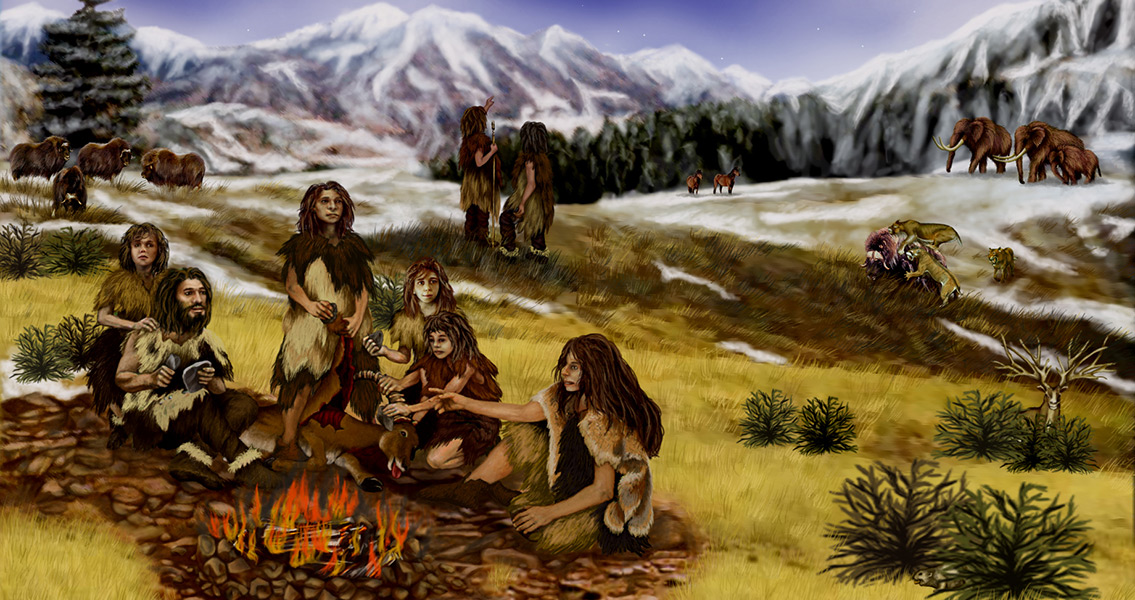
Neanderthals and Humans – What Are the Differences?

Homo neanderthalenisis is now long extinct, the differences between the two species can actually be hard to pinpoint. A fact further complicated by the now widely accepted belief that the two species interbred during the time they both inhabited Eurasia. History The first point of difference between the two species can be found in their respective histories. Neanderthals migrated into Eurasia long before modern humans did. Exactly when they left Africa is far from certain, but scientists generally estimate it was sometime between 300,000 and 200,000 years ago. Humanity’s path to Eurasia is also far from certain. The earliest recognisably modern human fossils have been found in Omo Kibish in Ethiopia, and date to around 200,000 years ago. Genetic and paleontological records suggest modern humans started to leave Africa between 60,000 and 70,000 years ago. Exactly why this migration started is unclear, but it is generally believed to have been due to the onset of the last Ice Age. Some 50,000 years ago the first humans started to arrive in what is now the Middle East (this was likely a different group to the original explorers out of Africa, who instead migrated East through India). It was this group that would eventually go on to colonise much of Europe and Asia. Anatomically modern humans then, arrived in Eurasia much later than their evolutionary cousins. Nevertheless, the two species lived alongside each other for several thousands of years, with the Neanderthals finally going extinct sometime between 40,000 and 30,000 years ago. Appearance Although similar in many ways, there are clear physical differences distinguishing Neanderthals and modern humans. Neanderthals were significantly shorter and stockier than modern humans, with much broader rib cages and pelvises. To give some perspective, the average height for a man in the USA is 1.76 metres. Conversely, based on the fossil records available, the average height for a Neanderthal was just 1.6 metres. A study published late last year suggested that some of these anatomical differences could be the result of the Neanderthals being forced to adopt a much more high protein diet than modern humans. Intelligence and Behaviour One of the hottest topics in scientific research right now involves determining just how intelligent Neanderthals were. For years, the prevailing view was that Neanderthals were primitive, poorly developed brutes when compared to modern humans, only capable of expressing themselves in grunts and groans. Discoveries in the last few years have really brought this assumption into question. ⦁ A study last year presented remarkable evidence that Neanderthals may have used vocal communication in a way similar to modern humans. ⦁ Archeologists working at Neanderthal sites in France believe Neanderthals deliberately collected manganese oxide to use in chemically assisted fire making 50,000 years ago. ⦁ Earlier this year, a study pointed towards Neanderthals being rock collectors, suggesting they placed symbolic importance in the objects around them. This is widely considered a signifier of cultural development. ⦁ Jewellery found at various paleolithic sites has long been a bone of contention, with some arguing it was created by humans, others that it was the work of Neanderthals and thus further proof of how advanced they were. If true, any of these discoveries would point to Neanderthals being for more advanced than their typical depiction in popular culture would suggest. The physical differences between Neanderthals and humans are quiet clear, especially in terms of anatomy. Beyond that though, it’s becoming increasingly uncertain just how distinct we are from our closest extinct evolutionary cousins.]]>

Categories
Breaking News

New Research Confirms the Oral Histories of Montezuma Castle

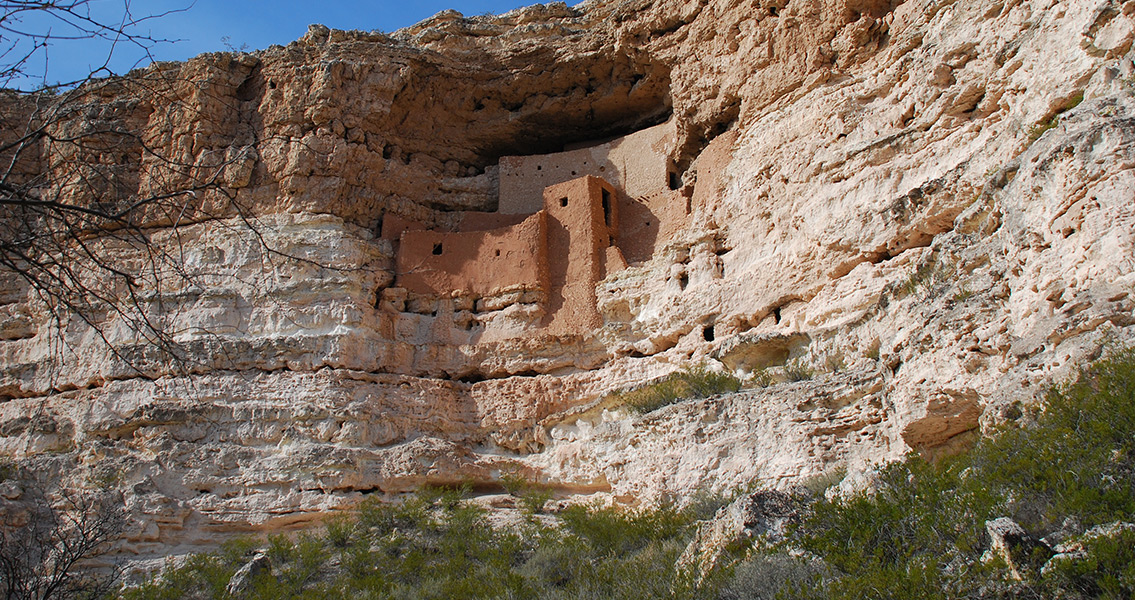
Western Digs: “The conventional thinking left a lot of room for speculation about when and why people might have abandoned the area. The new study doesn’t explain why violence occurred at the site, but it does provide a mechanism for the abandonment. Aside from a small research project conducted in the 1980s, very little archaeological work had been done since the 1930s.” When the site was originally studied approximately 80 years ago, archaeologists discovered a large amount of evidence, including burnt roof beams and charred areas on the wall plaster. One of the structures, the one that became known as Montezuma Castle, was built inside a natural alcove on the face of the limestone cliff, about 90 feet (27 meters) above the canyon floor. The other, erected on the ground next to the canyon’s north wall, was named Castle A. The charred remains of both buildings led many to the conclusion that the buildings burned after they had been abandoned. Later, however, that changed, and some experts came to think the sites had been burned intentionally by the Sinagua as part of some unknown ritual performed as they were leaving. This new research was undertaken to see if new archeological methods and technology could uncover information about why the dwellings were abandoned. Guebard, along with his colleagues, reviewed notes from the original excavations, studied features of the site as well as artifacts which included roof beams, ceramics, and a variety of other architectural elements. Additionally, Guebard solicited several tribal groups whose ancestors were from the Verde Valley, for their input. “Generally speaking, we spend a lot of time and effort working closely with culturally associated Native American tribal governments”, Guebard says in Western Digs. “They review many of our projects and provide important feedback that helps to develop project objectives.” Following these lines of evidence, a completely new picture of the final days at the cliff dwellings started to become clear. For example, new dating of the charred plaster indicates the fire occurred between 1375 and 1395, while the pottery from the dwelling showed signs of having been made in styles from that same time period, suggesting that Castle A was inhabited right up to the time it was burned. Even more persuasive are the four bodies. Discovered in the original excavation in the 1930s, at the time it was believed that the deceased had been buried well before the fire, but a closer look at the earlier research reveals the dead had suffered trauma before their deaths, such as bones with cut marks, burn marks, and skull fractures in three of the four bodies. “We learned that the interior portion of each fracture displayed evidence of singeing on live bone,” Guebard is quoted as saying in the article. “So, the sequence of events seems to be blunt trauma followed closely by burning. It is also interesting to note that all of the remains with reported evidence of trauma and burning were found in a single grave.” The research was corroborated by the oral histories of the Native Americans, which describe Castle A being attacked by rival bands seeking to drive the Sinagua away. “Years before starting the project, I had heard from tribal members that there were stories about violence at the site”, Guebard explains in the article. “So as I started to realize that the archaeological evidence was supporting violence at Castle A, I felt it would be helpful to get their unique perspectives on the project and on my interpretation of the data. What was interesting is how close the oral histories match up with the archaeological evidence, but also how each story provided a unique and different perspective of the event represented by the archaeological evidence.” A Hopi Bearstrap Clan member recounted stories of Sinagua villagers running into Montezuma Castle and then pulling up the ladders, while invaders set it on fire. Members of the Dil zhe’e, also known as the Tonto Apache, recount the story of how their ancestors joined with the Yavapai, and together they evicted the Sinagua by setting fire to the dwellings. ]]>

Categories
Breaking News

Prehistoric Humans Playing with Fire Changed European Landscape

Homo erectus begins around 400,000 years ago. Evidence of the widespread use of fire by modern humans’ dates back to approximately 125,000 years ago. An earlier report by Leiden’s Human Origins group had already proposed that Stone Age hunter-gatherers may have significantly modified their natural environment through the use of fire. This new research confirms the first hypothesis, and may also provide one of the earliest examples of this kind of large-scale impact by humans throughout all of Europe. The research was funded by the European Research Council, the Swiss National Science Foundation and the European HERCULES research program. The findings have been published in the journal PLOS ONE.]]>

Categories
Breaking News

Indigenous Populations Had a Profound Effect on Forest Fires

Categories
Breaking News

Ancient City Gutted By Fire in Three Hours, Study Says

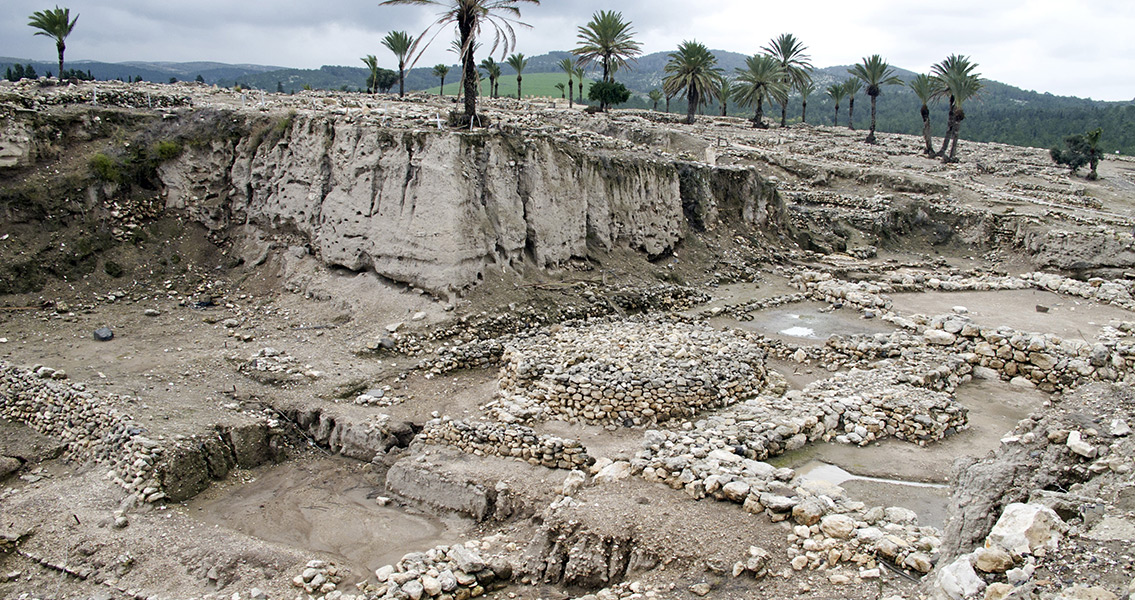
LiveScience, researchers from Israel’s Weizmann Institute of Science created their own mud bricks by taking soil, removing any large stones, and then creating a mixture of water, straw, and mud. This mixture was then poured into brick molds and cured in an oven. This method of construction was popular in antiquity and continues to be popular within the region today thanks to how cost-effective it is, according to Ruth Shahack-Gross, one of the scientists involved in the project, as the main building material is soil that can be sourced from the local landscape. Analysis of the remains of burned bricks at Tel Megiddo revealed that they reached a core temperature of approximately 600 degrees Celsius (more than 1,100 degrees Fahrenheit). Researchers subjected their own bricks to intense heat in an oven to re-create the conditions the ancient city’s bricks experienced, running the experiment on several different types of bricks made with varying construction ratios and of different shapes and sizes. The research results indicated that the bricks reached the temperature threshold in as little as two to three hours. Surprisingly, the amount of straw used in constructing mud bricks had little influence on how long it took for modern bricks to reach a core temperature of 600 C. Smaller bricks reached this target temperature more quickly than larger bricks, which was expected. Researchers said that the fire could have spread even faster thanks to items within Tel Megiddo’s dwellings such as bedding, oil, matting, furniture and wooden support beams. The new research study is the first of its kind, and to that effect many scientists have suggested follow-up experiments to account for any number of other factors that can contribute to a fire. The age of the bricks being subjected to heat may play a role, as older bricks with voids within them from decayed straw may not burn at the same rate as new bricks. Additionally, with fire being inherently chaotic, temperature alone may not be the best way to measure an event such as an entire city burning to the ground. In real-world situations, mud bricks may not be heated from all sides such as in the experiment but from only one side, depending on the location of the fire’s ignition point. Shahack-Gross stated that the limitations of this initial experiment are indeed clear, and that the research team is fully aware that conducting experiments in a laboratory under controlled conditions cannot truly mimic the events of the past. The research study, recently published in the journal Antiquity, can be found online here]]>

Categories
Breaking News

41,000 Year Old Fires Shed Light on Hobbits' Fate

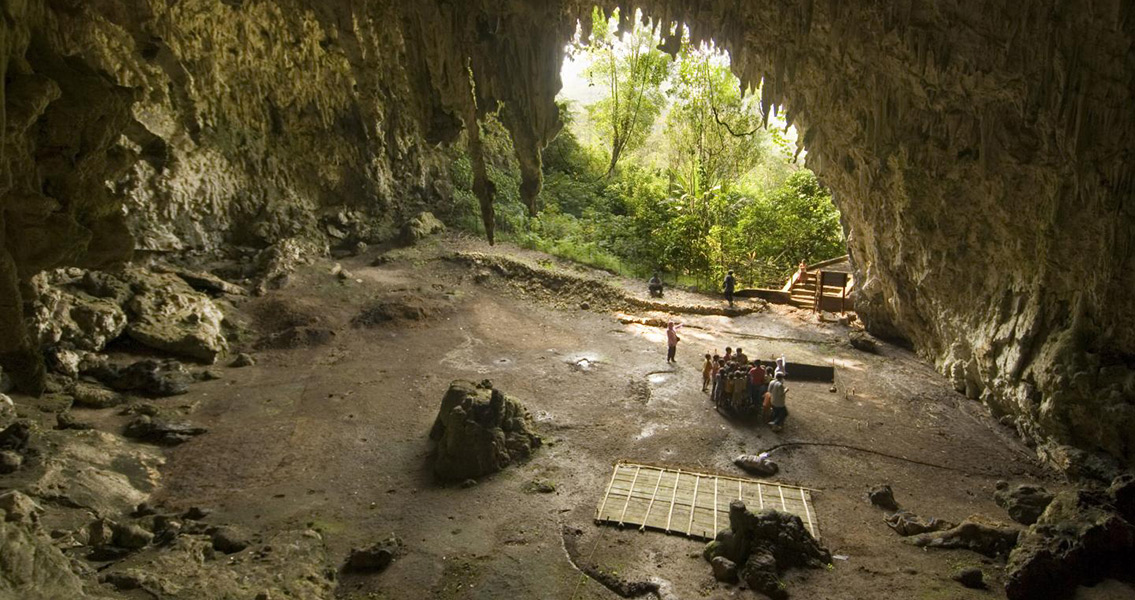
Homo floresiensis, the extinct ‘hobbit’ species of human. Published in the Journal of Archaeological Science, the new study presents evidence that modern humans (Homo sapiens) were likely using fire at Liang Bua 41,000 years ago. It’s a conclusion that narrows the gap between the disappearance of Homo floresiensis and the arrival of the first modern humans on the Island of Flores, and could provide new insight into the fate of H.floresiensis. Called the discovery of the century, the first H.floresiensis remains were unearthed in the Liang Bua cave on Flores in 2003. Surrounded by stone tools and animal remains, the female H.floresiensis would have been 3.5 foot (1.06 metres) tall and thirty years old at the time of her death. Subsequent discoveries of eight similarly diminuitive individuals led scientists to conclude in a study published in 2009 that the initial discovery had not been an anomally. The latest discovery on the Island of Flores provides some of the earliest evidence yet found of the presence of modern humans in South East Asia. Lead author of the study Dr Mike Morley, a research fellow and geoarchaeologist at UOW’s Centre for Archaeological Science (CAS), said the discovery could be “extremely important” in the mission to determine how and why the hobbit species disappeared, roughly 50,000 years ago. In March, a study published in the journal Nature revised the initial dating estimates for the original hobbit skeleton, concluding the bones were between 190,000 and 60,000 years old, much older than previous studies that claimed the creature survived on Flores until as recently as 12,000 years ago. With the most recent stone tools on the island dated to 50,000 years old, scientists were suddenly presented with a glaring gap in the chronology of the site’s sediment sequence: What happened there, and who lived there between 46,000 and 20,000 years ago? Dr Morley and colleagues, including CAS geoarchaeologist Professor Paul Goldberg and archaeologist Thomas Sutikna, have now been able to fill in some of that gap. On top of detailing environmental changes at the site between 190,000 and 20,000 years ago, they found evidence of fire places that were in use between 41,000 and 24,000 years ago. With no evidence that H.floresiensis used fire in their 130,000 year occupation of the site ever discovered, Morley’s team believe these fire places were most likely the work of modern humans. “We now know that the hobbits only survived until around 50,000 years ago at Liang Bua. We also know that modern humans arrived in Southeast Asia and Australia at least 50,000 years ago, and most likely quite a bit earlier” Dr Morley said in a press release from UOW. “This new evidence, which is some of the earliest evidence of modern human activity in Southeast Asia, narrows the gap between the two hominin species at the site.” A technique known as micromorphology was part of the team’s study, allowing sediments from the site to be examined in microscopic detail. Sediment blocks from the rear of the cave, an area separate from where the fossils were discovered, were extracted and shipped to UOW. Wafer thin slices (just 30 microns thick) were studied under microscopes, subjected to spectroscopic analyses and radiocarbon dated to determine the age of each layer. The team’s findings add further support to the idea that modern humans dispersed through South East Asia and Australia around 50,000 years ago. The researchers at Liang Bua are now looking for more evidence to narrow the time gap between modern humans and H.floresiensis; allowing them to decipher exactly when humans first inhabited the island, and perhaps even revealing a cross over between the two species. Image courtesy of University of Wollongong]]>

Categories
Breaking News

Earliest Evidence of European Fire Building Found in Spain

Homo heidelbergensis, a direct ancestor of Neanderthal Man, Homo neanderthalensis. Like other sites that show signs of early fire building, hominids at Black Cave left behind a variety of stone tools, indicating they possessed the technical skills needed for selecting the right material for striking sparks. Paleontologist Michael Walker with the University of Murcia explained in Science News that it’s unlikely a brush fire near the cave’s entrance could have sent sparks inside to ignite fires that were found between five and seven meters in, adding that dry brush wasn’t likely to be near the cave to begin with, given that 800,000 years ago the area bordered a swamp and a river. Other researchers told Science News they suspect the Cueva Negra’s artifacts are actually not as old as the report indicates, because it’s difficult to say where the artifacts originally were in relation to several different reversals of the planets magnetic field which are preserved in the sediment layers found in the cave. A 2011 study, published in the Journal of Archaeological Science, set an age limit for the tools made by the Homo species in Europe at no more than 600,000 years ago. Even at 600,000 years old though, the findings at the cave would still be the earliest evidence of fire making in Europe. The systematic excavation of the cave was started in 1990 and until 2004 researchers considered the site to be from the late Pleistocene era, however, rodent fossils were discovered from a species that became extinct 500,000 years ago. Other animal fossils include megaceroides (giant deer), wild boar, bison, hyena, turtles and rabbits, in addition to 60 different species of birds. ]]>

Categories
Breaking News

Fire – Early Humans Knew a Good Thing When They Saw It

Evolutionary Anthropology ]]>

Categories
News

1906 San Francisco Earthquake Leaves Half the City Homeless

Categories
Breaking News

Neanderthals Capable of Chemically Assisted Fire Making