Proceedings of the National Academy of Sciences. ]]>

Proceedings of the National Academy of Sciences. ]]>

IB Times, adding, “The discovery in Tultepec is important because it indirectly supports the presence of humans 40,000 years ago.” Preliminary research reports the woolly mammal was approximately 25 years old at the time of its death, it was 3.5 meters (11.5 feet) tall and 5 meters (16.5 feet) in length, and weighed around 5 tons. The experts are hopeful that the mammoth remains are in good enough condition to be reassembled and displayed. Woolly mammoths died off around 5,000 years ago. “We are talking about 40,000 years ago so it is a very considerable period of time. The affect (on the bones) over such a period is that the bones are very sensitive.” explained assistant archaeologist Felipe Munos in the article. However, the fact that the remains were found in sediment at the bottom of a lake, and the mud was of a good level, helped to conserve the mammoth remains. Mexico was a hotbed of dinosaur activity at one time, and although the area surrounding modern-day Tultepec is arid, in earlier eras it is thought to have had an ample water supply and lush vegetation. Off the coast of Yucatan, around 825 miles south of Mexico City, is the Chicxulub crater, an impact crater that’s buried underneath Mexico’s Yucatán Peninsula. It was left behind when a large comet or asteroid, approximately 6 miles (10 kilometers) in diameter, struck the Earth. The impact coincides exactly with the Cretaceous–Paleogene (K–Pg) boundary some 66 million years ago, and it’s widely accepted that the global climate disruption caused by the event caused the mass extinction (the Cretaceous–Paleogene extinction event) of 75% of the earth’s animal and plant species, including all of the non-avian dinosaurs. ]]>


Geology. ]]>

Phys.Org, a new research paper has revealed that domesticated turkey eggs have been found in Oaxaca, Mexico dating to the fifth-sixth century CE. The 1,500-year-old eggs are the oldest evidence of turkey domestication to be found in the Americas, according to Field Museum archaeologist Gary Feinman, one of the authors of the paper. Before this, educated guesses had been made concerning turkey domestication based solely on the presence of turkey bones – or their absence – at other archaeological sites, Feinman remarked. However, this new discovery is the first strong evidence of domestication, and the archaeologist states that it’s being used to confirm prior hypotheses. The eggs were found in a region of Oaxaca that is known to have been the territory of the Zapotec, a native population that has had ties to the land for millennia. The find was quite unexpected, Feinman said, adding that discovering an entire clutch of intact eggs is exceedingly rare. Thanks to the expertise of Feinman’s colleague, University of North Carolina-Chapel Hill archaeologist Heather Lapham, the eggs were identified immediately as turkey eggs. They were found next to the remains of seven newly-hatched turkey chicks, possibly as an offering, explained the researcher. Analysis of the shells via scanning electron microscope verified Lapham’s positive identification. Feinman says that it’s clear these turkeys were domesticated, based on the entire clutch of unhatched eggs as well as the other turkey bones found at the excavation. The discovery aids in confirming historical information regarding the Zapotec and how they made use of turkeys in the past. There are Zapotec people still living in Oaxaca today, and the domesticated turkey is still very much a part of their culture. Feinman pointed out that the birds are raised as poultry, used in rituals and given as gifts; food items prepared for religious festivals, weddings, baptisms and birthdays all feature turkey heavily. The story of Mesoamerican animal domestication has been filled in by a significant extent thanks to the new discovery. While the Eurasian continent features a high number of domesticated animals, few such examples are present in Oaxaca and beyond. The only domestic meat sources available in Oaxaca 1,500 years in the past would have been dogs and turkeys, Feinman said, unlike the variety of meat sources available to Eurasian inhabitants. Today, this has changed dramatically thanks to the Spanish bringing over animals such as pigs, cattle and chickens during their colonization of the region. However, the turkey, with its strong roots in Zapotec culture, is still highly significant in the area both ritually and economically. The modern domesticated turkeys of Oaxaca are not so different from those that would have been present in the original American colonies during the time of the first Thanksgiving, nor are they too dissimilar to the domesticated turkeys bred in North America today, Feinman remarked. The research study, which appears in The Journal of Archaeological Science: Reports, is available here]]>

Guardian. The presence of the third structure suggests the Kukulkan pyramid was built in three separate stages. The first, innermost pyramid was constructed between the years 550 and 800. The middle pyramid, which was discovered in the 1930s, was built between the years 800 and 1000. The largest, final pyramid dates back to the years 1,050 to 1,300. Structures like El Castillo were constructed one on top of the other for a variety of reasons, including the arrival of new leaders or deterioration. The research team is hopeful the find will reveal information about the original Maya culture prior to influences from central Mexico populations. The Mesoamerican Maya civilization was notable for its hieroglyphic script, the only fully developed writing system within the pre-Columbian Americas, and also for its architecture, art, calendar, mathematics, and astronomy system. In 2015 archeologists discovered the pyramid was built on top of a cenote (sinkhole), common to the region and considered sacred by the Maya. The sinkhole under the temple is approximately 82 by 114 feet (25 by 35 meters) and could be up to 65 feet (20 meters) deep. Researchers also found that the pyramid sits on a 16 foot (4.9 meter) layer of limestone on top of the cenote. The discovery of the limestone layer, like the discovery of the third pyramid, was made using a new noninvasive technology involving the placement of electrodes in the area surrounding a structure and sending an electrical current into the ground. While the current is being emitted measurements to determine whether or not sub-surface elements are impeding or increasing the electrical potential are taken and then processed with software that creates three-dimensional maps of the subsurface area. A Mesoamerican step-pyramid, El Castillo dominates the center of the Chichen Itza complex. It was built by a pre-Columbian Maya civilization between the ninth and twelfth centuries CE. The pyramid functioned as a temple to the Yucatec Maya Feathered Serpent god Kukulkan, who was closely related to the Aztec god Quetzalcoatl. The National Institute of Anthropology and History has begun closing pyramids and monuments to the public in an effort to preserve the buildings, so while visitors can still walk around them, they can no longer climb or enter them. Climbing El Castillo was halted after a woman fell to her death in 2006. Today, it remains one of Mexico’s most recognized pre-Columbian structures. ]]>
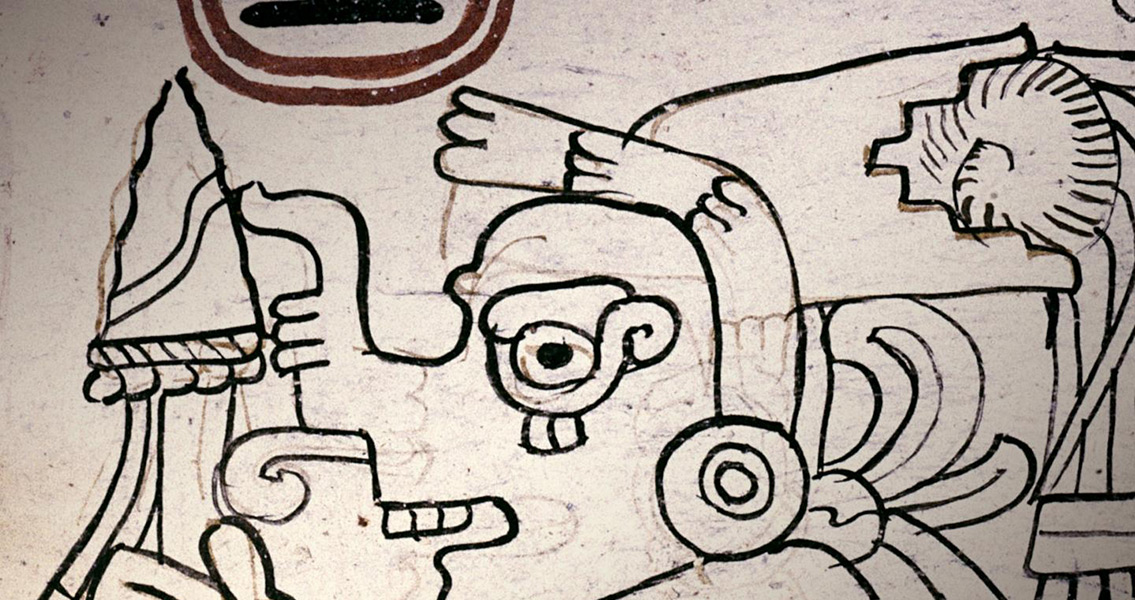
Maya Archaeology, are: “… a confirmation that the manuscript, counter to some claims, is quite real.” said Houston, in a Brown University press release. Coe’s team carried out a rigorous analysis of the codex to reach their conclusion, looking at everything from the manuscript’s style and iconography, to the paper it was produced on. Most crucially, they radio carbon dated it and found it came from the thirteenth century, predating three other well known Mayan codices: the Dresden, Madrid and Paris – named after the cities in which they are now housed. The authors note that because the Dresden, Madrid and Paris codices were discovered first, their features are regarded as canonical. The Grolier is undoubtedly different to those three codices, but the authors argue that in itself isn’t proof it is inauthentic. Most significantly, Coe et al point out that it actually would have been almost impossible for forgers to have created the forgery by 1964. The Grolier Codex depicts in detail gods and deities which archaeologists had yet to discover at that point; while the illustrations and paintings contain perfect Maya blue pigments, pigments that were not successfully synthesised in a laboratory until the 1980s. As the authors write in the study: “A reasoned weighing of evidence leaves only one possible conclusion: four intact Mayan codices survive from the Precolumbian period, and one of them is the Grolier.” For more information: Journal of Maya Archaeology Image courtesy of Justin Kerr ]]>

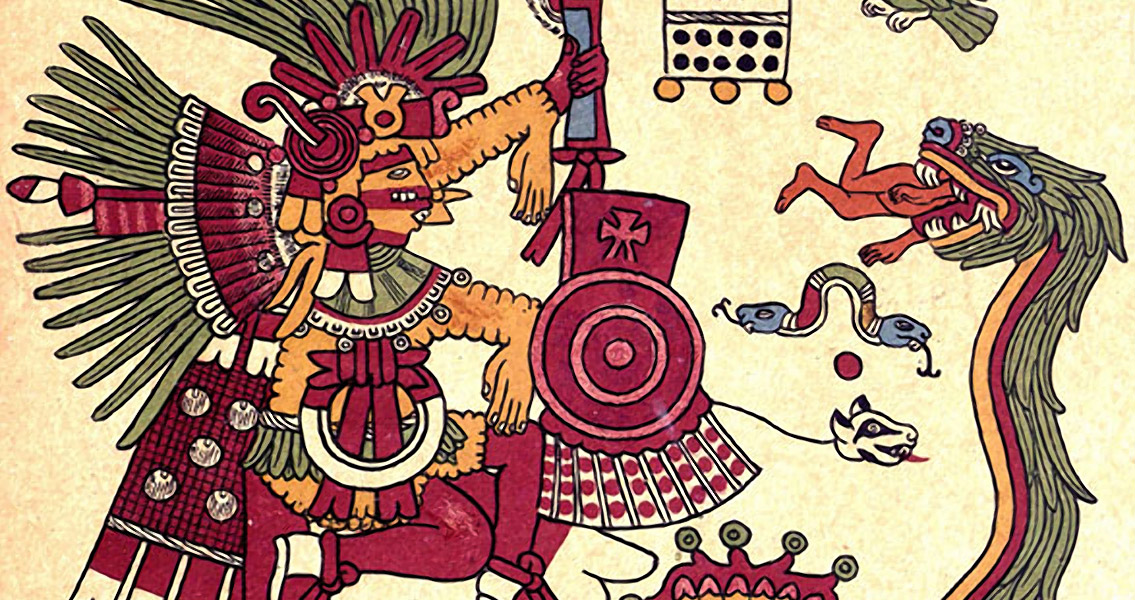
Live Science, the ceremonial site was first uncovered during the spring and early summer of last year in the Oaxaca Valley, situated in southern Mexico. The site, known as Dainzú-Macuilxóchitl, was once inhabited by the Zapotec people who still reside in the region today. The ceremonial site was part of a larger Zapotec residential complex. Oregon State University’s Jeremias Pink recently led a discussion on the research findings at the annual meeting of the Society for American Archaeology. The research study associated with the discovery is currently being prepared for publication. Archaeologists said that while Xipe Totec does have a reputation for being associated with human sacrifice, the painted jawbones might not have been from human sacrifices themselves. In fact, they may have been a form of ancestor worship and veneration for those Zapotec who had lived there previously. The complex had been used for human habitation for at least four centuries, researchers found upon excavating the area. Pink, who spearheaded excavations of the ceremonial site, said that the nearby residences were likely occupied by the same interrelated family groups over that span of time. Researchers say that during this long period of habitation, bones of long-dead residents were purposefully exhumed and decorated before being turned into jewelry. Pink remarked that local residents were likely delving into the tombs associated with their ancestors in order to retrieve the skeletal remains and ritualize them, demonstrating the ancestral link between their long-dead relations and themselves. It was likely a way to legitimize their position within the existing community, the grad student added. Although this might strike modern Westerners as gruesome or at the very least quite odd, ancestor rituals were widespread in ancient Mesoamerica, according to Ronald Faulseit, the excavation director at Dainzú-Macuilxóchitl. The Chicago Field Museum postdoctoral fellow said in an interview with Live Science that many instances of otherwise macabre ancestor worship are still widespread today, an example being the “Day of the Dead” celebrated in early November every year by many Mexicans. While there are no exhumations of skeletal remains as part of the celebration, Mexicans do use the day to remember their ancestors. As to why so many of the other items found at the ceremonial site, such as the whistles and the figurines, were deliberately smashed, Pink says there’s nothing but speculation. These artifacts are currently under ongoing analysis, he added. Images of the artifacts can be found here ]]>