Categories
Breaking News

The Great Auk Bone Excavated

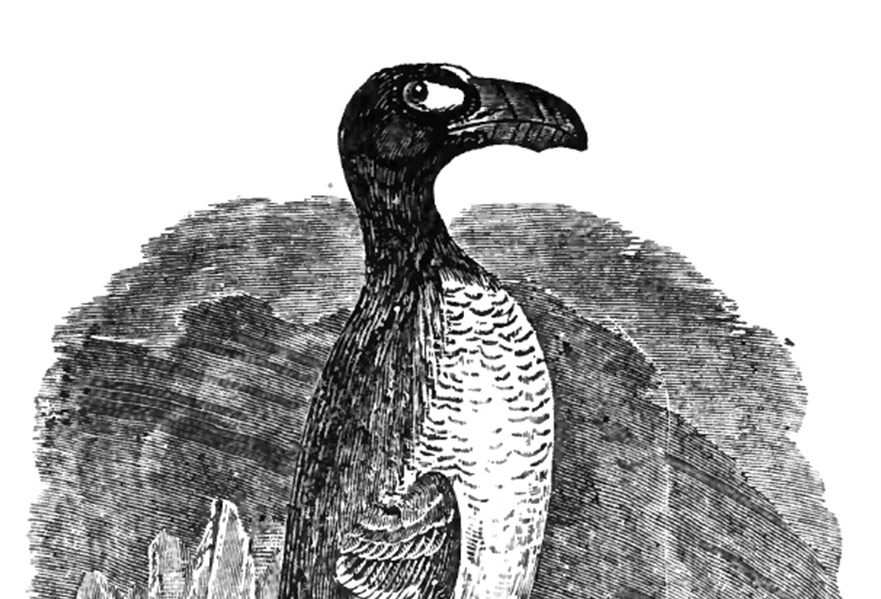
Bone from the Extinct Great Auk Unearthed at the Scottish Seabird Center An upper arm bone of the extinct Great Auk, also known as Scotland’s Dodo, was unearthed in an archeological dig at the Scottish Seabird Center at a location called the Kirk Ness site. Archaeologists were excavating the grounds of the Scottish Seabird Center when they uncovered this invaluable piece of bone fragment of the Great Auk, also known as Scotland’s Dodo. The archaeological dig, led by Addyman Archeology and supported by Historic Scotland, uncovered a number of invaluable animal bones belonging to the mid-18th century, in addition to the bone of the Great Auk. This bone fragment was, reportedly, unearthed near the entrance area of an old building. The Great Auk, also called as Scotland’s Dodo, was a flightless, Penguin-like bird. The meter-tall bird, while extant, had a range that extended from north-eastern United States all the way across the Atlantic, and covered the British Isles and Northern parts of Spain and France. As the bird could not fly, it was an easy target for hunting. Moreover, it was a staple food of people in the Middle Ages, both because of its inability to fly and its availability in abundance. However, the Great Auk started experiencing a severe decline in its population because of massive hunting, until it finally became completely extinct by the middle of the 19th century. The bird was last seen on St. Kilda British Waters in 1840. The Great Auks largely bred on the rocky and remote islands present in the Atlantic Ocean region. Since these islands provided great access to food, these birds flourished. The birds were also found on the coasts of Iceland, Greenland and Canada, and as far as the British and Norwegian coastlines. Mr. Tom Brock, Chief Executive of the Scottish Seabird Center said, “The discovery of the Great Auk bone on site at the Scottish Seabird Centre is fascinating but also very sad.We are so fortunate in Scotland to have a rich variety of seabirds and we must use the extinction of the Great Auk as a warning to future generations to look after our wonderful wildlife and the marine environment as an absolute priority.” Mr. Brock also said, “There are both behavioral and environmental lessons that must be taken from this internationally-important finding, and as an educational and conservation charity we will remain dedicated to inspiring people to enjoy, protect and learn about wildlife and the natural environment.” Although this excavation sheds light on the Great Auk and endangered wildlife, it is also believed be able to provide better insights into human society during the Middle Ages. Remains of various domestic buildings, in addition to the remnants of daily life at North Berwick, manage to provide us with a limited but encouraging glimpse of the way in which people and wildlife of East Lothian had been at that time. It will also help us gain a sounder understanding of extinction as a phenomenon, and help us make better decisions regarding our present-day environmental scenarios. Mr. Todd Addyman, of Addyman Archeology, said, “The discovery of the Great Auk bone at Kirk Ness is an illuminating find, as we seek to understand and document the importance of the area in the history of wildlife and human habitation in the Middle Ages. We hope that its discovery helps historians and conservation experts, such as the Scottish Seabird Centre, to educate future generations about the precious nature of our natural resources.” Senior Archeology manager of Historic Scotland, Mr. Rod McCullagh, said, “In the last two decades, there has been a renaissance in our understanding of the archaeology and history of early Medieval Scotland. The discovery of the remains of domestic buildings and the associated detritus of daily life at Kirk Ness gives us a glimpse of what ordinary life was like in East Lothian at this time. That ‘daily life’ involved the killing of such valuable birds as the Great Auk is no surprise but the discovery of this single bone perhaps attests to a time when hunting did not overwhelm such a vulnerable species.” ]]>

Categories
Breaking News

New Prehistoic Artefacts Found in Scotland

Recent findings uncovered new evidence for prehistoric Scotland. Recently, an unlikely turn of event has lead to a discovery of an ancient Scottish settlement believed to be an Iron Age village. Along with it, a host of ancient artefacts including tools and jewellery were also found. The unexpected discovery was excavated at the construction site of the £17 million A75 Dunragit bypass in Wigtownshire, in south-west Scotland. It has been reported that the discoveries include a rare and complete 130-piece jet bead necklace dating about 2000BC, the first of its kind ever discovered in south-west Scotland. Two of the jet beads necklaces found are considered to be the rarest of the discoveries, according to Dr Alison Sheridan of National Museums Scotland. She was also reported to have said that the necklaces were made in about 2000BC, between the Neolithic period and the Bronze Age, in Whitby, Yorkshire, located about 160 miles from where they were found. A Romano-British brooch, a Bronze Age cemetery complex, cremation urns and pottery fragments were among the other finds. Other than that, some flint tools, including a flint arrowhead from the early Neolithic period and more than 13,500 Mesolithic flints were also found. Flint is a hard, tough chemical or biochemical sedimentary rock that breaks with a conchoidal fracture. It is a form of microcrystalline quartz that is typically called “chert” by geologists. It is a preferred material for making tools and it has been used extensively by human to make stone tools during the prehistoric era. Prehistoric period is divided into three-age system, namely the Stone Age, Bronze Age and the Iron Age. Stone Age then further divided into three periods which are the Paleolithic, Mesolithic and Neolithic. Paleolithic means “Old Stone Age”, and this period begins when human were starting to use stone tools. Meanwhile, Mesolithic means “Middle Stone Age”, and this period dates from the end of the last Ice Age. It is in this period that agriculture was introduced. The Neolithic or the “New Stone Age” period in Scotland spanned approximately 4500BC to 2000BC and is the period in which settled farming became common. The Bronze Age dates from about 2500BC when metal-using and a “package” of other Continental novelties appeared in Scotland – and elsewhere in Britain – to around the 800BC, when iron objects and iron-using probably appeared. The Iron Age then lasted to about 500 AD. Rod McCullagh, an archaeologist of Historic Scotland said, “An unforeseen wealth of archaeological information has been recovered. The team of archaeologists from Amey and Guard Archaeology Ltd have uncovered the remains of dwellings and burials spanning over 7,000 years of prehistory,” He added, “In addition, numerous smaller sites have been discovered which seem to relate to the use and exploitation of the land both through hunting and farming. These are exciting discoveries which offer a much richer understanding of the settlement of south-west Scotland over the past 9,000 years.” Transport Minister of Scotland, Keith Brown have the following to say regarding the findings, “With the A75 Dunragit bypass already improving journey times and providing opportunities for business, leisure and tourism industries on this crucial route between Scotland, the rest of the UK and Europe – it is also helping shine a light on Scotland’s ancient past. “The finds at Dunragit, which would have remained uncovered had the new bypass not been built, are truly stunning, and underline the importance of the value we place on meeting our environmental obligations as we plan and construct essential new infrastructure,” he added. In the meantime the findings are being conserved for further analysis. Research is still ongoing and report by Historic Scotland will be produced to describe and explain what has been discovered along the road. Based on the report, a decision will be made on where the various collections will be stored or put on display. Whatever the result of the findings may yield to us, it would surely becomes another piece of evidence that would serves as an eye opener and might even unravel a new perspective in our knowledge and understanding of the prehistoric age. ]]>