Categories
Breaking News

Giant Polar Bear Skull Could Belong to 'King' Bear

Western Digs article, adding, “The back of the skull is longer and comparatively narrow, for example, with features that are noticeably different from those of modern polar bears. The front part of the skull, from roughly the eyes forward, is like that of typical polar bears,” Jensen said. Research biologist Dr. Raphaela Stimmelmayr compared The Old One to over 300 polar bear skulls kept at the University of Alaska Museum of the North and discovered several others that had similar features, making it unlikely that The Old One was entirely unique. “It’s possible it’s a subspecies,” Jensen says in the article, “or perhaps it’s more like [with] domestic dogs, where a borzoi and pug are considered members of the same species, [and] not [a] subspecies, even though their skulls are far more different than this is from a standard polar bear skull.” Ethnographers have documented stories of oversized polar bears from a number of Inuit groups. For example, the Inuvialuit people of Canada’s Northwest Territories have tales about a giant “weasel bear”, and the indigenous peoples on St. Lawrence Island and other locations have shared accounts of what they refer to as a “king bear.” Ethnographic accounts from the Utqiagvik area, however, don’t include any mention of a giant bear, either because these bears weren’t present when the ethnographic accounts were collected or because researchers didn’t ask the right questions. The archeological site Walapka, an ancient settlement, was occupied off and on over a 4,000-year period. Jensen, along with her colleagues, intend to further research the skull, including the cross-sectioning of several teeth as well as DNA analysis. The team’s findings were reported in Anchorage, Alaska, during the Alaska Marine Science Symposium. Images of the skull can be found here]]>

Categories
Breaking News

Genome of Deadly 800 Year Old Infection Found in Byzantine Skeleton

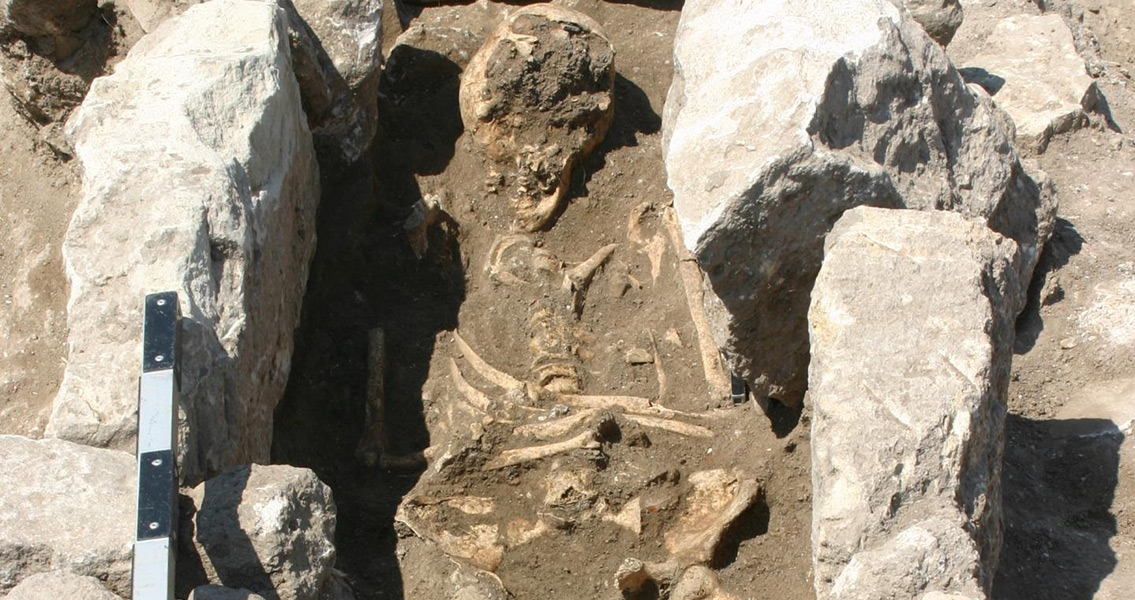
Staphylococcus, a family that includes the highly pathogenic species S. aureus. Determined to find out more, the researchers sent the nodules to Hendrick Poinar at McMaster University, an expert in ancient DNA. “Amazingly, these samples yielded enough DNA to fully reconstruct the genomes of two species of bacteria, Staphylococcus saprophyticus and Gardnerella vaginalis, which infected the woman and likely led to her death,” said Poinar, in the press release. According to Pepperell, the newly reconstructed genome contributes to “a pretty short list of ancient bacteria — cholera, tuberculosis, leprosy, plague – for which we have DNA.” Joining forces, Poinar and Pepperell led a team to produce a “portrait” of the ancient infection. Their results, published in the journal eLife, provide a history of the infection Staphylococcus saprophyticus. What is most remarkable is the sheer amount of information extracted from the nodules. “Calcification made little tiny suitcases of DNA and transported it across an 800-year timespan”, explained Pepperell. “In this case, the amount and integrity of the ancient DNA was extraordinary. One typically gets less than 1 percent of the target organism.” According to the study, between 31 and 58 percent of the preserved DNA came from the woman’s infection. “The quality of the (genetic) data is unparalleled.” said Pepperell. It seems that the woman, who lived in the final years of the Byzantine Empire, died of chorioamnionitis, a bacterial infection of the placenta, amniotic fluid and membranes surrounding the fetus. The fact the researchers also identified ancient Y-chromosome DNA suggested she died during pregnancy, possibly as a complication associated with the male fetus she was carrying. By reconstructing the diseases’ genome, the team have gleaned remarkable new insights into rural life in the thirteenth century. The strain of Staphylococcus saprophyticus which infected the woman is different to the kinds found today, and is not typically associated with human disease in the modern world. Its discovery in the eight hundred year old remains suggests that Byzantine peasants lived with their livestock. “The strain from Troy belongs to a lineage that is not commonly associated with human disease in the modern world,” Explained Pepperell. “We speculate that human infections in the ancient world were acquired from a pool of bacteria that moved readily between humans, livestock and the environment.” Examination of other remains found in the graveyard helped fill out the image of the tough life endured in the countryside as the Byzantine Empire was coming to its end. “People were struggling with physical strains and infectious diseases and only a few lived beyond the age of 50,” explained Kiesewetter an archaeologist affiliated with Project Troia at Tüebingen University. “Many newborns did not survive infancy and almost all skeletons of children show signs of malnutrition and infection.” Image courtesy of Gebhard Bieg ]]>

Categories
Breaking News

One of History's Deadliest Diseases isn't as Ancient as we Think

Current Biology are correct however, then historians might have to reevaluate just what role the disease played. “Scientists don’t yet fully comprehend where smallpox came from and when it jumped into humans,” said evolutionary geneticist Hendrik Poinar, a senior author of the study, director of the McMaster Ancient DNA Centre and a researcher with Michael G. DeGroote Institute of Infectious Disease Research. “This research raises some interesting possibilities about our perception and age of the disease.” The results look likely to reignite a longstanding debate over when variola, the virus that causes smallpox, originated and then evolved in response to vaccination and inoculation. Historians have long thought that the disease afflicted the populations of ancient Egypt, India and China thousands of years ago. Some accounts even claim that the pharaoh Ramses V may have died from smallpox in 1145 BCE. For their study, the researchers extracted DNA from the partial mummified remains of a Lithuanian child thought to have died between 1643 and 1665. The child’s death coincided with a series of severe smallpox outbreaks in Europe, making the team hopeful they would find evidence of the disease. Smallpox DNA was captured from the remains, sequenced and then the genome completely reconstructed. There was no evidence of live virus in the sample, meaning there was no chance of the remains being infectious. The researchers then set about tracing the evolutionary history of smallpox using the genome, which is when they made their surprising discovery. Comparing and contrasting the seventeenth century strain with a databank of samples of the disease dating from 1940 up to its eradication in 1977, they found that all the studied strains of the virus had an ancestor from no further back than 1580. “This study sets the clock of smallpox evolution to a much more recent time-scale” said evolutionary biologist Eddie Holmes, a professor at the University of Sydney, Australia, in a press release from McMaster University. “Although it is still unclear what animal is the true reservoir of smallpox virus and when the virus first jumped into humans.” Significantly, the team also found that the smallpox virus started to evolve in two separate strains after Edward Jenner developed a vaccine for it in 1796. One form of the variola virus, V. major, was highly virulent and deadly, the other, V.minor, was much more benign. Seemingly the ancestor of the minor strain corresponded with the Atlantic Slave Trade which likely helped disseminate it across the globe. “This raises important questions about how a pathogen diversifies in the face of vaccination. While smallpox was eradicated in human populations, we can’t become lazy or apathetic about its evolution – and possible reemergence–until we fully understand its origins.” said Ana Duggan, a post doctoral fellow in the McMaster Ancient DNA Centre, in the press release. Of course, the date of 1580 is hugely significant. It is commonly believed that European colonists to the Americas brought with them deadly strains of smallpox which had a devastating effect on indigenous populations. If accurate however, the team’s results seem to preclude that explanation, meaning further study might need to be done on the remains of indigenous populations. “This work blurs the line between ancient diseases and emerging infections. Much of smallpox evolution apparently happened in historic time,” says Margaret Humphreys, historian of medicine at Duke University. Image courtesy of Kiril ?achovskij ]]>

Categories
Breaking News

Early Set of Dentures Constructed With Human Teeth

Categories
Breaking News

Children Sacrificed to Serve as “Guardians” for Chornancap Priestess

Categories
Breaking News

It Takes Global Collaboration to Sequence a 6,000-year-old Seed

Nature Genetics. Image courtesy of Prof. Ehud Weiss ]]>

Categories
Breaking News

41,000 Year Old Fires Shed Light on Hobbits' Fate

Homo floresiensis, the extinct ‘hobbit’ species of human. Published in the Journal of Archaeological Science, the new study presents evidence that modern humans (Homo sapiens) were likely using fire at Liang Bua 41,000 years ago. It’s a conclusion that narrows the gap between the disappearance of Homo floresiensis and the arrival of the first modern humans on the Island of Flores, and could provide new insight into the fate of H.floresiensis. Called the discovery of the century, the first H.floresiensis remains were unearthed in the Liang Bua cave on Flores in 2003. Surrounded by stone tools and animal remains, the female H.floresiensis would have been 3.5 foot (1.06 metres) tall and thirty years old at the time of her death. Subsequent discoveries of eight similarly diminuitive individuals led scientists to conclude in a study published in 2009 that the initial discovery had not been an anomally. The latest discovery on the Island of Flores provides some of the earliest evidence yet found of the presence of modern humans in South East Asia. Lead author of the study Dr Mike Morley, a research fellow and geoarchaeologist at UOW’s Centre for Archaeological Science (CAS), said the discovery could be “extremely important” in the mission to determine how and why the hobbit species disappeared, roughly 50,000 years ago. In March, a study published in the journal Nature revised the initial dating estimates for the original hobbit skeleton, concluding the bones were between 190,000 and 60,000 years old, much older than previous studies that claimed the creature survived on Flores until as recently as 12,000 years ago. With the most recent stone tools on the island dated to 50,000 years old, scientists were suddenly presented with a glaring gap in the chronology of the site’s sediment sequence: What happened there, and who lived there between 46,000 and 20,000 years ago? Dr Morley and colleagues, including CAS geoarchaeologist Professor Paul Goldberg and archaeologist Thomas Sutikna, have now been able to fill in some of that gap. On top of detailing environmental changes at the site between 190,000 and 20,000 years ago, they found evidence of fire places that were in use between 41,000 and 24,000 years ago. With no evidence that H.floresiensis used fire in their 130,000 year occupation of the site ever discovered, Morley’s team believe these fire places were most likely the work of modern humans. “We now know that the hobbits only survived until around 50,000 years ago at Liang Bua. We also know that modern humans arrived in Southeast Asia and Australia at least 50,000 years ago, and most likely quite a bit earlier” Dr Morley said in a press release from UOW. “This new evidence, which is some of the earliest evidence of modern human activity in Southeast Asia, narrows the gap between the two hominin species at the site.” A technique known as micromorphology was part of the team’s study, allowing sediments from the site to be examined in microscopic detail. Sediment blocks from the rear of the cave, an area separate from where the fossils were discovered, were extracted and shipped to UOW. Wafer thin slices (just 30 microns thick) were studied under microscopes, subjected to spectroscopic analyses and radiocarbon dated to determine the age of each layer. The team’s findings add further support to the idea that modern humans dispersed through South East Asia and Australia around 50,000 years ago. The researchers at Liang Bua are now looking for more evidence to narrow the time gap between modern humans and H.floresiensis; allowing them to decipher exactly when humans first inhabited the island, and perhaps even revealing a cross over between the two species. Image courtesy of University of Wollongong]]>

Categories
Breaking News

Ancient African Farming Method Could End Food Shortages

Categories
Breaking News

Palmyra Recaptured Only to be Re-Looted, Archeologist Claims

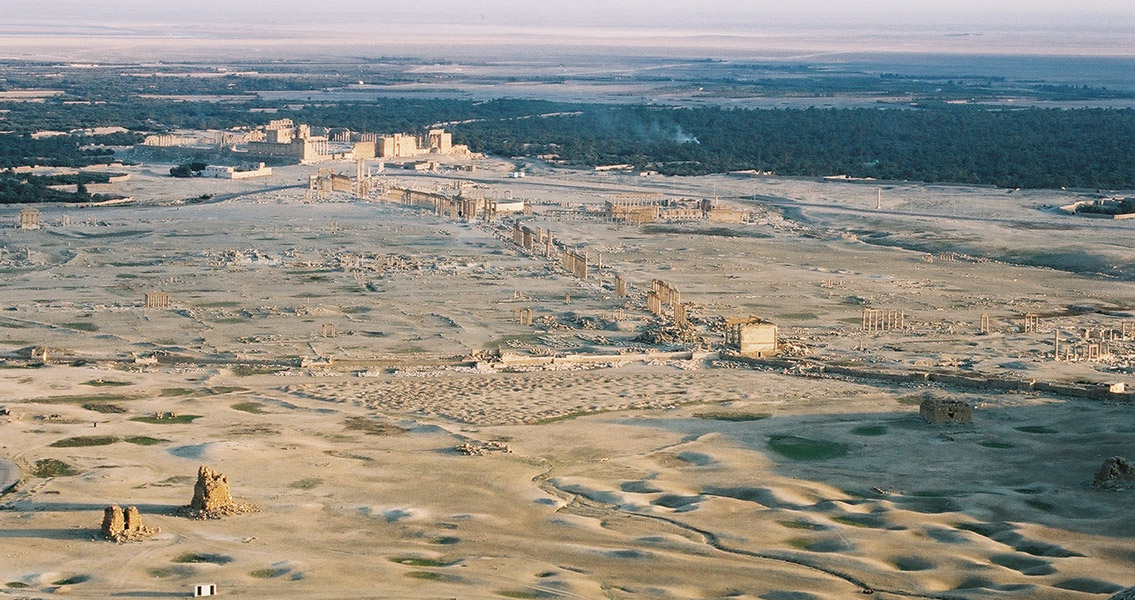
Tagesspiegel newspaper that approximately two-thirds of Aleppo’s old town had been burned and bombed and other sites had been plundered on an industrial scale. She’s branded these types of activities as ‘cultural cleansing’, and has started a campaign called Unite4Heritage to protect important sites. Palmyra was an ancient Semitic city in present-day Syria, with archaeological finds dating back to the Neolithic period. Renowned merchants, the Palmyrenes established settlements along the silk road and did business throughout the Roman Empire. Wealth from the trade caravans allowed the city to build monumental construction projects like the Temple of Bel, the Great Colonnade and the tower tombs. Heavily influenced by Greco-Roman culture, Palmyra produced distinctive architecture and art that reflected both western and eastern traditions. After the recapture of Palmyra early this year government experts discovered statues with the faces chipped off (some interpretations of Sharia law disallow the depiction of the human form) and others that had been left shattered on the floor. Although authorities had taken what they could from the museum as ISIL advanced, larger items and items that were fixed to the walls were left to the mercies of the militants. ISIL left a wide path of destruction on the inhabitants, defenders and ancient treasures of Palmyra. Captured Syrian army soldiers were reportedly executed in the Roman amphitheater, and hundreds of medical personnel, government officials, and the women and children from hated tribal groups were killed in and around the city. It was the death by beheading of the elderly Khaled al-Assaad, the head of the city’s antiquities who refused to reveal where artifacts had been hidden, which garnered the most attention around the world. ]]>

Categories
Breaking News

Kennewick Man Will Return Home to Native American Tribes