Categories
Breaking News

Monkeys Make Stone Flakes Similar to Human Ancestor's Tools

Sapajus libidinosus) uses rocks for a variety of purposes, such as cracking open a seed or fruit to extract the edible part. In addition, they hammer rocks against stone outcroppings, with the clear intention of smashing them. The process frequently produces sharp-edged conchoidal flakes with smooth rounded facets resembling the shape of a scallop shell. Crucially, the flakes are discarded by S.libidinosus, they are not used as tools. The monkeys performing this process have been observed licking and sniffing the quartz dust created by the rock fragmentation, leading scientists to speculate that the routine is performed for a dietary reason – perhaps in search of the trace element silicon, or to extract lichen from the rocks. A team of researchers from Sao Paulo University’s Psychology Institute (IP-USP), in collaboration with colleagues at the University of Oxford’s Archeology School and University College London’s Archeology Institute in the UK, have analysed the inadvertently produced rock fragments as part of the Thematic Project “Tool use by wild bearded capuchin monkeys (Sapajus libidinosus)”. Their results have been published in the online edition of the journal Nature. “We discovered that some of the stone flakes produced accidentally by these capuchin monkeys were very similar to Oldowan stone tools”, said Tiago Falótico, a postdoctoral fellow of IP-USP and one of the authors of the study, in a press release. First identified in Tanzania, Africa, Oldowan tools are among the oldest stone tools ever found and considered the earliest evidence of cultural behaviour, dating to as far back as 2.6 million years ago. Named after Olduvai Gorge, where they were first found, the tools are usually associated with Homo habilis, one of the earliest species of the Homo genus. The stone flakes and other materials gathered by Falótico and principal investigator Eduardo Ottoni over the course of several years were analysed by Tomos Proffitt, a researcher at Oxford University’s Archaeology School and expert on Oldowan tools, and Michael Haslam, a researcher at UCL’s Archaeology Institute. Proffitt and Haslam’s results showed that the stone flakes produced by the capuchin monkeys had identical characteristics and morphology to deliberately produced hominin tools. Half of the flakes exhibited conchoidal fractures, an attribute usually associated with the hominin production of tools. They also displayed varying levels of percussive damage as well as sharp edges, again, characteristics associated with hominin tools. “Paleoanthropologists use the characteristics of sharp-edged stone flakes both to distinguish them from naturally broken stones and to attribute them to the hominins that produced flakes with these shapes intentionally in order to use them as tools,” Falótico said. The fact the capuchin monkeys produced flakes which are indistinguishable from hominin produced ones, however, opens up a range of interesting questions about how we read the paleontological record. “When sharp-edged flakes are found at an archeological site, it’s usually easier to attribute them to hominins because the same digs generally also turn up many stone cores and signs of human occupation, such as fires,” Falótico said. “However, when they’re found in isolation with few or no other archeological artifacts, we should bear in mind that they might not necessarily have been produced by human ancestors.” ]]>

Categories
Breaking News

The Relationship Between Early Man and Eurasian Cave Lion Studied

Panthera spelaea, the Eurasian cave lion, a species that was larger than an African lion without the mane, became extinct approximately 14,000 years ago, but the reasons behind its disappearance have never been completely understood. Archeological findings show that between 50,000 and 10,000 years ago, Upper Paleolithic humans did in fact hunt animals both large and small, however, evidence of lion hunting is rare. In an attempt to determine if early humans hunted the cave lion, thereby contributing to its extinction, Marián Cueto, with the Universidad de Cantabria, Spain, and her colleagues examined nine fossilized toe bones from the claw of a cave lion, looking for evidence the cats were exploited by humans. The feline bones were unearthed at La Garma, the Upper Paleolithic cave site located in northern Spain. What researchers found was that a majority of the bones did in fact show signs of having been modified by stone tools used by humans, along with signs of a specific technique, similar to the one used by modern hunters to keep the claws attached to the fore while skinning it. The research suggests that the toe bones may have been part of a single lion pelt, possibly covering the floor of the occupied cave. The La Garma site is known to have been associated with human rituals, and it’s possible the Eurasian cave lions had some symbolic meaning for Upper Paleolithic humans. While the analysis doesn’t offer definitive findings which would conclude the Upper Paleolithic humans hunted cave lions for their pelts, it also doesn’t offer any findings to the contrary, and other evidence has been found showing that cave lions and early humans did interact in some capacity. The cave, situated on La Gama Mountain, is divided into different levels. In the upper section there are human burial sites, the intermediate level holds a large number of palaeontological remains, primarily bones. The most important remains, however, are found on the lower level where there are three intact spaces with numerous examples of painted art, including an amazingly realistic black horse, and a number of symbols painted red. Also found are representations of goats and bison and still more panels are covered with hand prints. The drawings date to between 28,000 and 13,000 years ago. Prehistoric humans ventured into the La Garma cave to perform sacred rituals. They navigated hundreds of yards through the dark, until they reached one of the circular stone huts (each with a horse skull in the center) where their religious ceremonies took place. Untouched for thousands of years, La Garma acts as a time capsule, with everything remaining exactly as it was during the Upper Paleolithic era. The nature of the ceremonies is unknown, however, the discovery of just foot bones indicates that aside from the pelts, the claws of the lion were also brought into the cave. The research has been published journal in the online journal PLOS ONE. Image courtesy of Wikimedia Commons user: Pit1233 ]]>

Categories
Breaking News

Cave Art Shows France Ravaged By Prehistoric Volcano

discovered in Northern Spain, but these images were dated to 13,000 years ago. In 2012 Nomade visited the Bas-Vivarais region with the aim of dating volcanic eruptions which would have coincided with the initial Homo sapien habitation of southern France. Through measuring the levels of certain isotopes of radioactive argon gas, he determined that the region had been struck by a series of spectacular eruptions between 19,000 and 43,000 years ago. Once it was clear that those living in the Chauvet-Pont d’Arc cave could have witnessed volcanic eruptions just a short distance away, Nomade and his team set about determining that the mysterious, as yet unidentified images in the cave were of volcanoes. The fact that the designs are unprecedented from the time period and region is a key part of the team’s reasoning: “The distinctive design of spray-shape signs specific to Chauvet-Pont d’Arc cave is reminiscent of typical lava fountains associated with strombolian eruptions. Such symbols have no close equivalent within the considered time period (i.e Aurignacian), or even among the more than 340 known ornate caves in France and Spain”, they write in the study. In addition, the iconography of the designs in France bares a resemblance to the petroglyohs depicting the Porak volcano in Armenia. The authors of the study point out that many of the images in the cave tend to be symbolic rather than naturalistic depictions of dangerous animals such as cave lions and bears. As mentioned above, there is no evidence of the inhabitants of the cave depicting scenery. However, the image of the volcano could be interpreted as reflecting a broader fascination with things seen as powerful or threatening. “We must add that as there is no other example in prehistoric rock art of natural scenery it is here perhaps the strength of the eruption image that might have inspired the Aurignacian artists”, the authors write in the study. For more information: www.plosone.org Image courtesy of Plos One ]]>

Categories
Breaking News

Oldest Image of Hunter-Gatherer Campsite Discovered?

www.plosone.org Image courtesy of García-Diez et al.]]>

Categories
Breaking News

New Paleolithic Elephant Butchering Site Discovered

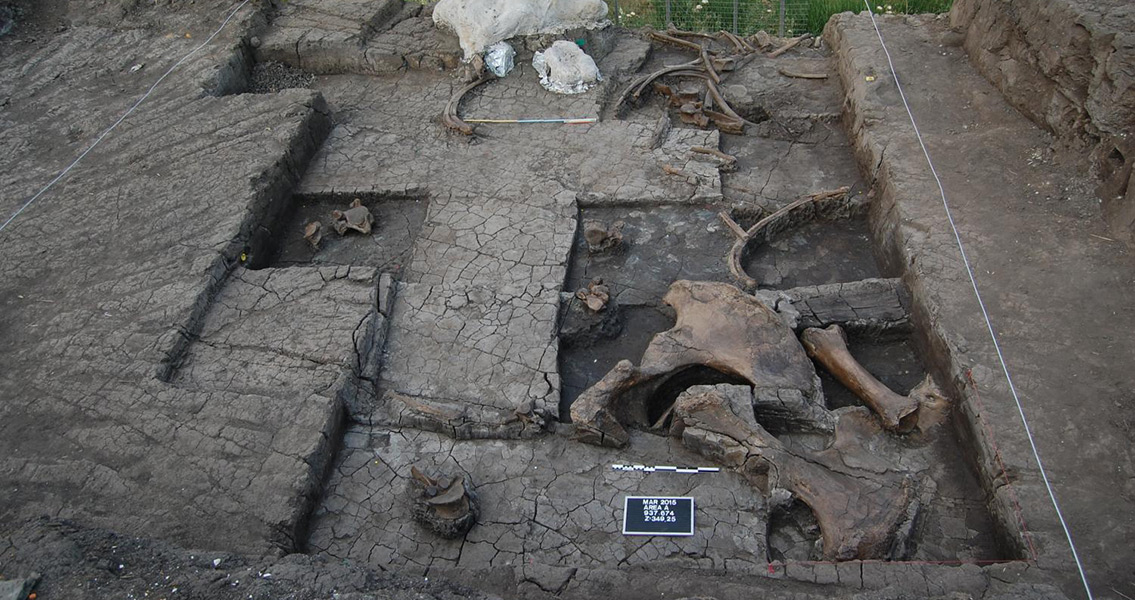
Elephas antiquus, more commonly known as the straight-tusked elephant, a long-extinct species that is thought to be the progenitor of the African elephant. Marathousa 1 was likely to have been a butchering site based on the types of stone artifacts found in close proximity to the remains of the elephant. Additionally, highly distinctive kerf marks were left behind on the bones of the elephant, ostensibly a result of the stone tools as they were used to separate the elephant meat from its bones. So far, early analysis results seem to indicate that the site dates to the Middle Pleistocene, putting it roughly between 300,000 and 600,000 years old. According to Katerina Harvati, a professor with Tübingen University’s Center for Human Evolution and Paleoenvironment, the Greek site is unique due to several of its characteristics. In a press release published by the University, she remarked that the Megalopolis site is the only one in the Balkan region where evidence of an early Paleolithic elephant being butchered had been uncovered. Easily one of the most ancient archaeological sites within the entire country, Marathousa 1 lies within what would have been an epicenter for human migration routes into Europe while also acting as a refuge for human, animal, and plant populations during ice ages. Harvati said that research into the region and its Paleolithic importance has largely gone unnoticed because of Greece’s role in Classical history. Much of the scholarship has revolved around the Hellenistic period and eschewed the Lower Paleolithic as a result. Despite this, the researcher added that Marathousa 1 was and continues to be a high-value site for revealing the secrets behind how humanity dispersed into Europe and how early humans adapted to and behaved within the region as a whole. Professor Havarti, along with her colleagues from both Germany and Greece, hopes to aid in closing the Paleoanthropology research gap that exists in southeastern Europe as a result of this previous focus on the Classical period. Image courtesy of Greek Ministry of Culture ]]>

Categories
Breaking News

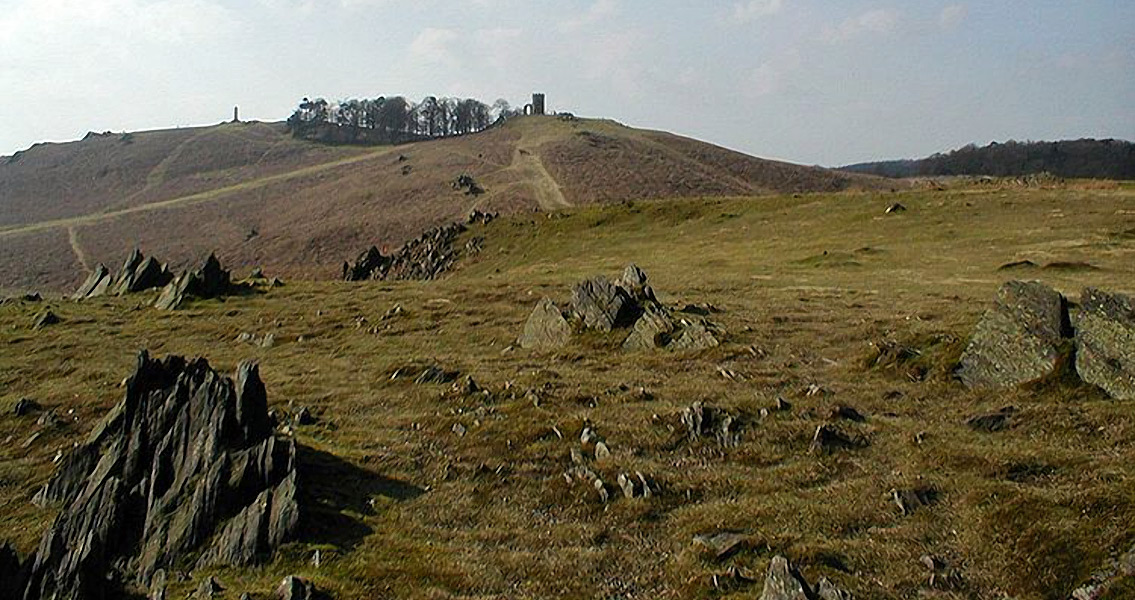
Exciting Finds Expected from Leicestershire Paleolithic Site

Categories
Breaking News

New Study Focuses on What Neanderthals Liked to Eat

www.sciencedirect.com Image courtesy of Wikimedia Commons user: William Warby]]>

Categories
Breaking News

Earliest Evidence of Manmade Pollution Found

Homo erectus, but had similarities with both Homo sapiens and Neanderthals, perhaps providing further evidence of interbreeding among hominin species. Image courtesy of Wikimedia Commons user: 66AVI]]>

Categories
Breaking News

New Prehistoic Artefacts Found in Scotland

Recent findings uncovered new evidence for prehistoric Scotland. Recently, an unlikely turn of event has lead to a discovery of an ancient Scottish settlement believed to be an Iron Age village. Along with it, a host of ancient artefacts including tools and jewellery were also found. The unexpected discovery was excavated at the construction site of the £17 million A75 Dunragit bypass in Wigtownshire, in south-west Scotland. It has been reported that the discoveries include a rare and complete 130-piece jet bead necklace dating about 2000BC, the first of its kind ever discovered in south-west Scotland. Two of the jet beads necklaces found are considered to be the rarest of the discoveries, according to Dr Alison Sheridan of National Museums Scotland. She was also reported to have said that the necklaces were made in about 2000BC, between the Neolithic period and the Bronze Age, in Whitby, Yorkshire, located about 160 miles from where they were found. A Romano-British brooch, a Bronze Age cemetery complex, cremation urns and pottery fragments were among the other finds. Other than that, some flint tools, including a flint arrowhead from the early Neolithic period and more than 13,500 Mesolithic flints were also found. Flint is a hard, tough chemical or biochemical sedimentary rock that breaks with a conchoidal fracture. It is a form of microcrystalline quartz that is typically called “chert” by geologists. It is a preferred material for making tools and it has been used extensively by human to make stone tools during the prehistoric era. Prehistoric period is divided into three-age system, namely the Stone Age, Bronze Age and the Iron Age. Stone Age then further divided into three periods which are the Paleolithic, Mesolithic and Neolithic. Paleolithic means “Old Stone Age”, and this period begins when human were starting to use stone tools. Meanwhile, Mesolithic means “Middle Stone Age”, and this period dates from the end of the last Ice Age. It is in this period that agriculture was introduced. The Neolithic or the “New Stone Age” period in Scotland spanned approximately 4500BC to 2000BC and is the period in which settled farming became common. The Bronze Age dates from about 2500BC when metal-using and a “package” of other Continental novelties appeared in Scotland – and elsewhere in Britain – to around the 800BC, when iron objects and iron-using probably appeared. The Iron Age then lasted to about 500 AD. Rod McCullagh, an archaeologist of Historic Scotland said, “An unforeseen wealth of archaeological information has been recovered. The team of archaeologists from Amey and Guard Archaeology Ltd have uncovered the remains of dwellings and burials spanning over 7,000 years of prehistory,” He added, “In addition, numerous smaller sites have been discovered which seem to relate to the use and exploitation of the land both through hunting and farming. These are exciting discoveries which offer a much richer understanding of the settlement of south-west Scotland over the past 9,000 years.” Transport Minister of Scotland, Keith Brown have the following to say regarding the findings, “With the A75 Dunragit bypass already improving journey times and providing opportunities for business, leisure and tourism industries on this crucial route between Scotland, the rest of the UK and Europe – it is also helping shine a light on Scotland’s ancient past. “The finds at Dunragit, which would have remained uncovered had the new bypass not been built, are truly stunning, and underline the importance of the value we place on meeting our environmental obligations as we plan and construct essential new infrastructure,” he added. In the meantime the findings are being conserved for further analysis. Research is still ongoing and report by Historic Scotland will be produced to describe and explain what has been discovered along the road. Based on the report, a decision will be made on where the various collections will be stored or put on display. Whatever the result of the findings may yield to us, it would surely becomes another piece of evidence that would serves as an eye opener and might even unravel a new perspective in our knowledge and understanding of the prehistoric age. ]]>