Categories
Breaking News

History News of The Week – Ancient Amazonians, Rapa Nui and Medieval Jewellery

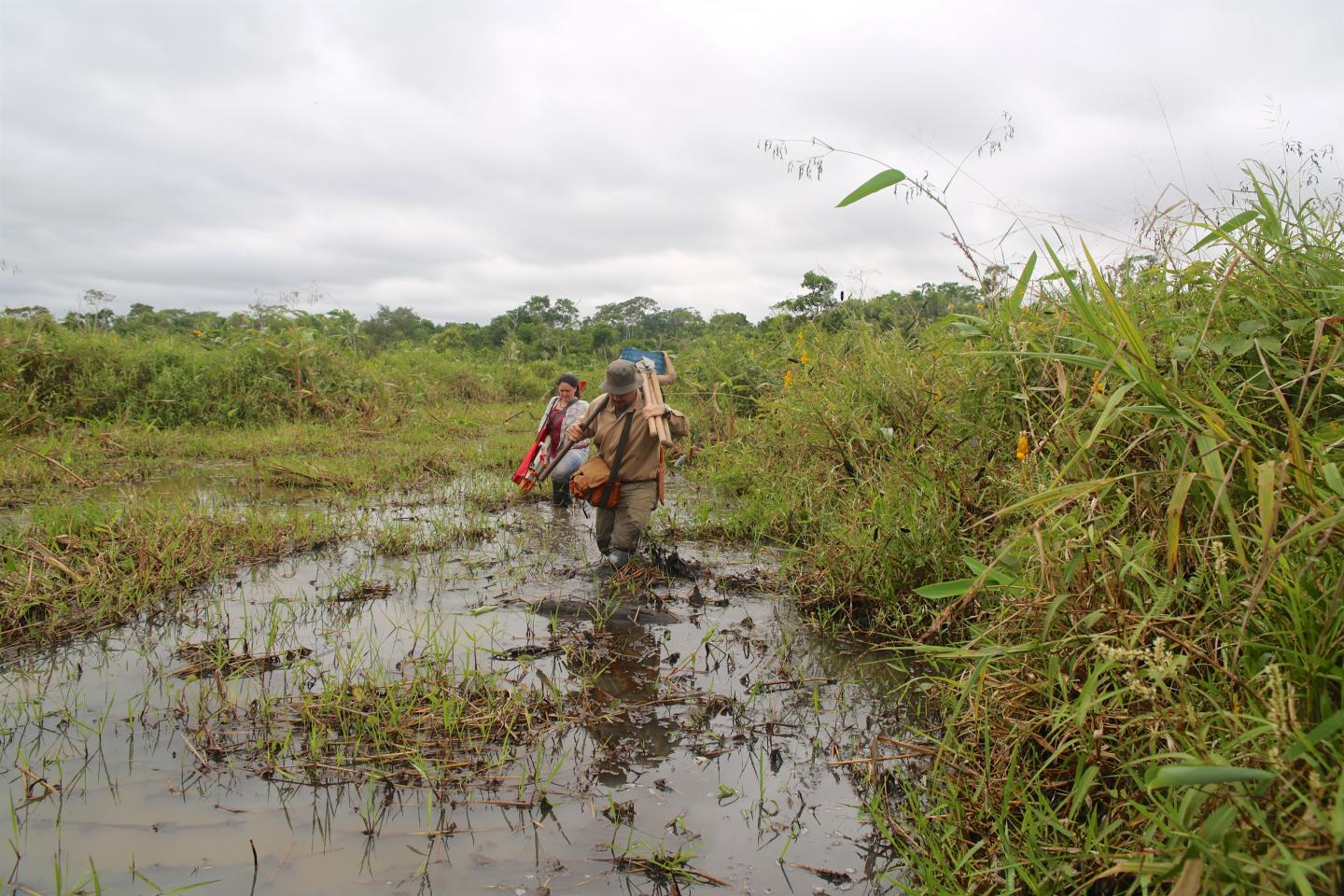
Amazonians Domesticated Wild Rice 4,000 Years Ago Amazonian farmers were manipulating wild rice to boost food production more than 4,000 years ago, long before Europeans arrived in South America, according to new research. A team of scientists from the UK and Brazil have discovered the first evidence that ancient South American farmers had domesticated wild rice to grow bigger crops with larger grains. The researchers speculate that this knowledge may have been lost with the arrival of Europeans and the decimation of the indigenous population in 1492. Different species of rice were first grown around 11,000 years ago near the Yangtze River in China, and around 2,000 years ago in West Africa. Led by the University of Exeter, the latest study has unearthed evidence of successful rice farming on the vast wetlands of Guaporé River in Rondônia state, Brazil The study highlights the importance of the huge wetlands of lowland South America in providing food for the ancient settlers of the continent. Ancient inhabitants also managed to domesticate cassava, peanut and chilli pepper crops for food. By analysing 16 samples of microscopic plant remains from ten different time periods, which were excavated by a team from the University of São Paulo in South West Amazonia, it was determined that more phytoliths – hard, microscopic pieces of silica made by plant cells, were found at higher ground level. This suggests that rice began to play a bigger role in the diet of the people who lived in the area over time, leading to increasing amounts being farmed. It was also revealed that the Amazon residents likely became more efficient farmers over time. Changes in the ratio of husk, stem and leaves at different ground levels suggest they brought more grain and fewer leaves to the site. Professor Jose Iriarte, from the University of Exeter, who led the research, said: “This is the first study to identify when wild rice first began to be grown for food in South America. We have found people were growing crops with larger and larger seeds. Even though they were also eating wild and domesticated plants including maize, palm fruits, soursop and squash, wild rice was an important food, and people began to grow it at lake or river edges.” The results of the study have been published in the journal Nature Ecology and Evolution. New Light Shed on the Mysteries of Rapa Nui The history of Rapa Nui, popularly known as Easter Island, has long been shrouded in mystery. As well as the obvious fascination with the monolithic stone heads that dominate the island, the history of the Rapa Nui people prior to the arrival of Europeans is far from clear. New palaeogenomic research carried out by a team of scientists led by University College Santa Cruz has shed some new light on Rapa Nui’s ancient history. The study has ruled out any intermixing between the inhabitants of the incredibly remote island and other South Americans prior to the arrival of Europeans in 1772. The international team of scientists, led by Lars Fehren-Schmitz, associate professor of anthropology at UC Santa Cruz, analysed bone fragments from the remains of five individuals excavated in the 1980s. Three of the individuals lived on the island prior to contact with Europeans, and two after. “We found no evidence of gene flow between the inhabitants of Easter Island and South America,” said Fehren-Schmitz. “We were really surprised we didn’t find anything. There’s a lot of evidence that seems plausible, so we were convinced we would find direct evidence of pre-European contact with South America, but it wasn’t there.” Previous research found genetic traces of early inhabitants of the Americas in present-day indigenous residents of Easter Island. It was suggested that this was likely the result of intermixing that occurred sometime between 1280 and 1425. Fehren-Schmitz is the first to use paleaogenomic analysis to test that hypothesis, and the results suggest that the contact must have happened after 1722. “The most likely scenario is that there wasn’t a single episode,” said Fehren-Schmitz. Acknowledging that his results answer one question but leave many others unanswered, he said, “The story is simply more complicated than we expected.” The findings don’t solve one of the most enduring mysteries of Rapa Nui, which is how a landmass 1,300 miles from the nearest inhabited island and 2,200 miles from central Chile on the nearest continent of South America came to be populated. Some archaeologists have suggested that sea travel between Polynesia and the Americas was plausible, leading to the intermingling of those populations and perhaps even the peopling of the Americas. Fehren-Schmitz pointed out in a statement that plausibility isn’t proof. “We want to do more work to determine more precisely when this gene flow between Native Americans and the people of Rapa Nui occurred, and where in the Americas it originated,” he said. “The population dynamics of these regions are fascinating. We need to study the ancient populations of other islands–if remains exist.” New technological advances mean such insights could eventually be gained, yielding new clues from materials long kept in museum collections. “Our methodologies have evolved so much in the last five years that we might need to re-study samples we gave up on in the past to see if we can get DNA out of them,” Fehren-Schmitz concluded. Secrets of Medieval Jewellery Manufacture Revealed Scientists have gained startling insights into the techniques used to make gold jewellery in the Medieval period. The techniques used by artisans to manufacture the gold-coated silver threads found in textiles from the Middle Ages have long perplexed historians, despite the wealth of examples in the form of artefacts available to study. Four decades of intensive research have yielded limited insights, comprehensive investigation of the materials restricted by their small size. A single metal thread is sometimes no thicker than a human hair, while its gold coating is only a hundredth of that. Scientists from the American Chemical Society set out to fill in the knowledge gap. Tamás G. Weiszburg, Katalin Gherdán and colleagues examined medieval gilded silver threads, and silver and gold strips produced during and after the Middle Ages, from a variety of European cultures. Using high-resolution scanning electron microscopy, electron back-scattered diffraction with energy-dispersive electron probe microanalysis and other analytical methods, the scientists were able to gather remarkable new insights. Their results suggest that the threads were gilded exclusively by using an ancient method that survived for a millennium. The goldsmiths simply heated and hammered the silver sheets and the gold foil together, and then cut them into strips. The results show that this process was used in the thirteenth century, and was still widely practiced well into the seventeenth century. These new insights, which are revealed in a study published in the journal Analytical Chemistry, could help scientists restore, preserve and date medieval artefacts. Featured image courtesy of University of Exeter]]>
Categories
Editorial

Neanderthals and Humans – What Are the Differences?

Homo neanderthalenisis is now long extinct, the differences between the two species can actually be hard to pinpoint. A fact further complicated by the now widely accepted belief that the two species interbred during the time they both inhabited Eurasia. History The first point of difference between the two species can be found in their respective histories. Neanderthals migrated into Eurasia long before modern humans did. Exactly when they left Africa is far from certain, but scientists generally estimate it was sometime between 300,000 and 200,000 years ago. Humanity’s path to Eurasia is also far from certain. The earliest recognisably modern human fossils have been found in Omo Kibish in Ethiopia, and date to around 200,000 years ago. Genetic and paleontological records suggest modern humans started to leave Africa between 60,000 and 70,000 years ago. Exactly why this migration started is unclear, but it is generally believed to have been due to the onset of the last Ice Age. Some 50,000 years ago the first humans started to arrive in what is now the Middle East (this was likely a different group to the original explorers out of Africa, who instead migrated East through India). It was this group that would eventually go on to colonise much of Europe and Asia. Anatomically modern humans then, arrived in Eurasia much later than their evolutionary cousins. Nevertheless, the two species lived alongside each other for several thousands of years, with the Neanderthals finally going extinct sometime between 40,000 and 30,000 years ago. Appearance Although similar in many ways, there are clear physical differences distinguishing Neanderthals and modern humans. Neanderthals were significantly shorter and stockier than modern humans, with much broader rib cages and pelvises. To give some perspective, the average height for a man in the USA is 1.76 metres. Conversely, based on the fossil records available, the average height for a Neanderthal was just 1.6 metres. A study published late last year suggested that some of these anatomical differences could be the result of the Neanderthals being forced to adopt a much more high protein diet than modern humans. Intelligence and Behaviour One of the hottest topics in scientific research right now involves determining just how intelligent Neanderthals were. For years, the prevailing view was that Neanderthals were primitive, poorly developed brutes when compared to modern humans, only capable of expressing themselves in grunts and groans. Discoveries in the last few years have really brought this assumption into question. ⦁ A study last year presented remarkable evidence that Neanderthals may have used vocal communication in a way similar to modern humans. ⦁ Archeologists working at Neanderthal sites in France believe Neanderthals deliberately collected manganese oxide to use in chemically assisted fire making 50,000 years ago. ⦁ Earlier this year, a study pointed towards Neanderthals being rock collectors, suggesting they placed symbolic importance in the objects around them. This is widely considered a signifier of cultural development. ⦁ Jewellery found at various paleolithic sites has long been a bone of contention, with some arguing it was created by humans, others that it was the work of Neanderthals and thus further proof of how advanced they were. If true, any of these discoveries would point to Neanderthals being for more advanced than their typical depiction in popular culture would suggest. The physical differences between Neanderthals and humans are quiet clear, especially in terms of anatomy. Beyond that though, it’s becoming increasingly uncertain just how distinct we are from our closest extinct evolutionary cousins.]]>
Categories
Breaking News

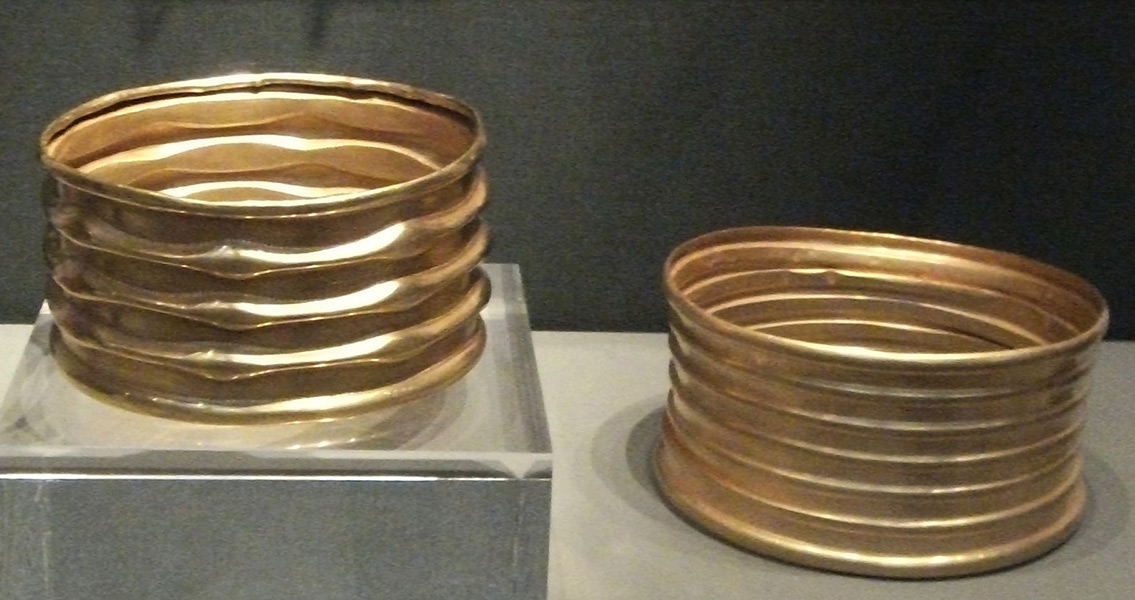
Bronze Age Gold Threads Unearthed in Denmark

Categories
Breaking News

Northern Europe Resisted Farming, Ornaments Reveal

Categories
Breaking News

Rare Ancient Egyptian Jewellery Found

Image coutesy of: Fæ]]>

Categories
News

Outer-Space Jewellery

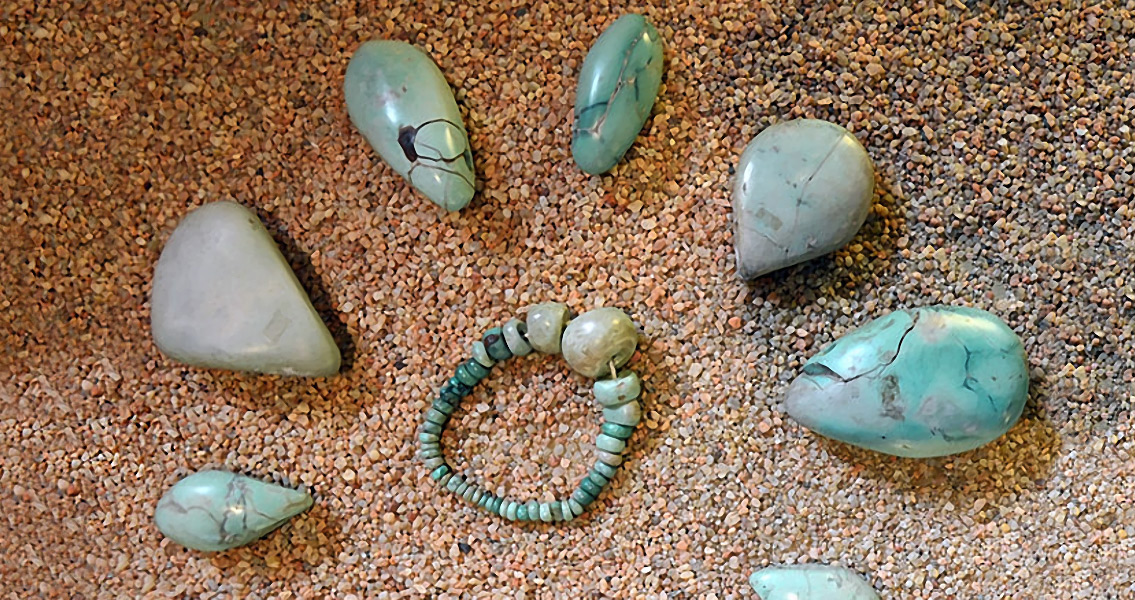
Some ancient Egyptian jewellery was actually made from material of celestial origin, research has revealed. Recent study has revealed that nine ancient Egyptian beads are actually made from iron meteorites. These beads, which are believed to be the oldest iron artefacts on the planet, were first discovered at a pre-dynasty cemetery near the village of el-Gerzeh, south of Cairo, in Lower Egypt. Their outer – space origins were suspected right from the start when they were first unearthed from a teenage boy’s tomb in 1911. That particular tomb dates back to approximately 3200 B.C.E., more than 5,000 years ago, according to researchers. Initial tests on the beads showed high concentrations of nickel. This is usually a sign of iron meteorite material, however, in the 1980s some academics argued that the high nickel content could have been the result of smelting. To lay this debate to rest the iron beads were scanned with beams of neutrons and gamma rays. High concentrations of cobalt, phosphorous and germanium were found and the result also revealed that these elements were present at levels that only occur in iron meteorites. “The really exciting outcome of this research is that we were for the first time able to demonstrate conclusively that there are typical trace elements such as cobalt and germanium present in these beads, at levels that only occur in meteoritic iron,” noted Thilo Rehren, a professor from UCL Qatar, a Western Asian outpost of the University College London’s Institute of Archaeology. Thilo Rehren is the study lead author. He added, “We had assumed this was the case for 100 years, but it’s nice to be able to put an exclamation mark on the label, rather than a question mark. “This meteoritic iron, it’s very hard material that you find in lumps, and yet here we see it in thin beads. The real question is, how were they made?” When first found inside the tomb, these tube-shaped beads were strung together into a necklace alongside other exotic materials, including gold and gemstones. From the X-ray analysis, researchers also found that the tube shape of the beads was obtained by smithing and rolling. “We are also excited to be able to see the internal structure of the beads, revealing how they were rolled and hammered into form. This is very different technology from the usual stone bead drilling, and shows quite an advanced understanding of how the metal smiths worked this rather difficult material,” Rehren commented. He also claimed that the process is a much more elaborate operation and one that they assumed was only invented and developed in the Iron Age, which started maybe 3,000 years ago — not 5,000 years ago. This operation is said to be different to the one that involves gold and copper, which are considered to be more pliable metals. The works involving solid iron need the advanced technique and craft of blacksmithing, which involves repeatedly heating metals to red-hot temperatures and meticulously hammering them into shape. In a more detailed explanation, researchers suggest the iron meteorites were probably heated and hammered into thin sheets. They were then woven around wooden sticks to create 0.8 inch (2cm) long, tube-shaped beads. “This shows that these people, at this early age, were capable of blacksmithing,” Rehren said. “It shows a pretty advanced skill with this difficult material. It might not have been on large scales, but by the time of the Iron Age, they had about 2,000 years of experience working with meteoritic iron.” In an interview with LiveScience, Rehren told them, “Even 100 years ago, [the beads] attracted attention as being something strange.” These findings smashed previous theories that ancient Egyptians crafted their beads from iron ore. In another part of the world, other researchers have also identified different artefacts that have outer-space origins. About two years ago, German scientists discovered a Buddha statue that was carved from a meteorite, between the eighth and 10th centuries.]]>

Categories
Breaking News

New Prehistoic Artefacts Found in Scotland

Recent findings uncovered new evidence for prehistoric Scotland. Recently, an unlikely turn of event has lead to a discovery of an ancient Scottish settlement believed to be an Iron Age village. Along with it, a host of ancient artefacts including tools and jewellery were also found. The unexpected discovery was excavated at the construction site of the £17 million A75 Dunragit bypass in Wigtownshire, in south-west Scotland. It has been reported that the discoveries include a rare and complete 130-piece jet bead necklace dating about 2000BC, the first of its kind ever discovered in south-west Scotland. Two of the jet beads necklaces found are considered to be the rarest of the discoveries, according to Dr Alison Sheridan of National Museums Scotland. She was also reported to have said that the necklaces were made in about 2000BC, between the Neolithic period and the Bronze Age, in Whitby, Yorkshire, located about 160 miles from where they were found. A Romano-British brooch, a Bronze Age cemetery complex, cremation urns and pottery fragments were among the other finds. Other than that, some flint tools, including a flint arrowhead from the early Neolithic period and more than 13,500 Mesolithic flints were also found. Flint is a hard, tough chemical or biochemical sedimentary rock that breaks with a conchoidal fracture. It is a form of microcrystalline quartz that is typically called “chert” by geologists. It is a preferred material for making tools and it has been used extensively by human to make stone tools during the prehistoric era. Prehistoric period is divided into three-age system, namely the Stone Age, Bronze Age and the Iron Age. Stone Age then further divided into three periods which are the Paleolithic, Mesolithic and Neolithic. Paleolithic means “Old Stone Age”, and this period begins when human were starting to use stone tools. Meanwhile, Mesolithic means “Middle Stone Age”, and this period dates from the end of the last Ice Age. It is in this period that agriculture was introduced. The Neolithic or the “New Stone Age” period in Scotland spanned approximately 4500BC to 2000BC and is the period in which settled farming became common. The Bronze Age dates from about 2500BC when metal-using and a “package” of other Continental novelties appeared in Scotland – and elsewhere in Britain – to around the 800BC, when iron objects and iron-using probably appeared. The Iron Age then lasted to about 500 AD. Rod McCullagh, an archaeologist of Historic Scotland said, “An unforeseen wealth of archaeological information has been recovered. The team of archaeologists from Amey and Guard Archaeology Ltd have uncovered the remains of dwellings and burials spanning over 7,000 years of prehistory,” He added, “In addition, numerous smaller sites have been discovered which seem to relate to the use and exploitation of the land both through hunting and farming. These are exciting discoveries which offer a much richer understanding of the settlement of south-west Scotland over the past 9,000 years.” Transport Minister of Scotland, Keith Brown have the following to say regarding the findings, “With the A75 Dunragit bypass already improving journey times and providing opportunities for business, leisure and tourism industries on this crucial route between Scotland, the rest of the UK and Europe – it is also helping shine a light on Scotland’s ancient past. “The finds at Dunragit, which would have remained uncovered had the new bypass not been built, are truly stunning, and underline the importance of the value we place on meeting our environmental obligations as we plan and construct essential new infrastructure,” he added. In the meantime the findings are being conserved for further analysis. Research is still ongoing and report by Historic Scotland will be produced to describe and explain what has been discovered along the road. Based on the report, a decision will be made on where the various collections will be stored or put on display. Whatever the result of the findings may yield to us, it would surely becomes another piece of evidence that would serves as an eye opener and might even unravel a new perspective in our knowledge and understanding of the prehistoric age. ]]>