Categories
News

Amateur Explorers Find Fort from Second Seminole War

Sun Sentinel that he wants the site of Harrell to be linked to the Tamiami Trail, to facilitate easier access for visitors. The site of the fort could easily have remained uncovered. Its discovery provides a reminder of the lives of those who had to serve in such an inhospitable location. The continued discovery of such sites is also vital for furthering America’s conversation with its past, and acknowledging the often uncomfortable history of the treatment of Native Americans in the nation’s creation.]]>

Categories
News

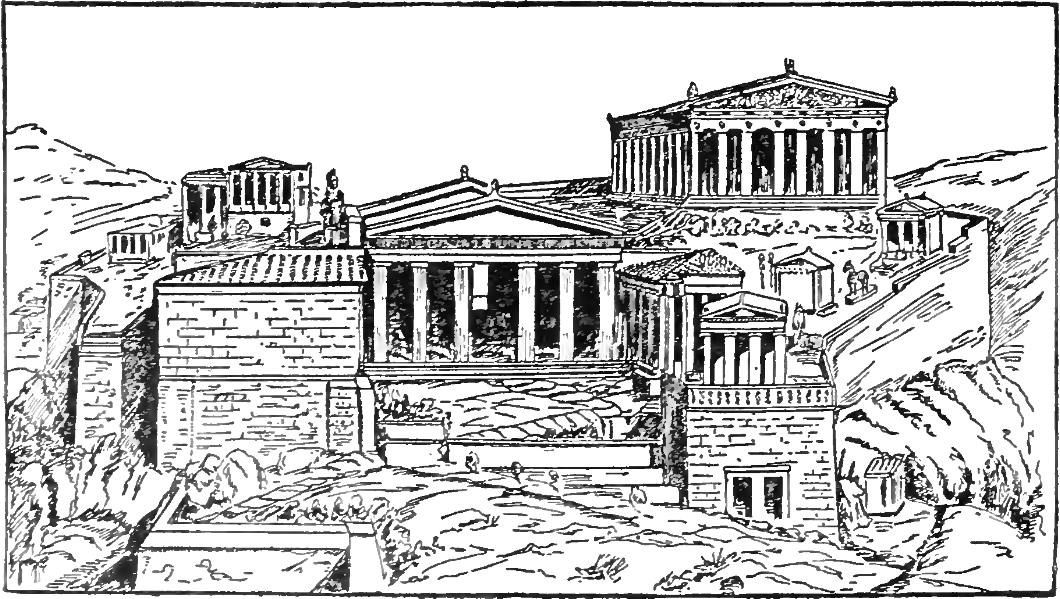
Archaeologists Investigate an Ancient Mycenaean Citadel

th century BC. Under the project, ancient engineers drained marshlands using drainage control systems and diverted six streams and rivers from the basin to two mammoth canals in the Kopais basin. This transformed the Kopais basin into one of the most fertile plains in Greece. The canals were also reinforced with Cyclopean revetments that helped in supporting roads as well. Archaeologists believe that approximately 2,000,000 cubic meters of earth was required to be moved in order to build the embankments and dykes and as much as 250,000 cubic meters of stone was used to carve the face of the embankments. The Citadel of Glas was believed to be the main administrative center for this project. It was protected by a huge stone wall that was 5.5 – 5.8 meters thick. This wall ran for about 3kms, featured 4 gates and three central enclosures. According to Maggidis, there were certain peculiarities in the Citadel of Glas. He said that one of the biggest oddities was that only 1/3rd of the area seemed to be occupied by buildings and structures, although it did not make sense for the space outside the central enclosure to be completely void of structures. Maggidis believes that the Citadel of Glas was much more than a simple fort to administer the drainage of the Kopais lake. He states that this was what prompted him to explore the Citadel further. As a result of his uncertainties, Maggidis and his colleagues performed a geophysical survey of the citadel with the help of a GPR, satellite imagery, a Fluxgate gradiometer and electrical resistivity. The group mainly focused on areas that were left unexplored. And the results were amazing to say the least. Maggidis states that the tests proved that the Citadel wasn’t void of structures, but was full of buildings that had many uses, including extensive residential quarters, well built complexes, terraces, a cistern and staircases. The picture that emerged was that of a fortified town. Maggidis believes that this discovery finally took them one step further to uncovering the mysteries that the Citadel had to offer. Even though the findings are still at their nascent level, a detailed report that showcases the discoveries made in the Citadel of Glas shall be published in the Popular Archaeology Magazine in September.]]>

Categories
Book Reviews

Henry Mayhew – London Labour and the London Poor

Related Books London Labour and the London Poor Book London Labour and the London Poor A Cyclopædia of the Condition and Earnings of Those That Will Work, Those That Cannot Work, and Those That Will Not Work, Vol. 1 by Henry Mayhew PIBN: 1000254030 [gap height=”20″]]]>

Categories
Breaking News

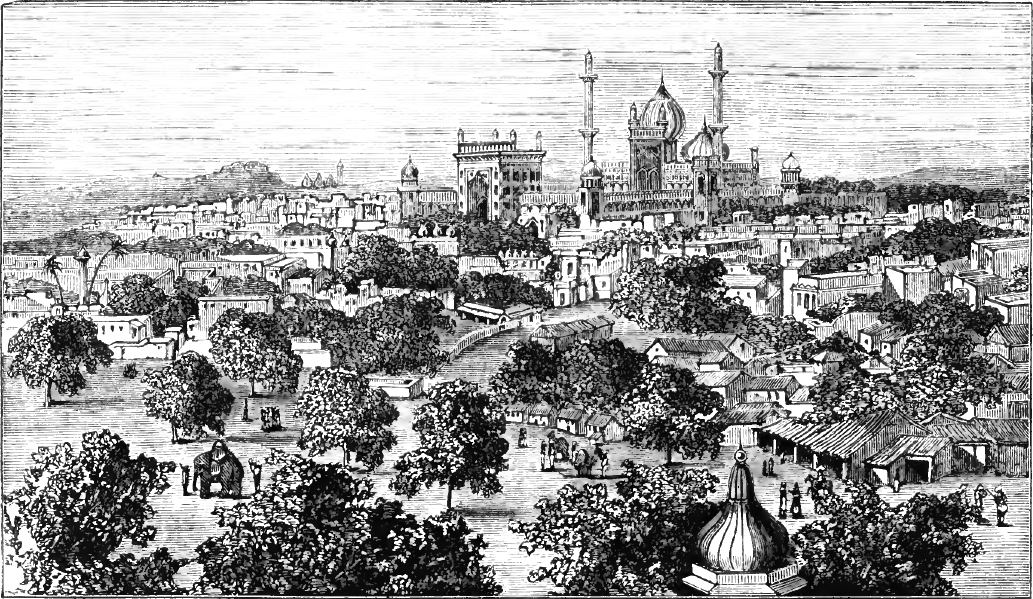
Excavations to Throw Light on Ancient Inhabitants of Delhi

Categories
Breaking News

Billionaire to Create History Theme Park in Russia

Categories
Editorial

Why We Need to Learn from the Past

society is causing tension and problems in the US and Europe. The experience of Ancient Greece can surely provide some insight into the modern situation. On a more practical level, the U.S. is suffering from water shortages in several major areas. This is a situation with historical precedent. The Pueblo ruins in the South-west reveal a sophisticated society that abandoned its settlements between the twelfth and thirteenth century A.D. Archaeological studies suggest that the reason the society disbanded was a dramatic shift to an arid climate in this period. In contrast, there is evidence of states in the Eastern Mediterranean and Middle East that succeeded through periods of drought between 1200-1000 BC and 2200-2000 BC. Archaeology and historical studies allow us to analyse why some societies succeed and others failed. They teach us valuable lessons that could have a positive impact on policy in the future. Unfortunately, in both the US and UK, funding for archaeology is in decline, and is often insignificant in comparison to Europe and China. It is vital for us to learn about the past, not just to preserve our heritage, but to teach us about the present and future as well.]]>

Categories
Breaking News

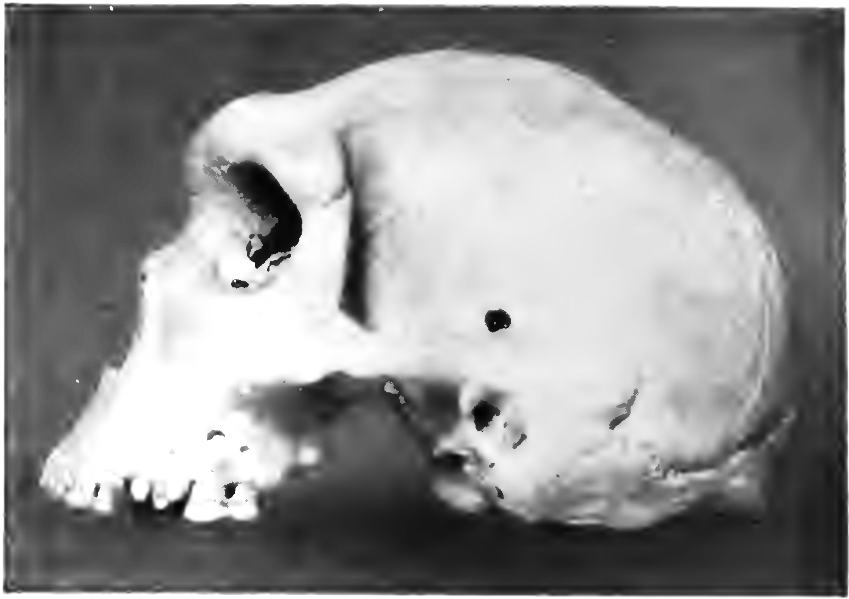
Researchers Discover Evidence of Plant-Based Diet in Prehistoric Man

Categories
Breaking News

Archaeologists Discover a 1400 Year Old Campsite in Edmonton

Categories
News

Was Vlad the Impaler Buried in Naples?

Dracula. Vlad III is thought to have been a fifteenth century Prince of Wallachia in Eastern Europe. His father was nicknamed ‘Dracule’ meaning dragon, in reference to the badge of his house and ‘Dracula’ means young dragon. Unlike the character in the novel, Vlad III was in fact a Prince rather than a Count. He was a member of the Order of the Dragon, a force set up to protect Christianity from Ottoman Turks. In 1476 Vlad disappeared in battle. The new research argues that rather than being killed, he was in fact imprisoned by Ottoman forces. The researchers at the University of Tallinn claim that Vlad was ransomed to his daughter in Naples, who had been adopted by an Italian family and eventually married to a nobleman. Once the ransom was paid he was sent to Naples, and was buried in a graveyard there, after he had quietly passed away. The main evidence is a gravestone discovered in the Piazza Santa Maria la Nova graveyard by Neapolitan student Erika Strella. This is the graveyard where some historians claim his daughter and son in law were buried. The tomb shows images of a dragon, which was the image of the Prince of Wallachia’s house. It also depicts the Sphinx of Thebes, which was also known as ‘Tepes’ – a pun on Vlad’s nickname. Medieval history scholar Raffaello Glinni told the Hurryiyet Daily News that the style of the images on the headstone were not that of an Italian nobleman from this period, but from the House of Transylvanian ‘Carpathians’. It is an unusual and fascinating discovery, one that has already started to attract tourists to the Neapolitan church, but much more research needs to be done before it can be confirmed. A recent article by Rossella Lorenzi for Discovery News has questioned some of the evidence supplied. The most damaging criticism relates to Vlad’s supposed daughter in Italy. His only recorded offspring was three sons. There is evidence that his ‘secret daughter’ Maria Balsa existed, but nothing confirming her relationship to Vlad. If Balsa was not in fact his daughter, then one of the key explanations for his burial in Naples begins to collapse. The second criticism concerns the coat of arms on the tombstone, and the symbol of the dragon. Some historical records associate this image to the family of Matteo Ferrillo, Balsa’s father in law. As Jason Colavito notes in his blog: ‘The tomb is that of a known Italian noble, with recognized arms.’ This is another piece of evidence that does raise questions over how well the argument holds together. The discovery in Naples is a fascinating one, which is likely to have historians locked in debate for some time.]]>
Categories
Breaking News

Age Horse Skull Unearthed in Yukon