Daily Mail, in order to accurately detect and time the very first appearance of this star, it has to be viewed at twilight. At the time the graves were constructed, between 4,300 and 3,700 BCE, Aldebaran would have risen between April 18th and 27th, in the exact spot in the sky that’s visible from inside every entrance passage at Carregal do Sal. The first sighting of Aldebaran may have been used by early humans to mark the seasons. Upon the star’s arrival, Neolithic communities would have likely moved their cattle to higher pastures located nearby in Serra da Estrela. Additionally, given that the tombs were widely considered sacred places, this ability to detect stars too faint for anyone outside of the tomb to see may have been considered a sort of secret knowledge, obtainable only in the company of their deceased ancestors. How does it work? There are several factors at play, according to what Dr. Silva told the Daily Mail. The long entrance behaves like a telescope without a lens, simply a long tube, the characteristics of which affect how and what you see. For instance, your attention is directed to a particular area while the distraction of other stars is removed, and the total darkness of the structure would be helpful for adjusting your eyes to the darkness of the sky – which in turn makes it easier to detect faint details like distant stars. Previous studies have shown that the majority of passage tombs located in Portugal are positioned to align with two or three different stars, Aldebaran being the primary attraction. Although there are over a thousand known passage graves throughout Europe, it’s estimated that only around 10% of them are oriented towards a particular star, including the well-known passage graves at Bryn-celli-Ddu on Anglesey, and Newgrange in Ireland; which appear to have been orientated towards either the sunset or sunrise on the winter or summer solstice. The research was presented at the 2016 Royal Astronomical Society’s national meeting during a special session about how historical societies and cultures studied the sky. Image courtesy of ESO/Luis Calçada/Herbert Zodet ]]>
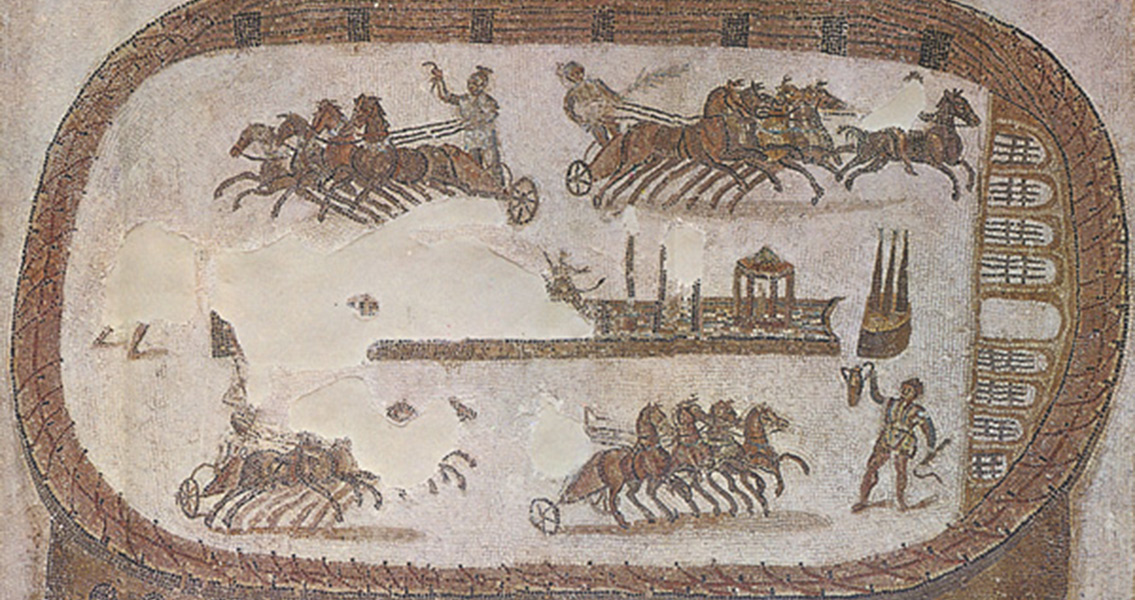
Haaretz, water resistant mortar was discovered within the median strip of the circus known as the spina. This hydraulic mortar, created by mixing lime with pulverized and crushed ceramics, was often used in Roman hydraulic engineering, Tübingen University’s Frerich Schön told Haaretz. The ends of the spina at any circus were often adorned with ornate statues and columns. Archaeologists realized that the spina at the Circus of Carthage had been festooned with water basins, and sprinklers known as sparsores would drop down and dip a clay amphora into each basin in order to sprinkle water on the chariots and their horses as they rounded the corner of the spina, said excavation co-director Dr. Ralf Bockmann. Water basins appearing at the ends of the spina were apparently a common occurrence, as there have been basins found at the Circus of Maxentius, located on the Via Appia outside Rome. Additionally, Carthaginian mosaics depicting the basins, located on the spina of the Circus, have also been found. However, the sprinkling of the chariots as they came around the bend would have been a harrowing job. A career as one of the sparsores meant tossing water from amphorae by hand as the chariots screamed around the arena at high speed, usually from the spina itself. It likely would have required careful organization and timing, Bockmann remarked, adding that it undoubtedly would have been a highly dangerous vocation. The Circus of Carthage was massive in its heyday, as it was at least 500 meters in length according to geophysical surveys undertaken in the 1970s. This is only 80 meters shorter than the Circus Maximus located in the heart of Rome. The Circus Maximus could hold approximately 150,000 spectators at a time, and while Carthage’s chariot ring was slightly smaller, the number of people it could accommodate was also likely to have been quite high. Bockmann, along with co-leader Dr. Hamden Ben Romdhane from Tunisia’s Institut National du Patrimoine, will be studying the Circus for several more years. ]]>
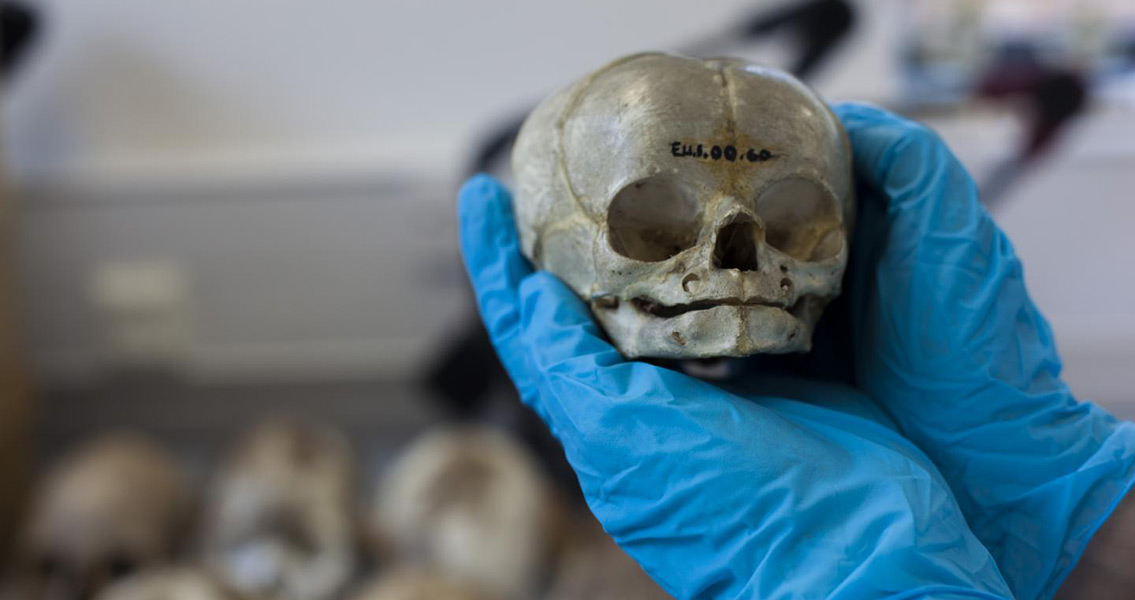
Journal of Anatomy, the study is a pioneering look at how the changing anatomy of childhood in the 1800s was studied and investigated by British scientists. The research was carried out by Jenna Dittmar and Piers Mitchell from Cambridge’s Department of Archaeology and Anthropology. The skeletons under analysis came from the dissecting room of the university’s Department of Anatomy. The dates of the specimens ranged from 1768 to 1913. A number of differences quickly became apparent to the researchers in terms of the type of tests that had been carried out on the varying age groups. The bodies of adults were generally subjected to a craniotomy, a procedure in which the top of the skull is opened with a saw. The skulls of foetuses and children on the other hand, were generally kept intact. Of the 54 infant and foetal specimens in the collection, a craniotomy had only been performed on one. Another surprising discovery of the research is that the bodies of infants and foetuses were often kept by anatomists for use as teaching aids or in further research. Adult bodies however, tended to be discarded swiftly. “Foetal and infant bodies were clearly valued by anatomists, illustrated by the measures taken to preserve the remains intact and undamaged,” said Dittmar, in a press release from the University of Cambridge. “The skulls appear to have been intentionally spared to preserve them for teaching or display. This may explain why so few children with signs of dissection on their bones have been recovered from the burial grounds of hospitals or parish churches, compared with adults.” According to the researchers, a number of historical factors could explain this surprising trend. Literature from the late eighteenth century suggests that smaller bodies were viewed as valuable teaching tools, making it easier for lecturers to highlight the intricacies of the circulatory and nervous systems for example, by injecting the entire cadaver with coloured wax. “The valuable and unique knowledge that could only be obtained from the examination of these developing bodies made them essential to the study of anatomy,” Dittmar explained. Legal factors could also explain the common use of child bodies. Although the Murder Act of 1752 allowed the bodies of executed murderers to be given to medical research, it had little impact on the growing demand for bodies, leading to a black market forming. Resurrectionists or body snatchers, who often obtained bodies by grave robbing, tended to sell cadavers by the inch, making infant bodies less profitable and thus more readily available. The Anatomy Act of 1832 let workhouses and hospitals donate unclaimed bodies to research. Waves of cholera and tuberculosis devastated the urban population during the industrial revolution, particularly infants, while workhouses were often lethal places for the young; factors that could have led to a greater number of infant bodies being donated to dissection. Potentially most significant, according to the authors of the study, was the New Poor Law Amendment Act of 1834, which ended parish relief for unmarried women and the obligations on the fathers of illegitimate children. Designed to cut the illegitimate birth rate, the law only succeeded in heightening the plight of unwed mothers, triggering a shocking outbreak of infanticide by the 1860s. “This left very few options for these women: the workhouse, prostitution, abortion and infanticide – all of which were life-threatening,” said Dr. Mitchell. As Britain progressed through the industrial revolution and its population increasingly moved to densely populated cities, the strains on the traditional family unit increased and the spread of diseases worsened. Meanwhile, for medical science, new ailments inherent in industrialisation and massive population growth led to a dramatic increase in the need for medical research and training. “Our research shows that the major sources of the bodies of very young children were from stillborn babies of destitute mothers, babies who died from infectious diseases, those dying in charitable hospitals, and unmarried mothers who secretly murdered their new-born to avoid the social stigma of single parenthood,” Mitchell said. “Poor and desperate women at the time of the industrial revolution could not only save the cost of a funeral by passing their child’s body to an anatomist, but also be paid as well. This money would help feed poor families, so the misfortune of one life lost could help their siblings to survive tough times.” Image courtesy of Nick Saffell]]>
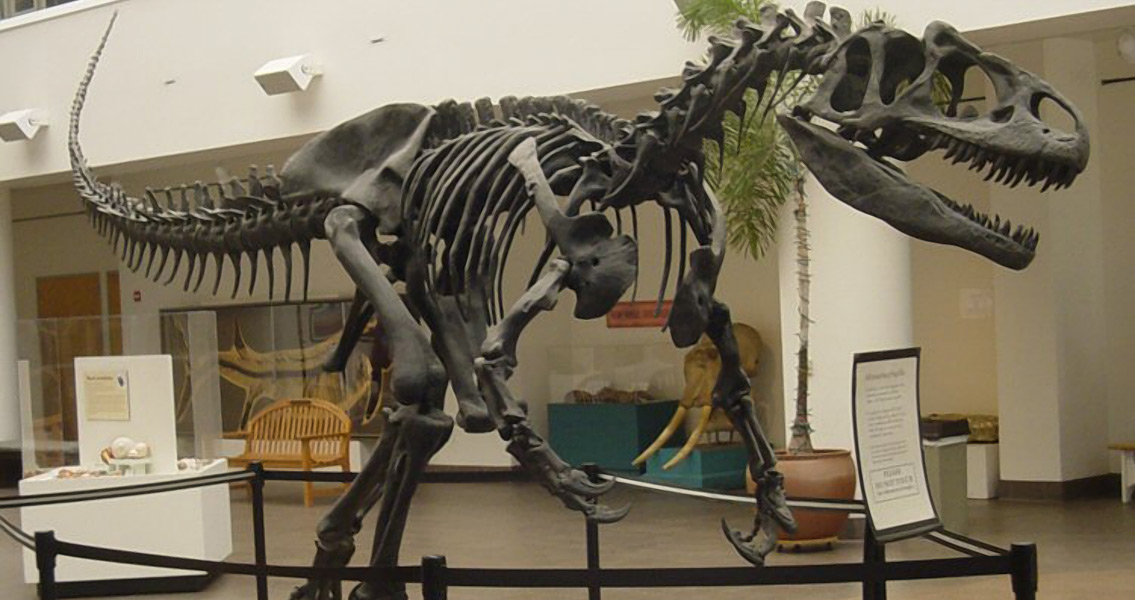
Phys Org as saying, “Our findings refute those of other studies which overlooked the fossils of placental mammals present around the last mass extinction. Using rigorous methods, we’ve successfully tracked the evolution of early placental mammals and reconstructed how it changed over time. While the rate differed between species, we see a clear and massive spike in the rates of evolution straight after the dinosaurs become extinct, suggesting our ancestors greatly benefitted from the demise of the dinosaurs. The huge impact of the dinosaur extinction on the evolution of our ancestors really shows how important this event was in shaping the modern world.” The study was funded by the Natural Environment Research Council and published in Proceedings of the Royal Society. ]]>