Categories
Breaking News

History News of the Week – Minoan 'Masterpiece' Unearthed

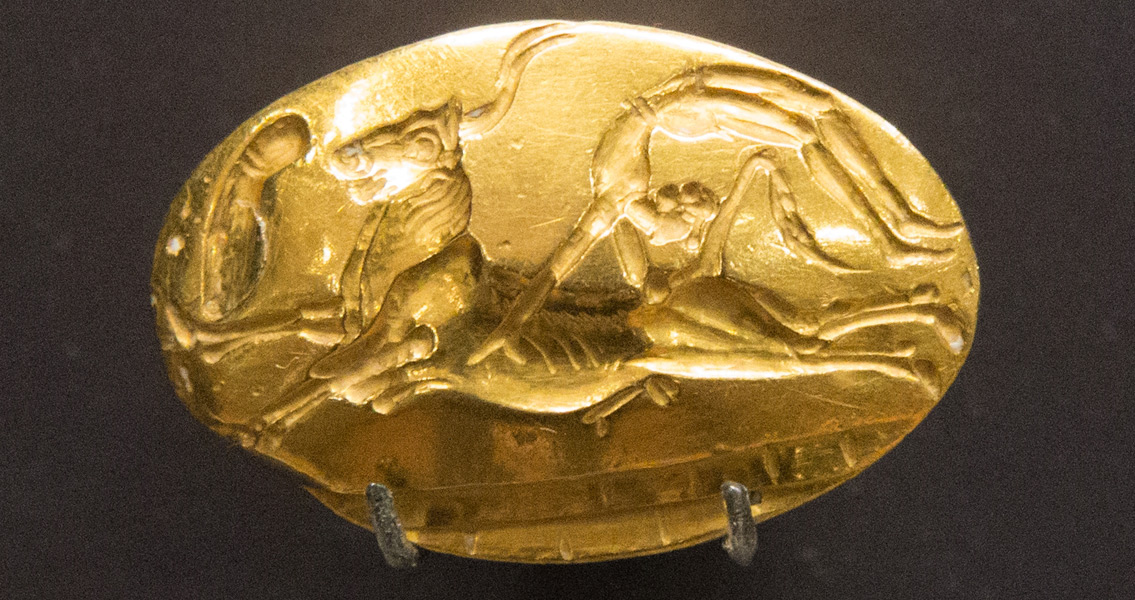
Discovery of Minoan Sealstone Could ‘Rewrite’ History of Ancient Greek Art Researchers working at the tomb of 3,500 year old Bronze Age warrior in the southwest of Greece have unearthed an ‘intricately carved’ sealstone which University of Cincinnati (UC) archaeologists are heralding as one of the finest works of prehistoric Greek art ever discovered. Depicting an intense hand-to-hand battle, the artefact has been dubbed the ‘Pylos Combat Agate’. “Looking at the image for the first time was a very moving experience, and it still is,” said Shari Stocker, a senior research associate in UC’s Department of Classics “It’s brought some people to tears.” “What is fascinating is that the representation of the human body is at a level of detail and musculature that one doesn’t find again until the classical period of Greek art 1,000 years later,” explained Jack Davis, the university’s Carl W. Blegen professor of Greek archaeology and department head, in a statement from UC. Davis and Stocker have been leading a dig at the tomb of the Bronze Age warrior, which was first discovered in 2015. The tomb’s occupant has been dubbed the ‘Griffin Warrior’, and his final resting place has already yielded a wealth of fascinating artefacts, including four gold signet rings. The size of the hand carved stone is perhaps the most remarkable thing about it, measuring just 3.6cm in length. Many of its details can only be viewed with a powerful camera lens and photomicroscopy. “Some of the details on this are only a half-millimetre big,” said Davis. “They’re incomprehensibly small.” The dramatic image of a warrior plunging a sword into a shielded enemy’s neck is reminiscent of the kinds of scenes described in Homer’s Iliad. Although the researchers can’t say if the image reflects a Homeric epic, they’re confident it would be from a legend familiar to Minoans and Mycenaeans. “It would have been a valuable and prized possession, which certainly is representative of the Griffin Warrior’s role in Mycenaean society,” Stocker explained. “I think he would have certainly identified himself with the hero depicted on the seal.” The sheer skill that would have been needed to create the sealstone is causing a re-evaluation of the history and development of Ancient Greek art. “It seems that the Minoans were producing art of the sort that no one ever imagined they were capable of producing,” explained Davis. “It shows that their ability and interest in representational art, particularly movement and human anatomy, is beyond what it was imagined to be. Combined with the stylised features, that itself is just extraordinary.” “This seal should be included in all forthcoming art history texts, and will change the way that prehistoric art is viewed,” said Stocker. Date of Biblical Eclipse Pinpointed Researchers have determined the date of an ancient eclipse which is referred to in the Bible. They believe it could be the oldest date of a solar eclipse yet recorded. The researchers used a combination of the Bible and Ancient Egyptian texts to pinpoint the date of the eclipse to 30th October 1207 BCE. From this information they’ve been able to refine the dates of Egypt’s ancient pharaohs, particularly the reign of Ramesses the Great. Biblical scholars have long been perplexed by the book of Joshua, which describes Joshua leading the people of Israel in Canaan, a region which covers modern day Israel and Palestine. According to the Biblical text, Joshua prayed “Sun, stand still at Gibeon, and Moon, in the Valley of Aijalon. And the Sun stood still, and the Moon stopped, until the nation took vengeance on their enemies.” “If these words are describing a real observation, then a major astronomical event was taking place – the question for us to figure out is what the text actually means,” said paper co-author Professor Sir Colin Humphreys from the University of Cambridge’s Department of Materials Science & Metallurgy. “Modern English translations, which follow the King James translation of 1611, usually interpret this text to mean that the sun and moon stopped moving,” said Humphreys, who is also a Fellow of Selwyn College. “But going back to the original Hebrew text, we determined that an alternative meaning could be that the sun and moon just stopped doing what they normally do: they stopped shining. In this context, the Hebrew words could be referring to a solar eclipse, when the moon passes between the earth and the sun, and the sun appears to stop shining. This interpretation is supported by the fact that the Hebrew word translated ‘stand still’ has the same root as a Babylonian word used in ancient astronomical texts to describe eclipses.” Evidence that the Israelites were in Canaan between 1500 and 1050 BCE can be found in the Merneptah Stele, an Egyptian text dating from the reign of the Pharaoh Merneptah, son of Ramesses the Great. The large granite block, held in the Egyptian Museum in Cairo, says that it was carved in the fifth year of Merneptah’s reign and mentions a campaign in Canaan in which he defeated the people of Israel. Using an innovative eclipse code, one which considers variations in the planet’s rotation, the team determined that the only annular eclipse visible from Canaan between 1500 and 1050 BCE was on 30 October 1207 BCE, in the afternoon. If the team’s calculations, which have been published in the Journal of Astronomy and Geophysics, are correct, then it is possible to date the reign of both Ramesses and his son to within a year. “Solar eclipses are often used as a fixed point to date events in the ancient world, Humphreys said. If Humphreys et al’s results of accepted, then the reign of Merneptah began in 1210 or 1209 BCE. As it is known from Egyptian texts how long he and his father reigned for, it would mean that Ramesses the Great reigned from 1276-1210 BCE, with a precision of plus or minus one year, the most accurate dates available. Hitler Only Joined the Nazis After Being Rejected by Another Far-Right Group Adolf Hitler only joined the Nazi Party after being rejected by another far right group, a historian at Aberdeen University is claiming. According to the Independent, historian Dr Thomas Weber unearthed an unpublished document which reveals that the German Socialist party told Hitler in 1919 they did not want him in their party nor to write for their newspaper. Weber argues that this rejection by the German Socialist Party should be seen as a crucial historic event, a turning point which ultimately led to Hitler joining the Nazi party and becoming its leader. Weber suggests that Hitler would have found it much more difficult to rise to the leadership of the much larger German Socialist Party. “I can only speculate why they did not let him join but one would imagine it had something to do with the fact Hitler was opinionated and they did not want to have someone there who was telling them what to do,” he told the Independent. He added: “If he had been accepted into the German Socialist party he would have almost certainly remained on the sidelines. Hitler managed to push over the established leadership of Nazi party but that would have been very unlikely to have happened if he had joined the German Socialist party.” The document Weber has discovered is from the testimony of Hans Georg Grassinger, the founding chairman of the German Socialist party, reports the Guardian. It describes how, in 1919, Hitler approached Grassinger to join the Party. Hitler also asked Grassinger to borrow money. Hitler, who was 30 at the time, was informed that the party did not him in their ranks. Featured image: The tiny sealstone depicting warriors in battle measures just 1.4 inches across but contains incredible detail. Credit: University of Cincinnati ]]>

Categories
Breaking News

History News of the Week: Earthquakes Shaped Ancient Greek Culture

Did Earthquakes Shape Ancient Greek Culture? New research claims that earthquake faults could have played a central role in shaping the culture of Ancient Greece. Professor of Geoscience Communication Iain Stewart MBE, Director of Plymouth University’s Sustainable Earth Institute, has presented a host of documentaries about how the power of earthquakes has shaped landscapes and communities. Now, he claims the Ancient Greeks could have deliberately built sacred or treasured sites on land affected by seismic activity. It has previously been argued that Delphi, once home to a legendary oracle, gained its important role in Classical Greek society as a result of a scared spring and intoxicating gases that emanated from a fault line formed by an earthquake. Stewart argues that Delphi might not be the only such case, suggesting that the cities of Mycenae, Ephesus, Cnidus and Hierapolis could have all been constructed around fault lines. “Earthquake faulting is endemic to the Aegean world, and for more than 30 years, I have been fascinated by the role earthquakes played in shaping its landscape. But I have always thought it more than a coincidence that many important sites are located directly on top of fault lines created by seismic activity,” Professor Stewart said. “The Ancient Greeks placed great value on hot springs unlocked by earthquakes, but perhaps the building of temples and cities close to these sites was more systematic than has previously been thought.” The Aegean region has an abundance of fault lines and ruined ancient settlements, but Stewart claims that many seismic fault traces in the region run through the heart of some ancient settlements’ most sacred structures. In Delphi, for instance, a sanctuary was destroyed by an earthquake in 373BCE. The city’s temple was subsequently rebuilt directly on the same fault line. It’s previously been suggested that legendary tales of individuals descending into the underworld to gain oracular status, could be referring to caves or grottoes formed by seismic activity. Professor Stewart concludes: “I am not saying that every sacred site in ancient Greece was built on a fault line. But while our association with earthquakes nowadays is that they are all negative, we have always known that in the long run they give more than they take away. The ancient Greeks were incredibly intelligent people and I believe they would have recognised this significance and wanted their citizens to benefit from the properties they created.” Frog and Salamander Ancestors had a Full Mouth of Teeth Modern frogs and salamanders are close to toothless, but a new study from the University of Toronto highlights that this was far from the case with some of their ancestors. According to the study, published online in the journal PeerJ, the ancient amphibian ancestors had a full array of teeth, large fangs and thousands of tiny hook-like structures called denticles on the roofs of their mouths that would snare prey. The authors of the paper, Professor Robert Reisz and his colleagues Bryan Gee and Yara Haridy, two graduate students, believe that the tooth bearing plates “were ideally suited for holding on to prey, such as insects or smaller tetrapods, and may have facilitated a method of swallowing prey items via retraction of the eyeballs into the mouth, as some amphibians do today.” In many vertebrates, ranging from fish to early synapsids (ancestors of mammals), denticles are commonly found in dense concentrations on the bones of the hard palate (roof of the mouth). However, in one group of tetrapods, temnospondyls (which are thought to be the ancestors of modern amphibians), these denticles were also found on small, bony plates that filled the large soft part of the palate. Suspended in soft tissue, these toothy palettes are often lost during the process of fossilisation. “Denticles have all of the features of the large teeth that are found on the margin of the mouth,” says Reisz. “In examining tetrapod specimens dating back ~289 million years, we discovered that the denticles display essentially all of the main features that are considered to define teeth, including enamel and dentine, pulp cavity and peridontia.” The team’s study saw them analyse specimens unearthed from the fossil rich Dolese Brothers Limestone quarry near Richards Spur, Oklahoma. Reisz and colleagues claim that the next area of study will be determining why modern amphibians have reduced or no teeth, but their ancient ancestors had mouths full of them. Nazi Relics Discovered in Austrian Parliament A range of Nazi artefacts have been discovered in the Austrian parliament building in Vienna during renovation works, the Jerusalem Post reports. Two busts of Hitler, four Nazi era paintings and a relief were discovered in a box hidden in the building’s basement, reports claim. Following the Anschluss, when Nazi Germany annexed Austria in 1938, the parliament building was turned into a “Gauhaus”, a local Nazi party headquarters. It continued to serve as the Nazi base in Vienna until the end of the Second World War. According to the Jerusalem Post, the Nazi artefacts have now been handed to University of Vienna historians Bertrand Perz and Verena Pawlowsky, who are exploring the building’s Nazi history. They will make recommendations on how best to preserve the relics for the future, the Jerusalem Post writes, citing Austrian newspaper Der Standard. Image courtesy of Free On Line Photos [Copyrighted free use], via Wikimedia Commons]]>

Categories
Breaking News

History News of the Week – Where the Minoans and Mycenaeans came from

Minoan and Mycenaean Origins Revealed The ancient Minoans and Mycenaeans were genetically similar, with both peoples descended from early Neolithic farmers, according to new DNA research. Dating back to the Bronze Age, the archaeological remains of both the Minoans and Mycenaeans show they were culturally, artistically and technically advanced. The Minoans flourished on Crete, beginning around the third millennium BCE, while the Mycenaeans developed on mainland Greece from the second millennium BCE. The origins of these two remarkable Greek cultures has remained a mystery, but the new analysis is providing fresh insights. Published in the journal Nature, the new findings point to the Mycenaeans’ and Minoans’ origins being in Neolithic Farmers who migrated from Anatolia to Greece and Crete thousands of years prior to the Bronze Age. “Minoans, Mycenaeans, and modern Greeks also had some ancestry related to the ancient people of the Caucasus, Armenia, and Iran. This finding suggests that some migration occurred in the Aegean and southwestern Anatolia from further east after the time of the earliest farmers,” said Iosif Lazaridis, a scientist from Harvard Medical School who worked on the study. The research results also show that modern Greeks are largely descendants of the Mycenaeans. For the study, an international group of researchers from Harvard Medical School, the Max Planck Institute and the University of Washington, as well as a range of universities in Greece and Turkey extracted tooth DNA from the remains of 19 ancient individuals who archaeological evidence revealed as Minoans of Crete, Mycenaeans of mainland Greece, and people who lived in southwestern Anatolia. These samples were then analysed, with scientists from the Max Planck Institute and Harvard Medical School comparing Minoan and Mycenaean genomes with each other, 330 other ancient genomes and over 2,600 genomes of modern day humans from around the world. The study itself can be found here Tropical Forests have felt Human Touch for over 45,000 years A pioneering study of the global impact of humans on tropical forests shows that mankind has been altering these environments for over 45,000 years. The findings challenge the widely held view that tropical forests were pristine, untouched environments prior to the advent of agriculture and industrialisation. Looking at distinct phases of human impact on tropical forests, the scientists from the Max Planck Institute for the Science of Human History, Liverpool John Moores University, University College London, and École française d’Extrême-Orient found evidence of techniques such as controlled burning of sections of forest, plant and animal management, and clear-cutting dating back thousands of years. The three phases focused on by the study correspond to hunting and gathering activities, small scale agriculture and large scale urban settlement. The hugely significant findings have the potential to change attitudes to conservation. By showing that an untouched forest ecosystem doesn’t exist, and hasn’t existed for thousands of years, it suggests there is no ideal forest environment that conservationists can use as a basis when setting conservation standards. The authors argue that instead modern efforts should be informed by a past understanding of how forests have been manipulated by humans. “Indigenous and traditional peoples – whose ancestors’ systems of production and knowledge are slowly being decoded by archaeologists – should be seen as part of the solution and not one of the problems of sustainable tropical forest development,” said Patrick Roberts of the Max Planck Institute for the Science of Human History, lead author of the paper. Published in the journal Nature Plants, the study is available here: Forgotten Trenches Unearthed in England A new archaeological survey has revealed for the first time the true extent of the network of trenches and fortifications built to defend England during the First World War, according to the Guardian. The new study aimed to detail the concentration of resources along England’s eastern and southern coasts, the region anticipated to receive the brunt of the German forces in the event of an invasion. Cutting edge LiDAR (Light Detection and Ranging) data gathered by the Environment Agency were used in conjunction with more traditional methods – analyses of periodicals and local history, to plot the defensive network, the Guardian reports. Revealing trenches, gun batteries, and fortified naval bases among other defences, the scientists behind the new research say the biggest surprise was the extent of the defence network uncovered. Titled First World War Fieldworks in England, the findings have been published by Historic England as part of its contribution to the national Centenary Partnership programme about the First World War. Image courtesy of Patrick Roberts ]]>

Categories
Breaking News

History News of the Week – New Insights on the fate of the Rapa Nui

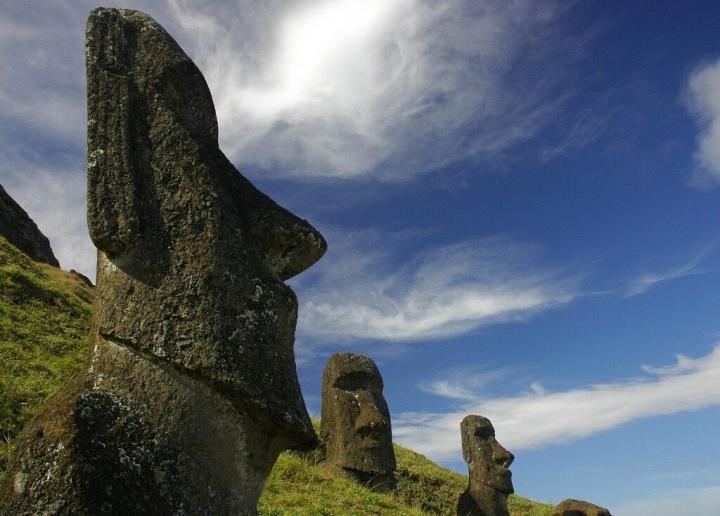
Easter Island mystery – ‘Ecocide’ didn’t lead to the Rapa Nui’s demise New scientific research is challenging the popular belief that the ancient inhabitants of Rapa Nui, aka Easter Island, were wiped out due to over exploitation of natural resources. It is often proposed that the Rapa Nui islanders cut down giant forests of palm trees on Easter Island, leaving them without wood to build canoes for fishing. The theory states that the absence of fish forced them to eat chickens, rats and agricultural crops. The island’s climate and infertile soil meant crop productivity started to decrease as the island’s inhabitants ate more and more. Conflict erupted as competition arose over the dwindling resources, and the population essentially wiped itself out through having destroyed the island’s ecosystem, a theory of their fate dubbed ‘ecocide’. New research from scientists at the University of Bristol, published in the American Journal of Physical Anthropology, is throwing the ecocide theory into question, showing through isotopic analysis of bones, soils and plant remains from Rapa Nui that the population had a diet of equal parts seafood and terrestrial food. Catrine Jarman, lead author of the study and PhD student at the University of Bristol’s Department of Anthropology and Archaeology, said: “We also discovered that agricultural crops consumed must have been planted in soils that were deliberately managed and manipulated to provide better yields. “Previous work has shown that plants of Rapa Nui were grown in rock mulch gardens and planting enclosures known as manavai. These had been carefully constructed and deliberately managed, and our study showed that the islanders may have added fertilisers.” Put simply, the new results suggest the Rapa Nui islanders adapted to the island’s harsh environmental conditions by managing their gardens and manipulating soils for better crops. Contrary to the idea of this ancient people recklessly wiping out the environment that had sustained them, it shows they demonstrated astute environmental awareness and stewardship to overcome nutrient poor soils. Jarman concluded: “This research highlights the unique and varied environmental adaptations that Pacific Islanders have shown through time. “Polynesians developed sustainable economies in ways that we are now better understanding through interdisciplinary research. Lessons from the past and from traditional island societies have value and relevance today.” Ancient Greek theatre had a wooden stage thousands of years ago An investigation by a Japanese architectural researcher suggests a high possibility that a wooden stage existed in the theater of the ancient Greek City of Messene during the Greek Classical period (ca. 369 BCE). During the Messene theatre’s 2007 excavation, a large storage room and three stone rows were discovered beside the stage by a group from the History of Western Architecture Laboratory of Kumamoto University. Similar features had also been discovered in Ancient Greek theatres at Megalopolis and Sparta. After studying the three sites in depth, a Kumamoto University researcher determined the stone rows remaining in the Megalopolis theater would have been used to set up wooden background picture panels, and the stage storage room would have likely been the custodian of such panels. In Hellenistic theatre, a one-story construction known as a proskenion was installed on the stage as background, behind which was another two story construction known as a skene that served as both a dressing room for actors and additional stage background. Traditionally, it’s been assumed that the skene and proskenion were wheeled around the stage as a single, large construction. The new research however, suggests they might have been moved separately. “A large force would have been required to move stage equipment as large as the proskenion and skene,” said Associate Professor Ryuichi Yoshitake who led the research project. “In previous studies, there was a theory that the proskenion and skene were simultaneously moved along just three stone rows, but I think it is more logical that the proskenion and skene each had their own set of two stone rows to move along. I came to this conclusion due to the positions of three stone rows and the fact that it would have been quite difficult to move the heavy proskenion and skene together using a single axle with three wooden wheels.” The findings have been published in the German language science journal Archäologischer Anzeiger. A new method to chart humans’ domestication of seeds Scientists from University College London have used synchrotron light to document for the first time the rate of evolution of seed coat thinning, a major mark of crop domestication, from archaeological remains. It marks the first-time scientists have been able to measure coat thickness throughout an entire seed. Published in the journal Science Reports, the authors present evidence for seed coat thinning between 2,000 BCE and 1,200 BCE in the legume horsegram (Macrotyloma uniflorum), a bean commonly eaten in southern India. “Seed coat thickness is a great indicator of domestication, as thinner coats will mean faster germination of a seed when it is watered,” explained Dorian Fuller, co-author on the paper. “But conventional methods of looking at the seed coat require breaking and destroying archaeological specimens.” “Being able to look at the seed coat thickness without breaking the sample is possible by other methods, but you can only look at a spot on the seed,” added Charlene Murphy, co-author on the paper. “The beamline at Diamond has allowed us to look at the entire seed, and has shown considerable variation within individual specimen’s seed coat thickness.” The team’s results suggest that domestication of horsegram took place during the second millennium BCE, with seed coats fairly fixed in thickness by the early centuries CE. The findings also suggest that the high-resolution X-ray computed tomography method could be used to study a variety of domesticated grains and pulses. Featured image: New isotopic analyses of bones, soils and plant remains from Rapa Nui, Chile (Easter Island) provide evidence contrary to the widely-held belief that the ancient civilization recklessly destroyed its environment. Courtesy of Terry Hunt ]]>

Categories
Breaking News

Bronze Age Mycenaean Tomb Yields Historic Jewelry

Categories
Breaking News

Has Evidence of Human Sacrifice in Ancient Greece Been Found?

Categories
Breaking News

Lost City Under the Sea Revealed to Be a Geological Formation

Ancient Origins in 2014. Tellingly, no other signs of life, such as surface pottery, have since been found at the site, and the mystery of the supposed architectural remains continued. Published in the Journal of Marine and Petroleum Geology, the joint research study by the University of East Anglia (UK) and the University of Athens (Greece), claims that the site was in fact created by a natural geological phenomenon in the Pliocene era, five million years ago. “We investigated the site, which is between two and five meters under water, and found that it is actually a natural geologically occurring phenomenon.” said Professor Julian Andrews, lead author of the study from UEA, in a press release. “The disk and doughnut morphology, which looked a bit like circular column bases, is typical of mineralization at hydrocarbon seeps – seen both in modern seafloor and palaeo settings.” The Ephorate of Underwater Antiquities of Greece launched the latest investigation of the site. Archaeologist Magda Athanasoula and diver Petros Tsampourakis studied the submerged remains, along with Prof Michael Stamatakis from the Department of Geology and Geoenvironment at the University of Athens. A combined research team was then composed of UEA and UoA staff, which analysed the mineral content and texture of the formation using microscopy, X-ray and stable isotope techniques. “We found that the linear distribution of these doughnut shaped concretions is likely the result of a sub-surface fault which has not fully ruptured the surface of the sea bed. The fault allowed gases, particularly methane, to escape from depth.” explained Prof. Andrews. “Microbes in the sediment use the carbon in methane as fuel. Microbe-driven oxidation of the methane then changes the chemistry of the sediment forming a kind of natural cement, known to geologists as concretion. “In this case the cement was an unusual mineral called dolomite which rarely forms in seawater, but can be quite common in microbe-rich sediments.” Andrews continued. “These concretions were then exhumed by erosion to be exposed on the seabed today.” It is rare for the phenomenon to occur in such shallow waters – the site is between just two and six meters below the surface – meaning although not the location of some mysterious lost city, the site is still remarkable. Andrews explained that the process which led to the formation is in fact similar to the effects of fracking, but significantly slower. ]]>

Categories
Breaking News

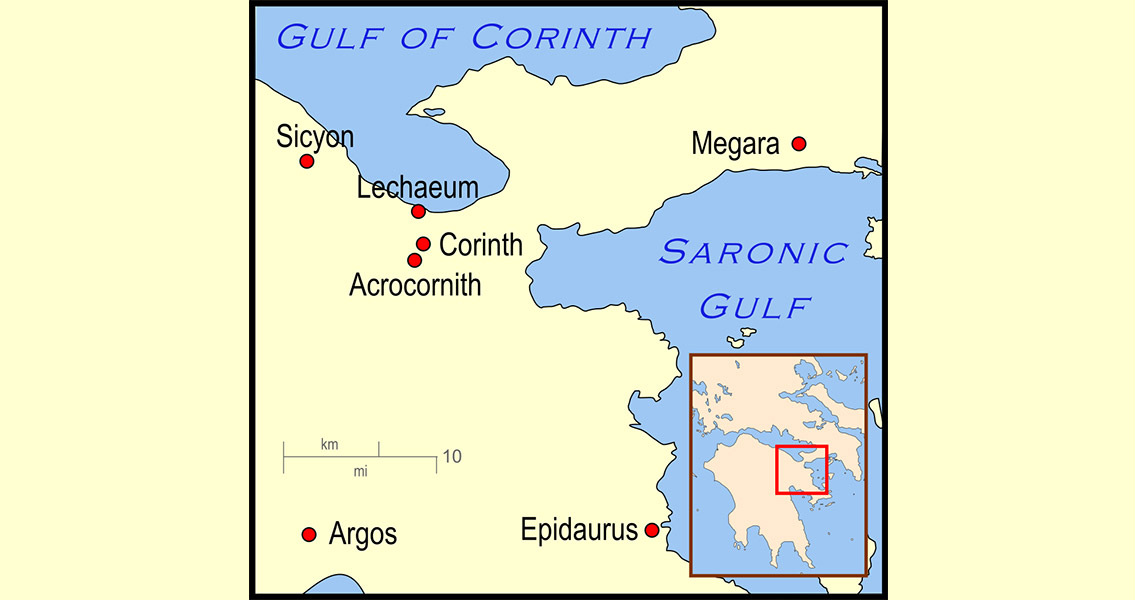
The Corinthian Port That Thrived for a 1,000 Years

Categories
News

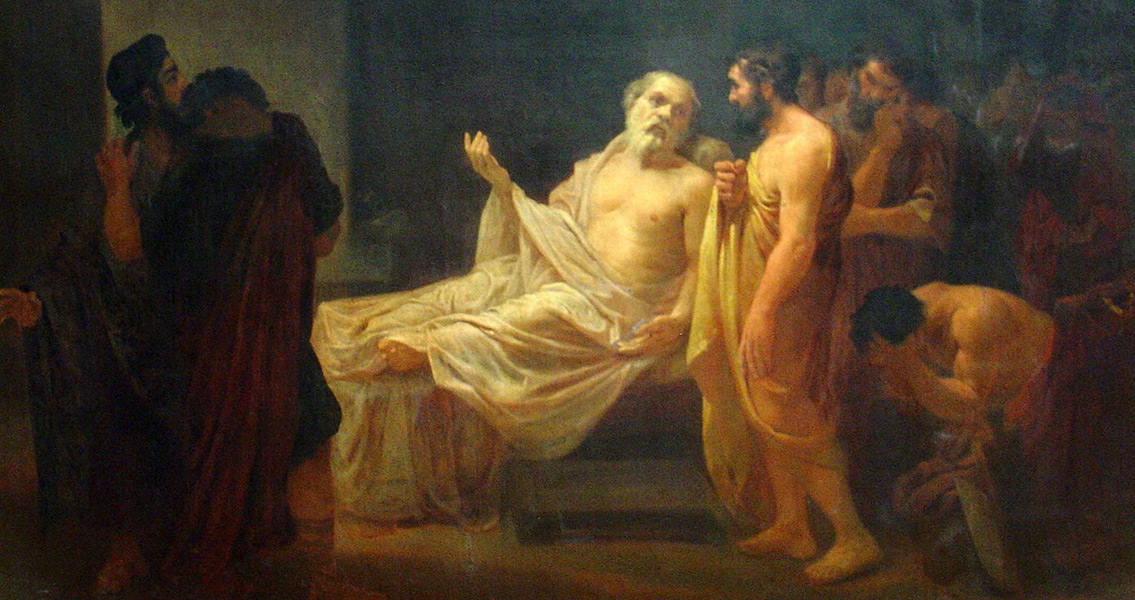
Socrates Sentenced to be his Own Executioner

Categories
Breaking News

New Research on Ancient Greek Politics

www.grbs.library.duke.edu Image courtesy of Wikimedia Commons user: Butko]]>