Categories
Breaking News

Why Neanderthals Couldn’t Draw – The History News of the Week

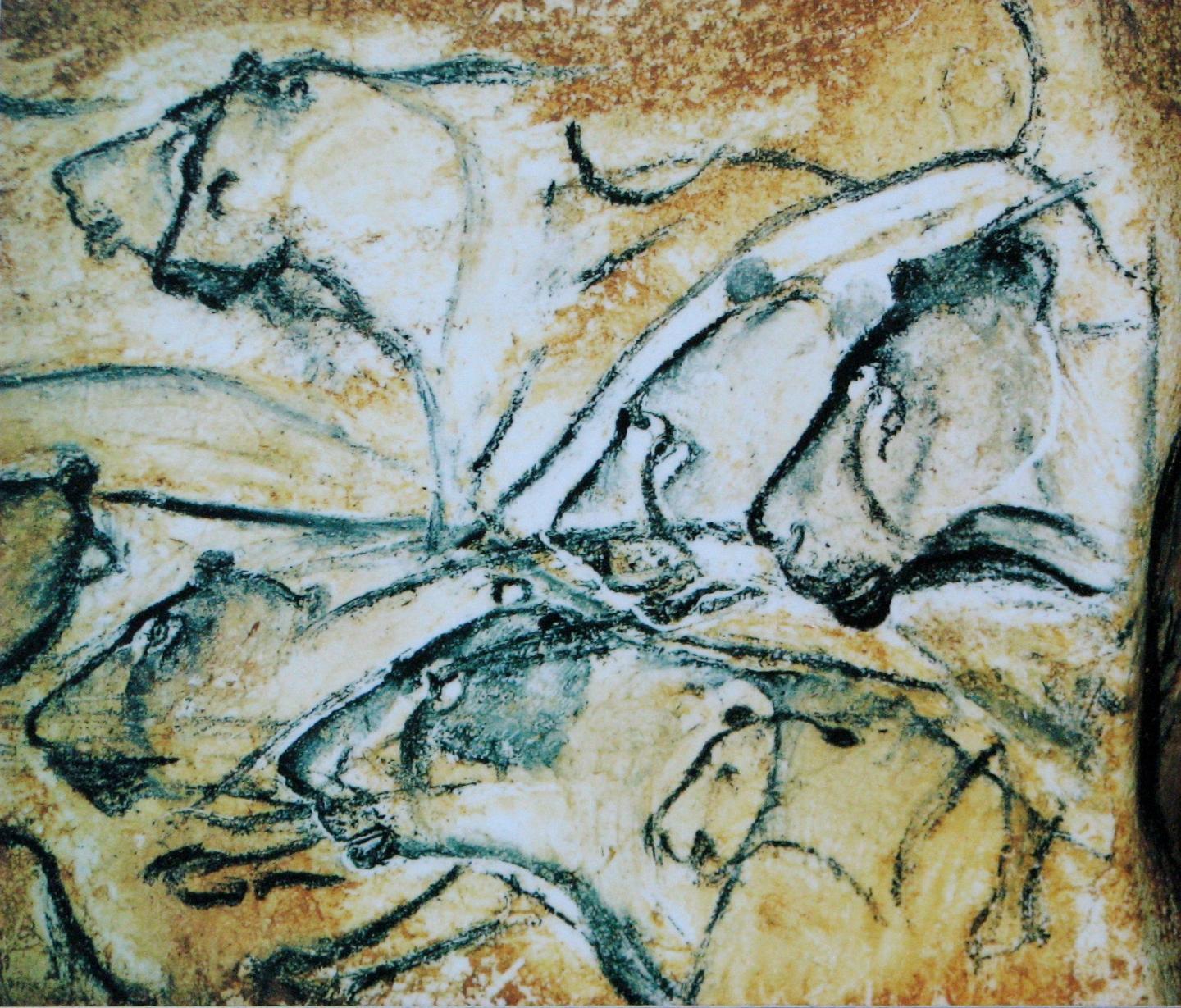
Hunting Skills Affected Neanderthals’ Drawing New research from the University of California Davis claims that Neanderthals’ lack of drawing ability compared to other early modern humans could be connected to their hunting skills, Neanderthals had large brains and were capable of making sophisticated tools, yet never demonstrated the ability to draw recognisable images. On the other hand, early modern humans created vivid depictions of animals and other figures in cave drawings. Richard Coss, a professor of psychology from UC Davis, thinks this difference could be connected to the fact that Neanderthals hunted with thrusting spears while early humans used throwing spears. Coss argues, in his study published in the journal Evolutionary Studies, that the hand-eye coordination involved in both hunting with throwing spears and drawing representational images could explain differences in intelligence between Neanderthals and humans. For 500,000 years early humans hunted with throwing spears in sub-Saharan Africa, something which caused their prey to develop better fight or flight strategies. Anthropologists have suggested that using throwing spears from a distance made hunting large game less dangerous. “No explanation has been given for why large animals, such as hippos and Cape buffalo, are so dangerous to humans,” Coss said. “Other nonthreatening species foraging near these animals do not trigger alert or aggressive behaviour like humans do.” Coss argues that Neanderthals, which left Africa for Eurasia long before modern human ancestors did, used thrusting spears at close range to kill horses, reindeer, bison and other large game that had not developed an innate wariness of humans. “Neanderthals could mentally visualise previously seen animals from working memory, but they were unable to translate those mental images effectively into the coordinated hand-movement patterns required for drawing,” Coss writes. After studying the drawings and engravings of animals made by human artists 28,000 to 32,000 years ago in the Chauvet-Pont-d’Arc Cave in southern France, Coss concluded: “The visual imagery employed in drawing regulates arm movements in a manner similar to how hunters visualise the arc their spears must make to hit their animal targets.” Coss argues that the development of drawing could have triggered a host of social changes in the early human ancestors. “There are enormous social implications in this ability to share mental images with group members,” he writes, in the recently published study. Toba Supereruption Didn’t Cause Volcanic Winter 74,000 years ago, the Toba supereruption caused spectacular destruction on the island of Sumatra. It has been hypothesised that the eruption triggered a six-year long volcanic winter in East Africa, in turn causing the human population in the region to plummet. New research from the University of Arizona has looked at the effect of the eruption on East Africa. The findings disagree with the Toba Catastrophe Hypothesis, finding no evidence of severe ecological disruption following the eruption. “This is the first research that provides direct evidence for the effects of the Toba eruption on vegetation just before and just after the eruption,” said lead author Chad L. Yost, a doctoral candidate in the UA Department of Geosciences. “The Toba eruption had no significant negative impact on vegetation growing in East Africa.” Yost and colleagues studied microscopic bits of plants preserved in two sediment cores from Lake Malawi, the southernmost of the East African Rift Lakes. They analysed samples taken from roughly every 8.5 years over a period beginning approximately 100 years before the eruption and ending 200 years later. “It is surprising,” Yost said. “You would have expected severe cooling based on the size of the Toba eruption–yet that’s not what we see.” According to Yost, if the region had experienced the multi-year cooling suggested in the Toba Catastrophe Hypothesis, the cores would have evidence of a massive die-off of the region’s vegetation at all elevations. However, the team only found some die-off in mountain plants just after the eruption, and no die-off in lower elevation plants. Part of the Toba Catastrophe Hypothesis says the eruption caused human populations to shrink. However, according to Yost, all known archaeological evidence of human habitation in the region is found at low elevations. “We know anatomically modern humans were living within 50 kilometers of Lake Malawi,” Yost said. “People would have been able to travel to habitats and lower elevations that had little to no cooling effect from the Toba eruption,” he said. Co-author Andrew S. Cohen, UA Distinguished Professor of Geosciences, said: “That a singular event in Earth history 75,000 years ago caused human populations in the cradle of humankind to drop is not a tenable idea.” The research has been published in the Journal of Human Evolution. First Briton had “Dark to Black Skin” Scientists have carried out the first ever full DNA analysis of Britain’s oldest modern human specimen, revealing that 10,000-year-old Cheddar Man likely had “dark to black skin”, blue eyes and dark curly hair. “Generally people would be very surprised to see what Cheddar Man – an individual from 10,000 years ago – looked like,” Dr Selina Brace, an ancient DNA researcher who contributed to the work at the Natural History Museum, told The Independent. The fossil of Cheddar Man was first discovered in 1903 in Gough’s Cave in Somerset. He lived shortly after the first settlers crossed from continental Europe to Britain at the end of the last ice age. The new revelations, made through genetic analysis of Cheddar Man’s bones, show that the genes for lighter skin became widespread in European populations later than traditionally thought. Tom Booth, an archaeologist at the Natural History Museum who worked on the project, told the Guardian: “It really shows up that these imaginary racial categories that we have are really very modern constructions, or very recent constructions, that really are not applicable to the past at all.” The key to the surprising discovery was genetic markers that showed skin pigmentation usually associated with sub-Saharan Africa. Dr Brace told The Independent: “It’s kind of surprising, because you would have thought [light skin] would have come more quickly as people are moving into these different climates. But in fact what we think is they had a very meat and fish-rich diet, so it was quite likely they were getting their vitamin D from there.” Featured image: Replica of drawing of lions painted in the Chauvet Cave. Art in the cave has been identified as created by early modern humans.]]>
Categories
Breaking News

Mysterious Stone Spheroids Were Hunting Weapons

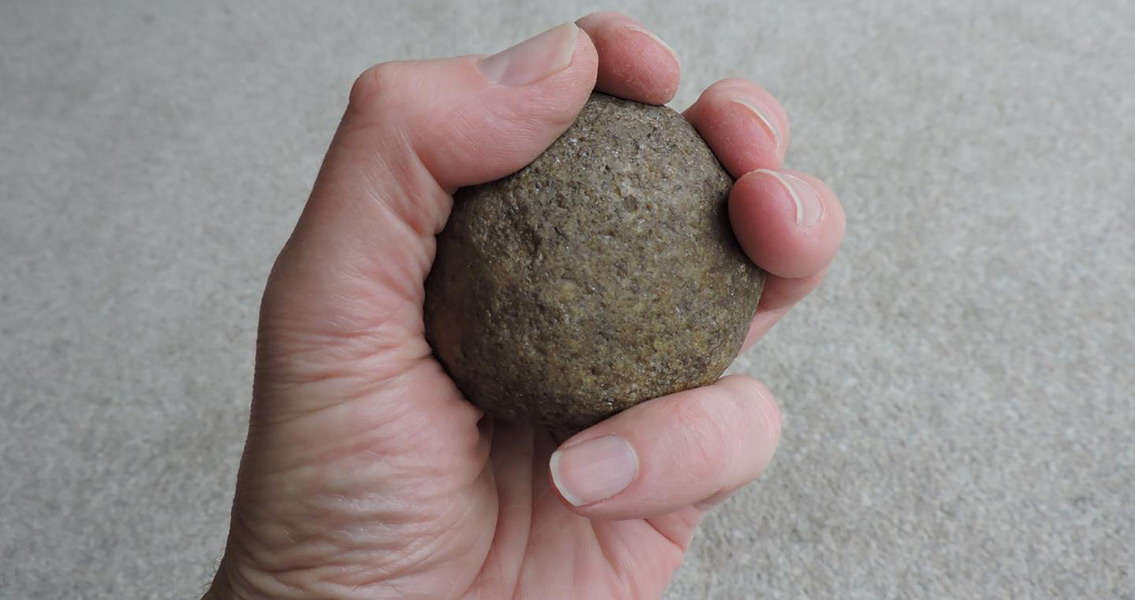
Science Reports. The team combined knowledge about how modern humans perceive an object’s ‘throwing affordance’ with mathematical analysis of the objects’ effectiveness as projectiles, to reach their conclusion. “Our study suggests that the throwing of stones played a key role in the evolution of hunting,” said Indianna University Bloomington professor Geoffrey Bingham, an author of the study, in a press release. “We don’t think that throwing is the sole, or even primary, function of these spheroids, but these results show that this function is an option that warrants reconsidering as a potential use for this long-lived, multipurpose tool.” A theoretical framework and computational tools developed at the Perception/Action lab at IU were the basis for the team’s conclusions. Bingham, the lab’s director, investigates human coordinated action and perceptual abilities. Part of this involves looking at throwing affordance: selecting the best object in terms of size, weight and shape for throwing at the greatest speed and distance, and causing the most damage. 55 ball shaped objects from the South African site were analysed in the lab. The team found that 81 percent of the stone balls were the optimal size, weight and shape to hit a target 25 metres away. Each of the stones is about the size of a tennis ball, but significantly heavier. In addition, the team simulated the motion the objects would undergo if thrown by an expert and the probability of causing damage to medium sized prey, such as an impala. Previous research on biomechanics and perception has shown that a human’s shoulder joint and visual perception are uniquely specialised for throwing objects at targets around 30 metres away. “Humans are the only animals — the only primates even — with that talent,” Bingham explained. “We can throw something to hit something else — like a quarterback throwing to the running back all the way down the field. That’s how in large measure we survived the ice ages. The available food was largely on hoof, or it was ‘mega-fauna,’ such as a mammoth. You don’t want to get close to them.” According to the team’s paper, most of the objects studied had weights that produce optimal levels of damage when thrown at prey. This puts serious doubt on the idea that they had been fashioned solely as simple percussive tools, which tend to be made to be as heavy as possible. “Imagine a human, searching for an object to throw so as to cause the most damage possible to potential prey or a competitor,” said Andrew Wilson of Beckett Leeds University in England, the study’s lead author. “This is a perceptual task: the person needs to perceive throwing-relevant properties of objects and be able to discriminate between objects that vary in those properties.” Bingham, along with former students and other colleagues, has been studying the complex mechanics of throwing for decades. He is in little doubt as to how significant it has been to human evolution. “The ability to throw great distances was not a small thing. It was how we got lunch.” For more information: www.nature.com Image courtesy of Judy Maguire]]>

Categories
Breaking News

Bison-Hunting Shaped Native American Society

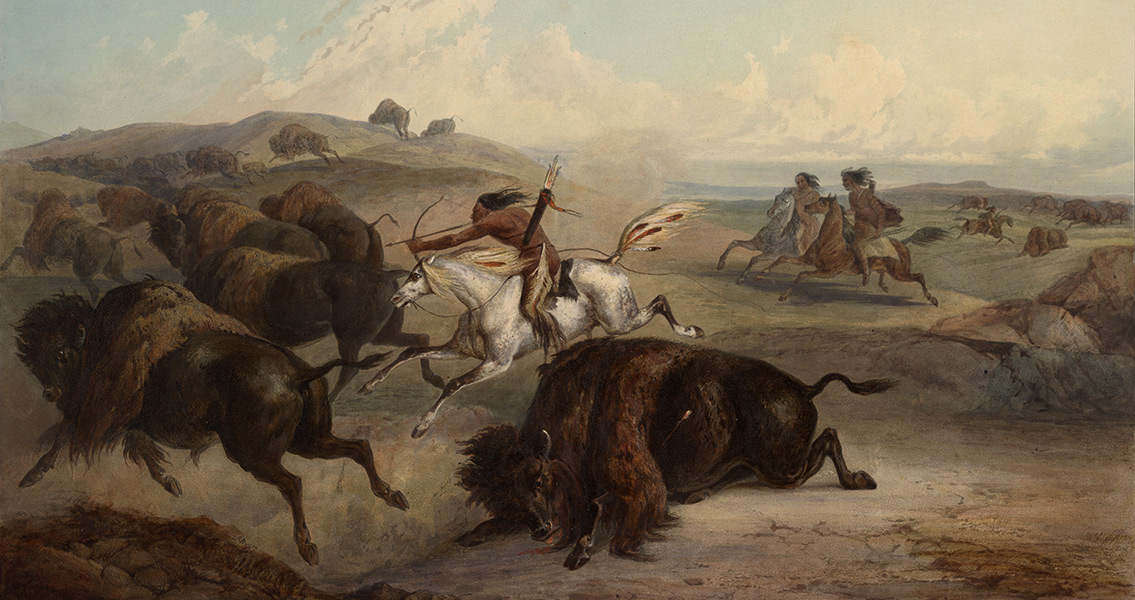
Early American Studies, reveals how the Illinois’ adaptation to the distinctive prairie environment influenced their history. “Although most historians have ignored the bison as a factor in the history of the Illinois and their region, the animals were a central fact of life there,” Morrissey explained. The traditional food eaten by Algonquians near the Great Lakes was beaver. On the Plains of the Midwest, however, beaver were scarce and of low nutritional quality. Bison, on the other hand, were plentiful. Bison hunting gave the Illinois new opportunities and shaped Illinois society in fundamental ways. “A unique economy, pedestrian (i.e., non-equestrian) bison hunting required two things: a large population and much labor,” Morrissey writes. “Because bison could be effectively hunted and processed only in large groups, committing to the bison required (but also enabled) larger villages.” Also, the processing stage was vitally important in the bison economy. As a result, the Illinois needed specialist workers to preserve the meat, render the tallow and tan the hides, Morrissey explains. “The Illinois conducted their bison economy with a gendered division of labor in which women performed the difficult tasks of hide and meat processing, this meant that the Illinois needed women.” The bison economy’s reliance on women for curing meat and creating hides fueled slave raids by the Illinois. In search of new female workers, the Illinois raided their nearby neighbours and enemies, creating a condition of continual war. Morrissey explained that “the Illinois were creating a cycle: more bison exploitation encouraged more raiding, and more violence, and larger settlements and . . . more bison.” When Native Americans came into contact with European explorers, the Illinois fought particularly intense wars. Morrissey argues that the effects of European colonisation on the Illinois cannot be understood independently of their bison economy, such was their dependence on these animals. European diseases began to hit Illinois villages in the 1670s and 1680s when European missionaries and fur traders, especially those specialising in bison hide trading, brought microbes and viruses. Diseases began to affect the Illinois significantly in the early contact period. These diseases put extra strain on the Illinois bison economy. Disease amongst the Illinois led to a shortage in specialist workers. This, in turn, led to increased slave raids and war, stretching the Illinois population to breaking point. “What seems clear is that the bison economy and the colonial changes combined to produce devastation for the Illinois in ways that were unique and particularly intense,” Morrissey argues. For more information: www.muse.jhu.edu Image courtesy of Wikimedia Commons user: Jan Arkesteijn]]>

Categories
Breaking News

Prehistoric Bows Show Neolithic Social Hierarchy

]]>

Categories
Breaking News

60,000-Year-Old Hunter Gatherers Slew Giant Aurochs

Categories
Breaking News

700 Year Old Polynesian Settlement Discovered

Categories
News

History of Shawnee County, Kansas

Someone would expect that a small town in Illinois of 7,970 people would not have much history. But recently, a group of archaeologists have found evidence of a nearly 1,000 year old Native American village in Murphysboro, which is near the Southern Illinois Airport. This village would have pre-dated any European contact. This find was actually by accident. The group of archaeologists that found the historic land were from the Illinois Archaeological Survey, and their purpose was to survey land in order for the state of Illinois to build. Instead of finding good land for a modern road to be built on, they found something even more valuable.  It is not known for certain the tribe or culture that the archaeologists dug up, but they found material such as clay that was used to make pots, which gave them a few ideas. There are about four known Native American tribes that currently live or have lived in Illinois: Kaskaskia, Moingwena, Peoria and the Moingona. They were part of the Shawnee people that came from the American Midwest. The history of the Shawnee people began in the late Pleistocene age, where at that time they were known as the Paleo-Indians. They hunted large animals such as bison, mastodons, caribou and mammoths. Some of these Paleo-Indians moved to the Ohio region, and settled there. At around 1000 AD, they started to flourish and took up a culture known as the Fort Ancient culture. They were known as the mound builders, as they constructed massive earthen mounds for homes, burials and also for ceremonial purposes. They grew mostly maize and had year-round nuclear families that lived in settlements of about 40 to 50 individuals. These settlements would be scatted along terraces that overlooked rivers and also on flood plains. Some groups had habits of moving to different locations. Now, there are only 1.03% Native Americans in the small town of Murphysboro, and an even meager 0.3% in the whole state of Illinois. 

Patrick Durst, the Senior Researcher of the Illinois State Archaeological Survey, stated that the find has opened up a new area of study for him and his team. They will conduct further research to find out if the groups that lived in this location formed any of the tribes that are known today, or if they stayed in the area and became something else. The tribes today actually came after the remnants of what were found at the site. 

Charcoal was found in the soil, which caused Durst and his team to believe that several homes were burnt down. The excavation also brought up old clay pots, tools and stones. They also found mussel shells and deer and fish bones on the site, which correlates to the way of the Fort Ancient culture of hunting and settling around the local rivers. The artifacts will be further analyzed to better identify the people the artifacts belonged to and their way of life.

]]>