
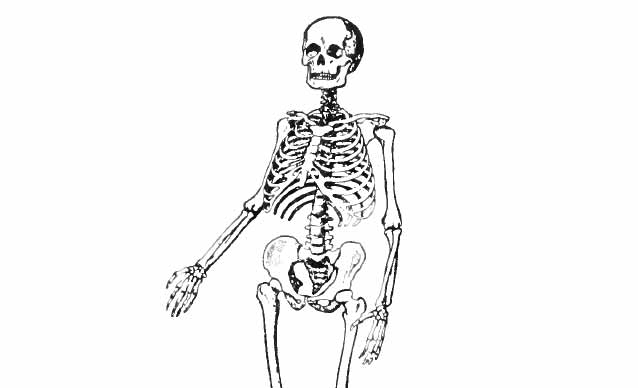
th century when the Roman empire began to decline. Unlike most archaeology students, who are content with finding pieces of glass or pottery in their first dig, the undergraduate students of the Bournemouth University have actually stumbled upon a piece of history that could rewrite the entire Roman history of Britain. For the first time in history, the modern generation has managed to uncover the skeletons of a family from a Roman villa in Dorset field. According to Dr. Miles Russell, a lecturer in archaeology at the Bournemouth University, this finding is very significant because of the fact that none of the occupants of the 700 odd Roman villas in Britain were ever found before. This finding could spur the uncovering of the graves of the owners of these Roman villa all over the country and finally allow historians to understand just who used to live in these villas. This landmark discovery was uncovered by a group of 85 students in their early twenties or their late teens in a corn field next to Winterbourne Kingston, Blandford while carrying out a study. The students were expected to establish whether the ancients living in these Roman villas were British or European. They managed to map the ground with the help of a geophysical survey. To the surprise of students, as well as the faculty, they managed to uncover an enclosure of almost 300 feet of an ancient Roman villa. After excavating the site, the skeletal remains of 2 adult males and females and 1 elderly female were found. It is believed that these remains belonged to 3 generations of a family that used to live in the Roman villa about 1700 years ago. The remains are now being analyzed in order to get a better picture of exactly who used to live in these villas. This groundbreaking work is also expected to become a part of the final year dissertation for the students. According to Dr. Russell, one of the main objectives of the group is to understand who lived in these villas and what sort of changes did Britain go through during the time. They also wish to ascertain whether the people in these villas were Britons or Europeans/ Romans who had moved to exploit the land. Dr Russell also estimates that if these skeletal remains belonged to the Romans, they were most probably tax collectors, politicians or statespeople. He believes that these people represented the top 2 – 3% of the society. Hopefully, the bones should offer more insights into their age and their health. Unfortunately, world history has majorly suffered as many of the Roman villas of Britain that were uncovered in the 19th century could not be cared for properly due to the lack of knowledge and technology. As a result important details of world history were lost to time. Hopefully, these findings could spur a new era where we finally understand just what happened in Britain towards the end of the Roman era.]]>

th anniversary of the Amistad Slave Rebellion. In 1838, on the 2nd of July, about 53 Africans aboard the Amistad, a slave carrier, managed to break out of their chains, kill two crew members and disarm the rest of the crew. After seizing control of the vessel, the slaves tried to sail all the way back to their homeland, but ended up sailing North instead. These slaves travelled approximately 1400 miles from Cuba all the way to Long Island in New York, where the navy finally picked them up. This rebellion was termed as the Amistad Rebellion and despite its popularity, it was just one of the thousands of rebellions that have been recorded. About 12 million Africans were forced to become slaves as they were shipped off to the New World between the 16th – 19th centuries. It is believed that almost 1.5 million Africans perished even before reaching land, due to the horrifying conditions present on-board. At the time of the Amistad Rebellion the United States, as well as most other major slave destinations in North and South America, had abolished the process of importing slaves. However, since slavery itself was legal unlawful activities were the norm. For example, a Spanish slave trader by the name of Pedro Blanco was believed to live like an aristocrat along the coast of Sierra Leone and was said to have continued the slave trade with the help of a local leader. The 53 Africans who found themselves aboard the Amistad were rounded up at Lomboko, Blanco’s slave depot. They were then marched all the way through the interior and kept in slave barracks where diseases and beatings were common. According to the testimony of these slaves, they were also shackled around the neck, ankles and wrists and were forced to sleep in contorted positions without even being offered enough room to stand straight. Whippings and beatings on flimsy grounds were common and dead bodies were thrown into the ocean almost every single day. What made this rebellion so famous was that despite being from 9 different ethnic groups, the slaves joined hands towards a common cause – freedom. This was something that was relatively unseen in Africa. The rebellion was led by Cinque, a rice farmer before he was turned into a slave. The captain of the ship was slashed to to death and two other crew members threw themselves overboard. However, to the dismay of the slaves, they had to depend on the Spaniards to set the course since they had no idea about charting out directions on the sea. The Amistad stopped on a number of islands in the Bahamas before it finally reached the United States. It was on August 26 that a US Navy brig entered the ship and imprisoned the Africans in Connecticut, a slave state at the time. These Africans received immense media coverage and thousands of locals also paid “entry fees” to look at them. A few influential people against the slave trade helped them to set up a trial in Hartford. In what became a historic ruling, the Hartford Court ruled that since the Africans were brought in illegally, they were not slaves. Despite having lodged an appeal with the Supreme Court, the decision could not be overturned. Thus, these slaves were finally made free after spending 18 months in the US. During the journey back to Sierra Leone, the number of surviving Africans fell to 35 who at last arrived home on 26th November 1841. This is just one of the many stories of the horrors of the slave trade and the efforts of a few individuals who played a huge role in abolishing slavery and making the world a much better place to live in.]]>

th century until the year 1349 when the iconic monument was terribly damaged by a major earthquake. This fact was uncovered after a 3-week excavation that uncovered a few arched entrances which lead into the arena. Archaeologists discovered the foundations of a 12th century wall that was used to enclose a particular property in the Colesseum, potshards and terracotta sewage pipes. According to Rossella Rea, the Director of the Roman Colosseum, these excavations allowed archaeologists to identify a complete housing lot from the Medieval era. It is believed that this unusual condominium also consisted of workshops and stables and that area within the Colosseum was rented out by friars of the Santa Maria Nova Convent who had control of the monument. Further research also indicated that all houses opened onto the area where the gladiators once used to fight. Professor Riccardo Santangeli Valenzani, teaching medieval archaeology at the Roma Tra University, believes that the area that once hosted glorious gladiator battles was transformed into a common space for the Romans living there in the medieval era. It is believed that this courtyard was buzzing with goods, animals and people. Archaeologists also uncovered cooking pottery along with the figurine of a tiny monkey that was carved from ivory. It is believed that this piece was used as a pawn in a chess set during the medieval era. The Roman Colosseum dates back to the year AD 72 when it was built by the great emperor Vespasian on the bed of a drained lake. It is considered to be the most popular remains of Ancient Rome. Many might not know this, but the Amphitheatre was actually opened in the year AD 80 by Titus, Vespasian’s son. This amphitheatre was inaugurated with a festival that lasted for 100 days and consisted of naval battles, fights and gladiatorial combats. Another reason why the Colosseum became so popular over the centuries was the fact that it survived 3 major earthquakes as well as a huge fire. It transformed into a garbage dump after emperor Honorius banned bloody gladiatorial combats as well as a stone quarry for buildings such as the St. Peter’s Basilica. The recent excavations have uncovered yet another piece of history for the Roman Colosseum. The Roman Colosseum is currently undergoing a $43 million restoration and cleaning project, the cost of which is being sponsored by Tod’s, a popular leather bag company in Italy. According to Rea, the dig should continue in the year 2015 when the second phase of the cleaning and restoration starts. More and more mysteries pertaining to the most visited monument of Italy are expected to be uncovered during the second phase of excavations. ]]>

th anniversary, members of UNESCO (The United Nations Educational, Scientific and Cultural Organization) met in Belgium in order to discuss how to best protect the underwater heritage of the historic event. The organization is expected to extend the 2001 convention so as to safeguard a number of sites, particularly World War 1 shipwrecks that are being threatened by looting, destruction and salvaging. The 2001 Convention introduced by UNESCO aimed to help the member countries to protect their shipwrecks, submerged valuables and ruins and other fragile segments of the underwater heritage. According to UNESCO, there are about 3 million undiscovered shipwrecks that are still scattered all over the globe. This number is said to include about 12500 sailing vessels that were lost at sea between the years 1824 and 1962. The constant advancements in technology have made these shipwrecks very easy to detect, thereby making them vulnerable to salvage operations, looting and treasure hunters. The 2001 Convention had originally included sites that were sunk more than 100 years ago. However, according to the current changes, this status is expected to be extended in order to cover thousands of other sites as well. The naval losses of the World War 1 might have been lesser than the carnage seen in the trenches, but it still constitutes a significant portion of history to ensure that it remains preserved for years to come. It is said that Britain had mobilized a total of 11000 vessels out of which 1100 had been sunk. The Germans also lost hundreds of warships and as many as 35000 men. Since the locations of these sinkings are well known, it is easy to discover the ruins and undertake looting, salvaging operations and treasure hunting activities. According to reports, the number of ships being salvaged has kept increasing over the years as more and more ships are being dismantled for aluminium, copper and brass. The increase in the number of protected sites is obviously expected to place a major strain on the already strained resources of the member nations. According to Dr. Innes McCartney, the leader of the research expeditions of the ships from the Battle of Jutland, the English Channel is full of war graves that have been subjected to looting, salvaging and treasure hunting in the recent past. Dr. McCartney also states that the only way to stop the looting is to allocate the proper resources and protect many more underwater sites. He also states that the one of the major challenges would be to show people what lies out there and how important it is to the culture and the legacy of the world. UNESCO had asked all ships at sea to use a commemorative signalling on Saturday, the 28th of June 2014, by lowering the ensigns or flags to half mast. A sound signal was also made a part of the procedure that served as a symbol of reconciliation and peace, a remembrance to those who lay down their lives in the war and a reminder to the public on the need to protect the land and underwater cultural heritage. ]]>

nd half of the 3rd millennium B.C. have also been uncovered in the region of South Caucasus. This leads to theories that interactions between the nomadic tribes from the Eurasian steppes and the farming communities located in and around South Caucasus were present. It is these interactions that seem to have allowed certain individuals like this Bronze Age chief to gain enough influence to receive elaborate burials. The armchair that was discovered at the site also showcases the kind of power individuals like the chief had. Scientists believe that armchairs were used to demonstrate power in the Early Bronze Age and that it was put in the kurgan as a sign of the chief’s power. The kurgan was first uncovered in the year 2012 close to the Lagodekhi municipality, eastern Georgia. ]]>

th century. This makes the present day findings even more important. ]]>
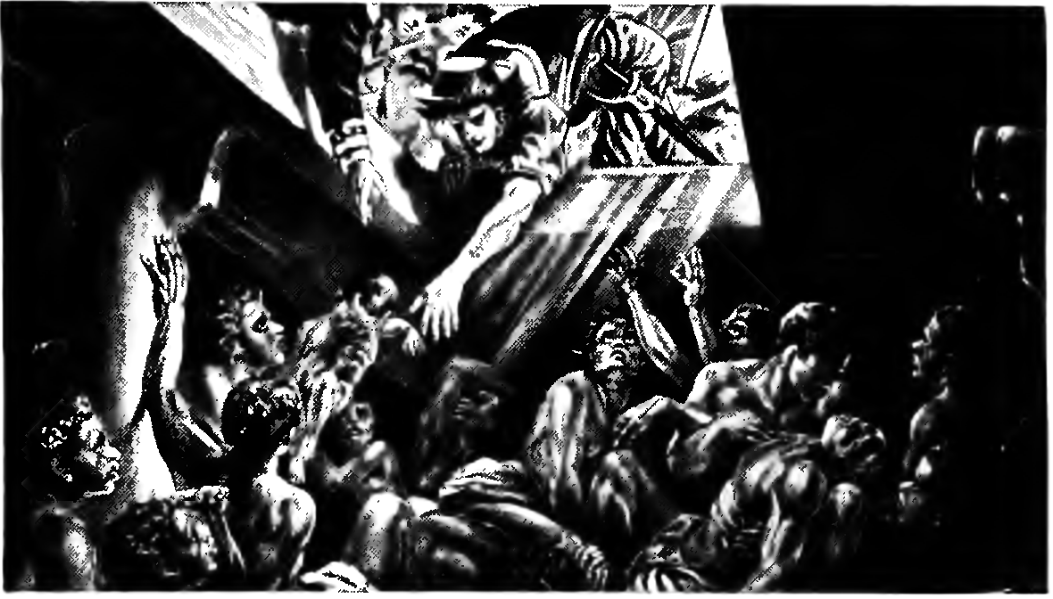
th century ship that ended up linking New London ships to the West African slave trade. According to this logbook, men from Connecticut travelled to Sierra Leone, where they bought slaves to be shipped as slaves to the West Indies. Contrary to popular belief, the keeper of this logbook wasn’t Sam Gould, but an aristocrat named Dudley Saltonstall. Ever since this discovery was made about 10 years ago, researchers have continued their studies on the slave trade and the involvement of North London families in the slave trade. A number of details have emerged since the first revelations and more and more ships have been linked with the slave trade. In fact, some of the leading families of the colonies were also said to be involved with slave trade. The suffering of captives during the Middle Passage from Africa to the Caribbean has been well documented. However, the logbooks and ongoing research highlight the lethal nature of the trade – both for the officers as well as the seamen. According to records, traders from Connecticut had died of fevers, killed in uprisings or been mutilated at the hands of black traders. One particular captain had his head bashed in by his chief mate, a crime to which the chief mate later confessed. Saltonstall was just about 18 when he first began to maintain a logbook in the voyage of 1757. His father, Gurdon Saltonstall, was the deputy mayor of New London and an extremely successful merchant as well. According to reports, Gurdon owned two of the three ships for which young Dudley kept records and logbooks. It also appears that Gurdon placed Dudley on the ship so that he could monitor the distributions that were being distributed to the seamen and act as his father’s eyes and ears on board the ships. According to Saltonstall’s log, the ships were in Sierra Leone on April 8, 1757 so that the seamen could buy rice to feed the slaves. The logbook also recorded that the ships were at Bence Island to take in slaves, wood and water five days later. Further proof was found when a record dated April 27, 1757 stated that 169 slaves had been boarded onto the ships. However, numerous slaves on board Dudley Saltonstall’s ship became infected with amoebic dysentery and began to fall ill during the first week itself. The logbook states that one slave fell dangerously ill and another slave died on May 4, 1757. Yet another post for the very next date mentioned that 3 more small slaves had died from the flux within a period of 24 hours. Another entry dated May 14 stated that a total of 9 slaves had died, leaving a total of 160 slaves on board. Dudley Saltonstall might have been court martialled for the loss of 100 ships and the rout of the Colonials in Maine’s Penobscot Bay, but he still managed to always land on his feet. He was disliked by his officers and was known to be extremely snobbish and arrogant. Later on in the war, Saltonstall brought the greatest prize ship of the war – the vessel that belonged to the British General Sir Henry Clinton. However, this achievement did not erase the massive costs that were spent in the Penobscot Expedition, a Pearl Harbor equivalent during the Revolutionary War. It is believed that Saltonstall remained in the business till almost 1784, traces of which were found in letters written to his wife where he mentioned that he longed to buy 300 slaves in order to sell them off in Charleston, S.C. ]]>

