
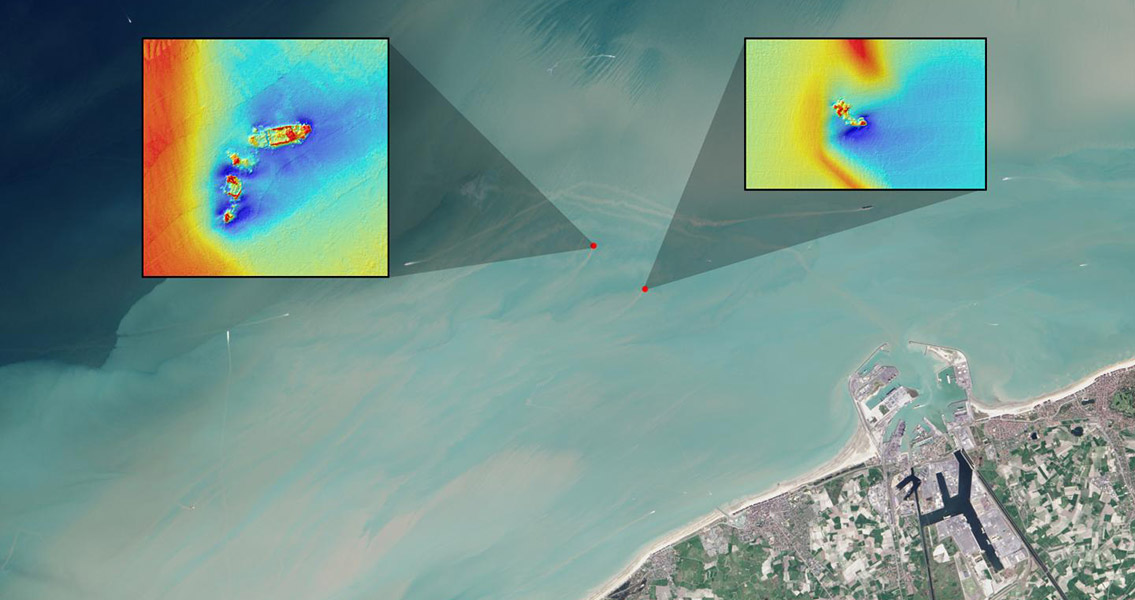
Journal of Archaeological Science. The team of researchers found that shipwrecks close to the coast can leave sediment plumes which are visible on the surface of the sea, revealing their location. Using free data from the Landsat 8 satellite, the team have detected plumes extending as far as 4 km downstream from the site of a shipwreck. It is the first study of its kind to show that Landsat 8 and similar satellites can be used to find shipwrecks in sediment heavy coastal waters. Around three million ships are scattered throughout the planet’s oceans, with the vast majority close to shore due to the abundance of navigational hazards in coastal areas. 25% of all the world’s shipwrecks are estimated to be in the North Atlantic. In particular, the narrow 100 mile stretch of the North Sea which separates England from the Netherlands and Belgium is saturated with Second World War wrecks, a consequence of mines, submarines and warships being deployed during the conflict to disrupt shipping between the Allies and Dutch and Belgian ports. So substantial is the potential environmental threat from these wrecks, the Council of Europe’s Parliamentary Assembly recommended they be mapped and monitored. This was the region that formed the focus of the researchers’ study. Taking the known locations of four shipwrecks from the Second World War: the SS Sansip, the SS Samvurn, the SS Nippon and the SS Neutron, as a starting point, the team mapped sediment plumes extending from the wrecks’ locations using Landsat 8 images and tidal models. They found that two of the wrecks which were mostly unburied created sediment plumes which could be measured during ebb and flow tides. The team suggest that the exposed parts of these ships create pits which fill with sediments during slack tides (when currents are reasonably still). During ebb and flow tides, the sediments are re-suspended in the water, creating the plumes which point to a shipwreck’s location. By mapping sediment plumes during different stages of the tides, the team postulate that it is possible to trace their origins and find as yet unearthed shipwrecks. As long as the waters in which a ship sank are shallow enough for the plumes to reach the surface, it is possible to detect them with optical satellites such as Landsat, according to the authors of the study. As coastal waters, where most shipwreck’s take place, are normally shallow and rich in sediment, the team’s findings could add a valuable new shipwreck detection method to the tool kit of marine archaeologists. Image courtesy of NASA/USGS Landsat image/Jesse Allen, NASA Earth Observatory]]>
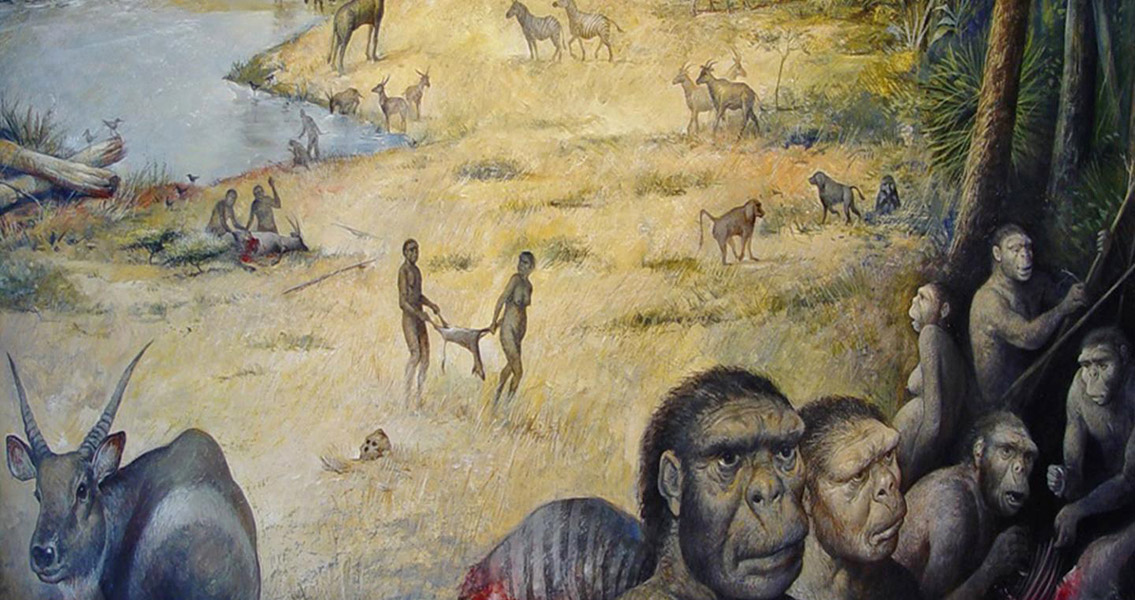
Homo habilis and Paranthropus boisei, these two species were similar in that they had a rough lifespan of anywhere from three to four decades and a height of around 4.5 feet to 5.5 feet. However, the latter is thought to have been more heavyset and with a smaller brain capacity than Homo habilis. Scientists involved in the research feel that the two species were unlikely to have camped there, but instead used the cover of the nearby acacia and palm trees to feed off of the carcasses of either their own kills or those taken from other carnivores. When and where early human ancestors began eating more meat are crucial questions, as an increased amount of protein in the diet of hominins is thought to be one of the first indicators of an increase in brain size. The research study can be found online here Image courtesy of M.Lopez-Herrera via The Olduvai Paleoanthropology and Paleoecology Project and Enrique Baquedano.]]>

Nature this week says that our Paleolithic evolutionary ancestors helped pave the way for their own evolution into modern humans by both eating meat, and preparing their food in certain ways prior to cooking it. The changes led humans living in the Stone Age to evolve with smaller teeth and faces thanks in no small part to adopting a more omnivorous diet that required some complexity to prepare, according to study author Daniel Lieberman from Harvard University. Research conducted into cooking in the past has singled out how pivotal it was to human evolution, but has been criticized for being too broad in giving credit for the changes that occurred to the face and head over the last 3 million years or so. The new study tackles this question; in an interview with USA Today, Lieberman did acknowledge that cooking food is certainly important, but the simple act of roasting raw meat over a fire isn’t the entirety of the story. The author and his colleagues point out in the research study how pounding, slicing, chopping, and other methods of food preparation and processing had effects on human anatomy and physiology that were profound – even to the point in helping humanity develop the ability to speak and run on two legs. There are other important facets of the paper, including the methods used to gather research. One of these methods involved volunteers willing to chew all manner of food while the researchers monitored their bite strength and other variables. Katherine Zink, a colleague of Lieberman from Harvard, worked together with him to see how humans handled masticating food like beets, carrots, yams, and even raw goat meat sourced from local goats. At first, the goat meat proved to be too tough for human teeth; however, once sliced into smaller pieces, the meat was much more manageable and was easily eaten. Vegetables that were eaten intact instead of first pounded by a stone tool were likewise harder to eat for the volunteers. Based on these findings, the research team feels that the inclusion of meat – sliced meat especially – into the diet of our human ancestors made it easier for them to enjoy relatively high levels of nutrition without having to work their jaws quite as hard. This could have contributed to the differences in jaw muscles and teeth in Homo erectus, a human ancestor that evolved shortly after the practice of using stone tools and eating meat. As humans no longer had to process and prepare their food by mouth but were instead able to do so with tools, early humanity evolved adaptations like shorter jaws and smaller faces that improved their ability to speak and to run. However, not everyone at Harvard is convinced that the new study is on the mark. Richard Wrangham, a colleague of both Zink and Lieberman, told USA Today that the relatively diminutive digestive tract of Homo erectus would have precluded the species from extracting enough calories from raw plants to thrive. Instead, he says that cooking food would have had to have played a much more important role than it does in the new study. The research can be found online here]]>


Tree Physiology, can be found online here]]>

Ahram Online. The documents were discovered accidentally in a Supreme Council of Antiquities storehouse in the Al-Abbassiya district of Cairo. The collection includes letters exchanged between former directors of the Egyptian Antiquities Organization such as Jacques de Morgan (a French archaeologist who served as the Director of Antiquities in Egypt in the nineteenth century), Gaston Maspero (a Director of Antiquities who introduced the first successful Anti-Looting laws in Egypt) and Pierre Lacau (a French Egyptologist and Philologist. He served as Egypt’s Director of Antiquities from 1914 until 1936), as well as archaeologists who were working in Egypt at the time, like Howard Carter (who discovered the tomb of the Eighteenth Dynasty Pharaoh, Tutankhamun). Old maps showing the Theben necropolis located in Luxor from 1921, and the Eastern Desert from 1904 were part of the find, as were papers from the Fayyed and Gabry families who traded in antiquities at the time. Also included were architectural diagrams, and files pertaining to the Egyptian Exploration Society and the French Institute for Oriental Studies. During this time period the French Institute had people working at the ancient Egyptian city of Tanis, the Karnak Temple in Luxor and Matariya in Heliopolis. Additionally, a complete file on the Egyptian Exploration Society, including a law which organized the work on antiquities, and reports written in a variety of languages about various digging operations being conducted during the eighteenth century, were found. Before the mid-nineteenth century, there were no regulations regarding the Egyptian antiquities trade. As a result, thousands of artifacts, everything from statuettes and jewelry, to reliefs and entire monuments, were taken from their ancient locations and shipped to museums and private collections around the globe. In 1835, Egyptian ruler, Mohamed Ali banned the unlawful removal of antiquities from the country and designated a building in Cairo to function as a storehouse for the artifacts. However, this did not stop the practice by rulers of giving the artifacts as gifts to foreign dignitaries. 1858 saw the creation of the Antiquities Service to stop the ongoing illicit trade of Egyptian artifacts. For just under a century, the Antiquities Service was led by French scholars. When the British troops left Egypt in the 1950s, the Antiquities Service became a truly Egyptian-run organization. In 1994, the department name was changed to the Supreme Council of Antiquities (SCA) by Presidential Decree. The Egyptian Antiquities Registration Centre will begin an immediate restoration process overseen by a newly formed committee tasked with examining and archiving the papers.]]>

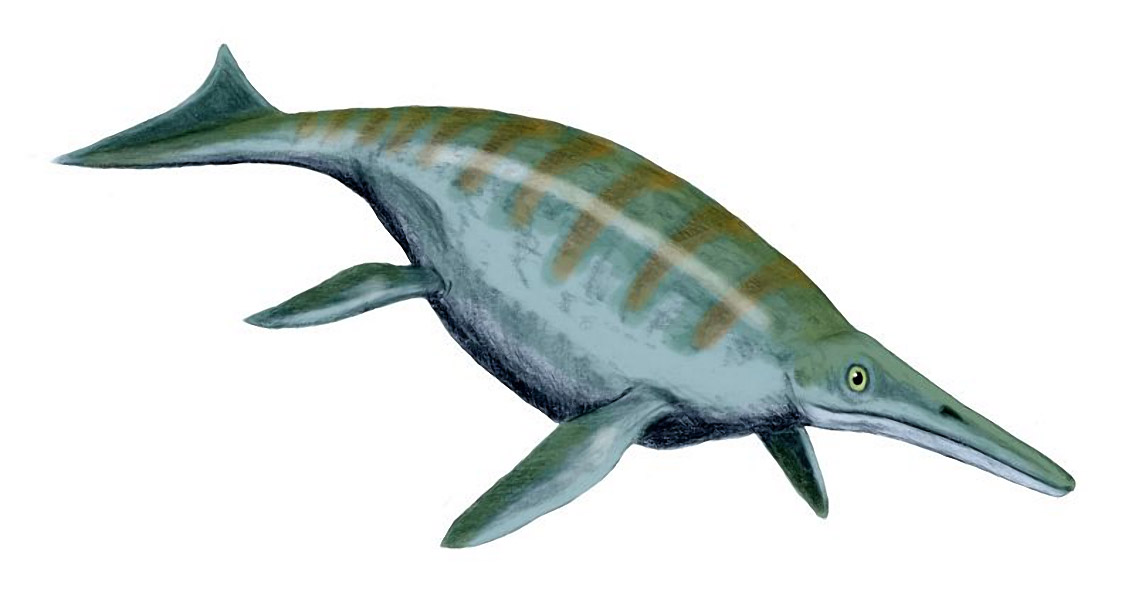
here Image courtesy of Wikimedia Commons user: Timdwilliamson]]>

Proceedings of the National Academy of Sciences. For more information: www.pnas.org Image courtesy of NOAA]]>