Categories
Breaking News

Scientists Making Progress in Creation of Woolly Mammoth Hybrid Embryo

The Guardian. “Actually, it would be more like an elephant with a number of mammoth traits. We’re not there yet, but it could happen in a couple of years.” Already dubbed a “mammophant”, the animal would have numerous mammoth traits such as small ears, shaggy hair and blood that allows the animal to tolerate freezing temperatures. The existence of an actual mammophant however, is still years beyond the creation of an embryo. Future plans, which could take more than a decade to realize, are to grow the embryo in an artificial womb in a lab. The scientists believe their modifications can help the endangered Asian elephant, and help battle global warming by reducing the rate at which Arctic permafrost is thawing. As the permafrost thaws, the process of microbes consuming the organic material beneath it releases huge amounts of the greenhouse gas methane into the atmosphere. When herds of mammoths wandered the Arctic, they suppressed forest growth which in turn prevented the melting of permafrost. “They keep the tundra from thawing by punching through snow and allowing cold air to come in,” Church explained in the article, “In the summer they knock down trees and help the grass grow.” There are critics of the team’s work who consider the revival of extinct creatures to be filled with unpredictable consequences, such as the impact such an introduction would have on elephants and other animals. Regardless of the ethical considerations the team of scientists continues their work. They successfully grew a mouse embryo inside an artificial womb for 10 days, half of its 20-day gestation period. An elephant calf‘s gestation period is 660 days, making growing one a much more difficult feat. Professor Church recently spoke about his team’s progress trying to recreate the long-extinct mammoth’s genetic blueprint over the past two years at the annual meeting of the American Association for the Advancement of Science (AAAS) in Boston. ]]>

Categories
Breaking News

Faeces Eating Fungus Shows Humans Sent Megafauna Extinct

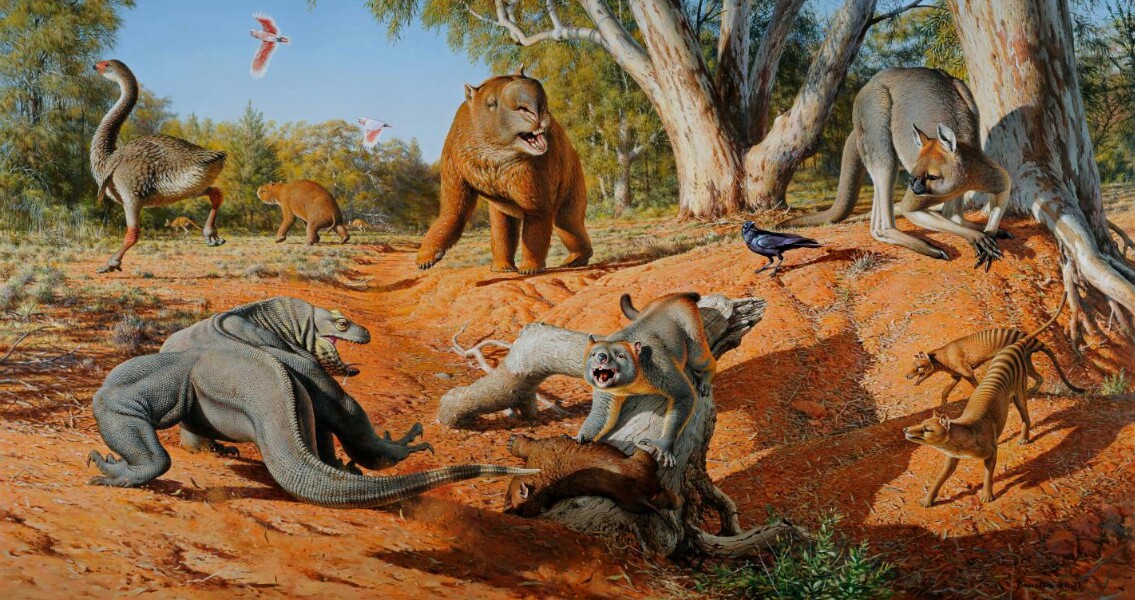
Nature Communications places the blame firmly on humans. Typically, explanations for the extinction of Australian megafauna have focused on either climate change or hunting by humans. The new study, led by scientists from Monash University in Victoria, Australia and the University of Colorado Boulder, has used the ancient faeces left behind by the megafauna to reach its conclusion. The team used a sediment core drilled from the Indian Ocean off the southwest coast of Australia to reconstruct past climate and ecosystems on the continent. The sediment core contains chronological layers of material blown into the ocean including ash, dust, pollen and spores from a fungus known as Sporormiella which thrived on the dung of plant eating mammals. Analysis of the sediment revealed that spores from Sporormiella were in abundance from 150,000 years ago, until plummeting around 45,000 years ago. “The abundance of these spores is good evidence for a lot of large mammals on the southwestern Australian landscape up until about 45,000 years ago,” said Professor Gifford Miller from CU Bolder’s Department of Geological Sciences, one of the study’s authors. “Then, in a window of time lasting just a few thousand years, the megafauna population collapsed.” According to Miller, the study results suggest that shortly after the arrival of humans 85 percent of Australia’s megafauna weighing over 100 pounds went extinct. Tellingly, the sediment core analysis also revealed that Australia’s southwest had dense forests 45,000 years ago, much like it does today. A hotbed of biodiversity, these forests make it unlikely that ecosystem change was behind the extinction of the megafauna. “It’s a region with some of the earliest evidence of humans on the continent, and where we would expect a lot of animals to have lived,” Miller explained. “Because of the density of trees and shrubs, it could have been one of their last holdouts some 45,000 years ago. There is no evidence of significant climate change during the time of the megafauna extinction.” Miller suggests that “imperceptible overkill” could have caused the extinction. A study published in 2006 claimed that even a small amount of megafauna hunting, at a rate as low as one juvenile mammal being killed per person per decade, could well have led to a species going extinct within a few hundred years. “The results of this study are of significant interest across the archaeological and Earth science communities and to the general public who remain fascinated by the menagerie of now extinct giant animals that roamed the planet – and the cause of their extinction – as our own species began its persistent colonization of Earth,” said study leader Sander van der Kaars of Monash University. The issue of the cause behind Australian megafauna extinction is likely to remain controversial, however. Just last week a study was published arguing that humans and certain megafauna coexisted for a least 17,000 years in Australia, highlighting just how complicated the extinction process might have been. Image courtesy of Peter Trusler, Monash University]]>

Categories
Breaking News

Researchers Place Extinct Horse with Humans in Oregon

Equus conversidens: a small, short-legged extinct species of horse, also known as the Mexican horse, which roamed parts of North America at one time, coexisted with the people living in the Paisley Caves area of Oregon over 14,000 years ago. By using discriminant analysis, an approach which relies on the data available to calculate an unknown species’ identity, the authors of the study studied horse toe fossils unearthed during previous archaeological investigations in 2009 and 2010 at Paisley Caves. This research represents the first time this analytic and replicable approach has been utilized to identify a species of horse based solely on toe bones. It is also the first time this specific horse species has been found in Oregon. An archaeologist with the University of Oregon (UO) and one of the study’s co-authors, Dennis Jenkin’s work at Paisley Caves is well-documented. Evidence, which included human feces dating back 14,000 years, identified the site as one of the earliest to be occupied by humans in North America. When the team uncovered horse remains there, paleontologists studying Pleistocene mammals also became interested in the find. “We knew that horses were around at the same time as the first Americans, but we wanted species-level information about those horses,” paleontologist Edward Davis said in an article on the UO website. Davis and Jenkins then turned to Eric Scott, curator at the John D. Cooper Archaeological and Paleontological Center in California and an expert on ice-age horses. Scott maintains large sets of data on the remains of extinct species from archeological sites across the western United States. “Sites like Paisley are important in understanding the paleoecology of North America,” Davis said in the article, “It’s pretty rare to find this kind of reliable fossil evidence of humans coexisting with large Pleistocene mammals.” “It’s often imagined that humans are to blame for the extinctions of ice age megafauna,” Jenkins is also quoted as saying in the UO article, “but at Paisley and elsewhere in North America, we see humans and horses coexisting for at least a thousand years, which suggests a different story.” These fossils, along with other items discovered at Paisley Caves, will be available for public viewing at the university’s Museum of Natural and Cultural History. The exhibit, Oregon—Where Past is Present, opens in November and features touch-screen technology, enhanced artifact displays and a brand new section called Paisley Caves and the First Americans. The study, a collaboration between researchers from the UO, Harvard University and California State University, has been published in the Journal of Vertebrate Paleontology. ]]>

Categories
Breaking News

Giant Sharks Weren't Driven Extinct By Climate Change

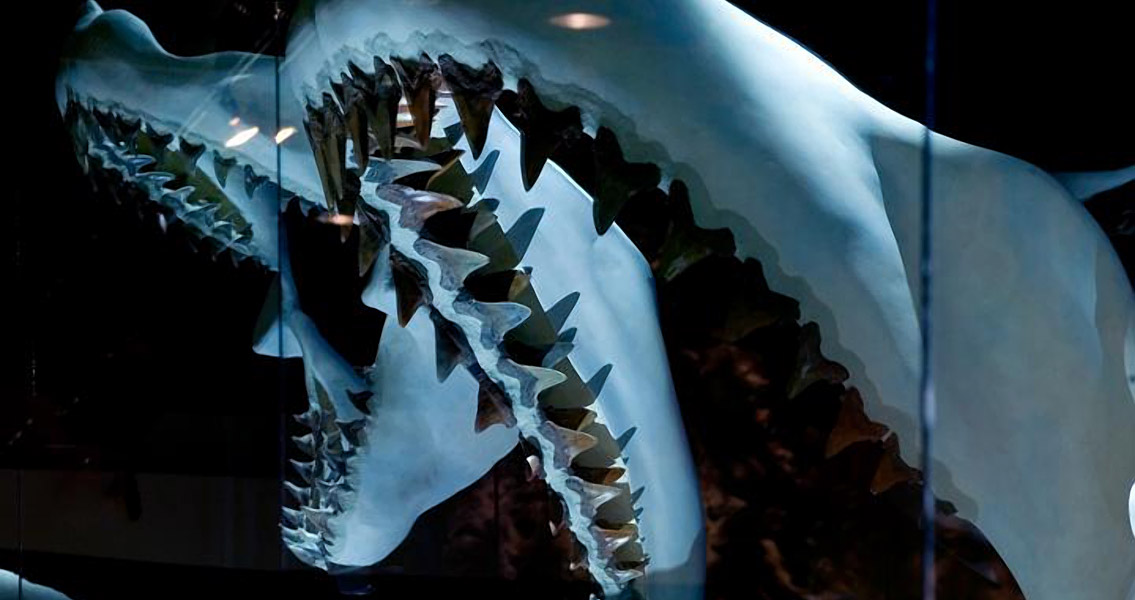
Carcharocles megalodon was the largest shark in the history of the planet, the fossil record suggesting body lengths of up to 18 metres (59 feet). By way of comparison, the giant great white shark which starred in the movie Jaws was meant to be just seven metres (25 feet) long. Although fossilised teeth of the monster sharks have been found in Africa, North America, South America, India, Australia, Japan, and Europe, little else is known about them. In particular, why these terrifying creatures went extinct has long been a mystery. In a recently published study, researchers from the University of Zurich suggest that megalodon died out because the diversity of its prey decreased, and new predators arrived on the scene as competitors. The team’s conclusion is based on an innovative study of the giant shark’s geographical distribution over time. Led by Catalina Pimiento from the Paleontological Institute and Museum of the University of Zurich, the team of researchers examined 200 megalodon records in museum collections and databases from across the globe. Their results have recently been published in the Journal of Biogeography. The data allowed Pimiento’s team to chart the range and abundance of the giant sharks. During the early Miocene, lasting until roughly 16 million years ago, megalodon were mainly found in the warm waters of the Northern Hemisphere, off the coasts of Europe and North America, as well as in the Indian Ocean. Later, they penetrated further into the seas around Australia, South America and Asia. The population of the species peaked during the middle Miocene, while they acheived their widest geographic dispersion during the late Miocene. Around five million years ago megalodon entered a state of continuous decline, seemingly coinciding with the beginnings of the Pliocene glacial period. Until now, most explanations for megalodon’s extinction have been directly connected to this period of climate change. The fossil record has led most researchers to conclude that the giant sharks lived in warm waters. As the temperature of the oceans started to decrease, its hypothesised they would have become uninhabitable for megalodon, and the species slowly died off. Another suggestion is that the freezing waters forced Megalodon’s prey to migrate, starving the giant sharks. The University of Zurich study throws serious doubt on this climate change explanation. “We were not able to ascertain any direct link between the extinction of C. megalodon and the global fluctuations in temperatures during this time.” explained Pimiento in a press release. “Changing climatic conditions do not appear to have had any influence on the population density and range of the giant sharks,” Evolutionary narratives of other species showed the greatest connection with the development of the monster sharks, according to the new study. At a time when a multitude of smaller marine mammals were disappearing, the megalodon range also decreased. Similarly, the arrival of other major predators, such as the ancestors of the killer whale and the great white shark, also coincided with a decline in the megalodon population, suggesting the new species provided too much competition for the increasingly scarce prey. Image ©Jeff Gage / Florida Museum of Natural History]]>

Categories
Breaking News

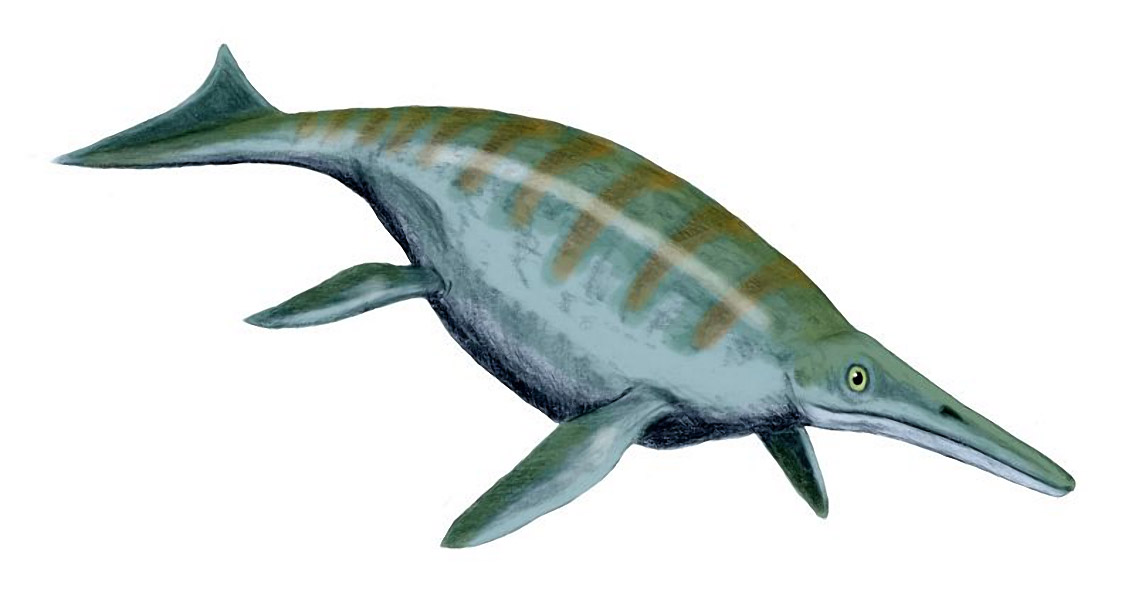
Ichthyosaurs – Ancient Victims of Climate Change

Categories
Breaking News

The Iceman Is Still Delivering New and Valuable Information