
American Journal of Physical Anthropology, suggests that linguistic diversity can predict genetic diversity better than geographical distribution. This idea about a parallel between genetic and linguistic diversity was first put forward by Charles Darwin but so far it has been difficult to devise a methodology that would allow science to actually prove this correlation. With the help of geneticists and linguists from two Italian universities, Ferrara, and Modena and Reggio Emilia, the lead author of the study, linguist Giuseppe Longobardi, developed a methodology using two new tools for comparative linguistics research. The first tool was a refined list of Indo-European cognate words and the second a hitherto unavailable method of language comparison, which can be used to estimate linguistic diversity based on “a universal inventory of grammatical polymorphisms”. This method allows researchers to compare languages from different families, which is what the team did, comparing languages from the Indo-European and the Uralic families. Using these tools, the team identified two sets of linguistic distances, they wrote in the paper, one syntactic and one lexical. Then they used matrix correlation tests to compare these sets with certain values of geographical and genomic distances. The methodology was applied to fifteen European languages and the respective nations. In a press release from the University of York, Longobardi said that, for instance, the French and the Russians speak notably different languages, they have “a certain degree of linguistic diversity”. The study, however, found that the degree of genetic diversity between two populations in Europe was proportional to the extent of linguistic diversity. As a general historical rule, he added, it can be assumed that populations as geographically and linguistically diverse as the Japanese and the Kenyans, for instance, will also be proportionally diverse genetically. Still, as every rule, this also has exceptions. In the case of European populations and languages, the marked exceptions are Hungarians, who are genetically very close to the Slavic and Germanic peoples but linguistically very different. The diversity resulted from a conquest, which brought the new language into the territory of what is today Hungary. Longobardi said the study will now be expanded to include languages spoken outside Europe, hopefully reaching a global scale at some point. This expansion will allow the scientists to see if the rule holds true and they are even hoping that it could tell them exactly when and how the Indo-European languages were brought into Europe. In addition to the purely linguistic perspective, however, the team are hoping that their findings and any future ones will also help the study of genetics. As Longobardi said, “Ultimately being able to identify the ancestry of a population just on the simple basis of the language they speak may benefit identifying genetic properties of these populations, which could ultimately be of practical use even for medical research.” For more information: “Across language families: Genome diversity mirrors linguistic variation within Europe” Image courtesy of Wikimedia Commons user: public domain, CIA]]>
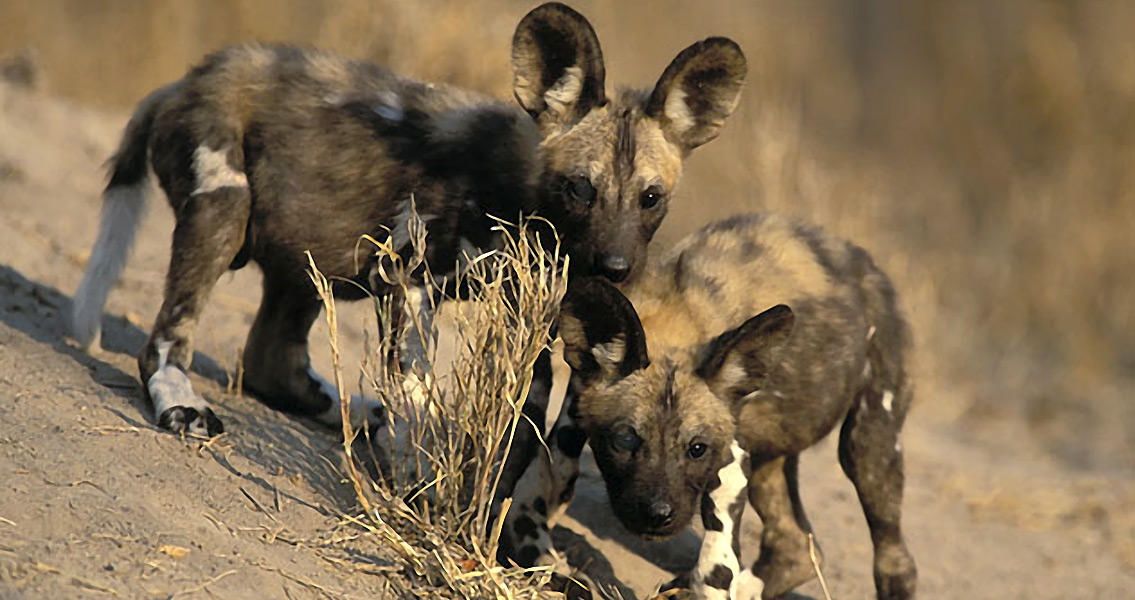
Azania. Recent DNA research has indicated that all modern dog breeds are descended from the domestication of a now-extinct wolf breed, about 11 to 16 thousand years ago. There is a lot of debate, however, surrounding where this domestication took place. Dogs were adopted by early hunter-gatherers, as they could assist in the capture of prey, or provide defence from large competing predators at kills. It is unclear however, whether their domestication took place just once, or on multiple occasions. The huge genetic diversity among dogs found in East Asia had led many scientists to conclude that domestication began there. Other research, however, has challenged this assumption, stating there is an equal likelihood of dog domestication having occurred elsewhere on the Eurasian continent. C. familiaris, it seems, is not native to the African continent, domestic dogs appear to have been introduced from the Middle East at some point after 12,000 years ago. After their initial introduction, dogs spread relatively quickly across North Africa, possibly because they were useful in the pastoral economy of animal husbandry. The expansion of dog populations south of the Sahara, however, appears to have been slow and staggered. In an effort to explain this much slower rate of expansion, Prof Mitchell has suggested that when dogs entered Sub-Saharan Africa, they encountered a series of endemic diseases. Mammalian species, including wild canids, native to Sub-Saharan Africa, acted as reservoirs for these diseases. The most virulent diseases that dogs encountered would have been the various strains of Trypanosomiasis, caused by parasitic protozoa in the bites of insects. One of the best-known diseases dogs could have been affected with is sleeping sickness, principally spread by tsetse fly bites. “[These diseases] pose a significant health risk to dogs living in Sub-Saharan Africa today, particularly to dogs not native to the region,” Prof Mitchell writes. It appears that African breeds of dog have a level of tolerance for these diseases; this resistance obviously took a long time to develop. Dogs which did not have this resistance, therefore, would not have been able to spread as quickly across Sub-Saharan Africa. “Based on the high mortality rates that European breeds introduced to sub-Saharan Africa today suffer, from the diseases discussed, such as sleeping sickness, I would think it very likely that the earliest dogs introduced to the region in prehistory would have suffered a similar challenge,” Prof. Mitchell told New Historian. Prof. Mitchell’s work provides an important addition to the little-understood history of the domestic dog. “I hope that this work will make a contribution to understanding the general history of dogs and people as a whole,” Prof Mitchell said. “[The study] helps develop a more informed understanding of how all kinds of domestic animals were taken up.” It is important to understand the history of the dog and other animals we have domesticated, as they are inextricably linked to our own development. “[Studying domesticated animals] is a field with a lot of potential to it,” Prof Mitchell said. For more information: www.tandfonline.com Image courtesy of Wikimedia commons user: Attis1979]]>

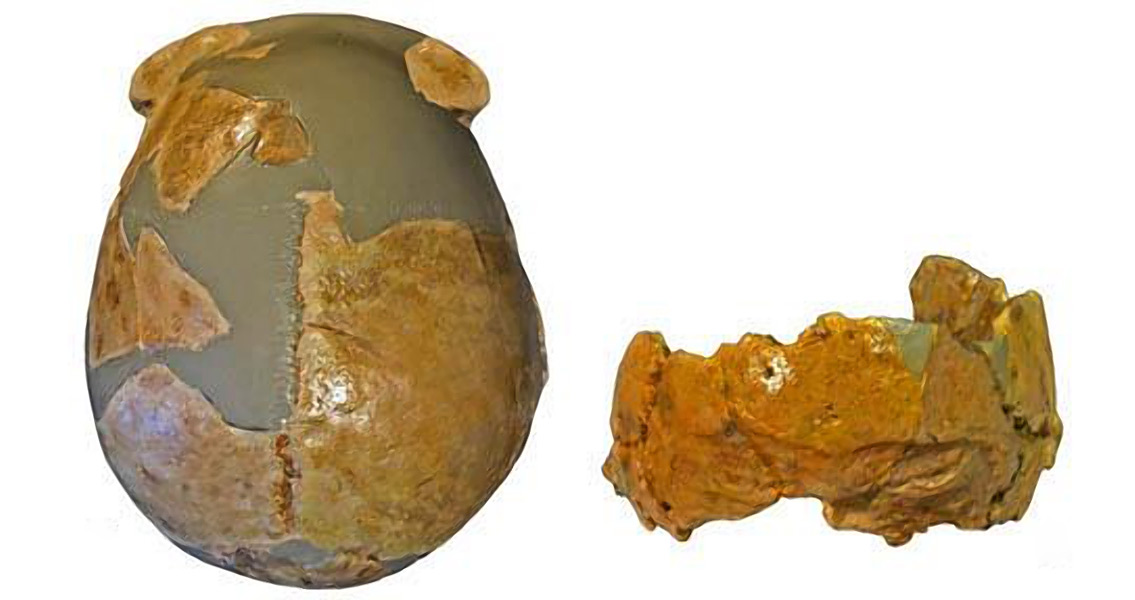
H. sapiens of the time. Interestingly, the skull was relatively thick, possibly as a result of damage, nutritional stress, or a very active childhood. “It looks like nothing else, and so it shows that original diversity that we’ve since lost,” said study co-author Christian Tryon, archaeologist at Harvard University’s Peabody Museum. “It’s probably an extinct lineage.” There is not enough evidence, however, to suggest this fossil is a new subspecies of H. sapien, Tryon stressed. The skull fragment was originally found in the 1970s, at the Lukenya Hill site in Kenya. Tryon and his team analysed the skull which is now part of the collection at the National Museum of Kenya, in Nairobi. The findings are described in the journal ‘Proceedings of the National Academy of Sciences’. Lukenya Hill has also revealed artefacts that are more than twice the age of the skull; 46,000-year-old ostrich eggshells have been found which were probably used to make beads. The Lukenya Hill excavations could offer clues about how human culture shifted when the ancestors of modern humans left Africa, about 50,000 years ago. Relatively little is known about humans before they settled down into farming communities. Only a handful of human burials have been found which are older than 12,000-years-old, said Stanley Ambrose, an archaeologist and paleoanthropologist at the University of Illinois, who was not involved in the study. Modern-day Africans have a tremendous amount of genetic diversity when compared to other populations. The new findings suggest that during a very early period of human history, Africa may have supported even greater human diversity, Tryon said. The finds from Lukenya Hill come from a very important moment in human history. The artefacts there originate from the time that many scientists believe a ‘light switch moment’ occurred, when early humans became smarter. In the period between 20,000 and 50,000 years ago, early humans began to trade over vast distances; they also fashioned decorative beads and made lightweight stone points, not much different from arrow blades. “They’re very simple little segments of blades that are easy to make, but they’re very small and lightweight and they fit into little slots on the ends and sides of arrows,” Ambrose said. “We know that the [ancient] Egyptian ones had traces of poison on them.” The Lukenya Hill fragments provide a very important piece of evidence of human culture at a highly critical juncture. For more information: www.pnas.org Image courtesy of Wikimedia commons user: Citron]]>