Categories
Breaking News

Earliest Evidence of Right-Handedness Discovered

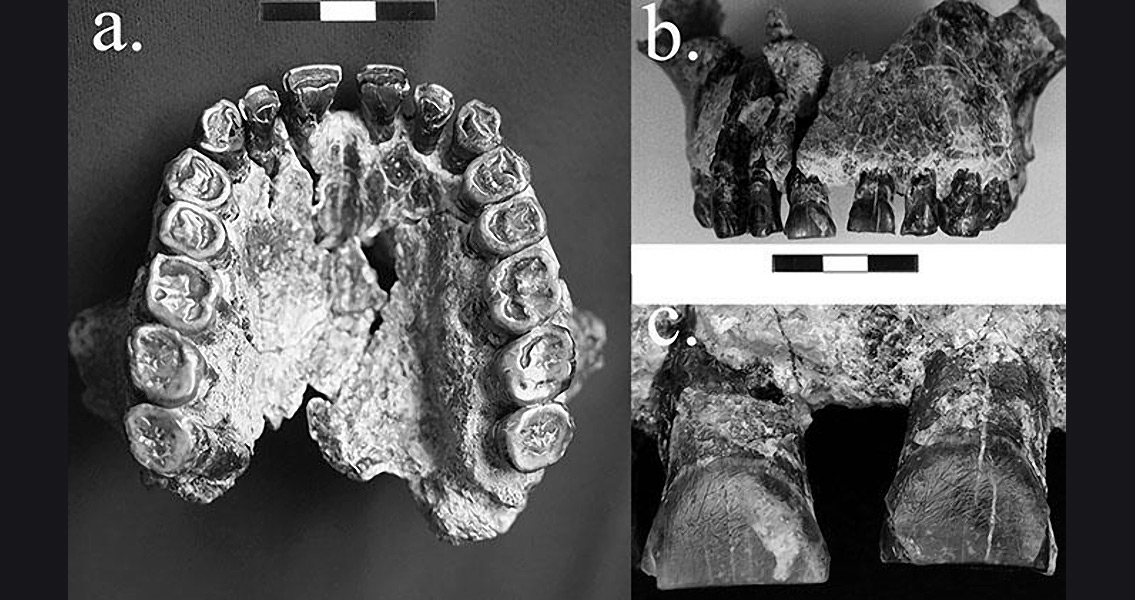
Homo habilis fossil. Although scientists have learnt a lot about “handedness”, they still haven’t been able to precisely explain why humans favour using one hand over the other, or why human populations are biased towards right handedness over left handedness. The lack of a standard, empirical definition for measuring handedness means scientists disagree on what percentage of the human population are left or right handed. However, it is agreed that the majority of humans are right handed (between 70 and 95 percent) and the minority left handed (30 to five percent). By comparison, the ratio among apes is 50:50. At 1.8 millions years old, the Homo habilis fossil studied by the University of Kansas researchers marks the oldest known evidence of right handedness in the fossil record. “We think that tells us something further about lateralization of the brain,” said David Frayer, a KU professor emeritus of anthropology and the lead author of the study, in a press release. “We already know that Homo habilis had brain lateralization and was more like us than like apes. This extends it to handedness, which is key.” Brain lateralisation refers to the fact that the left and right hemispheres of the brain are not exactly alike, leading to certain neural processes and cognitive functions being more dominant in one hemisphere than the other. Scientists have long theorised that this brain lateralisation has some correlation to a person’s handedness. Frayer and team made their discovery by analysing labial striations – small cut marks, which are lip side of the anterior teeth in the intact Homo habilis jaw fossil. Known as OH-65, the fossil was found in a stream channel of the Olduvai Gorge in Tanzania. Most of the deep cuts on the lip face of the upper front teeth veered downwards from left to right. After analysing the marks, Frayer and his team believe they most likely came from OH-65 using a tool with its right hand to cut food it was holding in its mouth while pulling at it with its left hand. The scratches can be seen with the naked eye, but the team used a microscope to accurately determine their alignment. “Experimental work has shown these scratches were most likely produced when a stone tool was used to process material gripped between the anterior teeth and the tool occasionally struck the labial face leaving a permanent mark on the tooth’s surface,” said Frayer. The direction of the marks strongly suggests that the Homo habilis specimen was right handed. Of course, OH-65 is only one sample but it could be the first evidence of a dominant handed pre-Neanderthal. As such, it could lead to the search for similar marks in other Homo fossils, allowing scientists to gain further insight into the development of handedness. “Handedness and language are controlled by different genetic systems, but there is a weak relationship between the two because both functions originate on the left side of the brain,” explained Frayer. “One specimen does not make an incontrovertible case, but as more research is done and more discoveries are made, we predict that right-handedness, cortical reorganization and language capacity will be shown to be important components in the origin of our genus.” A host of different studies have pointed towards brain reorganization, the use of tools and use of a dominant hand all occurring early in the human lineage. This latest study, published in the Journal of Human Evolution, is the first to look into the directionality of striations in the earliest specimens of our evolutionary lineage. It shows how something seemingly as basic as the dominance of one hand over the other is well embedded in our evolutionary history. “We think we have the evidence for brain lateralization, handedness and possibly language, so maybe it all fits together in one picture,” said Frayer. Image courtesy of David Frayer]]>
Categories
Breaking News

Scientists Reconstruct Habitat of Early Human Ancestors

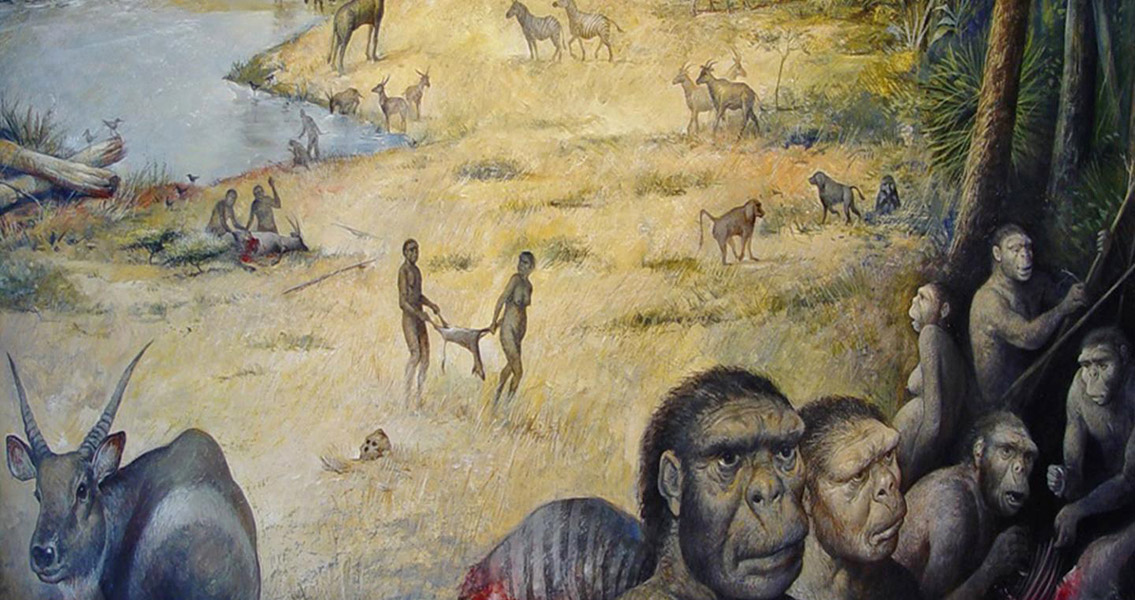
Homo habilis and Paranthropus boisei, these two species were similar in that they had a rough lifespan of anywhere from three to four decades and a height of around 4.5 feet to 5.5 feet. However, the latter is thought to have been more heavyset and with a smaller brain capacity than Homo habilis. Scientists involved in the research feel that the two species were unlikely to have camped there, but instead used the cover of the nearby acacia and palm trees to feed off of the carcasses of either their own kills or those taken from other carnivores. When and where early human ancestors began eating more meat are crucial questions, as an increased amount of protein in the diet of hominins is thought to be one of the first indicators of an increase in brain size. The research study can be found online here Image courtesy of M.Lopez-Herrera via The Olduvai Paleoanthropology and Paleoecology Project and Enrique Baquedano.]]>

Categories
Breaking News

Competition from Hyenas Limited Humans’ Spread in Europe

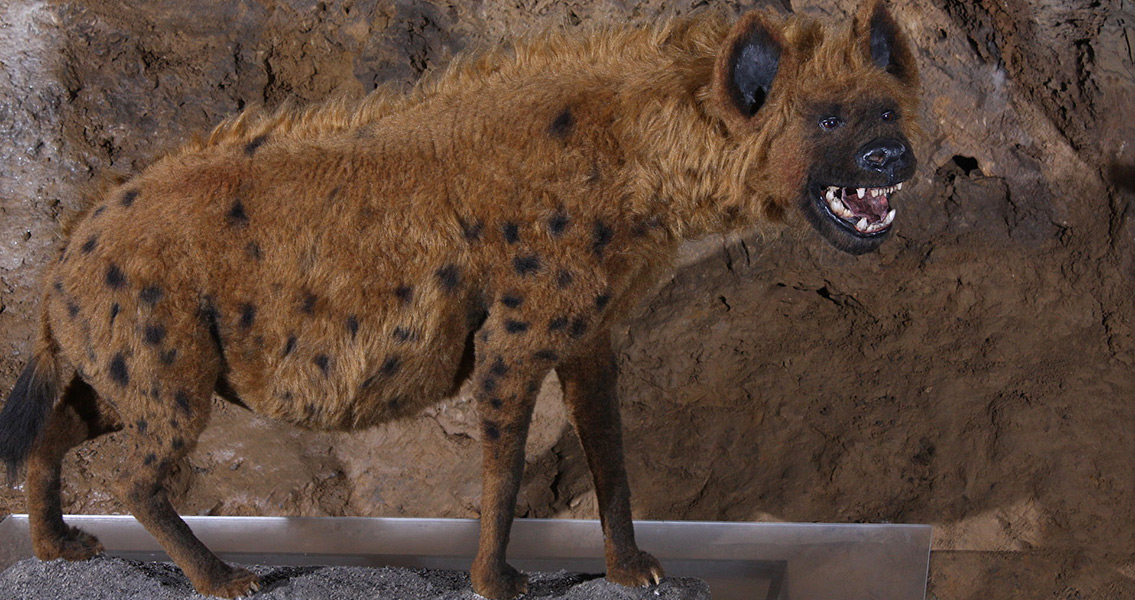
Pachycrocouta brevirostis, was more than twice as big as modern-day hyenas and it was the major competitor of Homo species for food, apparently gaining the upper hand and delaying the population of Europe by humans until the Neanderthals came along. According to the paper detailing the study, published in the journal Quaternary International, food availability was a leading limiting factor for the spread of early humans in the temperate climate of the Iberian Peninsula and western Europe as a whole, especially during the winter. In order to ensure their sustenance, these early hominids “developed scavenging strategies,” to make use of the bodies of hoofed animals. Yet, the giant hyenas were, it seems, better scavengers, greatly reducing the availability of food that could have driven a more expansive hominin spread across the continent. The authors also argue that the Villafranchian period, 1.4-1.2 million years ago, was characterised by stable climate that would have facilitated the spread of humans in Europe were it not for the hyenas. One of the popular hypotheses in the debate over why early humans did not populate Europe is that they were incapable of coping with sharp climatic changes. To come to these conclusions, the researchers analysed several large deposits of animal bones dating to the Villafranchian period of the Pleistocene, writes the Daily Mail. The bones were found at two sites in northeastern Spain, near the city of Terassa. The bones belong to large herbivores and the team of palaeontologists deduced that they were carried to these sites by Pachycrocouta brevirostis. During the same time period, caves in the region were occupied by early humans. These early humans, as another recent study revealed were not Homo erectus, as was believed earlier. They were Homo habilis, a smaller, more ape-like species that could both climb trees and walk. It was probably not very well prepared to handle large predators like the hyenas, which, according to the Spanish team, reached a height of 4 feet (not much shorter than H. habilis) and weight of 30 stone. Besides, just like modern hyenas, they had very powerful jaws that could crush the bones of animal carcasses and get to the nourishing marrow, unlike humans, ancient or modern. What’s more, say the authors, the hyenas were not the only predators that competed with our ancestors: there were a number of felid species that roamed Europe in those times, making it additionally difficult for the hominids, who lacked the hunting “equipment” of those giant cats, to survive. For more information: Were large carnivorans and great climatic shifts limiting factors for hominin dispersals? Evidence of the activity ofPachycrocuta brevirostris during the Mid-Pleistocene Revolution in the Vallparadis Section (Valles-Penedes Basin, Iberian Peninsula) Image courtesy of Wikimedia Commons user: Heinz-Werner Weber]]>

Categories
Breaking News

Homo Habilis Were First Out of Africa

Homo erectus as long believed, but a smaller species, Homo habilis, also called Handy Man, Discovery News writes. The senior author of the study told the website that the Homo habilis species was characterised by more ape-like features than previously thought, such as climbing besides walking on two legs, but also had some features characteristic of modern humans; such as a large brain, and tool-making skills. It was, however, shorter than Homo erectus: a more muscular species more closely resembling modern man. Using the huge dataset, Mark Collard, who is professor at the Human Evolutionary Studies Program of Simon Fraser University, and his team compared a number of alternative evolutionary trees and looked into how well each tree fit in with the dataset. There were three possible outcomes: either the tree was inconsistent with the dataset and was hence rejected, it was partially consistent, or it was fully consistent with the dataset. Based on what they found from the comparisons, the researchers suggest that Handy Man went into Asia and Europe from Africa and somewhere in Asia it gave rise to Homo erectus. Collard explains that the ‘Upright Man’ then went into Africa, a bold suggestion in the face of current consensus but backed by evolutionary data, apparently. The little Handy Man was also the ancestor of another species, this time even smaller: the Homo floresiensis, the ‘Hobbit Humans’ who were thought to have been nothing more than physically deformed humans. In fact, according to the theory of Collard and his team, H.floresienis were a separate species that inhabited the island of Flores in Indonesia. As to where the first modern human originated, Collard says this most likely happened in South Africa. He told Discovery News that “The fact that Australopithecus sediba [a two-million-year-old fossil] groups with Homo is consistent with the idea that the earliest known representative of the genus Homo originated in South Africa.” Another interesting conclusion of the team was that the Neanderthals were almost certainly a species exclusive to Eurasia; there was no evidence that its representatives had ever been in Africa. At the same time the researchers were unable to establish the immediate ancestor of this species, as scientist before them had been unable to trace back the origins of other hominin species from the Middle Pleistocene. Collard said he hoped his team’s findings would encourage further research by other scientists in South Africa, China, and Southeast Asia, where some of the oldest known human fossils have been unearthed. Asked by Discovery News to comment on the study, the director of New York University’s Center for the Study of Human Origins, Terry Harrison, said it would definitely fuel a debate among palaeoanthropologists, hardly a surprise given the way it challenges long-held beliefs in the area. Another commenter, human origins professor Bernard Wood from George Washington University, said the team who did the study had made an important step in furthering our understanding about evolution, which he called “superficial” at present. Image courtesy of Wikimedia Commons user: Royroydeb ]]>