Categories
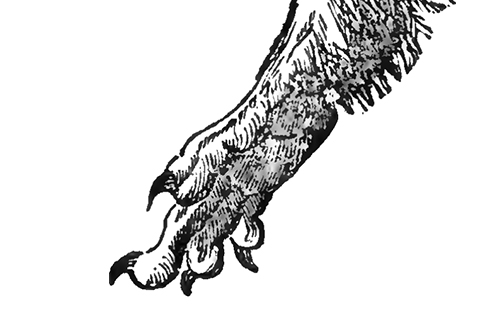
Ancient Metal Feline Claws Found
th century. As a result, the discovery of new features had become rare at the archaeological site. Therefore, it came as a major surprise when the researchers managed to uncover a painting on the eastern wall of the tomb. According to Maksim Ledebev, the professor at the Russian State University for Humanities, this painting was made on a layer of fine white plaster that was damaged by soot and dirt from the 19th century. As a result, only 30% of the original painting could be preserved. Ledebev also believes that the fact that people were actually living inside these tombs during the Middle Ages also added to the damage. However, the scenes have not been lost completely and the traces should allow experts to reconstruct the entire painting. Once reconstructed, this painting depicted various scenes of life in the Ancient times. The images of boats sailing on the River Nile most probably represented the return of the owner after a voyage. The lower portions of the painting represent a variety of agricultural scenes – such as ploughing, sowing and labourers driving sheep and donkeys. Lebedev believes that each scene depicted in the painting had a deeper symbolic meaning. He also feels that the paintings of bird hunting in marshlands most probably referred to rebirth and to the taming of chaotic forces. Furthermore, since the boats had sails going southwards, Lebedev thought that they reflected the high status of their owner. Evidence of ancient paintings has also been found in a few other tombs in the vicinity. The team has also uncovered certain indirect pieces of evidence in different tombs, such as the remains of plaster and paint and extremely smooth walls. Moreover, a number of rock-cut chapels were rapidly excavated in the early 20th century without proper documentation. Many of these areas were still covered with a rough plaster that belonged to the inhabitants who lived in these tombs during the Middle Ages, so finding more paintings in the necropolis is widely anticipated.]]>
He said; “In fact, in a literate society there are multiple channels of recording information that can be complementary to each other. In this case both prehistoric clay tokens and cuneiform writing used together.” He speculated that tokens would have been used in the initial transactions between administrators and farmers, before the information was recorded in cuneiform later on in the process. Indeed, despite cuneiform having existed for over two thousand years, this would have been a society a long way from universal literacy. The use of both systems may have been necessary for example, to facilitate understanding between administrators and suppliers. The discovery of the tokens raise interesting questions about how quickly Assyrian society embraced literacy and writing for day to day use. It offers a valuable insight into the path of progress taken by mankind. Just as the arrival of the calculator did not herald the immediate and total disappearance of the abacus, the arrival of cuneiform did not kill off pre-literate communication methods.]]>



th and 27th of July the Council for British Archaeology will be coordinating the nationwide Festival of Archaeology. This annual celebration includes over a thousand events organised by museums, national parks, heritage organisations and universities to raise awareness across the country about sites of historic importance and interest. Unfortunately, a combination of budget cuts and dwindling interest in archaeology has put the future of the profession in Britain in a precarious position. Archaeological digs in the UK are still unearthing a host of fascinating discoveries that show just how important the profession is. In 2003, an archaeological survey for a road widening scheme in Essex discovered an undisturbed Saxon tomb, believed to be that of one of the Kings of Essex. In 2012, the bones of the last Plantagenet King, Richard III, were found in a car park in Leicester. Such sites are vital to piecing together the UK’s rich and diverse history, but the archaeology sector is coming under increasing pressure. The recession reduced the number of archaeologists in the UK by a third. The number of archaeologists cannot match the rate of development works, raising the prospect of important sites being lost. The situation has reached the point where only 5% of England’s heritage is designated and protected by Law. Despite the extensive level of qualification needed for a professional archaeologist, entry level salaries start at just £17,000, and jobs are often only temporary. For university departments, a vicious cycle is starting. Government funding is decided by the number of top grade students applying for a university. Archaeology departments are beginning to shrink due to the paucity of students that apply to them. In the case of Birmingham University, this led to the closing of the Institute of Archaeology and Antiquity in late 2012. At every level, sources of funding are becoming scarce. Local councils and charitable funds such as The Heritage Lottery Fund, the Arts and Humanities Research Council and English Heritage have all reduced their funding over the last few years. Digs are increasingly reliant on the enthusiasm and goodwill of volunteers. Speaking about the exhumation of Richard III, world renowned archaeologist Glenn Foard told The Independent, “We could not have found the battlefield, and surveyed it when we found it, if we had not had this volunteer input.” Other solutions are being explored. DigVentures seeks to use crowd funding techniques to create investment and engagement in sustainable archaeology. It is a self sufficient enterprise that aims to break the reliance on government or local authority grants. DigVentures’ is an innovative approach that also allows donators to take part in digs and excursions, hopefully fostering genuine engagement. It is a truly innovative approach, the only potential criticism being that it relies on choosing sites for their widespread and popular appeal. Elsewhere, the Local Heritage Engagement Network is trying to rekindle local participation in the protection of heritage. By highlighting the consequences local authority cuts can have for the historical environment, they hope to encourage local groups to campaign for the protection of archaeological services. It is vital that there are enough archaeologists to keep pace with the rate of redevelopment and building work in the UK. Unfortunately, the difficulties facing the sector raise the very real prospect of important sites being lost forever. The key seems to be reigniting the general public’s fascination with the past and appreciation of archaeology’s value.]]>