Categories
Breaking News

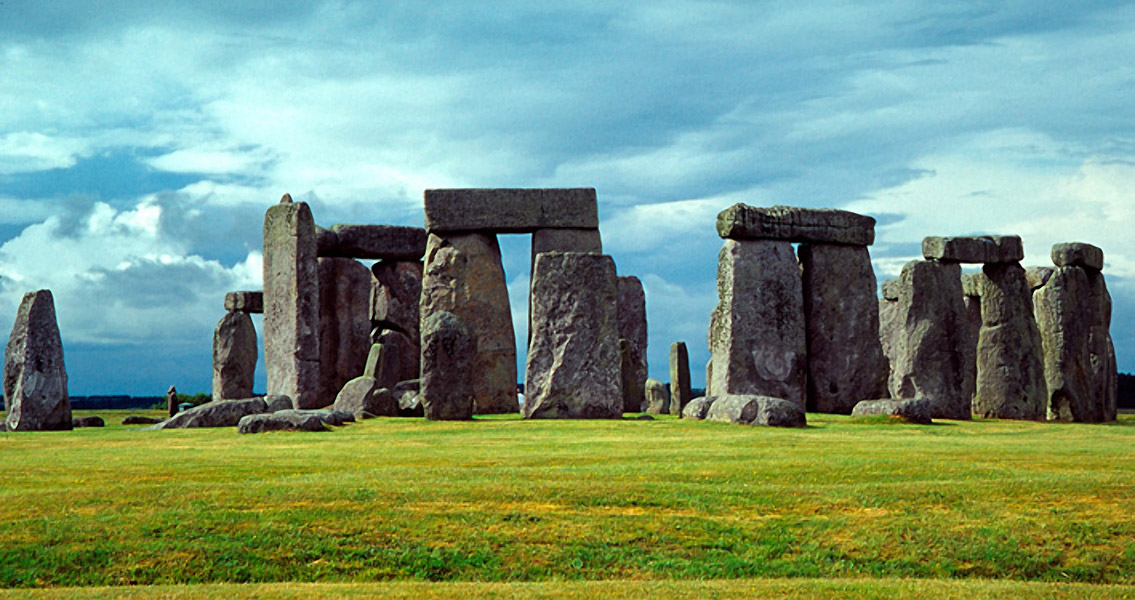
What do we know about the people who built Stonehenge?

Stonehenge (3)

Who built Stonehenge?

The questions of how and why Stonehenge was built garner significantly more research than specifically who built it. That is partly down to the fact that many of the human remains were cremated, making it difficult to extract much useful information from them.

New technique unlocks ancient secrets

Lead author Christophe Snoeck, who is undertaking doctoral research at Oxford’s School of Archaeology, demonstrates that even cremated bone retains its strontium isotope composition, making it possible to investigate where these people had lived during the last ten years of their lives. He says: ‘The recent discovery that some biological information survives the high temperatures reached during cremation (up to 1000 degrees Celsius) offered us the exciting possibility to finally study the origin of those buried at Stonehenge.’ Professor Julia Lee-Thorp, Head of Oxford’s School of Archaeology and an author on the paper, says: ‘This new development has come about as the serendipitous result of Dr Snoeck’s interest in the effects of intense heat on bones, and our realization that that heating effectively “sealed in” some isotopic signatures.’

Stonehenge bodies travelled from Wales

The team analysed the skulls of 25 people who were cremated at the site around 3000 BC to better understand their lives. At least ten of them did not live near Stonehenge at the time of their death. They were far more likely to have been living in western Britain; a region that includes west Wales, the known source of Stonehenge’s bluestones. The research was conducted in partnership with colleagues from University College London, Université Libre de Bruxelles & Vrije Universiteit Brussel), and the Muséum National d’Histoire Naturelle de Paris, France. Rick Schulting, a lead author on the research and Associate Professor in Scientific and Prehistoric Archaeology at Oxford, explains: ‘Some of the people’s remains showed strontium isotope signals consistent with west Wales, the source of the bluestones that are now being seen as marking the earliest monumental phase of the site.’

Inter-regional connections in 3000 BC

The results emphasise the prevalence of inter-regional connections involving the movement of both materials and people in the construction and use of Stonehenge, providing rare insight into the large scale of contacts and exchanges in the Neolithic, as early as 5000 years ago.

A revolutionary analysis technique

Dr Schulting adds: ‘To me the really remarkable thing about our study is the ability of new developments in archaeological science to extract so much new information from such small and unpromising fragments of burnt bone.’ The technique is now regarded as a vehicle to improve our understanding of the past using previously excavated ancient collections. Schulting continues: ‘Our results highlight the importance of revisiting old collections. The cremated remains from Stonehenge were first excavated by Colonel William Hawley in the 1920s, and while they were not put into a museum, Col Hawley did have the foresight to rebury them in a known location on the site, so that it was possible for Mike Parker Pearson (UCL Institute of Archaeology) and his team to re-excavate them, allowing various analytical methods to be applied.’]]>

Categories
Breaking News

Ancient dirty dishes shed light on early climate change – and how farmers adapted

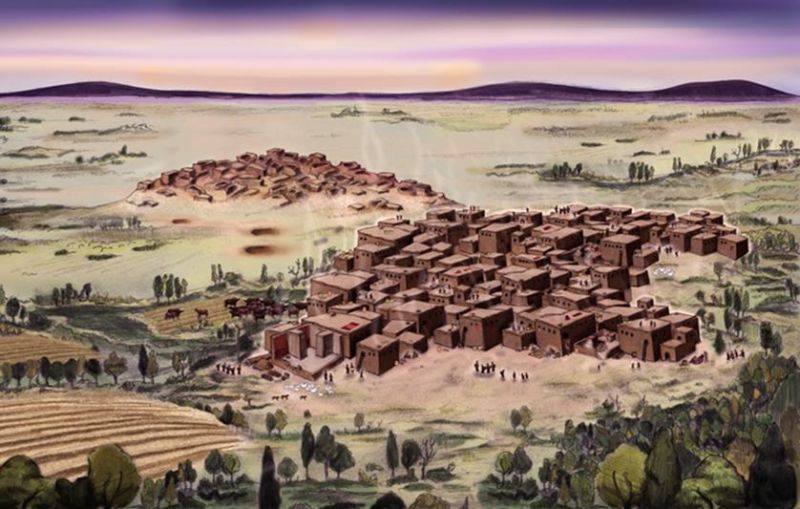
A major climate event Looking closely at the Neolithic and Chalcolithic city settlement of Çatalhöyük in southern Anatolia, Turkey, the study takes into account farming practices in the period spanning 7500 BC to 5700 BC. When the city was most intensely occupied around 8,200 years ago, there was a sudden decrease in global temperatures. It became a well-documented event in the history of climate change, and was caused by a huge amount of glacial meltwater from a massive freshwater lake in northern Canada.   [caption id="attachment_8875" align="aligncenter" width="800"] An artist’s reconstruction of the east and west mounds at Çatalhöyük. Image Credit: Çatalhöyük Research Project[/caption]

Pragmatic farming during drought

The research centres on animal bones found at the excavation site. Scientists have concluded that the herders of the city turned towards sheep and goats, as they fared better during times of drought than cattle. By looking at the cut marks on the animal bones, we can also find more information on butchery practices. They indicate desperation in the community: the high number of cut marks on the bones during the time of the temperature drop shows how the populace exploited any meat available as food would have been scarce.

Dirty dishes

Ancient cooking pots with traces of animal fats have also been analysed in the study, which makes this the first time compounds from animal fats found in pottery are shown to carry evidence for the climate event. [caption id="attachment_8874" align="aligncenter" width="500"] In situ pottery at the archaeological site of Çatalhöyük. The pottery has been at the centre of recent research shedding light on the ways ancient farming practices adapted to climate change. Image credit: Çatalhöyük Research Project.[/caption]

Inevitable impacts

The paper brings together researchers from the University of Bristol’s Organic Geochemistry Unit (School of Chemistry) and the Bristol Research Initiative for the Dynamic Global Environment (School of Geographical Sciences). Co-authors of the paper include archaeologists and archaeozoologists involved in the excavations and the study of the pottery and animal bones from the site. Dr Mélanie Roffet-Salque lead the research. She says: “Changes in precipitation patterns in the past are traditionally obtained using ocean or lake sediment cores. “This is the first time that such information is derived from cooking pots. We have used the signal carried by the hydrogen atoms from the animal fats trapped in the pottery vessels after cooking. “This opens up a completely new avenue of investigation – the reconstruction of past climate at the very location where people lived using pottery.” Co-author, Professor Richard Evershed, adds: “It is really significant that the climate models of the event are in complete agreement with the H signals we see in the animal fats preserved in the pots. “The models point to seasonal changes farmers would have had to adapt to – overall colder temperatures and drier summers – which would have had inevitable impacts on agriculture.”]]>

Categories
Breaking News

Chewing the fat: gossip culture in early Neolithic food halls

PloS One demonstrates that specialised food production buildings were commonplace in the world’s earliest agricultural villages. The study shows how these buildings played a key role in maintaining and enhancing community cohesion. [caption id="attachment_8777" align="aligncenter" width="500"] View of the early Neolithic communal structure at Beidha, Jordan. Credit: Prof. Cheryl Makarewicz[/caption]

Food production encourages an organised society

Prof. Cheryl Makarewicz of Kiel University and Prof. Bill Finlayson from the University of Reading have posited that the advent of food production sparked profound changes in the ways humans organised their societies. The team undertook excavations at the Pre-Pottery Neolithic B settlement of Beidha, not far from the UNESCO World Heritage site of Petra in Jordan. The very architectural fabric of early farming villages helped to shape human interaction, which was crucial during a period when farming and animal herding were in their first incarnations. Professor Makarewicz comments: “These buildings provided a focal point for the community, a place where everyday mundane activities such as preparing food and making tools could have been undertaken by several people simultaneously.” [caption id="attachment_8778" align="aligncenter" width="377"] The Monastery, Petra, Jordan. Credit: Berthold Werner[/caption]

A place to cook, a place to chat

On top of their immediate functions, these spaces became a platform for conversation and the exchange of ideas. She continues: “These spaces were also important in that they provided a place where community members could drop by and have a chat with their neighbours. “This informal, but highly regular activity may have been all the more important in this context of increasingly large and settled populations. Community members knew information was being passed along and there was a central place to catch up on the news.”

A platform for philosophy?

The buildings have even been linked to the first hints of control and ownership in human society. “What we are also seeing here at Beidha is a really interesting example of how societies deal with managing new issues of how to access and control ownership of plant and animal resources, which might have become more contested within these increasingly populous settlements.”

The early social influence of architecture

“Also interesting is that people at Beidha dealt with these new social tensions very differently from their contemporaries to the west across the Jordan Valley,” Makarewicz adds. The research suggests that in southern Jordan, community daily practice occurred in non-residential buildings, which maintained and strengthened social structures. Conversely, nearby communities would use buildings like this for occasional, dramatic ritual practices. The researchers conclude: “There is a long history of using special-purpose architecture in the south of Jordan to structure the community, and this way of using the built environment for more than just shelter goes right back to the start of the Neolithic here. The continuation of this practice illustrates a strongly local continuity in pathways through the Neolithic revolution.”]]>

Categories
Breaking News

Why does science say there was only 1 man for every 17 women in 3000 BC?

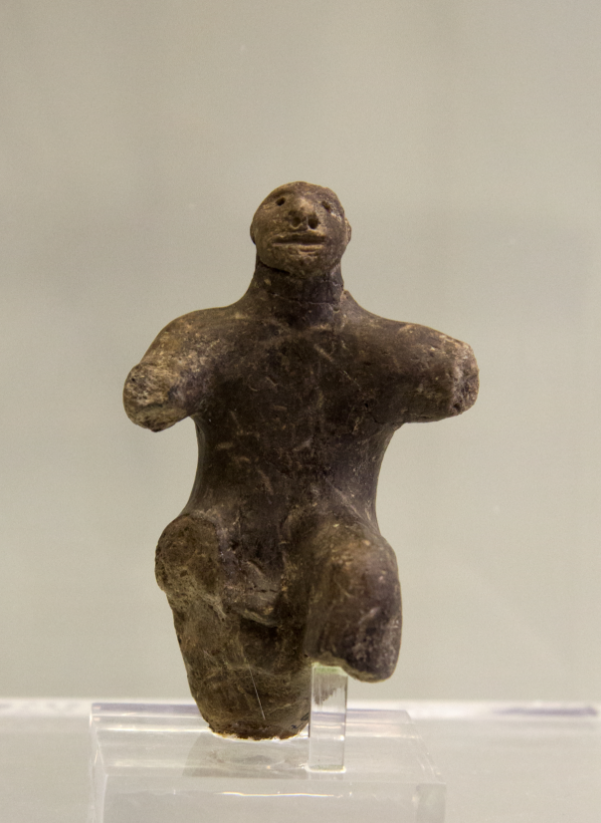
Male figurine, pottery. Neolithic, 5000 – 3000 BC. Credit: Archaeological Museum of Heraklion.[/caption]

The Y Chromosome Bottleneck

Known as the Y chromosome bottleneck, this research was first proposed in 2015 by Monika Karmin, a population geneticist at the University of Tartu in Estonia. Since then, academics have been trying to understand how this could have happened. Some research has told us that the drop-off in the male population was the result of ecological factors mainly affecting male babies. Stanford University students Alan Aw and Tian Cheng Zeng thought there must be another explanation. They took their theories to Marcus Feldman, a population geneticist at the University, who said that the imbalance “struck us as being very extreme.”  

A new explanation?

On 25th May 2018, the team published a new paper in the journal Nature Communications. It posits that humans who were living in patrilineal clans, which consisted of males from the same lineage, could have entered a particularly violent age; with inter-clan wars happening particularly frequently. If true, this had the potential to wipe out entire lines of male descent at a time. In his research, Feldman suggests that rather than the male population taking an apparent nosedive, the diversity of the Y chromosome decreased due to the ways people were living and fighting with one another. Or, to put it another way, there weren’t actually fewer males. There was just far, far less diversity.  

A quick recap of our chromosomes

As humans, most of our genes are carried in 23 pairs of chromosomes. The 23rd pair determines our sex: females have two X chromosomes, whereas males have one X and one Y chromosome. A baby’s sex is determined by the chromosomes it inherits from its parents. This allows genes to get shuffled around, which increases the overall diversity in the species. But the Y chromosome, which has no female counterpart, stays almost the same from grandfather to father to son, and so on. Of course, mutations occur, which explains why the Y chromosome does in fact differ among males.  

How were people living at the time?

After the advent of farming around 12,000 years ago, societies were increasingly organising themselves around extended kinship groups, ultimately manifesting as patrilineal clans. As we know from this study, this was a cultural fact with poignant biological consequences. Women may have married into a clan, but the men in the clan were all related through male ancestors. “From the point of view of those chromosomes at least, it’s almost as if everyone in a clan has the same father,” says Nathan Collins from Stanford University. This study, which looks at genetic occurrences between 5,000 and 7,000 years ago, considers people living in a transitional period. Soon after, people moved into larger societies and built towns. At that point, humans because less intent on maintaining the Y chromosome lineage and perhaps unsurprisingly, the diversity of the Y chromosome bounced back. [caption id="attachment_8716" align="aligncenter" width="500"] Marcus Feldman with fellow researchers Tian Cheng Zeng and Alan Aw. Credit: Marcus Feldman, Stanford University[/caption]

Simulating the possibilities

Feldman, Zeng and Aw conducted 18 different simulations, each representing different scenarios that could explain the bottleneck. This included situations reflecting Y chromosome mutations; competition between different tribes, and natural death. Crucially, the bottleneck did not occur in the simulation in which patrilineal clans did not exist. We can then assume that the most likely reason for the bottleneck was patrilineal clans going to war. If one clan was wiped out, so was its shared Y chromosome. Monika Karmin, lead author of the original study, weighs in: “fighting clans are indeed likely to cause a drastic drop in male genetic diversity… However, we do have to keep in mind that there is very little information on the actual societal organisation from that time.”  

No XX bottleneck

Incidentally, there was no such bottleneck in females. Feldman was able to deduce this by analysing mitochondrial DNA, which is only passed down from the mother. “In that same group, the women could have come from anywhere,” Feldman says. “They would’ve been brought into the group from either the victories that they had over other groups, or they could’ve been females who were residing in that area before.” He added that colonisation tends to see the men killed, and the women kept alive.  

A cultural influence on genetic variation

Academic research often focuses on behaviours that have a genetic basis; but not necessarily on behaviours that influence genes. The new research is, in Feldman’s words: “an example of what a cultural preference can do in changing the level of genetic variation.”]]>
Categories
Breaking News

Mummy Mystery Solved – The History News of the Week

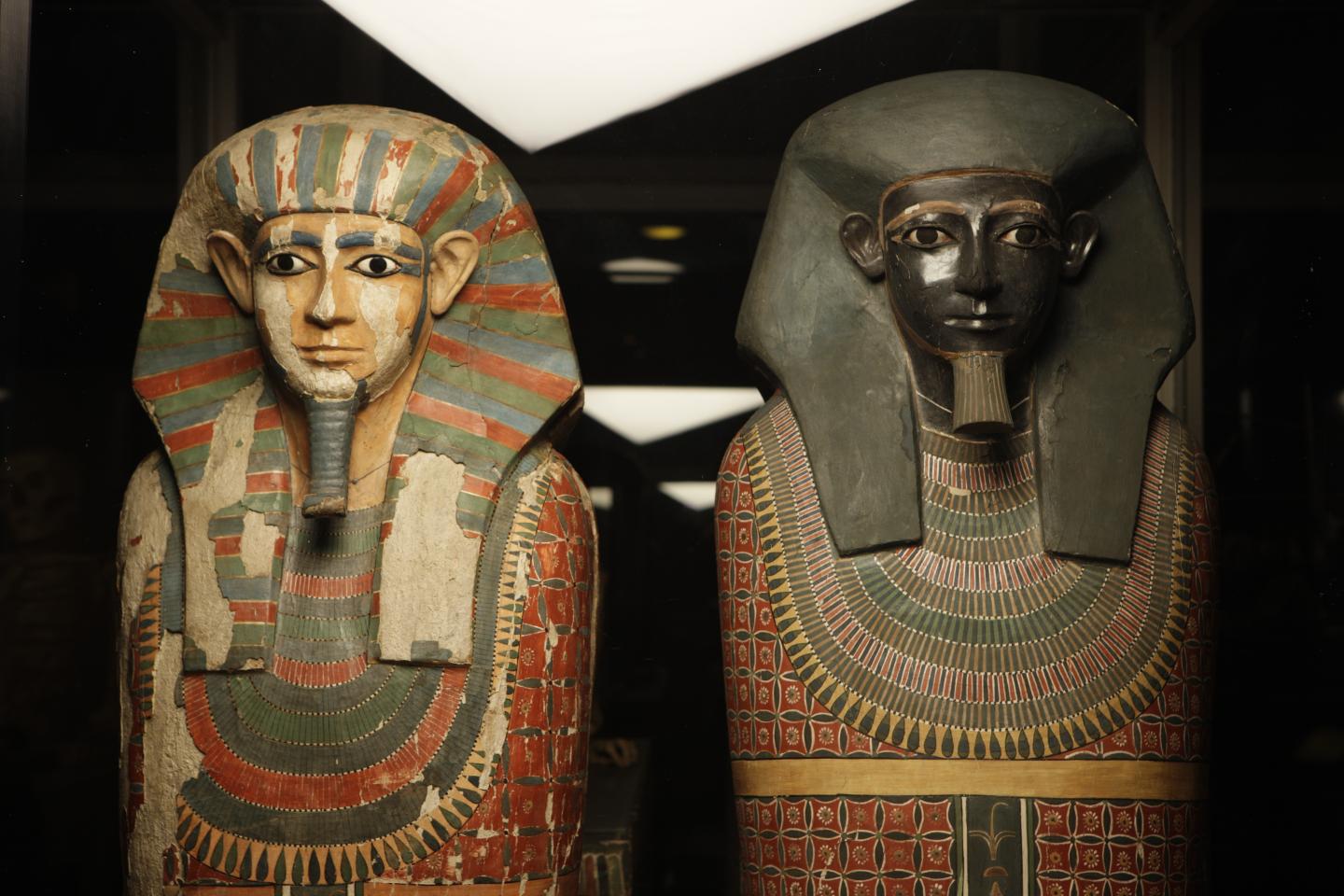
Mystery of Mummified Brothers solved Modern DNA techniques have solved a 4,000-year-old mummy mystery. For years, two mummies at the Manchester Museum were thought to be brothers, but a new study by scientists from the University of Manchester has revealed they are in fact half-brothers with a different father. The mummies are of two ancient Egyptian elites, Khnum-nakht and Nakht-ankh – dating to around 1800 BCE. Despite popularly being dubbed ‘The Two Brothers’, ever since their discovery in 1907 there has been debate over whether they were really related. Hieroglyphic inscriptions on their coffins had suggested the two men were siblings. However, when pioneering Egyptologist Dr. Margaret Murray unwrapped the two mummies in 1908, she argued that differences in skeletal morphologies suggested they weren’t actually related and one had been adopted. In 2015, DNA was extracted from the teeth and sequenced using a next generation technique to determine the relationship – if any – of the two men. The results have now been published in the Journal of Archaeological Science, revealing that they were half-brothers. Dr Konstantina Drosou, of the School of Earth and Environmental Sciences at the University of Manchester, who conducted the DNA sequencing, said: “It was a long and exhausting journey to the results but we are finally here. I am very grateful we were able to add a small but very important piece to the big history puzzle and I am sure the brothers would be very proud of us. These moments are what make us believe in ancient DNA. ” The study is the first to successfully use the typing of both mitochondrial and Y chromosomal DNA in Egyptian mummies. Forest Europe’s Forests Halved over last 6,000 years More than 50% of Europe’s forests have disappeared in the last 6,000 years, new research claims. Authors of the new study identify the need for agricultural land and wood as a source of fuel as causing the massive deforestation. The shocking findings were made through pollen analysis at over 1,000 different sites on the continent. They reveal that at one point more than two thirds of northern and central Europe were covered by trees. By contrast, now only a third of the region is covered with forest. In the UK, Ireland and other coastal areas, the amount has plummeted to less than 10%. Published in the journal Scientific Reports, the study points out that this trend of massive deforestation is now starting to reverse due to new types of fuel and building techniques, and ecological initiatives. “Most countries go through a forest transition and the UK and Ireland reached their forest minimum around 200 years ago,” said study lead author Neil Roberts, Professor of Physical Geography at the University of Plymouth. “Other countries in Europe have yet to reach that point, and some parts of Scandinavia – where there is not such a reliance on agriculture – are still predominantly forest. But generally, forest loss has been a dominant feature of Europe’s landscape ecology in the second half of the current interglacial, with consequences for carbon cycling, ecosystem functioning and biodiversity.” Along with Roberts, the study also involved scientists from Estonia, France, Germany, Sweden and Switzerland. Remarkably, in their bid to track the development of Europe’s forests over the last 11,000 years, the authors found that between 11,000 and 6,000 years ago the amount of forest coverage increased, from 60& to 80%. The introduction of ‘modern’ farming practices in the Neolithic period started the drastic decline that accelerated towards the end of the Bronze Age and has lasted until the present. Glass Was Made in Sub-Saharan Africa Centuries Before Europeans Arrived Glass was being made in Sub-Saharan Africa centuries before the arrival of Europeans, new research has discovered. Scientists from Rice University, University College London and the Field Museum say the findings represent a new chapter in the history of glass making. Abidemi Babatunde Babalola, a recent graduate of Rice with a PhD in anthropology and a visiting fellow at Harvard University, came across evidence of early glass making during archaeological excavations at Igbo Olokun, located on the northern periphery of Ile-Ife in southwestern Nigeria. He recovered more than 12,000 glass beads and several kilograms of glass-working debris. “This area has been recognised as a glass-working workshop for more than a century,” Babalola said. “The glass-encrusted containers and beads that have been uncovered there were viewed for many years as evidence that imported glass was remelted and reworked.” A decade ago, it was found that the chemical composition of the glass from Ile-Ife was different to other known glass production areas, raising the possibility the glass was actually produced in Ile-Ife. The excavations at Igbo Olokun have confirmed that possibility. The researchers analysed 52 of the glass beads discovered, revealing that none matched the chemical composition of any glass production area in the ‘Old World’. The excavations revealed that glass production at Igbo Olokun dates to the eleventh through fifteenth centuries CE, long before Europeans arrived at the west coast of Africa. The teams’ findings have been published in the Journal of Archaeological Science. Featured Image: The Two Brothers are the Museum’s oldest mummies and amongst the best-known human remains in its Egyptology collection. They are the mummies of two elite men — Khnum-nakht and Nakht-ankh — dating to around 1800 BCE. Credit: Manchester Museum, The University of Manchester]]>
Categories
Breaking News

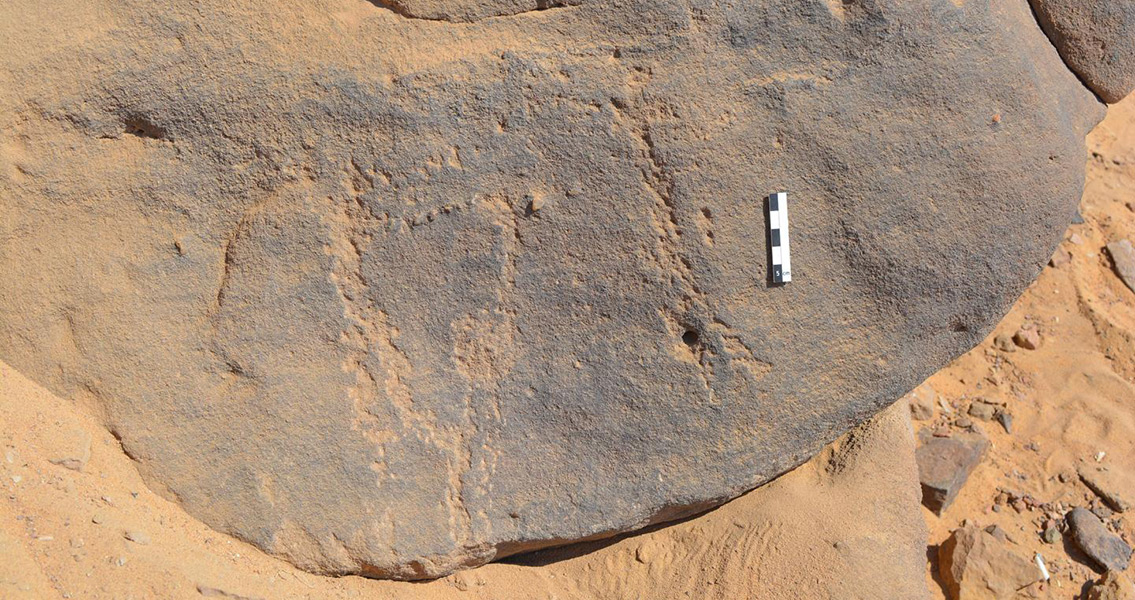
Rock Art Discovered in Egypt Predates the Rise of the Pharaohs

Categories
Breaking News

First Ever Study of a Garment from the Mediterranean Neolithic

IBTimes UK. “The presence of red deer canines is unique in the region, and the combination with columbella is unique too,” adding, “This burial is also important because there burial constructs containing grave goods are rare. But the materials worn by the dead here are obvious and ornaments are visible. The burial is exceptional.” The single, isolated grave was discovered and partly unearthed in the 1970s, with various artifacts from it exhibited and then stored at the Calvet Museum. The grave’s rediscovery in 2009 revealed that the deceased male had been buried in primary deposition with no preserved architectural features. Using calibrated AMS dates researchers were able to reliably date the garment to the early 5th millennium BCE, which reinforces existing evidence of long distance relationships between the Neolithic cultures in Europe. Avignon and the surrounding region have been inhabited since the Neolithic, evidenced by the discovery of a small anthropomorphic monument carved from Burdigalian sandstone in the shape of a tombstone. This stele is believed to represent the first Avignonnais and dates from the Copper Age to the Early Bronze Age, a period which is referred to as the southern Chalcolithic. The face of the stone is engraved with a stylized human figure that has no mouth, and eyes marked by small holes. At the bottom there’s a deep indentation that has eight radiating lines that form a representation of the sun, unique for this type of monument. Other findings from this time period include two polished axes made from greenstone, several Chalcolithic objects used for adornment and numerous shards of Hallstatt pottery. The study has been published in the Journal of Field Archaeology. Image courtesy of Aurélie Zemour ]]>

Categories
Breaking News

Stone Age Fences Discovered in Denmark Surround Mystery

Science Nordic. “The openings don’t seem to sit next to each of the post rows, and we’re slightly amazed by that. But maybe it functioned as a sort of labyrinth–at least that’s how we imagine it. That way you weren’t able to look inside the common space, which may have been an advantage.” Generally, a palisade type of construction is built for defense, however, the rows of poles at Stevns would have stood approximately two meters tall and were placed in a way that would have allowed a person to squeeze through, suggesting a gathering area. Numerous palisade enclosures have been discovered in Denmark and Sweden in recent years, with some of the most intriguing sites found on Bornholm, a Danish island in the Baltic Sea. In 1988 a large timber palisade (one of two on the island) enclosing a sun temple was excavated by archeologists at Vasagårds Field on the south side of the island. The Stevns site may have also had a ritualistic purpose. One difference between the Stevns site and the Bornholm palisades is that the poles at Bornholm are located much more tightly together. It’s also probable the Bornholm fences were built prior to the ones at Stevns. Dating analysis of the Stevns site is not yet complete, however, several of the pottery fragments found there indicate it may date to the latter half of the Middle Neolithic Funnel Beaker Culture between 2900 BCE and 2800 BCE. The Funnel Beaker culture draws its name from its characteristic beakers, ceramics and amphorae which were formed with funnel-shaped tops and found in dolmen burials. A dolmen is a type of megalithic tomb with a single chamber, which typically consisted of a flat horizontal capstone supported by at least two vertical megaliths. “We’ve unfortunately not found any circular shaped constructions like they have on Bornholm, but the similarities between the enclosures makes me think about rituals in our finds too,” Sloth says in the article. Image courtesy of Danish Geodata Agency / Pernille Rohde Sloth ]]>

Categories
Breaking News

'Killed' Pebbles Reveal 12,000 Year Old Burial Practice

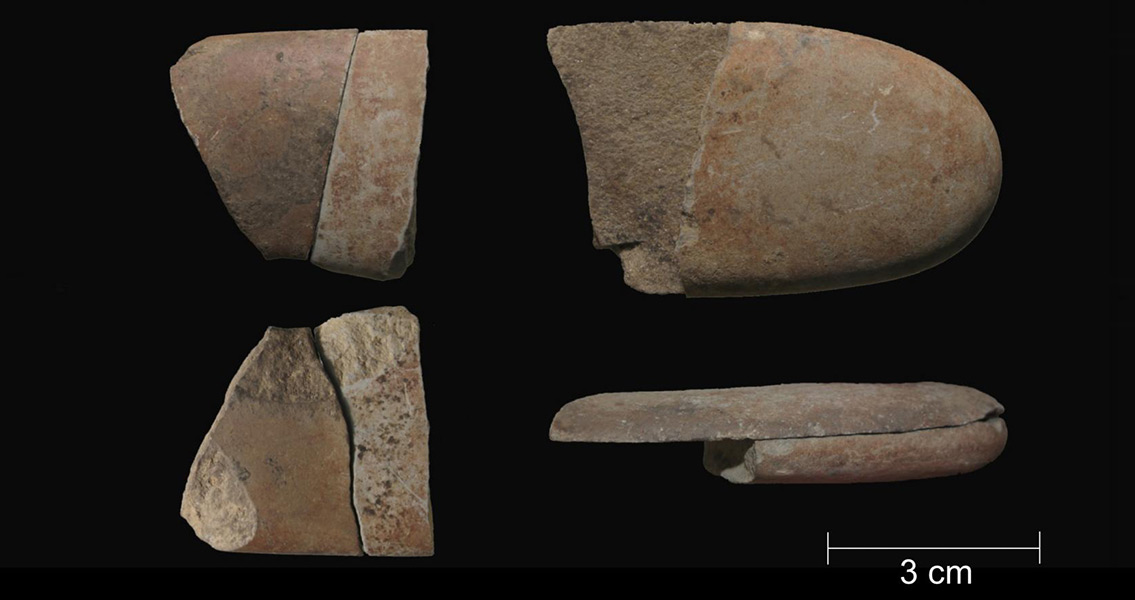
Cambridge Archeological Journal, claims to have found evidence that this symbolic killing was actually practiced up to 5,000 years earlier. Researchers from Université de Montréal, Arizona State University and University of Genoa examined 29 pebbles taken from an Upper Paleolithic burial site in Italy to make their conclusion. They believe that roughly 12,000 years ago the flat, oblong pebbles recovered from Caverna delle Arene Candide on the Mediterranean Sea in Liguria had been brought up from the beach and used as spatulas to apply ochre paste to decorate the dead. Once the decoration had been completed, the pebbles were broken and discarded. Study co-author Julien Riel-Salvatore, an associate professor of anthropology from the UdeM, said the reason for breaking the stones could have been to “kill” them, “discharging them of their symbolic power”. Roughly the size of a hockey rink, the Arene Candide cave is home to a necropolis containing the remains of some twenty adults and children. Situated in a steep cliff some 90 metres above sea level, it’s considered a vital reference site for the Neolithic and Paleolithic periods in the Mediterranean. Although the cave has been known about and subject to excavation since the 1940s, the broken pebbles were always overlooked. “If our interpretation is correct, we’ve pushed back the earliest evidence of intentional fragmentation of objects in a ritual context by up to 5,000 years,” said study lead author Claudine Gravel-Miguel, a PhD candidate at Arizona State’s School of Human Evolution and Social Change, in Tempe. “The next oldest evidence dates to the Neolithic period in Central Europe, about 8,000 years ago. Ours date to somewhere between 11,000 and 13,000 years ago, when people in Liguria were still hunter-gatherers.” Crucially, no matching pieces were found for the pebble fragments analysed by the team. They speculate that this could be because the missing halves were kept as talismans or souvenirs. “They might have signified a link to the deceased, in the same way that people today might share pieces of a friendship trinket, or place an object in the grave of a loved one,” explained Riel-Salvatore. “It’s the same kind of emotional connection.” For five years the team painstakingly excavated the Arene Candide area using trowels and dental tools before carrying out rigorous microscopic analysis on the pebbles they found. For comparison, they also carried out a similar process on pebbles from nearby beaches, to prove that those from Arene Candide had indeed been deliberately broken. “This demonstrates the underappreciated interpretive potential of broken pieces,” the authors write in the conclusion to their study. “Research programs on Paleolithic interments should not limit themselves to the burials themselves, but also explicitly target material recovered from nearby deposits, since, as we have shown here, artifacts as simple as broken rocks can sometimes help us uncover new practices in prehistoric funerary canons.” Broken pebbles are often overlooked during excavations. Riel-Salvatore suggests that this could have led to many vital insights being missed. “Historically, archeologists haven’t really looked at these objects – if they see them at a site, they usually go ‘Oh, there’s an ordinary pebble,’ and then discard it with the rest of the sediment. We need to start paying attention to these things that are often just labeled as rocks. Something that looks like it might be natural might actually have important artifactual meaning.” Image courtesy of Université de Montréal]]>

Categories
Breaking News

World's Oldest Snowshoe Disovered in Northern Italy

The Telegraph. The 5,800-year-old snowshoe is the oldest discovered so far, scientists say, and was stumbled upon nearly by accident on the Gugrler Eisjoch glacier at an elevation of 10,280 feet (3,134 meters). Researchers say that because of the frigid environment of the glacier, the conditions were “ideal” to preserve the organic materials from which the snowshoe was constructed. The twine-wrapped oval frame was discovered by cartographer Simone Bartolini as part of a project to map the Italian-Austrian border at the behest of the Military Geographical Institute of Italy in 2003. For more than a decade, Bartolini says he kept the snowshoe in his Florentine office as a strange memento of his work on the glacier, simply assuming that it was lost by a farmer or cattle-driver sometime in the last century. However, in 2015 he began to suspect that the find might have much more significance, prompting him to have it studied by archaeologists who confirmed the age of the snowshoe. The announcement was made this week in the South Tyrol city of Bolanzo, the capital of the autonomous province. Meanwhile, this is not the only rare archaeological find to have emerged from the Dolomite range. A quarter of a century ago, a pair of German hikers discovered the frozen remains of a Neolithic hunter nearby; nicknamed “Oetzi” for a local range of mountains, the mummified remains have been a near-constant source of archaeological data regarding how local Neolithic humans lived. Oetzi has provided information on how humans traveled, how they hunted, what they ate, and what they wore. Oetzi’s death is one of the oldest clearly recorded cases of homicide, as well. The remains, which have been dated to around 5,300 years ago, show clear evidence of Oetzi being first struck by an arrow and then possibly finished off with some sort of blunt instrument. The snowshoe, however, predates Oetzi by up to 500 years. According to Dr. Catrin Marzoli, who also spoke at the press conference, the shoe is proof positive that individuals residing in the region during the Neolithic had adapted themselves to the environment by equipping themselves appropriately. The director of the cultural heritage department for the province, Dr. Marzoli added that there are no clear indications as to why individuals might have been attempting to traverse such treacherous terrain, suggesting that the snowshoe could have been lost during a hunt, a visit to a pagan site of worship, or even during a panicked flight from enemies. Meanwhile, one of the reasons the snowshoe was discovered in the first place may have negative implications for modern humans. With climate change causing glaciers to recede, many new archaeological finds have come to light as a result – though increased climate change could spell disaster through coastal flooding caused by rising sea levels. Images of the find can be found here]]>