
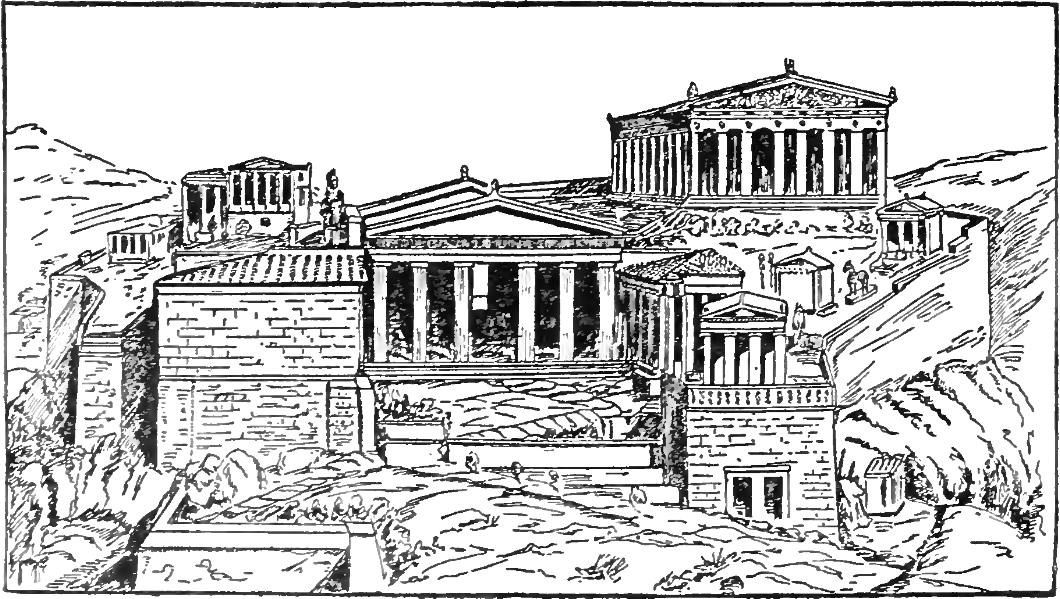
society is causing tension and problems in the US and Europe. The experience of Ancient Greece can surely provide some insight into the modern situation. On a more practical level, the U.S. is suffering from water shortages in several major areas. This is a situation with historical precedent. The Pueblo ruins in the South-west reveal a sophisticated society that abandoned its settlements between the twelfth and thirteenth century A.D. Archaeological studies suggest that the reason the society disbanded was a dramatic shift to an arid climate in this period. In contrast, there is evidence of states in the Eastern Mediterranean and Middle East that succeeded through periods of drought between 1200-1000 BC and 2200-2000 BC. Archaeology and historical studies allow us to analyse why some societies succeed and others failed. They teach us valuable lessons that could have a positive impact on policy in the future. Unfortunately, in both the US and UK, funding for archaeology is in decline, and is often insignificant in comparison to Europe and China. It is vital for us to learn about the past, not just to preserve our heritage, but to teach us about the present and future as well.]]>

Dracula. Vlad III is thought to have been a fifteenth century Prince of Wallachia in Eastern Europe. His father was nicknamed ‘Dracule’ meaning dragon, in reference to the badge of his house and ‘Dracula’ means young dragon. Unlike the character in the novel, Vlad III was in fact a Prince rather than a Count. He was a member of the Order of the Dragon, a force set up to protect Christianity from Ottoman Turks. In 1476 Vlad disappeared in battle. The new research argues that rather than being killed, he was in fact imprisoned by Ottoman forces. The researchers at the University of Tallinn claim that Vlad was ransomed to his daughter in Naples, who had been adopted by an Italian family and eventually married to a nobleman. Once the ransom was paid he was sent to Naples, and was buried in a graveyard there, after he had quietly passed away. The main evidence is a gravestone discovered in the Piazza Santa Maria la Nova graveyard by Neapolitan student Erika Strella. This is the graveyard where some historians claim his daughter and son in law were buried. The tomb shows images of a dragon, which was the image of the Prince of Wallachia’s house. It also depicts the Sphinx of Thebes, which was also known as ‘Tepes’ – a pun on Vlad’s nickname. Medieval history scholar Raffaello Glinni told the Hurryiyet Daily News that the style of the images on the headstone were not that of an Italian nobleman from this period, but from the House of Transylvanian ‘Carpathians’. It is an unusual and fascinating discovery, one that has already started to attract tourists to the Neapolitan church, but much more research needs to be done before it can be confirmed. A recent article by Rossella Lorenzi for Discovery News has questioned some of the evidence supplied. The most damaging criticism relates to Vlad’s supposed daughter in Italy. His only recorded offspring was three sons. There is evidence that his ‘secret daughter’ Maria Balsa existed, but nothing confirming her relationship to Vlad. If Balsa was not in fact his daughter, then one of the key explanations for his burial in Naples begins to collapse. The second criticism concerns the coat of arms on the tombstone, and the symbol of the dragon. Some historical records associate this image to the family of Matteo Ferrillo, Balsa’s father in law. As Jason Colavito notes in his blog: ‘The tomb is that of a known Italian noble, with recognized arms.’ This is another piece of evidence that does raise questions over how well the argument holds together. The discovery in Naples is a fascinating one, which is likely to have historians locked in debate for some time.]]>


th July and is expected to be completed by 25th July. Edwinstowe is a typical forest village and understanding its growth and development over time will allow experts to understand how different villages grew with the changing times. This free community excavation project has already made major waves across the world. More than 100 individual volunteers have been celebrating the Festival of British Archaeology over a period of 13 days by trying to uncover one of its best kept secrets. This has helped the project to grab headlines across the world as well. Project members will be posting regular updates about their findings and discoveries on Facebook and Twitter and any Robin Hood fan interested to know more about the project can easily follow them on one of the two social networking channels. ]]>

st of February 2014 marked the 200th anniversary of the publication of Lord Byron’s ‘The Corsair’. The lyric poem sold out the initial run of 10,000 copies on the day of its release, an impressive feat even by modern standards and unprecedented back then. The poem was hugely popular in nineteenth century England, and the continued fascination with Byron shows that his works are still capable of striking a chord. The plot revolves around the life of Conrad, the Corsair from the poem’s title. The first canto details Conrad’s decision to raid the riches of the Sultan Seyd, and his wife’s endeavours to make him change his mind and stay at home. The second canto details the raid itself. Conrad and his men launch their attack on Syed. Initially everything goes according to plan until Conrad is distracted by, and attempts to rescue, the women in the Sultan’s harem. This gives the Sultan’s men time to regroup and capture Conrad. Gulnare, the Sultan’s favourite slave, comes to Conrad in his cell and vows to try and save his life as thanks for his attempt to save hers. In the final canto, the escape plan begins with Gulnare attempting to trick Syed into releasing Conrad. This fails, and when unable to convince Conrad to kill the Sultan, Gulnare does so herself before the successful escape. Gulnare returns with Conrad to his home, where he finds Medora has died from grief, having believed him dead. At the end, Conrad leaves the island alone…
“And Conrad comes not, came not since that day
Nor trace, nor tidings of his doom declare
Where lives his grief, or perished his despair”
Born in 1788, Byron was one of the most extreme and flamboyant of the Romantic poets, in both his writing and lifestyle. The Corsair was written at a tumultuous time in his life. His early works had been critically slated, but from 1812 he was becoming increasingly popular. He had recently been involved in a scandalous affair with Lady Caroline Lamb, while also rumoured to be the father of his half sister’s third child. The Corsair reflects much of the poet’s life. As he said himself, it was written “con amore, and much from existence.” The protagonist finds himself embroiled in a confusing relationship, the loving wife who longs for him to settle down into domesticity, and the temptation presented by Gulnare. Most pertinently Conrad has a moral code, however alien it may seem. Byron presented a window onto his own life, the temptations he found himself surrounded by and struggling to control. He often seemed to live a life with no consequence, but The Corsair at least provides an insight into his inner turmoil. The popularity of his works also reveal a great deal about the society in which he lived, one in the early stages of industrialisation, just before the advent of rigid Victorian values. For all the legendary eccentricities, controversies and debaucheries that surround Byron’s life, the continued fascination with the man says a lot. He was a one person topic for conversation. His writings were popular but he was also a source for gossip, a personality that was, and for many people still is, just as important as his art. In many ways one could argue he was the prototype of the modern celebrity – a fame brewed from 50% art and 50% the artists own character. The brooding, gloomy Corsair reveals to us another side of this larger than life writer. Related Books The Works of Lord Byron
Vol. 2 of 6
by George Gordon Byron
PIBN: 1000228173
[gap height=”20″]]]>

