Categories
Breaking News

Revealed: Cavemen Picked Their Teeth and had a Raw Food Diet

The Science of Nature. Traces of raw animal tissue, uncooked starch granules indicating consumption of grasses, pollen grains from a species of pine and insect fragments were among the other microfossils extracted from the hominin molar. All of these were uncharred and showed no evidence of inhalation of microcharcoal, in other words, they displayed none of the characteristics usually associated with having been in close proximity to fire. The teeth investigated by the team come from one of the two oldest sets of hominin remains found in Europe. The piece of jawbone, discovered at Sima del Elefante in 2007, is between 1.1 and 1.2 million years old. The site itself is one of several in the region covering a period between 300,000 and 1.2 million years old. Exactly when early humans first started to use fire is hotly contested, and the new study seems to add to the debate. Some researchers suggest habitual fire use started as far back as 1.8 million years ago, while others argue it happened as recently as 300,000 – 400,000 years ago. Some have argued that hominins mastered fire while still in Africa, but didn’t bring the skills with them when they reached Europe, something the lack of fire evidence at Sima del Elefante would seem to support. The earliest definitive evidence of fire use in Europe is 800,000 years ago at the Spanish site of Cueva Negra, and at Gesher Benot Ya’aqov, Israel, a short time later. Taken together, a timeline emerges suggesting that the development of fire technology in Europe occurred sometime between 800,000 and 1.2 million years ago. Dr Karen Hardy, lead author and Honorary Research Associate at the University of York and ICREA Research Professor at the Universitat Autònoma de Barcelona, said in a press release: “Obtaining evidence for any aspect of hominin life at this extremely early date is very challenging. Here, we have been able to demonstrate that these earliest Europeans understood and exploited their forested environment to obtain a balanced diet 1.2 million years ago, by eating a range of different foods and combining starchy plant food with meat.” According to Dr Hardy, the results follow ideas about the development of certain characteristics in humans. “This new timeline has significant implications in helping us to understand this period of human evolution – cooked food provides greater energy, and cooking may be linked to the rapid increases in brain size that occurred from 800,000 years ago onwards.” “It also correlates well with previous research hypothesising that the timing of cooking is linked to the development of salivary amylase, needed to process cooked starchy food. Starchy food was an essential element in facilitating brain development, and contrary to popular belief about the ‘Paleodiet’, the role of starchy food in the Palaeolithic diet was significant.” Image courtesy of Karen Hardy ]]>
Categories
Breaking News

Million-Year-Old Artifacts Found in South Africa

Categories
Editorial

Protect and Record Your Heritage Through Rock Art

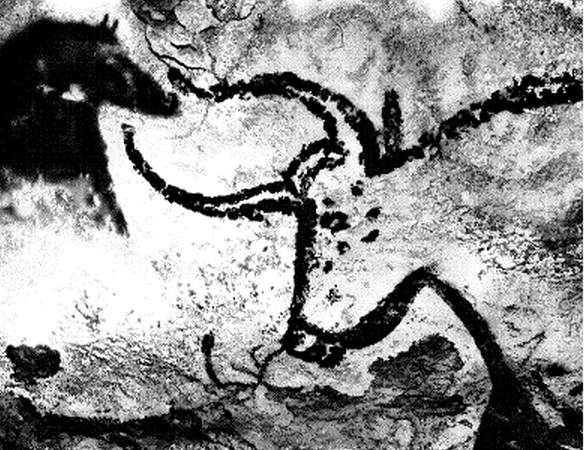
Vandalism a crime, not art Rock art could be used for understanding ancient symbols, religions, cultural boundaries, origins, beliefs and even factors like gender relationships and should be protected from Vandalism Rock art can be an extremely precious phenomenon especially depending on the era it belongs to, the impact of the images and the significance of historic background. They are supposed to be preserved the way they are, so archeologist and anthropologists can extract the comparative study of the human societies that existed before, their culture and development. It is a complex field as well, as one has to predict the most accurate depiction of these pieces of art and establish a link, if any. Art-of-the-Stone-Age,-page-29Thanks to the Pharaoh, Egypt is an example many of us know for rock art reflecting heritage and culture. The Egyptians had their Gods and language carved all over the ancient rocks is an evidence of how they lived, what their beliefs were, what their culture was, what psyche they followed and much more can be concluded from these precious pieces of artifacts. But not being famous for rock art does not mean that there are no such sites reflecting heritage anywhere else in the world. Every place has a history and heritage to go with and same is the case with Australia. Australia has a number of sites that contain rock art that date back to 40,000 or even 100,000 years old. The rock art is a reflection of the culture and beliefs of these localities. These indigenous pieces of art, especially those in the Kimberly, are believed to be 60,000 years old, which is five times older than the Egyptian pyramids. These pictures of men, women and children with their tools, animals and the different actions reflect a lot about how they lived and what their beliefs were. This rock art should be protected from a serious crime, vandalism, as no one wants to lose track or disrupt history. A recent case of vandalism was witnessed in Burrup Peninsula, where the biggest and most important collection of rock carving can be found which is dated back to the ice ages. The maximum fine for such an act is a hefty one as well of up to $20,000. These sites have to be protected by the Government in case of vandalism. The Australian Government should also make sure that all the sites of rock art and ancient rocks are recorded and registered with all the details so we never lose track of them in the times to come. They should start a campaign about such sites and what they reflect about our heritage. In fact, one should cover the 100 most important sites across the globe and have a comparative analysis of the heritages worldwide. With the rain, dust and reptiles crawling over these precious pieces of art, they have survived and they will survive in the future as well, only if protected from vandalism. Such rock art that reflects history is a precious symbolic sign of the past, one can relate to. These sites are a library for history, and should be registered and recorded which is a very inexpensive process.]]>