Categories
Breaking News

Earliest Human Cancer Pushes its Origins Back Over a Million Years

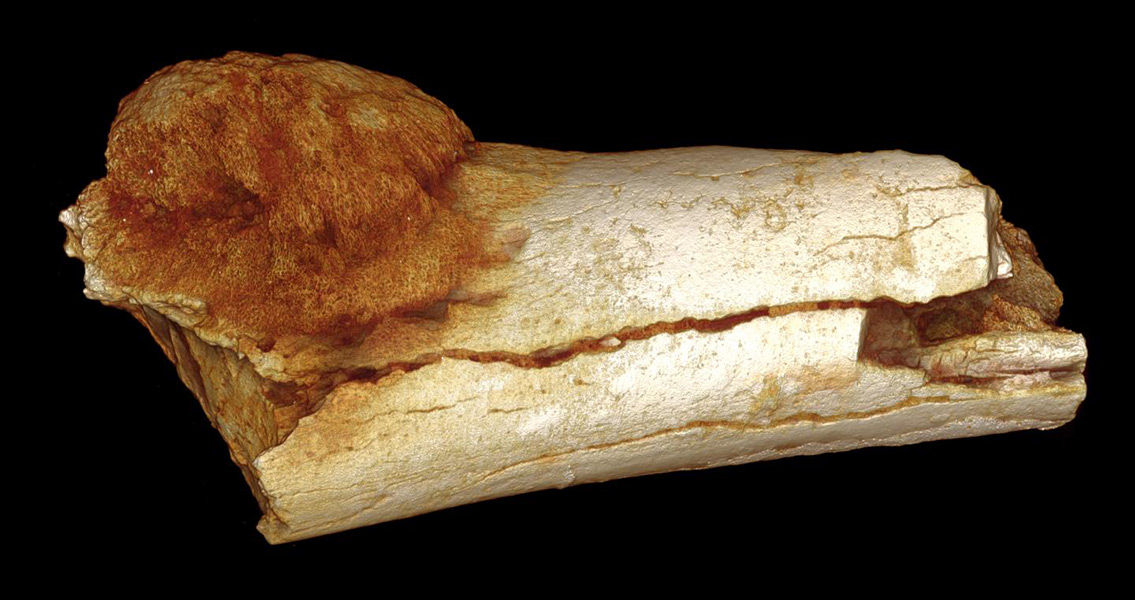
South African Journal of Science, an ancient cancer case and an ancient tumour case are detailed. Until now, the oldest documented incidence of a tumour had been discovered on the 120,000 year old remains of a Neanderthal. The two new studies suggest that cancer and tumours were in fact around well over a million years ago. A 1.7 million year old foot bone discovered in Swartrans, South Africa, bore definitive evidence of malignant cancer. Although the species to which the foot belongs remains unclear, the researchers behind the first paper say it is clearly that of a hominin or bipedal human relative. The accompanying paper identifies the oldest tumour ever found in the human fossil record. A benign neoplasm was found in the vertebrate of Karabo, the close to two million year old remains of an Australopithecus sediba child discovered at the site of Malapa. “Modern medicine tends to assume that cancers and tumours in humans are diseases caused by modern lifestyles and environments.” said Edward Odes, a Wits doctoral candidate and lead author of the cancer paper, and co-author on the tumour paper. “Our studies show the origins of these diseases occurred in our ancient relatives millions of years before modern industrial societies existed”. In the case of the foot bone, the cancer: an agressive osteosarcoma, was discovered on the metatarsal. It’s a form of cancer most commonly found in younger humans, which if left untreated proves fatal. “Due to its preservation, we don’t know whether the single cancerous foot bone belongs to an adult or child, nor whether the cancer caused the death of this individual, but we can tell this would have affected the individual’s ability to walk or run”, explained Dr Bernard Zipfel, a Wits Scientist and expert on the feet and movement of early human relatives. Both discoveries further complicate the picture we have of the causes and history of cancer and tumours. The diseases are typically linked to aspects of modern life, such as our diet, urban living and background radiation. Prevailing thought also suggests that the reason cancer and tumours seem to exhibit themselves more often now is due to increasing life expectancies. However, the tumour discovered on the child’s vertebrate is one associated with adulthood. Indeed, it is the first evidence of the disease in a young individual in the whole of the fossil record. Professor Lee Berger, the leader of the Malapa project and an author on both papers, highlighted just how much of a game changer in the study of oncology both discoveries could prove to be. “…not only has there been an assumption that these sorts of cancers and tumours are diseases of modernity, which these fossils clearly demonstrate they are not, but that we as modern humans exhibit them as a consequence of living longer, yet this rare tumour is found in a young child. The history of these types of tumours and cancers is clearly more complex than previously thought”. In both studies, cutting edge imaging technology was used to diagnose the incidences of disease. The results show the potential of modern technology to not only further our understanding of our ancient human relatives, but also the origin and development of modern diseases. “This is another good example of how the modern clinical sciences and the science of palaeoanthropology are working together in South Africa and with international collaborators to advance our understanding of diseases in both the past and the present.” said Dr Jacqueline Smilg, a radiologist based at Charlotte Maxeke Hospital, who is an author on both papers and was involved in the clinical diagnoses. Image courtesy of Patrick Randolph-Quinney (UCLAN)]]>
Categories
Breaking News

Newly Discovered Homo naledi Spurs Controversy

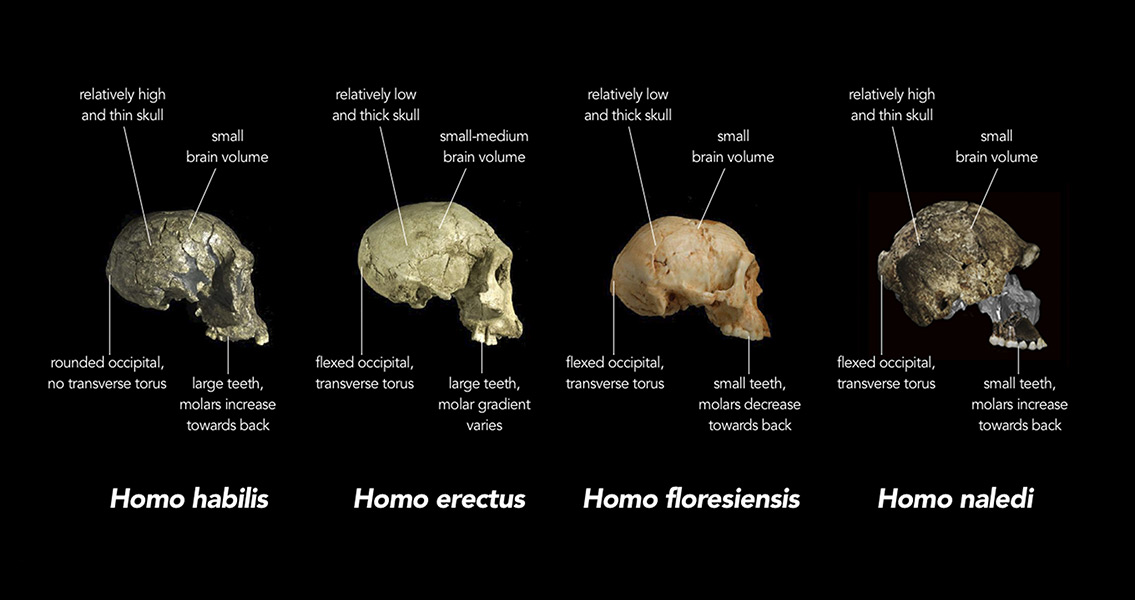
Homo naledi in South Africa has resonated negatively with some South Africans, spurring a seemingly confusing controversy within the black African community. In a country still reeling from the long-standing effects of apartheid, a growing movement to dismiss the discovery of Homo naledi as part of a racist conspiracy to find spurious scientific evidence that black Africans are less than human has been growing in popularity. Cosatu’s former general secretary, Zwelinzima Vavi, proclaimed on his Twitter account that he was “no grandchild of any ape, monkey or baboon” and that “no one will dig old monkey bones” in order to drum up support for what he viewed as a spurious theory that he “was once a baboon”. Vavi has more than 300,000 Twitter followers. The South African Council of Churches (SACC), an organization that had been historically involved in fighting apartheid, came out in support of Vavi’s statements. The president of the SACC, Bishop Ziphozihle Siwa, added fuel to the fire by stating Vavi’s comments were “spot on”, and that it was insulting to claim that black Africans descended from baboons. While apartheid came to an end with Nelson Mandela’s election as South Africa’s first black president in 1994, the injustice and indignities of the former regime’s racist policies run deep. Under apartheid rule, Vavi recounted, he remembered how he had been denigrated by the ruling class to the point where he had been referred to as “a baboon” all his life. Meanwhile, the response of the international scientific community has been perplexed and confused by the vehemence of Vavi, the SACC and others in strongly protesting the discovery of Homo naledi. Richard Dawkins, a noted British biologist, summed it up on Twitter by dismissing the idea of a racist conspiracy as paranoia, pointing out that according to current evolutionary theory we’re all descended from the same biological source; as Dwakins put it, “Whole point is we’re all African apes.” Meanwhile, the official reaction of the South African government has been a positive one. Cyril Ramaphosa, the country’s deputy president, remarked in a statement that the discovery of Homo naledi underscores the bonds we all have with a common ancestor, adding that Africa is the resting place of “our common umbilical cord”. Despite these encouraging words, former chief whip and African National Congress member of parliament Mathole Motshekga proclaimed in an interview with the ENCA television network that the discovery of Homo naledi was a plot to support efforts of Western culture to characterize black Africans as “subhumans”. It’s because of exactly this type of theory that no Africans are respected anywhere in the world, Motshekga proclaimed during his interview, adding that these findings are in line with what colonialists did and said to classify black Africans as less than human in order to justify their oppression, exploitation, and enslavement during the colonial appropriation of South Africa. Image courtesy of Wikimedia Commons user: Chris Stringer, Natural History Museum, United Kingdom]]>

Categories
Breaking News

Homo naledi – A New Link in Human Lineage

Homo naledi, was among our earliest ancestors and probably lived around three million years ago. The earliest human ancestors to date are believed to have been Ardipithecus ramidus, which, the BBC writes, probably lived around 4.4 million years ago, and based on the fossil record could both walk up right and climb trees. This H. naledi, the researchers explain, was ape-like in many ways but also had some features in common with modern humans. The skeleton found in the Rising Star cave resembled in size that of a modern human child, especially the skull, teeth and feet. It belonged, however, to an elderly female. The shoulders and pelvis were ape-like, and its brain size was likely similar to that of a gorilla. The reason it was classed as a hominin was the more advanced shape of the skull, the longer legs, the smaller teeth and the modern-like feet. The chamber in which this first skeleton was found was difficult to access because it was in the deepest recesses of the cave and one had to be quite slim to be able to pass through a constriction on the way. Yet once a team was gathered, work started and the researchers discovered something even more exciting: the chamber contained not just one remarkably well preserved skeleton but as many as fifteen, of all ages and sizes. The total number of specimens collected after three weeks of excavation reached 1,550. The scientists that analysed the fossils and tried to place them along the line of human lineage had a tough job. Some of the bones, like the tiny skulls, suggested these were apes, but others were too human-like to ignore. The conclusion was that this species lived some time between Australopithecines and Homo, Berger told the National Geographic, although he added that for him personally, these creatures belonged closer to Homo than Australopithecus. Then there is the much more fascinating question of how all these people ended up in that remote chamber of the Rising Star cave (the name of the species, by the way comes from the Sotho word for “star”). There was no fauna, tools or any other artefacts around them to suggest it was a dwelling, and there were no tooth marks on the bones, which would have been the case had they been dragged here by carnivores. One possible explanation is that they wandered into the cave and got trapped in the remote chamber but the position of the skeletons didn’t corroborate that hypothesis. The other could cause a rethinking of the fundamental link between brain size and evolution: it is the suggestion that this chamber was a burial ground, where bodies were deposited over a period of centuries. In other words, that this early species, despite its small head, was capable of allocating a special place to bury its dead, a tradition so far only found in much later hominins and up until now considered too complex behaviour to be found in such earlier species. Commenting on the news, anthropologist Isabelle Winder from the University of York, who wasn’t involved in the study, said: “Look at the hind limb of H.naledi and you will see a collection of features associated with upright stance. The forelimb, however shows ape-like characters. This may suggest that the Savannah Hypothesis, which emphasises life in Savannah mosaics, may be an incomplete explanation of human locomotion. H.naledi was a scrambler, living in complex landscapes.” Nick Winder from Newcastle University told New Historian that “If you compare the naledi material with the Dmanisi skeletons (a site in Georgia where a number of different early hominin fossils were found a few years ago) you make two striking observations. The first is that the naledi assemblage is described as morphologically homogenous — all the specimens look similar. At Dmanisi, however, there is a lot of morphological variation. Second, the mosaics of attributes in the two collections are very different. This suggests much more variability than one might have expected. There were clearly lots more ways of being a successful hominin than we imagined.” For more information: Homo naledi, a new species of the genus Homofrom the Dinaledi Chamber, South Africa]]>

Categories
Breaking News

Iron Age Remains Hold Key to Earth’s Magnetic Field?

Categories
Breaking News

South African Dig Sites Reveal Human Development Clues

PLOS ONE, found that South African settlements existing some 1,000 kilometers apart during the MSA were using similar types of stone tools at the same time. Scientists found that these tool-making tribes of humans, which existed around 71,000 years in the past, were likely to have developed independently of each other – especially since the methods used to create these tools diverged even though the end products were so similar. This is in stark contrast to archaeological evidence dating back to just 65,000 years ago, says Lyn Wadley, who remarked in a press release that the older civilizations didn’t seem to demonstrate the same level of disseminated cultural and social tradition as the settlements dating to just 6,000 years later. One of the authors of the new study, Professor Wadley, teaches archaeology at Johannesburg’s University of the Witwatersrand. The dig sites involved in the study, Sibudu in KwaZulu-Natal and Blombos Cave in the Western Cape region, are among the most famous within South Africa. The exact locations of each dig are known as Howiesons Poort and Still Bay respectively; these sites have yielded up much of what modern archaeology has been able to deduce about the earliest forms of human civilization, how human tradition began to develop through cross-cultural contact with individual tribes of early humans in the MSA, and when that development first began to occur. There’s precedent for the idea of cultural exchange between such relatively isolated pockets of early humanity, as earlier research into stone tools made around 65,000 years in the past shows that the processes used to create tools at both locations were similar, despite the difference in the types of stone found in each place. However, the new research shows little in the way of this evidence from 71,000 years ago; this is an indication that socialization among disparate groups of human settlements developed over the gap between the two time periods, especially since the evidence from the settlements dating back to 65,000 years ago has shown several different examples of this cultural cross-pollination. Currently, the differences in stone tool making methods discovered by Professor Wadley and the other members of the research team involved in the study is some of the only evidence of its type in existence. While the results are certainly promising, the archaeologists say that additional research is going to be needed before a definitive date can be pinned down as to when humanity began to come together through important concepts such as tool making techniques passed down from generation to generation. For more information: www.journals.plosone.org Image courtesy of Wikimedia Commons user: Chenshilwood]]>

Categories
Breaking News

49,000-Year-Old Milk-Based Paint Found in South Africa

“A Milk and Ochre Paint Mixture Used 49,000 Years Ago at Sibudu, South Africa” Image courtesy of Wikimedia Commons user: Gribeco ]]>

Categories
Breaking News

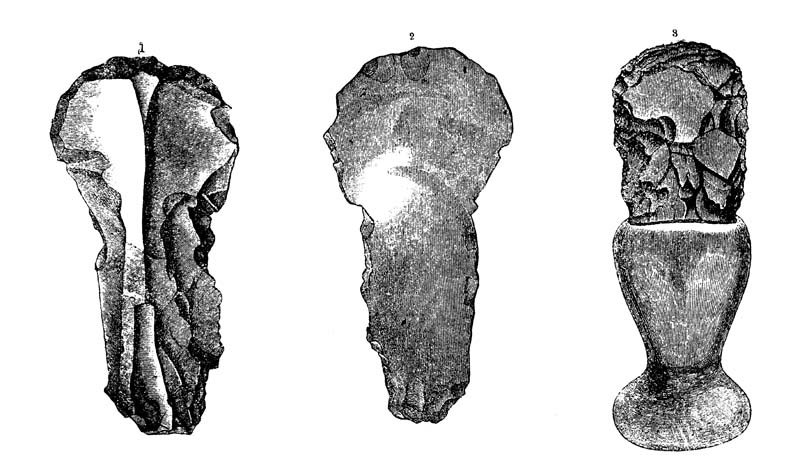
Million-Year-Old Artifacts Found in South Africa