Categories
Breaking News

History News of the Week: Earthquakes Shaped Ancient Greek Culture

Did Earthquakes Shape Ancient Greek Culture? New research claims that earthquake faults could have played a central role in shaping the culture of Ancient Greece. Professor of Geoscience Communication Iain Stewart MBE, Director of Plymouth University’s Sustainable Earth Institute, has presented a host of documentaries about how the power of earthquakes has shaped landscapes and communities. Now, he claims the Ancient Greeks could have deliberately built sacred or treasured sites on land affected by seismic activity. It has previously been argued that Delphi, once home to a legendary oracle, gained its important role in Classical Greek society as a result of a scared spring and intoxicating gases that emanated from a fault line formed by an earthquake. Stewart argues that Delphi might not be the only such case, suggesting that the cities of Mycenae, Ephesus, Cnidus and Hierapolis could have all been constructed around fault lines. “Earthquake faulting is endemic to the Aegean world, and for more than 30 years, I have been fascinated by the role earthquakes played in shaping its landscape. But I have always thought it more than a coincidence that many important sites are located directly on top of fault lines created by seismic activity,” Professor Stewart said. “The Ancient Greeks placed great value on hot springs unlocked by earthquakes, but perhaps the building of temples and cities close to these sites was more systematic than has previously been thought.” The Aegean region has an abundance of fault lines and ruined ancient settlements, but Stewart claims that many seismic fault traces in the region run through the heart of some ancient settlements’ most sacred structures. In Delphi, for instance, a sanctuary was destroyed by an earthquake in 373BCE. The city’s temple was subsequently rebuilt directly on the same fault line. It’s previously been suggested that legendary tales of individuals descending into the underworld to gain oracular status, could be referring to caves or grottoes formed by seismic activity. Professor Stewart concludes: “I am not saying that every sacred site in ancient Greece was built on a fault line. But while our association with earthquakes nowadays is that they are all negative, we have always known that in the long run they give more than they take away. The ancient Greeks were incredibly intelligent people and I believe they would have recognised this significance and wanted their citizens to benefit from the properties they created.” Frog and Salamander Ancestors had a Full Mouth of Teeth Modern frogs and salamanders are close to toothless, but a new study from the University of Toronto highlights that this was far from the case with some of their ancestors. According to the study, published online in the journal PeerJ, the ancient amphibian ancestors had a full array of teeth, large fangs and thousands of tiny hook-like structures called denticles on the roofs of their mouths that would snare prey. The authors of the paper, Professor Robert Reisz and his colleagues Bryan Gee and Yara Haridy, two graduate students, believe that the tooth bearing plates “were ideally suited for holding on to prey, such as insects or smaller tetrapods, and may have facilitated a method of swallowing prey items via retraction of the eyeballs into the mouth, as some amphibians do today.” In many vertebrates, ranging from fish to early synapsids (ancestors of mammals), denticles are commonly found in dense concentrations on the bones of the hard palate (roof of the mouth). However, in one group of tetrapods, temnospondyls (which are thought to be the ancestors of modern amphibians), these denticles were also found on small, bony plates that filled the large soft part of the palate. Suspended in soft tissue, these toothy palettes are often lost during the process of fossilisation. “Denticles have all of the features of the large teeth that are found on the margin of the mouth,” says Reisz. “In examining tetrapod specimens dating back ~289 million years, we discovered that the denticles display essentially all of the main features that are considered to define teeth, including enamel and dentine, pulp cavity and peridontia.” The team’s study saw them analyse specimens unearthed from the fossil rich Dolese Brothers Limestone quarry near Richards Spur, Oklahoma. Reisz and colleagues claim that the next area of study will be determining why modern amphibians have reduced or no teeth, but their ancient ancestors had mouths full of them. Nazi Relics Discovered in Austrian Parliament A range of Nazi artefacts have been discovered in the Austrian parliament building in Vienna during renovation works, the Jerusalem Post reports. Two busts of Hitler, four Nazi era paintings and a relief were discovered in a box hidden in the building’s basement, reports claim. Following the Anschluss, when Nazi Germany annexed Austria in 1938, the parliament building was turned into a “Gauhaus”, a local Nazi party headquarters. It continued to serve as the Nazi base in Vienna until the end of the Second World War. According to the Jerusalem Post, the Nazi artefacts have now been handed to University of Vienna historians Bertrand Perz and Verena Pawlowsky, who are exploring the building’s Nazi history. They will make recommendations on how best to preserve the relics for the future, the Jerusalem Post writes, citing Austrian newspaper Der Standard. Image courtesy of Free On Line Photos [Copyrighted free use], via Wikimedia Commons]]>

Categories
Breaking News

First Ever Study of a Garment from the Mediterranean Neolithic

IBTimes UK. “The presence of red deer canines is unique in the region, and the combination with columbella is unique too,” adding, “This burial is also important because there burial constructs containing grave goods are rare. But the materials worn by the dead here are obvious and ornaments are visible. The burial is exceptional.” The single, isolated grave was discovered and partly unearthed in the 1970s, with various artifacts from it exhibited and then stored at the Calvet Museum. The grave’s rediscovery in 2009 revealed that the deceased male had been buried in primary deposition with no preserved architectural features. Using calibrated AMS dates researchers were able to reliably date the garment to the early 5th millennium BCE, which reinforces existing evidence of long distance relationships between the Neolithic cultures in Europe. Avignon and the surrounding region have been inhabited since the Neolithic, evidenced by the discovery of a small anthropomorphic monument carved from Burdigalian sandstone in the shape of a tombstone. This stele is believed to represent the first Avignonnais and dates from the Copper Age to the Early Bronze Age, a period which is referred to as the southern Chalcolithic. The face of the stone is engraved with a stylized human figure that has no mouth, and eyes marked by small holes. At the bottom there’s a deep indentation that has eight radiating lines that form a representation of the sun, unique for this type of monument. Other findings from this time period include two polished axes made from greenstone, several Chalcolithic objects used for adornment and numerous shards of Hallstatt pottery. The study has been published in the Journal of Field Archaeology. Image courtesy of Aurélie Zemour ]]>

Categories
Breaking News

The Dinosaur That Had Teeth as a Baby, but Not as an Adult

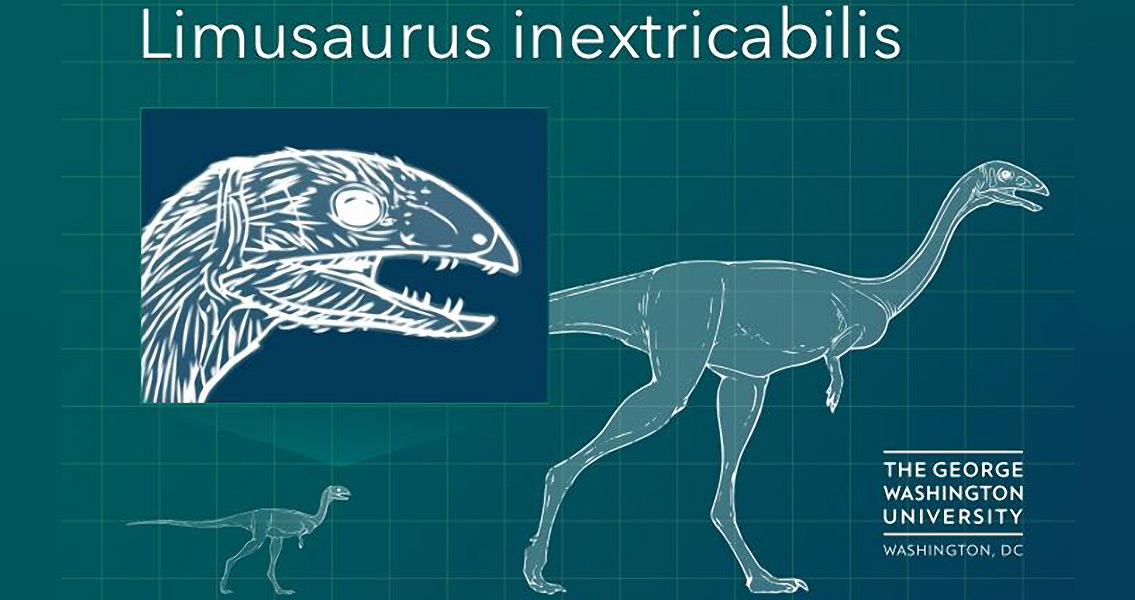
Current Biology, could explain why birds have beaks but not teeth. Limusaurus inextricabilis, the species in question, was a beaked therapod which lived in Western China during the Jurassic period – between 201.3 million years ago and 145 million years ago. Limusaurus inextricabilis is the only member of the Limusaurus genus. The research team from George Washington University in Washington D.C., USA, and the Capital Normal University in Beijing, China, analysed nineteen Limusaurus skeletons discovered in Xinjiang Province, China. The remains were unearthed from ‘death traps’ where the creatures had become fatally trapped and buried in mud. Ranging in age from babies to adults, the unfortunate victims of the muddy death traps provided the researchers with a pattern for Limusaurus‘ tooth development and loss over time. While the baby skeletons had small, sharp teeth, the adults were consistently toothless. “This discovery is important for two reasons,” said James Clark, a co-author on the paper and the Ronald Weintraub Professor of Biology at the George Washington University’s Columbian College of Arts and Sciences, in a press release. “First, it’s very rare to find a growth series from baby to adult dinosaurs. Second, this unusually dramatic change in anatomy suggests there was a big shift in Limusaurus’ diet from adolescence to adulthood.” Limusaurus is part of the theropod group of dinosaurs which are considered evolutionary ancestors of birds. Interestingly, theropods were ancestrally carnivorous but a number of species in the group were herbivorous or omnivorous. The team’s findings could point to an unusual change in diet for Limusaurus as they grew older. The babies of the species could have been meat eaters, while the adults were herbivores. The sharp teeth would have been needed to chew meat, but not plants. Chemical analysis of the Limusaurus bones supports this theory of a changing diet. It is hoped that further analysis of the Limusaurus fossils could provide an insight into how the descendants of theropods, such as birds, evolved with no teeth. It is possible that the origins of this trait can be found in the changes Limusaurus experienced in their development from childhood to adulthood. “For most dinosaur species we have few specimens and a very incomplete understanding of their developmental biology,” said Josef Stiegler, a graduate student at George Washington University and study co-author. “The large sample size of Limusaurus allowed us to use several lines of evidence including the morphology, microstructure and stable isotopic composition of the fossil bones to understand developmental and dietary changes in this animal.”]]>

Categories
Breaking News

Revealed: Cavemen Picked Their Teeth and had a Raw Food Diet

The Science of Nature. Traces of raw animal tissue, uncooked starch granules indicating consumption of grasses, pollen grains from a species of pine and insect fragments were among the other microfossils extracted from the hominin molar. All of these were uncharred and showed no evidence of inhalation of microcharcoal, in other words, they displayed none of the characteristics usually associated with having been in close proximity to fire. The teeth investigated by the team come from one of the two oldest sets of hominin remains found in Europe. The piece of jawbone, discovered at Sima del Elefante in 2007, is between 1.1 and 1.2 million years old. The site itself is one of several in the region covering a period between 300,000 and 1.2 million years old. Exactly when early humans first started to use fire is hotly contested, and the new study seems to add to the debate. Some researchers suggest habitual fire use started as far back as 1.8 million years ago, while others argue it happened as recently as 300,000 – 400,000 years ago. Some have argued that hominins mastered fire while still in Africa, but didn’t bring the skills with them when they reached Europe, something the lack of fire evidence at Sima del Elefante would seem to support. The earliest definitive evidence of fire use in Europe is 800,000 years ago at the Spanish site of Cueva Negra, and at Gesher Benot Ya’aqov, Israel, a short time later. Taken together, a timeline emerges suggesting that the development of fire technology in Europe occurred sometime between 800,000 and 1.2 million years ago. Dr Karen Hardy, lead author and Honorary Research Associate at the University of York and ICREA Research Professor at the Universitat Autònoma de Barcelona, said in a press release: “Obtaining evidence for any aspect of hominin life at this extremely early date is very challenging. Here, we have been able to demonstrate that these earliest Europeans understood and exploited their forested environment to obtain a balanced diet 1.2 million years ago, by eating a range of different foods and combining starchy plant food with meat.” According to Dr Hardy, the results follow ideas about the development of certain characteristics in humans. “This new timeline has significant implications in helping us to understand this period of human evolution – cooked food provides greater energy, and cooking may be linked to the rapid increases in brain size that occurred from 800,000 years ago onwards.” “It also correlates well with previous research hypothesising that the timing of cooking is linked to the development of salivary amylase, needed to process cooked starchy food. Starchy food was an essential element in facilitating brain development, and contrary to popular belief about the ‘Paleodiet’, the role of starchy food in the Palaeolithic diet was significant.” Image courtesy of Karen Hardy ]]>

Categories
Breaking News

Early Set of Dentures Constructed With Human Teeth

Categories
Breaking News

Earliest Evidence of Right-Handedness Discovered

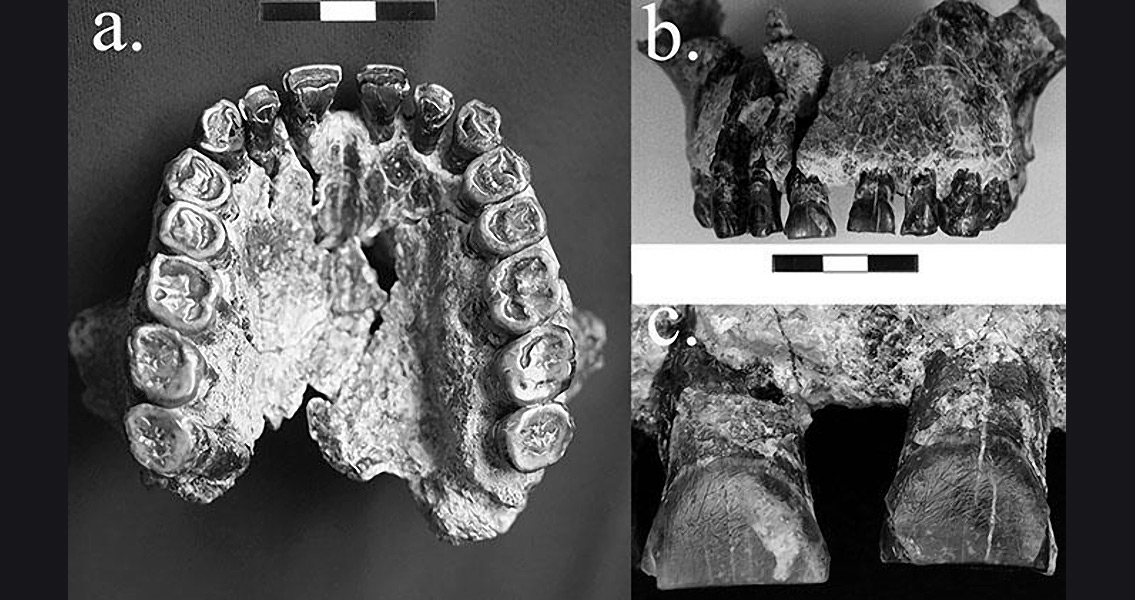
Homo habilis fossil. Although scientists have learnt a lot about “handedness”, they still haven’t been able to precisely explain why humans favour using one hand over the other, or why human populations are biased towards right handedness over left handedness. The lack of a standard, empirical definition for measuring handedness means scientists disagree on what percentage of the human population are left or right handed. However, it is agreed that the majority of humans are right handed (between 70 and 95 percent) and the minority left handed (30 to five percent). By comparison, the ratio among apes is 50:50. At 1.8 millions years old, the Homo habilis fossil studied by the University of Kansas researchers marks the oldest known evidence of right handedness in the fossil record. “We think that tells us something further about lateralization of the brain,” said David Frayer, a KU professor emeritus of anthropology and the lead author of the study, in a press release. “We already know that Homo habilis had brain lateralization and was more like us than like apes. This extends it to handedness, which is key.” Brain lateralisation refers to the fact that the left and right hemispheres of the brain are not exactly alike, leading to certain neural processes and cognitive functions being more dominant in one hemisphere than the other. Scientists have long theorised that this brain lateralisation has some correlation to a person’s handedness. Frayer and team made their discovery by analysing labial striations – small cut marks, which are lip side of the anterior teeth in the intact Homo habilis jaw fossil. Known as OH-65, the fossil was found in a stream channel of the Olduvai Gorge in Tanzania. Most of the deep cuts on the lip face of the upper front teeth veered downwards from left to right. After analysing the marks, Frayer and his team believe they most likely came from OH-65 using a tool with its right hand to cut food it was holding in its mouth while pulling at it with its left hand. The scratches can be seen with the naked eye, but the team used a microscope to accurately determine their alignment. “Experimental work has shown these scratches were most likely produced when a stone tool was used to process material gripped between the anterior teeth and the tool occasionally struck the labial face leaving a permanent mark on the tooth’s surface,” said Frayer. The direction of the marks strongly suggests that the Homo habilis specimen was right handed. Of course, OH-65 is only one sample but it could be the first evidence of a dominant handed pre-Neanderthal. As such, it could lead to the search for similar marks in other Homo fossils, allowing scientists to gain further insight into the development of handedness. “Handedness and language are controlled by different genetic systems, but there is a weak relationship between the two because both functions originate on the left side of the brain,” explained Frayer. “One specimen does not make an incontrovertible case, but as more research is done and more discoveries are made, we predict that right-handedness, cortical reorganization and language capacity will be shown to be important components in the origin of our genus.” A host of different studies have pointed towards brain reorganization, the use of tools and use of a dominant hand all occurring early in the human lineage. This latest study, published in the Journal of Human Evolution, is the first to look into the directionality of striations in the earliest specimens of our evolutionary lineage. It shows how something seemingly as basic as the dominance of one hand over the other is well embedded in our evolutionary history. “We think we have the evidence for brain lateralization, handedness and possibly language, so maybe it all fits together in one picture,” said Frayer. Image courtesy of David Frayer]]>

Categories
Breaking News

Frightening Megalodon and Great White Shark Relative Described

Megalolamna paradoxodon, lived during the early Miocene epoch, some 20 million years ago. The long extinct creature belongs to a shark group called Lamniformes, which includes the modern day great white and mako sharks. Terrifying fossilised teeth, measuring up to 4.5 centimetres (1.8 inches) long, were the basis of the discovery. Megalolamna paradoxodon’s teeth have been found in California and North Carolina in the United States, as well as in Peru and Japan. Substantially smaller than members of the ‘megatoothed’ lineage, Megalolamna paradoxodon was still a formidable creature. At a minimum it was comparable in size to a modern great white shark, around four metres (thirteen feet) long. Living in the same oceans as the megatoothed sharks, Megalolamna paradoxodon likely feasted on small and medium sized fish, grasping its prey with its front teeth and slicing the unfortunate victim with its rear teeth. Megalolamna paradoxodon is a member of the Otodontidae family of sharks. Kenshu Shimada, a paleobiologist at DePaul University and research associate at the Sternberg Museum in Kansas, who led the study, said in a press release that the newly discovered fossilised shark is a “close cousin” of the megatoothed lineage that includes megalodon. The prehistoric shark’s name reflects ambiguities over its identification. Although certain dental features point to the otodontid affinity, superficially the teeth look close to those of a modern day salmon shark from the lamna genus – only much bigger. It is for this reason it has the name Megalolamna. Paradoxodon means paradoxical teeth. This is in reference to the fact the shark appears unexpectedly in the geologic record, with an as yet inexplicable 45 million year gap from when Megalolamna split with its apparent closest relative: Otodus. “It’s quite remarkable that such a large lamniform shark with such a global distribution had evaded recognition until now, especially because there are numerous Miocene localities where fossil shark teeth are well sampled,” said Shimada. Through their work on Megalolamna paradoxodon the team have also concluded that members of the megatoothed lineage, such as megalodon, should be reclassified from their traditional place in the Carcharocles genus to the Otodus genus. “The idea that megalodon and its close allies should be placed in Otodus is not new, but our study is the first of its kind that logically demonstrates the taxonomic proposition,” The Odotus lineage without megatoothed sharks would not constitute a full lineage, something scientists call ‘non-monophyletic’. By including megatoothed sharks however, Odotus becomes a monophyletic group, a complete lineage. This lineage is considered the next of kin to Megalolamna paradoxodon. The study has been published in the latest issue of the journal Historical Biology. Shimada, the lead author, worked alongside Richard Chandler, North Carolina State University; Otto Lok Tao Lam, The University of Hong Kong; Takeshi Tanaka, Japan; and David Ward, The Natural History Museum, London; to describe the prehistoric shark. For more information: tandfonline.com Image courtesy of Kenshu Shimada]]>

Categories
Breaking News

New Carbon Dating May Tie Early Humans to Hobbits' Extinction

Homo floresiensis – the “hobbit” species – was discovered, have been carbon dated to approximately 46,000 years ago. Because the upper premolar and lower molar are somewhat younger than any of the known hobbit remains, this new information seems to support the theory that humans were involved in the demise of H. floresiensis. Discovered at Liang Bua in 2003, the remains of H. floresiensis, widely believed to be in the genus Homo, suggest they would have been around 3.5 feet (1.1 m) tall. Nine partial skeletons from nine individuals, including a single complete skull, have been discovered. Recent re-dating efforts in the cave moved the hobbits’ extinction back to approximately 50,000 years ago, when early humans were known to already be living in South-East Asia, according to the study co-authored by geochronologist Richard Roberts and archeologist Thomas Sutikna, both with the University of Wollongong, Australia. “It’s a smoking gun for modern human interaction, but we haven’t yet found the bullet,” Roberts told Nature, which published the research. Although the team is confident the teeth are from H. sapiens, partly because they’re larger than those of H. floresiensis; a paleoanthropologist from University College London, María Martinón-Torres, believes that the premolar appears slightly more primitive. To conclusively prove the teeth are human, she believes they should be compared to a wide range of H. sapiens and H. erectus remains. There is other evidence which puts humans on Flores Island immediately after H. floresiensis disappeared, supporting the possibility that humans contributed to the hobbits’ extinction by out-competing them for limited resources on the island. Animals which may have been a food source for early human hunter–gatherers, including giant storks (Leptoptilos robustus), miniature elephants; known as stegodons (Stegodon florensis insularis), and vultures (Trigonoceps), all vanish from the sediment layers in the cave after approximately 46,000 years ago. During this same time period, freshwater mollusk shells start to show up. These shellfish are commonly found at other early human sites across Africa and Eurasia. Stone tools constructed using chert, a material which is also regularly seen at other early human sites, and evidence of fire hearths are further examples of findings more recent than the Liang Bua hobbit remains. “What we don’t yet know is whether there was at least a short overlap in the populations, thus raising the question once again of the possible role of modern humans in the extinction of floresiensis”, paleoanthropologist Chris Stringer with the Natural History Museum in London told Nature, adding that if humans and hobbits had overlapped, interbreeding is also a possibility. Meanwhile, the research team intends to return to Liang Bua in order to explore cave deposits from 46,000 to 50,000 years old. The discovery of the teeth was revealed at the European Society for the study of Human Evolution in Madrid’s annual meeting. ]]>

Categories
Breaking News

Victims of Great Irish Famine Exposed to Tooth Analysis

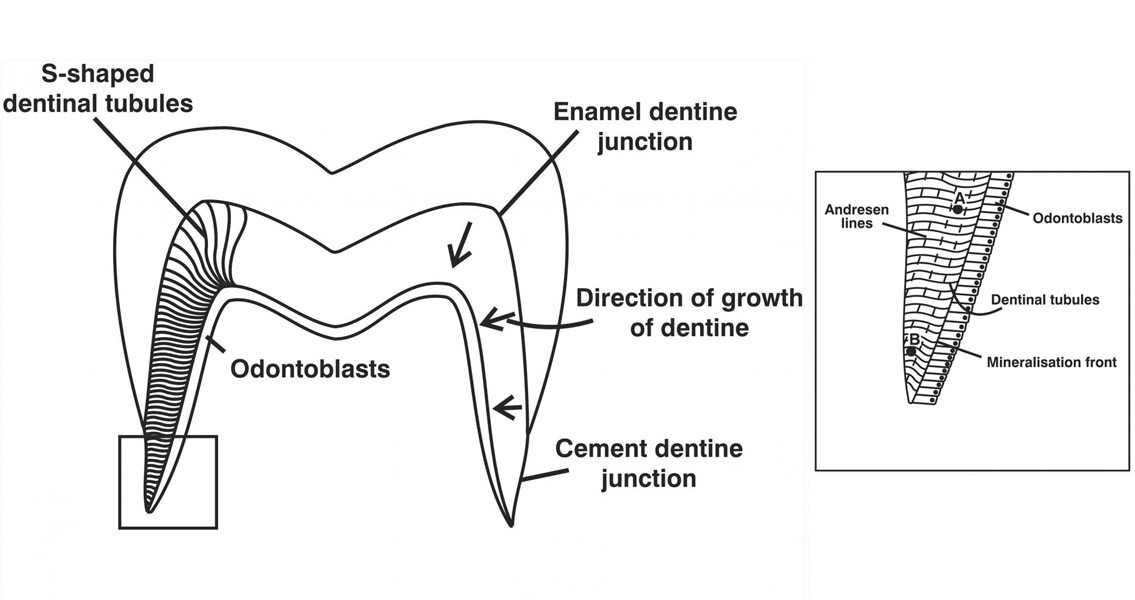
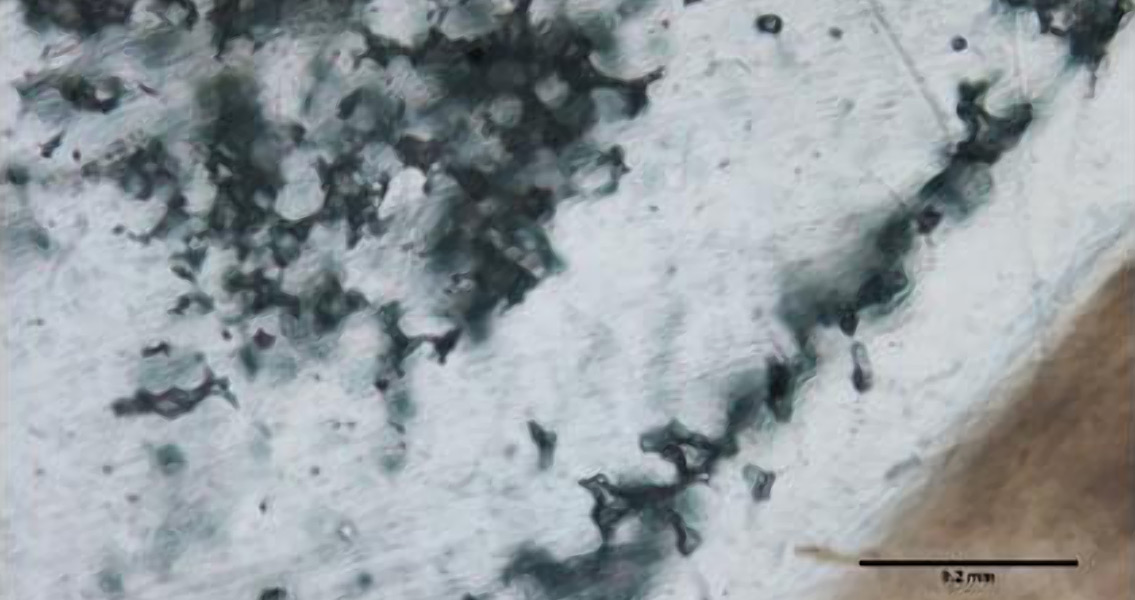
here Image courtesy of Beaumont et al. (2016) ]]>

Categories
Breaking News

Vitamin D Levels in Teeth Reveal Much, Researchers Find

The Journal of Archaeological Science, can be viewed online here Image Reused from Journal of Archeological Science, 2016, with permission from Elsevier]]>