Categories
Breaking News

Chinese Fossilized Fish Sheds New Light on Jaw Evolution

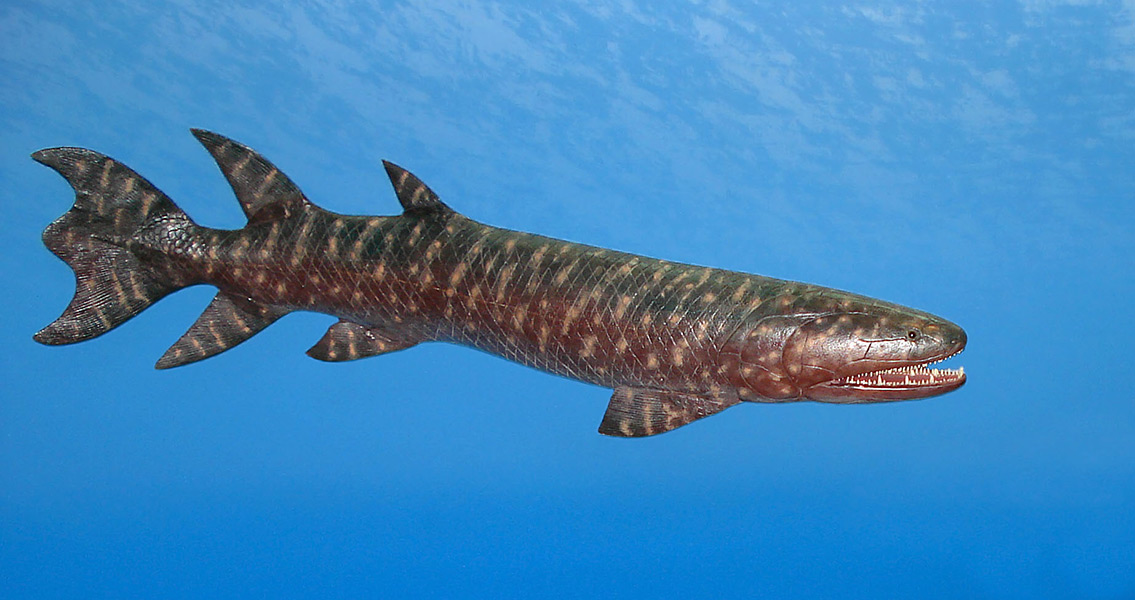
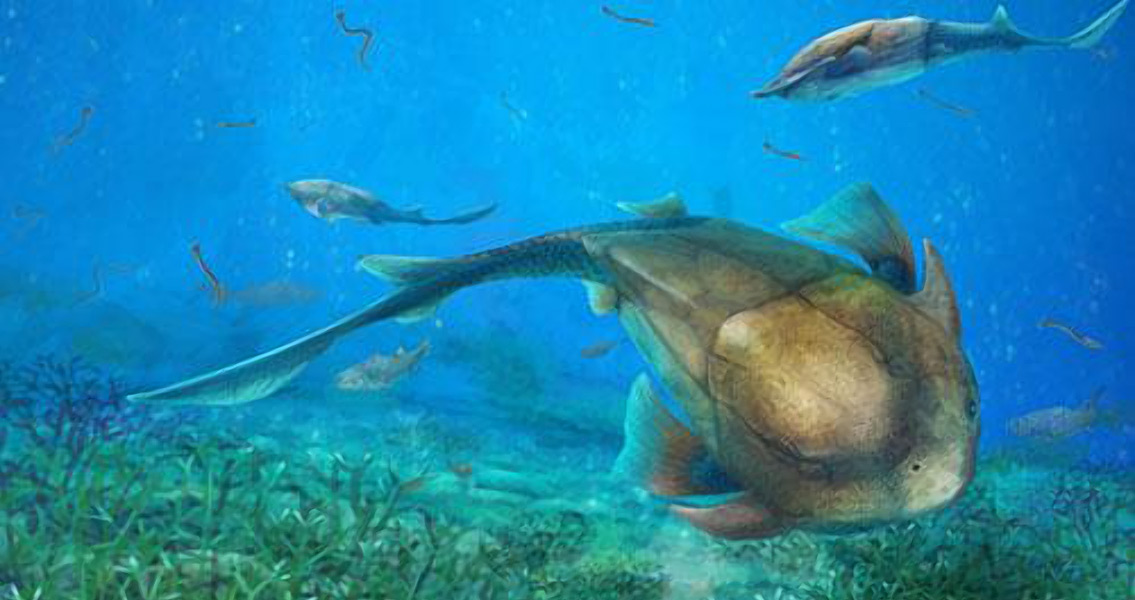
Qilinyu rostrate, a fish-like Silurian placoderm species, has led to new information regarding the evolution of the jaw in vertebrate species. The roughly 423 million year old fossil is approximately 126 millimeters in length – with an estimated total body length for the creature of 20cm – and is associated with several different species including the Guiyu and Megamastax (classified as osteichthyans), the Entelognathus (a maxillate placoderm) and the Dunyu (a galeaspid). Osteichthyans, which include tetrapods and bony fish species, have facial and bone structure differences when compared to placoderms. The discovery of Entelognathus revealed a placoderm with many facial characteristics more suited to osteichthyans, but the relationship between Entelognathus’ development and the rest of the placoderms from the same time period remained uncertain until this new discovery. According to a recently published research study by the Chinese Academy of Sciences, Sweden’s Uppsala University, and the Institute of Vertebrate Paleontology and Paleoanthropology of Beijing, the new Qilinyu fossil bridges the gap between placoderms such as Entelognathus and osteichthyans. The new specimen, according to the team of international researchers, has dentary, premaxilla, and maxilla structures that are constructed in the same way as the gnathal plates of less advanced placoderms while also predating the addition of certain lower jaw bones that characterized the evolutionary move away from gnathal jaws to maxillate ones. According to Uppsala University professor Per E. Ahlberg, one of the authors of the new study, examining the jaw bones of both Qilinyu and Entelognathus reveals that both fish species combine the characteristics of placoderm gnathal plates and bony fish jaw bones. Extrapolating from these findings, Professor Ahlberg remarked that if gnathal plates from placoderm species represented an inner jaw arcade that was similar to certain bones of bony fish species, there would be an expectation to find gnathal plates in distinct locations in Qilinyu and Entelognathus. With no evidence of these gnathal plates, the professor states that one interpretation of this is to conclude that the jaw bones of humans are lightly remodeled gnathal plates of placoderms, accomplished through several hundred million years of evolutionary process. Based on the team’s findings, Professor Ahlberg remarked that it looks as if substantial anatomical details of humanity can be traced back even beyond early bony fish species, into the Silurian period in the form of these “ungainly” placoderm species. The scientific community has largely agreed with the team’s findings, with John Long, the Society of Vertebrate Paleontology’s president and professor from Australia’s Flinders University, commenting that the new insights into Qilinyu help to fill a large gap in the evolution of vertebrate jaws. The new research study, published recently in the journal Science, can be found online here Image drawn by YANG Dinghua]]>
Categories
Breaking News

A.Sediba Likely Ate Similar Food to Homo Sapiens

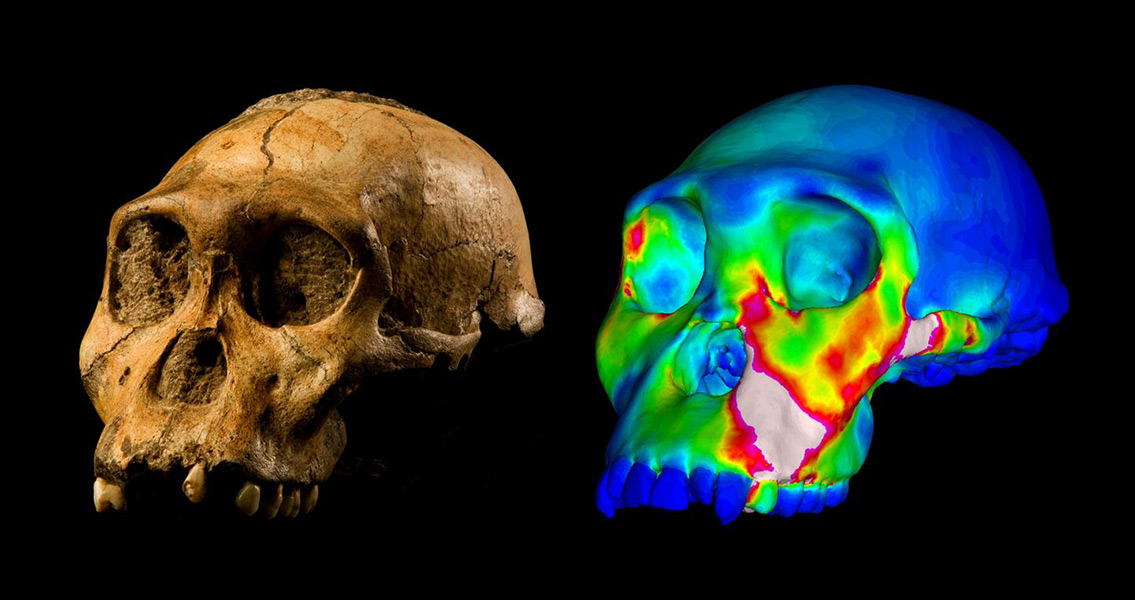
Australopithecus sediba; a species first discovered at the archaeological site of Malapa in the Cradle of Humankind World Heritage Site, South Africa, in 2008. A.sediba‘s phylogenetic relationships have been a source of debate since its initial discovery. Some have hypothesized that A.sediba was close to the genetic ancestry of the Homo genus, while others have suggested that it was in fact a phylogenetic relative of A.africanus. Although not answering the question of whether A.sebiba is a close evolutionary relative of the Homo genus, the new study does provide insights into the evolution of early human species. A 2012 study argued that A.sediba lived off a woodland diet, including hard foods mixed in with tree bark, fruit, leaves and other plant products. This conclusion was based on dental microwear data, which seemed to show tooth damage indicative of a diet of hard to chew foods. The authors of the new paper have used mechanical tests on a model of A.sediba’s skull to show that in fact the creature did not have the requisite tooth and jaw structure to survive on a diet of hard foods. Indeed, the study suggests that if A.sediba had bitten down as hard as possible with its molar teeth, it would have dislocated its jaw. To test the biomechancial properties of the A.sediba skull model, the team used techniques similar to those deployed by engineers to test whether airplanes, vehicles, and mechanical devices will break during use. Significantly, these new findings seem to distinguish A.sediba from other members of the Australopithecus genus. “Most australopiths had amazing adaptations in their jaws, teeth and faces that allowed them to process foods that were difficult to chew or crack open. Among other things, they were able to efficiently bite down on foods with very high forces,” said Professor David Strait, team leader and anthropologist from Washington University in St. Louis, US, in a press release. It is widely believed that humans are descended from an australopith ancestor. Since its discovery, A.sediba has been considered a possible candidate for that ancestor, or at least a close relative to it. The limitation in biting force discovered by the team is something A.sediba shares with modern humans. “Humans also have this limitation on biting forcefully and we suspect that early Homo had it as well, yet the other australopiths that we have examined are not nearly as limited in this regard,” said co-author Dr. Justin Ledogar, from the University of New England in Australia, in the press release. “This means that whereas some australopith populations were evolving adaptations to maximize their ability to bite powerfully, others (including A. sediba) were evolving in the opposite direction.” Ultimately, the new study shows the impact of diet and ecology on the development of the Homo genus’ ancestors. The difference in jaw strength among australopiths revealed by the study suggests ecological factors disrupted their eating patterns and behaviours, thus causing different evolutionary adaptations. As the study explains, “Thus, even if A.sediba and Homo were descended from different gracile australopith ancestors, it is evident that one must understand the dietary selective pressures that influenced the ancestors that preceded the earliest members of Homo if one is to understand the origin of the genus.” For more information: www.nature.com Image courtesy of Brett Eloff provided courtesy of Lee Berger and the University of the Witwatersrand.]]>

Categories
Breaking News

Bone Could Link Transition From Fish to Tetrapods

Prehistoric Wildlife notes. Later, however, it was established that it was a fish, though its anatomy and habitat in shallow waters were both factors linked to the later emergence of tetrapods. Land dwelling vertebrate animals originated around 390 to 360 million years ago, when some fish species that had lungs moved into shallow waters before eventually crawling onto land. In fact, all four-limbed vertebrates up to and including humans, along with lobe-finned fish, belong to the class of Sarcopterygii. Initially, this class only included lobe-finned fish but after scientists discovered that these fish were the ancestors of every four-legged animal, the class was expanded to include them as well. Image courtesy of Wikimedia Commons user: Dr. Gunter Bechly]]>

Categories
Breaking News

Giant Human Jawbone Baffles Scientists