Categories
Breaking News

Ancient Badger-Sized Mammal Likely Preyed on Dinosaurs,

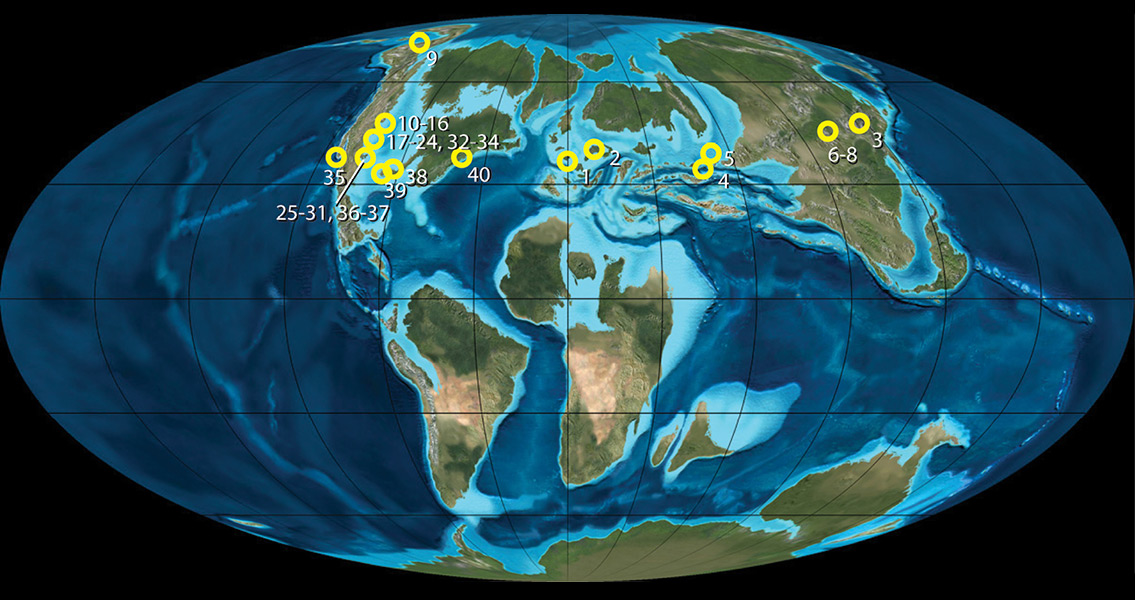
D. vorax, with its incredibly powerful bite and sharp, bone-crushing teeth, put a new spin on the theory that marsupials originated in South America, instead suggesting the origin point was both much further north – and about 10 to 20 million years earlier – than previously thought. Gregory Wilson, vertebrate paleontology adjunct curator from Seattle’s Burke Museum and lead researcher on the study, remarked that D. vorax absolutely “crushes the mold” when it comes to what scientists expect from mammals of the time period. With most other mammals from the era about the size of a shrew, D. vorax would have been a “fearsome predator” Wilson stated – one whose prey included some of the smaller dinosaur species. Discovered in the Hell Creek Formation, D. vorax fossil specimens were found in rock dating to between 59 million and 66 million years in the past. This isn’t the first instance of evidence pointing to creatures of this kind in North America though; based on previous finds, which were primarily fragmented teeth or jawbones, scientists have established something close to 60 different species of marsupial-like animals classified as metatherians from the entire Cretaceous. However, these new findings are radically different as they entail a partial snout and upper jawbone, and a nearly complete skull. These D. vorax parts have never been seen before now and have revealed that the creature is the largest metatherian known to have lived during the Cretaceous. While perhaps not large by the standards of the gargantuan dinosaurs roaming the Earth at that point, D. vorax would have weighed anywhere from just over 5 pounds to as much as 11-and-a-half pounds, the scientists have concluded. Even more interesting is the possible bite force the creature had, based on computed tomography (CT) scans of the fossilized remains. After determining where the jaw muscles would have been attached to the creature’s skull, and then comparing these muscles with modern animal analogues whose bite forces are already recorded, the researchers revealed that D. vorax would have had the strongest mammal bite strength ever. Most similar to modern hyenas and felines, the metatherian’s bite was strong enough to bite through bone. D. vorax could have easily bitten through hard shells of marine crustaceans and even small-sized dinosaurs. Wear patterns on the creature’s teeth bear out these hypotheses, scientists remarked. The new research study, published in the journal Nature Communications, can be found online here]]>
Categories
Breaking News

Bandicoot Fossils Show Marsupials were Ancient Survivors

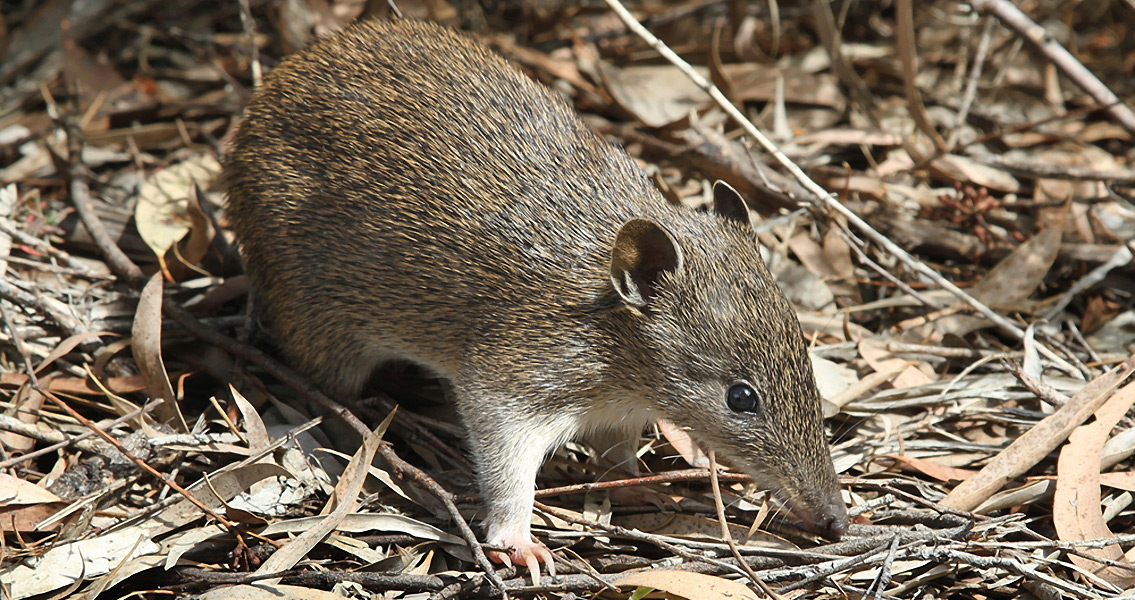
Lemdubuoryctes aruensis however, the remarkably archaic new bandicoot fossil discovered by Alpin, didn’t live in a rainforest but on an expansive savannah plain stretching from Australia to New Guinea at the time of the last glacial maximum. “While retreating rainforests and spreading grasslands did provide a backdrop for ecosystem change 5-10 million years ago. The Australian fauna likely adapted via changing its distribution rather than undergoing wholesale extinction and replacement,” Michael Westerman, with La Trobe University in Australia, says in the article, adding, “This agrees with our results from DNA, which indicate that modern desert-living bandicoot groups pre-date the onset of aridity by as much as 40 million years.” These timeframes coincide with the proliferation of Eucalyptus woodlands in Australia’s interior. “Bandicoots, like other Australasian marsupials, probably occupied a range of different habitats over many millions of years. However, our study has further implications for future conservation. Arid zone bandicoots are amongst the most vulnerable mammals in Australasia today, with multiple species having gone extinct within the last 100 years. By demonstrating their profound evolutionary antiquity, we can thus serve to highlight how extremely urgent it is to protect these living fossils as part of Australia’s unique biodiversity”, Dr. Kear is quoted as saying in the Heritage Daily article. The study has been published in Scientific Reports. ]]>

Categories
Breaking News

Terrifying Flesh Eating Marsupial Discovered in Queensland

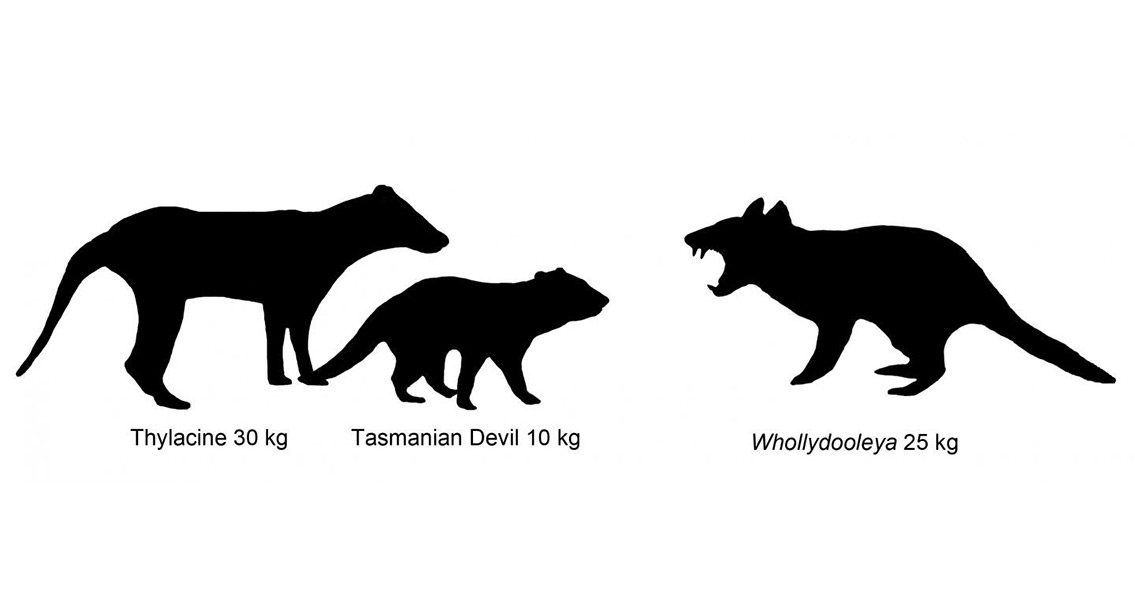
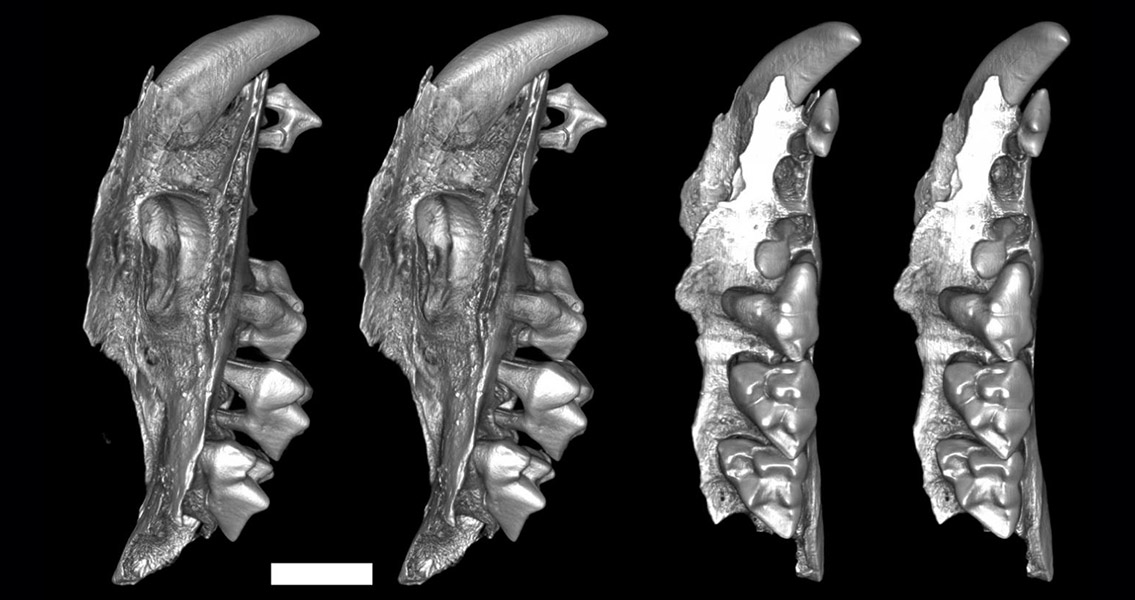
Whollydooleya tomnpatrichorum. It is believed W.tomnpatrichorum would have weighed between 20 and 25 kilograms in life. By comparison, a modern adult Tasmanian Devil weighs around just 10 kilograms. The creature marks the first formally identified discovery from New Riversleigh, a recently unearthed site in a remote part of Queensland littered with the remains of a plethora of strange, previously unidentified creatures. A description of W.tomnpatrichorum has just been published in Memoirs of Museum Victoria. W.tomnpatrichorum‘s distinct teeth are the focus of the new paper. One of the animal’s molars was excavated from an area of New Riversleigh known as Whollydooley Hill, named after Genevieve Dooley, one of the volunteers excavating the area. The tooth was found by Dooley’s partner, Phil Creaser. University of New South Wales Professor Mike Archer, the lead author of the new study, provided an insight into the just how the animal used its ferocious looking teeth. “W. tomnpatrichorum had very powerful teeth capable of killing and slicing up the largest animals of its day,” The late Miocene period in Australia, during which the newly discovered creature lived, is one of the least well understood in Australia’s history. Stretching from twelve million to five million years ago, it was characterised by drastic climate change as the continent began to dry out and megafauna there were forced to evolve and change in response. Due to the aridity of the period, precious few land animal fossils remain. That scarcity of fossils makes New Riversleigh so valuable to scientists. The site was discovered in 2012 by remote sensing using satellite data, close to the already famous fossil site of Riversleigh. “New Riversleigh is producing the remains of a bevy of strange new small to medium-sized creatures, with Whollydooleya tomnpatrichorum, the first one to be described,” explained Professor Archer. “These new discoveries are starting to fill in a large hole in our understanding about how Australia’s land animals transformed from being small denizens of its ancient wet forests to huge survivors on the second most arid continent on Earth.” Although the remains of a host of medium to large sized late Miocene animals have previously been found in fossil deposits in Australia’s Northern Territory, much less is known about the small to medium sized creatures that lived in that time “which generally provide more clues about the nature of prehistoric environments and climates”, Professor Susan Hand from UNSW, a team member on the project, explained. Dr Karen Black, post-doctoral researcher in paleontology at UNSW, added: “The small to medium-size mammals from the New Riversleigh deposits will reveal a great deal about how Australia’s inland environments and animals changed between 12 and 5 million years ago – a critical time when increasing dryness ultimately led to the Ice Ages of the Pleistocene.” According to Professor Archer, the W.tomnpatrichorum specimen discovered at New Riversleigh could have been one of the last of its species. “While it was at least distantly related to living and recently living carnivorous marsupials such as Devils, Thylacines and Quolls, it appears to have represented a distinctive subgroup of hypercarnivores that did not survive into the modern world.” “Climate change can be a merciless eliminator of the mightiest of mammals,” Archer remarked. For more information www.museumvictoria.com Illustration: Karen Black/UNSW ]]>

Categories
Breaking News

15 Million Year Old Remains of Bizarre Marsupial Found

Malleodectes mirabilis by the researchers behind the study published recently in the journal Scientific Reports. “Malleodectes mirabilis was a bizarre mammal, as strange in its own way as a koala or kangaroo,” said study lead author Professor Mike Archer, from UNSW. “Uniquely among mammals, it appears to have had an insatiable appetite for escargot–snails in the whole shell. Its most striking feature was a huge, extremely powerful, hammer-like premolar that would have been able to crack and then crush the strongest snail shells in the forest.” Archer and his team have been carrying out excavations at the Riversleigh World Heritage Fossil Site across four decades. Nothing remains of the cave except its limestone floor, which contains fossils of creatures who either fell into or lived in the cave throughout its history. Over the years the cave’s walls have worn away, but the fossil deposits there still cover the last 24 million years of Australian history. Teeth and other partial remains of Malleodectes had been found in the cave previously, but the discovery of a well preserved juvenille’s skull in a 15 million year old Middle Miocene cave deposit revealed just how strange the creature was. An acid bath allowed researchers to extract the remains from the limestone casing, and commence analysis involving techniques such as micro-computed tomography. UNSW Professor Suzanne Hand, a member of the team involved in the research, offered an explanation as to how the young animal may have died. “The juvenile malleodectid could have been clinging to the back of its mother while she was hunting for snails in the rocks around the cave’s entrance, and may have fallen in and then been unable to climb back out,” she said in the UNSW press release. At the time of its death the creature was teething, with its adult teeth embedded in its jaw and on the verge of erupting. The unusual creature, which went extinct millions of years ago, is believed to have been a distant relative of modern Tasmanian Devils. “Although it is very different from the others, it appears to have been related to the dasyures – marsupial carnivores such as Tasmanian Devils and the extinct Tasmanian Tigers that are unique to Australia and New Guinea.” Professor Archer said. Since they started forty years ago, UNSW’s annual expeditions to the Riversleigh site have yielded a host of remarkable, extinct creatures, including leopard like, potentially tree dwelling crocodiles known as drop crocs; and Dromornis, one of the largest birds to have ever existed, which is occasionally referred to as the ‘Duck of Doom’. Like many of the other strange, wonderful and occasionally terrifying creatures unearthed in Riversleigh’s rocks, it’s believed Malleodectes mirabilis went extinct as the result of a period of severe climate change that started around fifteen million years ago. “This climate change-driven transformation in Australia’s wildlife over the last 15 million years is a timely reminder of the probable outcome of the next cycle of climate change, one we appear to have triggered ourselves,” remarked Archer. Image courtesy of Karen Black and Suzanne Hand/UNSW]]>