Categories
Breaking News

Ancient Badger-Sized Mammal Likely Preyed on Dinosaurs,

D. vorax, with its incredibly powerful bite and sharp, bone-crushing teeth, put a new spin on the theory that marsupials originated in South America, instead suggesting the origin point was both much further north – and about 10 to 20 million years earlier – than previously thought. Gregory Wilson, vertebrate paleontology adjunct curator from Seattle’s Burke Museum and lead researcher on the study, remarked that D. vorax absolutely “crushes the mold” when it comes to what scientists expect from mammals of the time period. With most other mammals from the era about the size of a shrew, D. vorax would have been a “fearsome predator” Wilson stated – one whose prey included some of the smaller dinosaur species. Discovered in the Hell Creek Formation, D. vorax fossil specimens were found in rock dating to between 59 million and 66 million years in the past. This isn’t the first instance of evidence pointing to creatures of this kind in North America though; based on previous finds, which were primarily fragmented teeth or jawbones, scientists have established something close to 60 different species of marsupial-like animals classified as metatherians from the entire Cretaceous. However, these new findings are radically different as they entail a partial snout and upper jawbone, and a nearly complete skull. These D. vorax parts have never been seen before now and have revealed that the creature is the largest metatherian known to have lived during the Cretaceous. While perhaps not large by the standards of the gargantuan dinosaurs roaming the Earth at that point, D. vorax would have weighed anywhere from just over 5 pounds to as much as 11-and-a-half pounds, the scientists have concluded. Even more interesting is the possible bite force the creature had, based on computed tomography (CT) scans of the fossilized remains. After determining where the jaw muscles would have been attached to the creature’s skull, and then comparing these muscles with modern animal analogues whose bite forces are already recorded, the researchers revealed that D. vorax would have had the strongest mammal bite strength ever. Most similar to modern hyenas and felines, the metatherian’s bite was strong enough to bite through bone. D. vorax could have easily bitten through hard shells of marine crustaceans and even small-sized dinosaurs. Wear patterns on the creature’s teeth bear out these hypotheses, scientists remarked. The new research study, published in the journal Nature Communications, can be found online here]]>

Categories
Breaking News

Evolution of Ants Laid Bare by New Fossil Discoveries

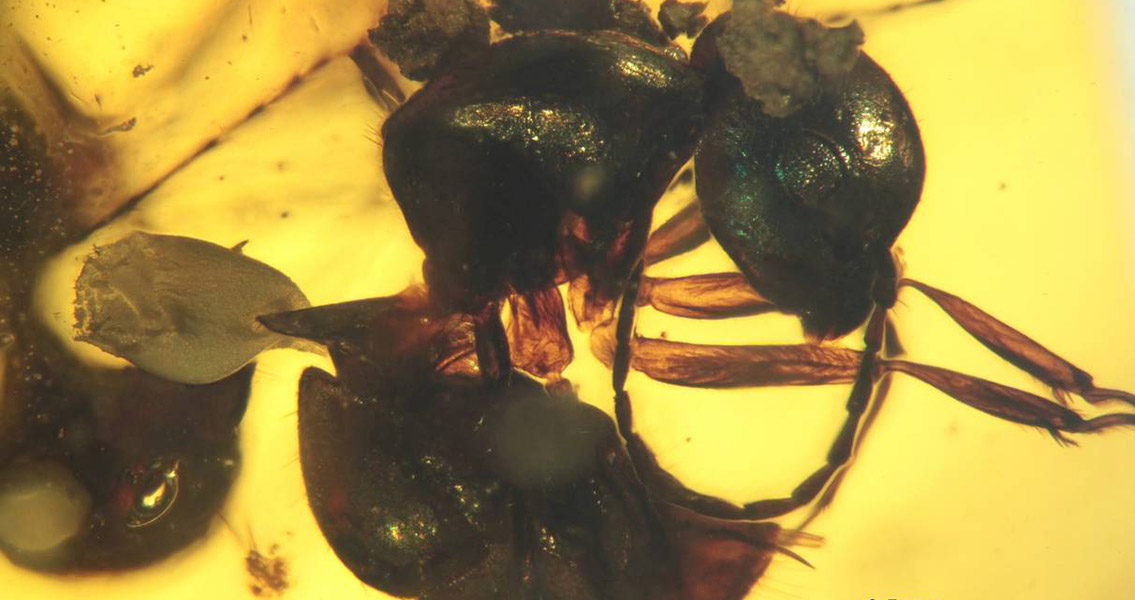
Ceratomyrmex ellenbergeri, is thought to have used its horn and mandibles to trap prey relatively large for its size. C. ellenbergeri, which belongs to the Formicidae stem-group, seems to be an exception to the idea of social evolution in Cretaceous ant species. The bladelike horizontal movement of the species’ mandibles are unique, resembling the Haidomyrmecine ants of the same time period which have long puzzled evolutionary biologists when it comes to classifying their ecology; both these species bear little in common with other large-mandible solitary hunter ant species such as modern trap-jaw ants. According to a press release from the Chinese Academy of Sciences, a new research paper spearheaded by Dr. Wang Bo from the academy’s Nanjing Institute of Geology and Paleontology found that C. ellenbergeri’s remarkable cephalic horn represents a hitherto unseen genetic modification among both ants discovered in the fossil record and the known ant species of today. This shows that the morphology of exaggerated trap-jaws such as in the Haidomymrmecines occurred early in the Formicidae stem group. The implications of the discovery include suggestions that at the very least some of the earliest Cretaceous stem-group ants differentiated themselves by being solitary socialist predators instead of eusocial insects. Additionally, the research study states that soon after ants started forming social bonds during the Early Cretaceous, there was at least one lineage in the form of Haidomyrmecini that grew to become effective at capturing prey – something that would not be seen in ant morphology again until well after the end of the Mesozoic, as evidence of these morphological specializations in the fossil record disappear for millions of years. The highly exaggerated features of the fossilized C. ellenbergeri specimen also show how early Cretaceous ants developed the ability to carry large-bodied prey, despite the fact that smaller prey would have presumably been easier to capture. In the end, the research data indicates that the earliest ants of the Cretaceous had ecological traits that were much more diversified and complex than previously thought. The research study, recently published in the journal Current Biology, can be found online here]]>

Categories
Breaking News

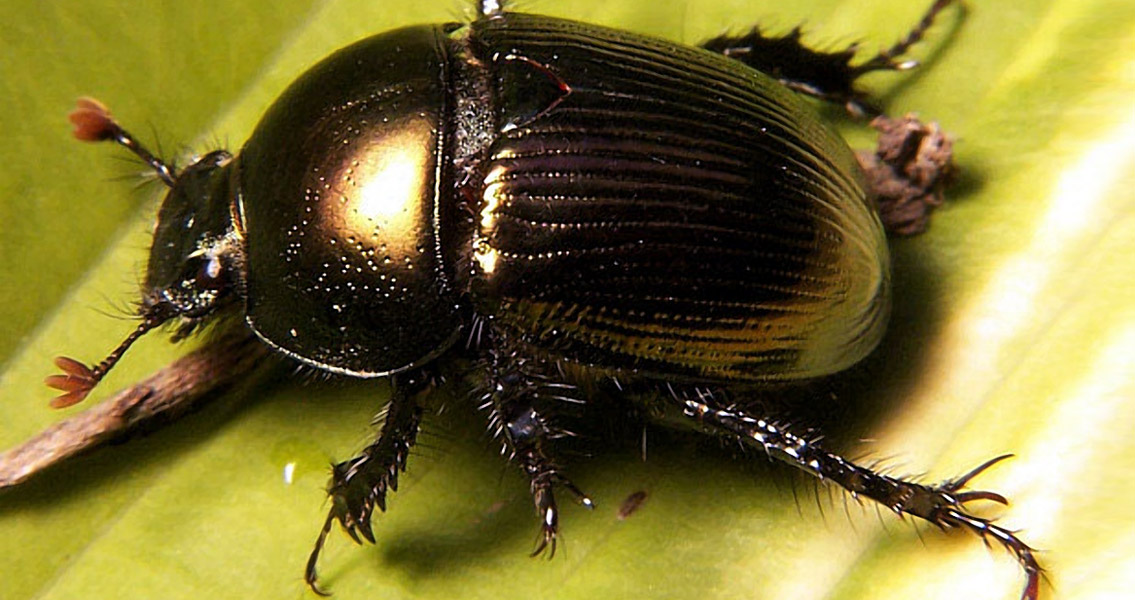
Dinosaurs Were an Important Resource for Dung Beetles

PLOS ONE, co-author Dr. Stephen Cameron with the Queensland University of Technology in Australia explained that fossilized dinosaur feces (70 and 80 million years old) supports the hypothesis the study outlines because it shows signs of tunneling that has been attributed to dung beetle feeding. The study is the first to show how the specialization of one group was related to using dinosaurs, the dominant species for 135 million years, as a resource. Of course, the flip side of this connection is that the mass extinction of dinosaurs during the Cretaceous-Paleogene period would have also impacted the dung beetle. Fortunately for the beetle, the impact of the dinosaur extinction occurred during the beetle diversification and they survived the event. The study concludes that the modern dung beetle is descended from a species which either fed on the dung of dinosaurs and other early mammals, or from a species which had already adapted to eating the dung of the Cretaceous mammals. Although the findings may challenge prior research associating mammals and the origin of dung feeding, the study also shows that the greatest rate of diversification the beetle experienced was during the Paleogene period, which is in line with the timing of major diversification of most mammals. Additional research will be needed to untangle the cause of the latest diversification and provide more detail on the dung beetle’s survival through the Cretaceous-Paleogene mass extinction. This story of flowering plants, beetles, and dinosaurs, demonstrates the relationships and complex interactions between evolving ecosystems, and the possibility of discovering what drives diversification – even for insects like the dung beetle for which very limited fossil records exist. The study was published this week, in the open-access journal PLOS ONE.]]>

Categories
Breaking News

T-Rex Bone Speaks of Cannibalism

a study of Tyrannousaurus fossils in museums in North America revealed four specimens which had bite marks on them, made by a large animal. Since the largest carnivore in the region at the time was the T-Rex, the researchers concluded that the eater must have been another T-Rex, suggesting cannibalism was a common behaviour among Tyrannosauri. Earlier this year, British researchers studied in Alberta, Canada, the remains of a Daspletosaurus, another species from the Tyrannosaurus family, which bore traces of multiple fights and cannibalism. The Daspletosaurus was smaller than the T-Rex and had apparently become a victim of a bigger genetic cousin, who also snacked on it after its death. The evidence pointing in that direction included bite marks and even one puncture wound to the back of the head, which was the result of a particularly hard bite, according to the researchers who studied the skull. The cousin in question, however, was not T-Rex because the Daspletosaurus lived 75 million years ago, the BBC writes, before that most famous of the Tyrannosaurids came onto the scene. For more information: TYRANNOSAUR CANNIBALISM: A CASE OF A TOOTH-TRACED TYRANNOSAUR BONE IN THE LANCE FORMATION OF EASTERN WYOMING Image courtesy of Wikimedia Commons user: David Monniaux]]>

Categories
Breaking News

New Polar Dinosaur Species Discovered

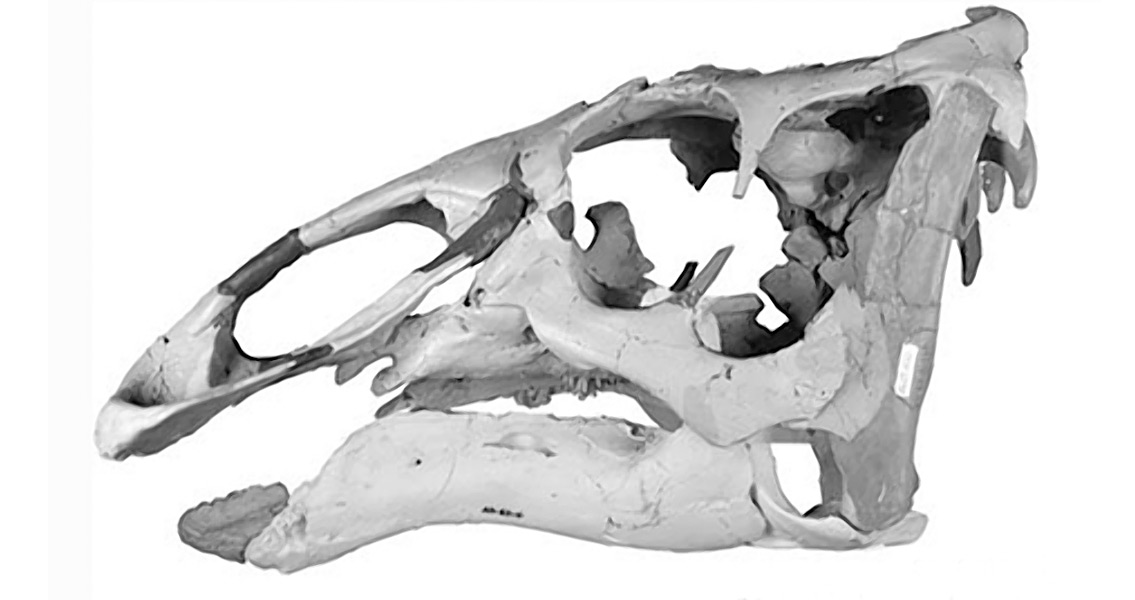
Ugrunaaluk kuukpikensis, a hadrosaur, or duck-billed dinosaur, probably lived around 69 million years ago and spent four months every year in darkness, surviving on tree bark, ferns, and whatever other vegetation was left when the sun went down for the winter. The hadrosaur fossils were discovered in the Liscomb Bone Bed, a geological layer rich in ancient fossils along Colville River, in the Prince Creek formation, the University of Alaska Fairbanks said in a press release. Pat Druckenmiller, one of the authors of the new study and the earth science curator at the University of Alaska Museum of the North, said the animal stood between six and seven feet tall and was up to 30 feet long. The creature’s hind legs were much longer that its front legs but it could walk on all fours, the authors also report. Another one of the authors, biologist Gregory M. Erickson from Florida State University, told the New York Times that the “ancient grazer” had crests along its back, like Godzilla, and a mouth full of as many as 1,000 sharp teeth. Although Ugrunaaluk kuukpikensis had to survive snowfalls and a long period of darkness, the authors note that temperatures above the Arctic Circle during the Cretaceous were warmer than they are now, with the average standing around 4 degrees Celsius above zero. Still, if that was the average, then there were certainly prolonged periods when temperatures dipped below zero, which suggests the hadrosaur was a uniquely hardy creature. Druckenmiller told the New York Times that the species is completely new to science, distinctly different from other dinosaur species discovered earlier at lower latitudes in Alaska, a “truly polar” dinosaur. The authors of this new paper, which was published in the journal Acta Palaeontologica Polonica, had earlier published work suggesting that there were animals living in northern Alaska 69 million years ago, when there were forests in the area because of the more temperate climate, the press release notes. Erickson says that the discovery of the Ugrunaaluk kuukpikensis fossils “challenges everything we thought about a dinosaur’s physiology.” he added that the discovery prompts the question of how the duck-billed herbivores survived the harsh Arctic winter. Since 1961, when palaeontologist Robert Liscombe, after whom the area is named, discovered the first dinosaur fossils in the Northern Slope of Alaska, a total of 6,000 dinosaur bones have been unearthed there. Most of them belong to young, smaller, animals, probably a herd that was suddenly killed, Druckenmiller says in the press release. As for species, three distinct ones have been named and catalogued, all of them unique to northern Alaska. This latest one, “the ancient grazer” as its name translates from the language of the local indigenous community, is by far the most complete ever discovered in a polar region, Druckenmiller says. For more information: “A new Arctic hadrosaurid from the Prince Creek Formation (lower Maastrichtian) of lower Alaska” Image courtesy of Wikimedia Commons user: Hirotsugu Mori, Patrick S. Druckenmiller, and Gregory M. Erickson]]>

Categories
Breaking News

125 Million Year Old Dinosaur Tracks to Be Made Public