Categories
Breaking News

How European colonisation completely wiped out dogs in America

Canines and colonisers: an unhappy tale Colonial devastation bestowed upon native humans of the Americas is well-documented; but evidence about dogs’ lives is less known. However, an international team has started to ask – and answer – those questions. Fifty researchers collaborated on the investigation and together, they conducted the most detailed and thorough study of ancient and modern dog DNA to date. Through biological and archaeological evidence, they examined the remains of 71 ancient dogs from the Americas and Siberia; and put their findings alongside the genomes of modern dogs. [caption id="attachment_8797" align="aligncenter" width="720"] A ritual burial of two dogs at a site in Illinois near St. Louis suggests a special relationship between humans and dogs at this location and time (660 to 1350 years ago).
Credit: Photo courtesy Illinois State Archaeological Survey[/caption]

Lineage losses for man’s best friend

Published in the journal Science, the new evidence gives us reason to conclude that ‘pre-contact’ dogs disappeared to a similar extent to the Neanderthals. One of the authors was Greger Larson from the University of Oxford, who is leading an international effort to investigate how dogs have been domesticated. He says the study solidifies our understanding of the fates of humans and their animals: “The Europeans come through. They knock out the humans. They knock out the dogs… It’s a complete disappearance.” Leading the research was Laurent Frantz, an expert on ancient DNA at the Queen Mary University of London. Until now, there hadn’t been sufficient evidence to tell the story of what happened to dogs after the arrival of European colonists. However, his research proves that pre-contact dogs were identifiable as a group separate to any other, and that their disappearance came about from a combination of disease and European persecution.

Dogs in America: a history

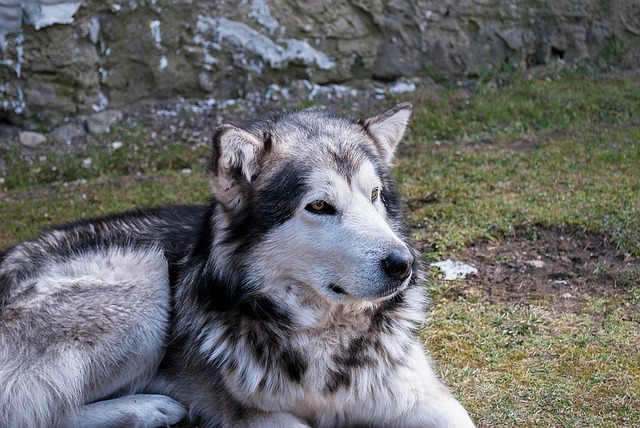
America’s earliest dogs were not domesticated North American wolves, as has been speculated. It’s much more likely that they followed humans over a land bridge that once connected North Asia and the Americas, the study found. You can read more about recent research on human migration into the Americas here. The earliest archaeological evidence for dogs living in North America comes from 10,000 years ago. As humans entered the region 14,000 years ago, it looks like the first wave didn’t bring dogs with them. The first canines to arrive in America were of East Asian descent, but soon evolved into their own group, distinct from both their ancestors and modern dogs. The animals in question are loosely related to Arctic breeds, such as huskies and malamutes, which arrived with later human migrations into North America. [caption id="attachment_8798" align="aligncenter" width="640"] A modern Malamute.[/caption]

“Forced cultural changes”

Humans and dogs coexisted relatively peacefully in both continents for over 9,000 years. But when European colonists arrived, they were gone. “This suggests something catastrophic must have happened, and it’s likely associated with European colonisation,” says Frantz. Clearly, early humans and dogs in the Americas faced many of the same challenges after European contact. University of Illinois Professor of Anthropology, Ripan Malhi, explains: “It is known how Indigenous peoples of the Americas suffered from the genocidal practices of European colonists after contact… What we found is that the dogs of Indigenous peoples experienced an even more devastating history and a near-total loss, possibly as a result of forced cultural changes and disease.”]]>

Categories
Breaking News

Fonni's Dogs Followed Their Owners to Sardinia, Genome Shows

GENETICS, the new study reveals that the regional variety has in fact developed into a true breed. Interestingly, the authors suggests this took place because of unregulated selection for the animal’s distinctive behaviour. The results also suggest that the Fonni’s Dog came from the same geographic areas as the island’s human migrants. Known as Cane Fonnese in Italian, Fonni’s Dogs are characterised by their intense facial expressions. A rugged herd guardian, they all make fine protectors of flocks and display a wariness towards strangers. Despite these common traits, significant variation in their fur has led many to question if they’re a true breed. “If you were to look at ten Fonni’s Dogs, you would see there’s a lot of variation in coat color and fur length. But they are all good protectors of their flocks. That’s because nobody cares what they look like; they’ve been bred to do a job and to do it right,” said study leader Elaine Ostrander of the National Human Genome Research Institute (NHGRI), in a press release. Another common trait among Fonni’s Dogs is their fierce loyalty to their owners. This manifests itself in their willingness to guard the property of their owner, and somewhat more unusually in their skill as thieves. “They can be trained to sneak over to the neighbors’ and bring items home.” Ostrander explained. Much like the people that brought them to the island, the Fonni’s Dogs are an example of an isolated population which is providing scientists a wealth of genetic insights, particularly in regards to genes that influence health and behaviour. Sardinia’s geographic isolation means its population has a unique ancestry, and very low genetic diversity. These characteristics make it easier to study the genetic influences of disease and aging in Sardinians when compared to other genetic groups. Ostrander and colleagues argue that the same is also true of the hundreds of different dog breeds. “Dogs get all the same diseases as humans, and there are lots of dog breeds with genetic predispositions, for example to particular types of cancer,” Ostrander said. “Once we understand the genetic history of a breed we can search for disease genes in a much more powerful way than is possible in humans, enabling us to hone in on medically-relevant genes.” The study also revealed that the ancestors of the Fonni’s Dog were related to the Saluki, a swift, graceful ‘sight’ hound from the Near and Middle East; and the Komondor, a powerfully built sheep guardian from Hungary. These insights into the history of the Fonni’s Dog show just how closely it mirrored human migration to Sardinia. “The map we can draw of the dog’s origins is the same as the map of human migration to Sardinia,” said Ostrander. “Clearly ancient people traveled with their dogs, just as they do now.” These parallels between the migration of dogs and humans could have a surprising application, according to the study authors. “Our study shows how closely dog migration parallels human migration. It could be that if you have missing pieces in a study of a human population’s history, samples collected from dogs in the right place could fill in those gaps.” The team now plan to study the regions of the genome that make the Fonni’s Dog unique, perhaps even explaining its loyalty and protective behaviour. Ostrander and her team also hope to work with colleagues in other countries to explore other so called ‘niche’ dog populations; to demonstrate the ways man’s best friend can be used to help track down disease genes. ]]>

Categories
Breaking News

Genetic Tests Suggest Dogs Domesticated More Than Once

here Image courtesy of Wikimedia Commons user Peter Wadsworth]]>

Categories
Breaking News

Dogs Came From South East Asia 33,000 Years Ago

www.nature.com Image courtesy of Wikimedia Commons user: Andre Engels ]]>

Categories
Breaking News

Did Dogs Come from Central Asia?

” target=”_blank”>”Genetic structure in village dogs reveals a Central Asian domestication origin” Image courtesy of Wikimedia Commons user: Peter Wadsworth ]]>

Categories
Breaking News

Study Says Climate Change Influenced Canine Evolution

www.nature.com Image courtesy of Wikimedia Commons user: Flicka]]>

Categories
Breaking News

Cats Brought Extinction to Dog Species in North America

“The role of clade competition in the diversification of North American canids” Image courtesy of Wikimedia Commons user: Don Wecua ]]>

Categories
Editorial

May History News Round-up

The Americas Researchers from New York Queens College have found that the Ancient Maya city Nixtun-Ch’ich, in Northern Guatamala, was built with a grid pattern design, something not seen in other cities from that time and region. Thought to have thrived between 600 and 300 BCE, the city featured a ceremonial route lined with up to 15 flat top pyramids which were each up to 100 feet tall. Running from west to east, the route only had a 3-degree variation from true east. Other Maya cities tended to be much more ‘relaxed’ in design and the researchers, led by Timothy Pugh from Queens College, have suggested that Nixtun-Ch’ich’s strict design may have given a sense of being constantly controlled for the people living there. A study by Jack Williams and Samuel Munoz has looked at the largest pre-colonial settlement north of Mexico, the city of Cahokia, located on the flood plain of the Mississippi River. By studying 2000 years old sediment cores from the flood plain, Munoz and Williams have shown that major flood events could have been linked to the rise and fall of the city. Correlating the history of the city with the record of floods, it was found that the rise of Cahokia took place between 600 and 1200 CE, a relatively flood free period. A major flood hit the area after 1200 CE, around the same time that the city entered a period of decline culminating in its complete abandonment in 1400 CE. The study could be hugely important for other studies of early agricultural societies as it has highlighted the importance of flood as a possible cause of decline, as well as shedding new light on a rarely studied period of North American history. Human Origins and Development Several studies published in May about our prehistoric origins have the potential to cause a major rethink about our distant past. Grasping the connectivity of such developments can be difficult. Below, several of the most important news stories from this month are presented in chronological order of the periods of which they relate to. An international team of scientists has just announced the discovery of a new human ancestor species which they have called Australopithecus deyiremeda. The scientists believe that this species inhabited the Afar region of Ethiopia around 3.3 million to 3.5 million years ago. This is hugely significant as it means Australopithecus deyiremeda lived in the region at the same time as Australopithecus afarensis (whose most famous representative is Lucy). The study has the potential to question the hitherto dominant theory that only one human ancestor species inhabited the earth at any time during the Pliocene period. Jumping forward three million years, a study from the Wellcome Trust Sanger Institute and the University of Cambridge used genetic sequencing to understand the path of human migration through Africa. Based on a study of the DNA of 100 Egyptians and 125 Ethiopians, the team observed that the DNA of the Egyptians was closer to that of Eurasians. From this, they concluded that the divergence from Egyptians to Eurasians occurred around 10,000 years later than that from Ethiopians to Eurasians. Based on these conclusions, the team believes that the bulk of the human migration from Africa went through Egypt rather than Ethiopia. Other studies have looked at the development of early culture and societies. Genevieve von Petzinger, an anthropologist from the University of Victoria, has looked at the origins of written communication. It is generally believed that the use of written symbols as a source of communication first emerged in Sumer around 3,000 BCE. After examining 52 caves around Europe where ancient humans had lived, von Petzinger believes that written symbols were intentionally used as a way to convey information over 40,000 years ago. These written symbols are clearly not as sophisticated as a modern written language, but if von Petzinger is correct, they would suggest that human cultural development actually started much earlier than previously thought – possibly before the migration out of Africa. Finally, a study by Pontus Skoglund from Harvard Medical School and the Broad Institute, and Love Dalén from the Swedish Museum of Natural History, has suggested that the relationship between humans and dogs may have formed much earlier than previously thought. Scientists generally argue that the domestication of dogs occurred around 16,000 years ago, but this new study argues it actually took place as far back as 35,000 years ago. The conclusions are based on research into the dates that modern dogs diverged from wolves in Siberia (Scientists consider the divergence between dogs and wolves to have been a consequence of human domestication of the animals). ]]>

Categories
Breaking News

Tracking the Spread of Man's Best Friend

Azania. Recent DNA research has indicated that all modern dog breeds are descended from the domestication of a now-extinct wolf breed, about 11 to 16 thousand years ago. There is a lot of debate, however, surrounding where this domestication took place. Dogs were adopted by early hunter-gatherers, as they could assist in the capture of prey, or provide defence from large competing predators at kills. It is unclear however, whether their domestication took place just once, or on multiple occasions. The huge genetic diversity among dogs found in East Asia had led many scientists to conclude that domestication began there. Other research, however, has challenged this assumption, stating there is an equal likelihood of dog domestication having occurred elsewhere on the Eurasian continent. C. familiaris, it seems, is not native to the African continent, domestic dogs appear to have been introduced from the Middle East at some point after 12,000 years ago. After their initial introduction, dogs spread relatively quickly across North Africa, possibly because they were useful in the pastoral economy of animal husbandry. The expansion of dog populations south of the Sahara, however, appears to have been slow and staggered. In an effort to explain this much slower rate of expansion, Prof Mitchell has suggested that when dogs entered Sub-Saharan Africa, they encountered a series of endemic diseases. Mammalian species, including wild canids, native to Sub-Saharan Africa, acted as reservoirs for these diseases. The most virulent diseases that dogs encountered would have been the various strains of Trypanosomiasis, caused by parasitic protozoa in the bites of insects. One of the best-known diseases dogs could have been affected with is sleeping sickness, principally spread by tsetse fly bites. “[These diseases] pose a significant health risk to dogs living in Sub-Saharan Africa today, particularly to dogs not native to the region,” Prof Mitchell writes. It appears that African breeds of dog have a level of tolerance for these diseases; this resistance obviously took a long time to develop. Dogs which did not have this resistance, therefore, would not have been able to spread as quickly across Sub-Saharan Africa. “Based on the high mortality rates that European breeds introduced to sub-Saharan Africa today suffer, from the diseases discussed, such as sleeping sickness, I would think it very likely that the earliest dogs introduced to the region in prehistory would have suffered a similar challenge,” Prof. Mitchell told New Historian. Prof. Mitchell’s work provides an important addition to the little-understood history of the domestic dog.  “I hope that this work will make a contribution to understanding the general history of dogs and people as a whole,” Prof Mitchell said. “[The study] helps develop a more informed understanding of how all kinds of domestic animals were taken up.” It is important to understand the history of the dog and other animals we have domesticated, as they are inextricably linked to our own development. “[Studying domesticated animals] is a field with a lot of potential to it,” Prof Mitchell said. For more information: www.tandfonline.com Image courtesy of Wikimedia commons user: Attis1979]]>