Categories
Breaking News

Construction Work Reveals Russian Spy Room

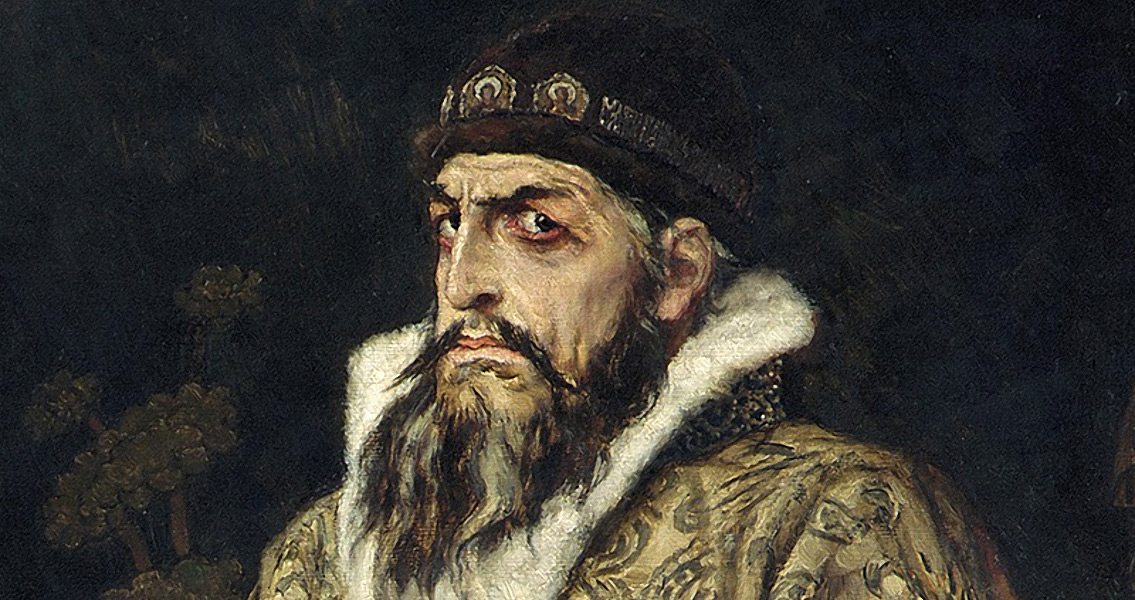
RT’s Ruptly news agency. Ivan IV Vasilyevich, also known as Ivan the Terrible, was the Grand Prince of Moscow between 1533 and 1547. During his reign, Russia conquered several neighboring regions to become a multicontinental and multiethnic state that spanned approximately 4,050,000 square kilometers (1,560,000 square miles). Historic sources offer dissimilar accounts of Ivan’s character. He’s often described as devout and intelligent, and a patron of the arts and trade (he established Russia’s first publishing house), yet he was prone to rages and episodic periods of mental instability that grew more common as he aged. During one such outburst, he reportedly killed his second son and heir Ivan Ivanovich during a heated argument that resulted in Ivan Vasilyevich striking him in the head with a pointed staff. In total, archeologists recovered approximately 150 artifacts dating back to between the sixteenth and nineteenth centuries, the majority of which are eighteenth and nineteenth century ceramics, including fragments of bowls and pots, as well as an intact ceramic cup. Trade sealing marks made of lead, 12 copper coins, nails, and iron knives were also recovered from the room. Experts are currently considering whether the room should be opened up for the public to see or preserved as it is. ]]>

Categories
Editorial

Trump's Wall Vs The Great Wall Of China, Hadrian's Wall & the Berlin Wall

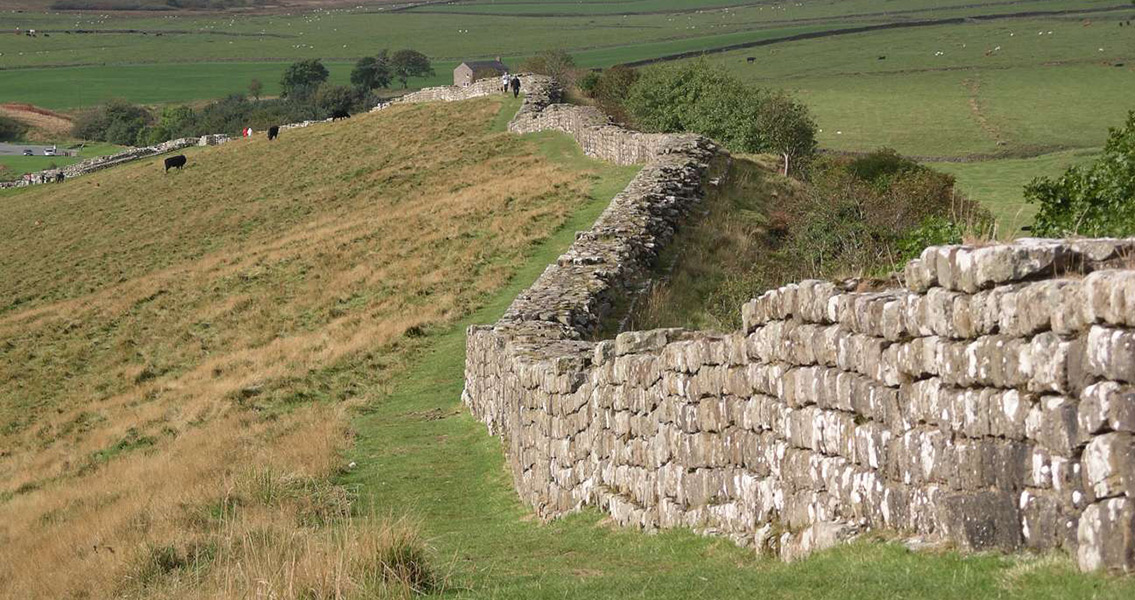
The Great Wall of China Trump’s proposed wall would pale in comparison to the impressive Great Wall of China, which at its peak measured 13,170.7 miles (21,196.18 km) in length. Even today, what remains of the wall (5,500 miles, 8,851 km) is more than twice the length of the Mexican-US border. Consisting of a series of fortifications and connected walls, the Great Wall of China was first conceived in the third century BCE by Emperor Qin Shi Huang as a means of protecting the Chinese Empire from incursion by barbarian nomads. The most recognisable and well preserved section of the Great Wall was built centuries after the project began, during the Ming Dynasty from the fourteenth to the seventeenth century CE. Although still a powerful symbol of Chinese culture, the Great Wall of China ultimately failed to prevent invaders entering China. In the seventeenth century, Manchus from central and southern Manchuria broke through the wall, attacking Beijing and bringing about the end of the Ming Dynasty and the rise of the Qing Dynasty. Nevertheless, the wall still remains one of the most impressive architectural feats in history. Hadrian’s Wall For nearly 300 years Hadrian’s Wall marked the north-west frontier of the Roman Empire, affording it enormous symbolic as well as defensive importance. The wall’s construction was ordered by Roman Emperor Hadrian on his visit to Britain in 122 CE. At its peak it stretched over 73 miles, crossing northern Britain. The wall had a selection of small castles and towers at regular intervals along its length, meaning there were observation points every third of a mile. Much like the Great Wall of China, Hadrian’s Wall was built as a defensive measure to keep out nomadic tribes, in this instance the Picts of Scotland. In 180 CE, during a major war, a tribe from the north managed to cross over the wall, attacking a fort and killing the Roman general and troops stationed there. The attack likely led to changes in how the wall was manned and its defensive system, but it remained a prominent military installation throughout the Roman occupation of Britain. Following the Roman withdrawal in the fifth century however, Hadrian’s wall started to fall into disrepair, the stones used in its construction being quarried to build castles, churches and houses. The Berlin Wall The most short lived of the three walls, but perhaps the most traumatic for those affected by it. The Berlin Wall was a symbol of the Cold War, and a Europe divided into East and West. Measuring 87 miles long and around 3 metres high, it came to embody a huge cultural divide. In August 1961 the Communist Government of the German Democratic Republic started work on the barbed wire and concrete Antifascistischer Schutzwall (antifascist bulwark) between East and West Berlin. The GDR government claimed the wall was built to prevent ‘western fascists’ attempting to infiltrate East Germany’s socialist society, but in large part its creation was intended to stop the stream of migration west out of the Soviet Union. When completed, the wall embodied the separation of East and West Berlin. Travel between the two sides became virtually impossible, except for diplomats and officials who went through designated checkpoints – the most famous of which was Checkpoint Charlie. On 9th November 1989 the GDR announced that Berliners could once again cross the wall whenever they pleased. An ecstatic atmosphere descended on the city, citizens rushed to climb over the wall, or took pickaxes to it in an attempt to bring it down. 138 people were killed attempting to cross the Berlin Wall over the 28 years of its existence, either by being shot or through accidents associated with their attempts to evade the authorities. The three walls mentioned served their purposes with varying levels of success. Beyond their intended practical uses however, they are so well remembered for the symbolic barriers they represented. It is this that can perhaps provide the biggest insight into the proposed US-Mexico border wall.]]>
Categories
Breaking News

New Discovery from Egypt’s Old Kingdom

Egypt Independent that the stone wall was dated using the pottery fragments that were embedded in the mortar used to build the wall. Among the fragments were pieces of carinated bowls, fashioned in a style that was typical of the Sixth Dynasty (2278-2184 BCE) reign of King Pepi II. The Old Kingdom is generally regarded as the time period between the Third Dynasty and Sixth Dynasty (2686–2181 BCE) in the third millennium BCE, when Egypt achieved its first ongoing peak of civilization. The three ostensible “Kingdom” periods: the Old, the Middle, and the New Kingdoms, indicate the peaks of civilization within the lower Nile Valley. The Old Kingdom is notable for being a dynamic time for Egyptian art. During this period, sculptors created the earliest known individual portraits as well as the first life-size statues in copper, wood, and stone. Masons and architects mastered the building techniques that were necessary in the construction of monumental stone structures. Additionally, the art of carving precisely detailed reliefs was perfected. Egypt’s Middle Kingdom (also referred to as The Period of Reunification) is the time period between 2050 BCE and 1800 BCE, covering the twelfth and thirteenth dynasties. The New Kingdom, also known as the Egyptian Empire, between the sixteenth century BCE and the eleventh century BCE, covers the eighteenth, nineteenth, and twentieth dynasties. Qubbet el-Hawa is the site of a cemetery containing Rock-cut tombs, located on the west bank of the Nile river, across from the Egyptian city of Aswan. The elite tombs discovered there date primarily to the Old Kingdom and include the well-known tomb of Harkhuf. A member of the research team, Carl Graves is quoted by the Egypt Independent as saying: “The findings are dramatically altering our understanding of the funerary landscape in this area during the Old Kingdom and First Intermediate Period in 2278-2184BC. I don’t think anyone yet knows who the tombs might have belonged to.” The discovery was made as part of the project’s first field season. ]]>

Categories
Breaking News

New Evidence of a Battle Still Mourned during Jewish Fast

Jewish Press: “This is a fascinating testimony of the intensive bombardment by the Roman army, led by Titus, on their way to conquering the city and destroying the Second Temple. The bombardment was intended to attack the sentries guarding the wall and provide cover for the Roman forces so they could approach the wall with battering rams and thereby breach the city’s defenses.” As described by historian Flavius Josephus, who witnessed the event, the last battle against the Jewish rebels started with the Romans using catapults to hurl large stones, spears and gravel at the outer third wall and its defenders. The Romans were firing from siege towers which Jewish weapons were unable to reach. When the Jews were forced to retreat, they were no longer able to prevent the endless onslaught of Roman battering rams which gradually destroyed the wall. Josephus wrote: “The soldiers who reached the top of the wall opened the gates and brought the entire military force inside. Therefore on the 15th day of the siege, the 7th day of Artemisius [corresponding to the Hebrew month of Iyar], the Romans took control of the … wall, most of which was destroyed to the foundations along with the northern part of the city.” It took another two and a half months of battle before Titus was able to breech the remaining two walls. The findings attesting to the battle at the third wall were discovered in the Russian Compound, an area west of Jerusalem’s Old City, named for the Russian Orthodox church built there during the nineteenth century. Construction of Jerusalem’s third wall was started by Judean King Agrippa I, however, construction was halted and the wall was only completed years later, haphazardly and with inadequate resources making it a weak spot in the city’s defense. The destruction of the first and second temples is still mourned yearly as the Jewish fast Tisha B’Av, while the Arch of Titus, which celebrates the Roman’s victory in Jerusalem and the Temple’s destruction, is still standing in Rome. The excavation findings are scheduled to be presented at the “New Studies in the archaeology of Jerusalem and its Region” conference. ]]>

Categories
Breaking News

Volunteers Strike Again with Discovery of Bronze Goddess

Wallquest project has unearthed at Arbeia. In 2014, another volunteer discovered the head of a protective goddess, a tutela, carved out of stone. The site of the only permanent stone granaries left in Britain, the fort, constructed sometime around 120 CE, was occupied until the fifth century when the Romans left Britain. One possible interpretation of Arbeia is “fort of the Arab troops”, which refers to a time when Mesopotamian boatmen were garrisoned there, as was the First Asturian, a squadron from the Spanish cavalry. It was not uncommon for Roman forts to be manned by troops from somewhere else within the empire, where they often assimilated and recruited locally. Ceres, the goddess of the harvest, was credited with teaching mankind how to grow, and then preserve and prepare corn and grain. She was also believed to be responsible for the fertility of the land. The only god involved in the day-to-day lives of common people, she is typically portrayed holding a scepter or a farming tool with one hand, and a basket of fruit, grain or flowers with the other. Hadrian’s Wall, also known as the Roman Wall, was a defensive fortification in the Roman province of Britannia during the rule of Hadrian, the Roman emperor between 117 CE and 138 CE. Built along the River Tyne, it was constructed to mark the northern limit of the Roman Empire. The total length of the wall was 80 Roman miles or 73 modern miles (117.5 km). The structure consists of a stone wall atop a stone base, with two turrets in between milecastles (small forts, or fortlets, guarding a gateway), and forts approximately five Roman miles apart. Designated a UNESCO World Heritage Site in 1987, the portion of the wall that remains standing can be followed by visitors using the Hadrian’s Wall Path. Amanda Seim, the Earthwatch volunteer working with the Wallquest Community Archaeology Project, who discovered the Ceres figure, described the moment she found the figure to Heritage Daily, “At first I didn’t believe the goddess was real since the condition seemed pristine and the detail was incredible, but then our site supervisor fell eerily-quiet triggering a hum of authentic excitement.” The goal of the Wallquest project is to learn about the easternmost section of Hadrian’s Wall – an approximately 30 mile long section between Hexham/Corbridge and South Shields. Although the wall isn’t always visible in this area, locals are exceptionally interested in it and this project allows them to become involved in the excavations and research. Visitors to Arbeia will see the two newly discovered goddesses displayed in the site’s museum. ]]>

Categories
Breaking News

Taken to the Grave – King Tut’s Secret Chamber Confirmed

last year that he was “90 percent positive” that another chamber was behind the north wall of the existing burial chamber. This recent announcement is based on the final report which Watanabe delivered earlier this year. The findings have since been reviewed by other experts in the field. More tests are planned, but practically anything discovered behind the walls will require specialists to view the reign of King Tut through new eyes. One of Reeves’ most explosive theories was that the tomb of Nefertiti, widely believed to be Tut’s stepmother, is behind the north wall. Reeves has also suggested that Tutankhamun’s widely identified funerary mask was made for Nefertiti originally. No hard evidence exists for this theory although several prominent Egyptologists agree with Reeves’ suggestion. There are also signs pointing to the fact that many of the grave goods associated with Tut were in fact made for someone else. Like so many, we’ll have to wait and see. ]]>