Categories
Breaking News

Shock discovery that Homo naledi may have lived alongside modern humans

Homo naledi likely lived alongside modern humans, according to a newly published study. First discovered at the Rising Star Cave in South Africa in September 2015, Homo naledi quickly caused a stir in the scientific community. It is believed the creatures may be one of the earliest members of the homo genus, which includes our own species, homo sapiens, and our closest extinct relatives, the Neanderthals (Homo neanderthalensis). Professor Paul Dirks and Associate Professor Eric Roberts from James Cook University have been analysing Homo naledi fossils for the past few years, indeed, they were involved in the first paper describing Homo naledi. By using state-of-the-art techniques, they have now concluded that Homo naledi is between 236,000 and 335,000 years old. “The oldest dated fossils of Homo sapiens in Africa are around 200,000 years old. And now we have a very primitive looking hominid that probably existed at the same time as them. This is the first time one of these primitive hominids has been found in association with more modern humans in Africa,” Professor Dirks said in a press release from James Cook University. Dating was achieved using a combination of the fossil remains and their surrounding sediments. The team has since commenced work on studying a recently discovered second chamber in the cave system, distinct from the one where the initial Homo naledi discovery was made. The dates the team attribute to the fossils have the potential to be hugely significant. “When we first identified the fossils, most of the paleo-anthropologists on site were convinced that they would be a million or two million years old, but we have now shown they are much more recent. It means that a primitive hominid persisted on the landscape in Africa for a very substantial period of time. Well beyond what paleo-anthropologists predicted to be possible”, explained Prof. Dirks. The area around the cave where the Homo naledi fossils were found is littered with prehistoric tools which are typically thought to have been the work of Homo sapiens. The new dating of Homo naledi however, might lead to a rethink on the origins of those tools. “The new dating puts it on the landscape at a time from which we find lots of tools in Africa in the middle stone-age. One of the implications of the new dates is that it’s no longer automatically possible for us to assume that early homo sapiens were making these tools.” Professor Roberts said the team were confident about the new dates. “Much of the initial work on the age range was done here at JCU in our advanced analytic centre. But to get the final date range we used ten different labs and six different techniques which also involved double-blind testing.” Since Homo naledi’s first discovery, a number of figures have been suggested for the age of the remains with each subsequent study seeming to claim the hominid was more recent. A comparative skull study with other members of the Homo genus in December 2015 concluded Homo naledi was around two million years old. In July 2016, another study claimed Homo naledi was only around 900,000 years old. Dirks and Robert’s discovery will likely have far reaching consequences for the study of evolution. “We have many different branches on the family tree and it is only fairly recently that there is only one survivor on the landscape. The new dating of the fossils opens up all sorts of possibilities for an interchange of tool use, cultural activities and behaviours between Homo naledi and homo sapiens,” concluded Dirks. ]]>

Categories
News

History News of 2015

Homo naledi In September 2015, it was reported that fossils of a new species of hominin, designated Homo naledi, had been discovered in South Africa. In many ways it was one of the biggest stories of the year, sparking new research and remaining a major theme in the mainstream media. The remains unearthed at the Rising Star Cave constituted close to a complete skeleton, a rarity when it comes to ancient hominins. Exactly where H.naledi fits into the timeline of evolution is still being studied, but it could be one of the oldest members of the Homo genus. Met with controversy in some areas, particularly in South Africa, researchers have already started to reach some conclusions about H.naledi. studies of the anatomy of the creature’s hands and feet revealed areas of similarities with humans, but also marked differences. It seems that the creature was just as adept at climbing trees as it was at walking, or even running, on the ground. Meanwhile, a comparative analysis of H.naledi‘s skull alongside that of other members of the Homo genus, suggested that H.naledi lived around 2 million years ago. Although exactly where H.naledi fits into the homo evolutionary tree remains unclear, the discovery of the new species has the potential to greatly improve our understanding of human evolution. Shipwrecks Old and New 2015 saw a host of significant shipwrecks discovered, and new exploration of some which have been known about for a lot longer. In July, a shipwreck found off the coast of Japan in 2014 was confirmed to be part of a massive fleet which had attempted to invade the Japanese mainland in the thirteenth century. The remains, measuring twelve metres long and three metres across, were part of one of the Kublai Khan led attempted Mongolian invasions of Japan. The campaigns have since entered Japanese folklore, having been stopped by massive typhoons referred to as the ‘Kamikaze’. The dating is based on twenty examples of Chinese ceramic wares unearthed from the shipwreck. In August, marine archaeologists recovered a figurehead that stood on the ship of a Danish king, from the Baltic sea. Exactly what the unusual figurehead is meant to depict remains unclear, but the bizarre, dragon-like creature has a person in its mouth. Coming from the Gribshunden, the flagship of the fifteenth century Danish king Hans, the object has the potential to add to the understanding of medieval ship construction. An underwater survey of the seafloor near the Greek archipelago of Fourni unearthed 22 previously undocumented shipwrecks in the space of just 13 days. The ships discovered range in origin from 700 BCE to the sixteenth century CE. The survey has so far only covered 5% of the Fourni coastline, meaning countless other ships could be hidden there. Further studies are expected this year, to unearth what could prove to be a treasure trove of information. Finally, in June, Greece’s Central Archaeological Council approved plans for five years of new excavations at the site of the Antikythera shipwreck. The site of the discovery of the mysterious Antikythera Mechanism, the wreck and surrounding areas will now be analysed with new ‘exosuit’ technology, hopefully answering questions about one of the most significant archaeological sites in the world. Stonehenge One of the most famous sites in England, Stonehenge, was shrouded in controversy and intrigue for much of 2015. A study of pottery and animal bones found close to the site of the Neolithic monument allowed one group of researchers to conclude that the builders of Stonehenge subsisted on a diet of meat, milk and other dairy produce. The work gives a greater insight into the lives of the people of pre-historic England. In March, art critic Julian Spalding had a book published arguing that most interpretations of the monument have failed to understand its use, as they view it from the wrong perspective. He argues that the stones were once the foundations of a large wooden platform, or raised altar, made to accommodate hundreds of people as they prayed to their gods. Spalding’s theory has received heavy criticism in some circles of the archaeological community, while others have argued that all theories about the monument’s use have to be considered. In December, a team of Welsh scientists argued that the smaller bluestones used in the construction of Stonehenge were transported to the site in Wiltshire by glacial action rather than pagan ancestors. As is so often the case when discussing Stonehenge, the study has caused a great deal of controversy.]]>

Categories
Breaking News

Skull Study Dates Homo naledi to Two Million Years Ago

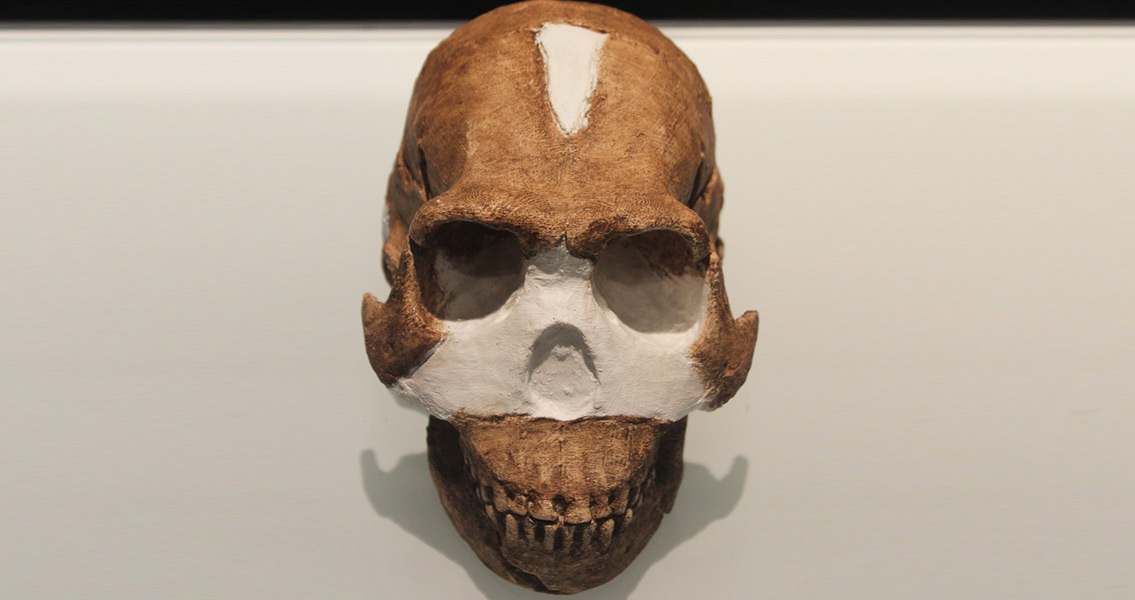
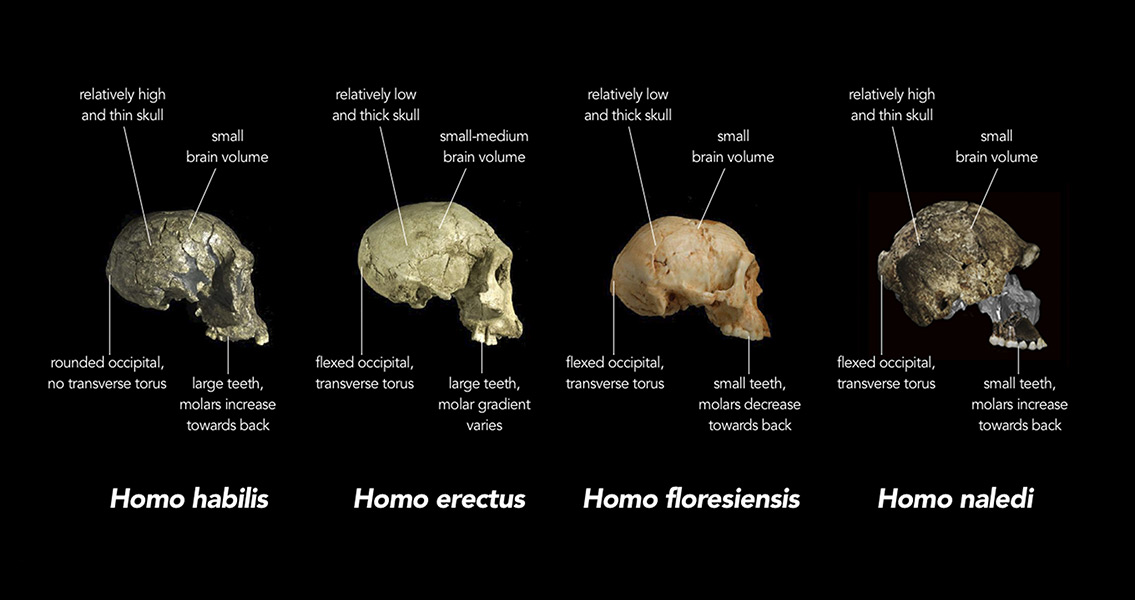
Homo naledi, a species first discovered earlier this year which is part of the Homo genus. In a paper published in the South African Journal of Science, Professor J. Francis Thackeray from the Evolutionary Studies Institute at the University of Witwatersrand suggests that H.naledi lived two million years ago (plus or minus 500,000 years). He bases his conclusion on a comparative analysis of H.naledi and other Homo species’ skulls. If proven correct, Thackeray’s conclusion could be hugely important in furthering our understanding of the evolution and development of the Homo genus, allowing H.naledi to be placed in the human family tree. In September of this year Professor Lee Berger, also from the University of Witwatersrand, first announced the discovery of H.naledi. Over 1,500 bones from the hominin species were discovered in the Rising Star cave in the Cradle of Civilisation World Heritage Site, South Africa. The name H.naledi comes from the word for a star in the Sesotho language. The fossils unearthed at the cave constitute a complete skeleton, an extreme rarity when it comes to early members of the homo genus. This fact allowed Berger and his team to conclude that it was one of the oldest members of the homo genus. H.naledi was ape like in many respects, but also had several characteristics in common with modern humans. H.naledi’s brain size was likely similar to that of a gorilla, based on analyses of its skull, while its pelvis and shoulders were also ape like. It has been classed as a hominin due to the advanced shape of its skull, long legs, small teeth and modern-like feet. Attempts to conclusively date the fossils have so far proven unsuccessful, however. A study by Paul HGM Dirks, carried out in conjunction with Berger, concluded that the usual method of dating such fossils; stratigraphic analysis of the area they were excavated from, had proven inconclusive due to the unusual geological and taphonomic context of the Dinaledia Chamber where the remains of H.naledi were discovered. Stratigrahic analysis is the method which has been used to date other hominin fossils, such as Australopithecus africanus. Thackeray has based his conclusion on a statistical analysis of the skull size of different hominin specimens. “The method is based on a least squares linear regression analysis of mean values of measurements for crania of 12 hominin species… The analyses were performed to obtain standard errors of m-coefficients (sem) in regression equations of the form y = mx + c, based on pairwise comparisons of cranial data, as described elsewhere for pairs of hominin specimens”. He writes in the study. His results confirm that H.naledi is indeed significantly different from the ten other species included in the study. Secondly, he was able to determine the level of similarity between different species’ skulls. He found that H.naledi was most similar to the skulls attributed to Homo habilis, known to date to 1.8 million years ago, and to some extent to Homo rudolfensis, which lived between 2 and 2.5 million years ago. As he explains in the study, “…H. naledi appears to be most similar to specimens attributed to early Homo, notably H. habilis, and (to a lesser extent) H. rudolfensis and H. erectus.” Significant questions remain about H.naledi, and where it fits into the evolutionary tree. Thackeray’s study has the potential to make clearer H.naledi’s place in the history of the Homo genus. For more information: Thackeray JF. Estimating the age and affinities of Homo naledi. S Afr J Sci. 2015;111(11/12), Art. #a0124, 2 pages. http:// dx.doi.org/10.17159/sajs.2015/ a0124 Image courtesy of Wikimedia Commons user: Martinvl]]>

Categories
Breaking News

Homo naledi: Walker and Handyman

Homo naledi, has shown that the hominin was probably equally good at climbing trees as walking, even running, on the ground. What’s more, Homo naledi seems to have been handy with tools, media report. This new examination focuses exclusively on the anatomy of the hands and feet of the hominin and has found that the shape of the bones is very similar in many ways and distinctly different in others from our own. Among the similarities are the shape of the foot, specifically the ankle joint area, as well as the absence of a “grasping big toe”, the researchers say in their new paper, Still, the toes were more curved than ours, which suggests Homo naledi felt comfortable in the trees. Commenting on the paper, Jeremy Da Silva, an anthropologist from Dartmouth College, told Reuters that the foot and leg anatomy of Homo naledi revealed the species was well adapted for long-distance walking and running, with elongated bones, and ankles and knees like modern humans’. At the same time, however, Homo naledi had a lower arch than modern humans, and the toes were curved. Another commenter, William Harcourt-Smith from the American Museum of Natural History, told the BBC that the hominin’s lifestyle probably involved long periods of being on the ground, and going up in the trees to escape predators or to feed. All in all, however, Harcourt-Smith said the species was “much more bi-pedal than not, but not 100%.” The hand bone fossils found in the Rising Star cave in South Africa offered even more fascinating insight into this ancient ancestor of ours. The shape of the hand suggested that although the fingers were more curved than are ours, Homo naledi could manipulate tools. This suggestion could fuel a hypothesis that tool use is not as directly related to cognitive capacity as traditionally believed. Homo naledi’s brain was just a third of the size of ours, something that would usually make scientists think the species was unable to make and use tools, but apparently the case is the opposite. One palaeoanthropologist commenting on the paper, Tracy Kivell from the University of Kent, told Reuters that this discovery “causes us to perhaps rethink the cognitive requirements for tool use.” The Homo naledi fossils were found in August and the discovery was made public in September. Starting with one nearly complete skeleton, so far researchers working at the site have unearthed partial remains from around 15 individuals. Hand fossils alone number almost 150, with one almost complete specimen of the right hand of an adult, while foot bones total 107 so far, with one completely preserved right foot, again of an adult. Luckily for science, the bodies in the cave were not disturbed after they were put there or died there and they did not suffer the effects of the elements, such as floods, which would have dissolved some of the smallest bones, Tracy Kivell told the BBC. For more information: “The hand of Homo naledi”]]>

Categories
Breaking News

Newly Discovered Homo naledi Spurs Controversy

Homo naledi in South Africa has resonated negatively with some South Africans, spurring a seemingly confusing controversy within the black African community. In a country still reeling from the long-standing effects of apartheid, a growing movement to dismiss the discovery of Homo naledi as part of a racist conspiracy to find spurious scientific evidence that black Africans are less than human has been growing in popularity. Cosatu’s former general secretary, Zwelinzima Vavi, proclaimed on his Twitter account that he was “no grandchild of any ape, monkey or baboon” and that “no one will dig old monkey bones” in order to drum up support for what he viewed as a spurious theory that he “was once a baboon”. Vavi has more than 300,000 Twitter followers. The South African Council of Churches (SACC), an organization that had been historically involved in fighting apartheid, came out in support of Vavi’s statements. The president of the SACC, Bishop Ziphozihle Siwa, added fuel to the fire by stating Vavi’s comments were “spot on”, and that it was insulting to claim that black Africans descended from baboons. While apartheid came to an end with Nelson Mandela’s election as South Africa’s first black president in 1994, the injustice and indignities of the former regime’s racist policies run deep. Under apartheid rule, Vavi recounted, he remembered how he had been denigrated by the ruling class to the point where he had been referred to as “a baboon” all his life. Meanwhile, the response of the international scientific community has been perplexed and confused by the vehemence of Vavi, the SACC and others in strongly protesting the discovery of Homo naledi. Richard Dawkins, a noted British biologist, summed it up on Twitter by dismissing the idea of a racist conspiracy as paranoia, pointing out that according to current evolutionary theory we’re all descended from the same biological source; as Dwakins put it, “Whole point is we’re all African apes.” Meanwhile, the official reaction of the South African government has been a positive one. Cyril Ramaphosa, the country’s deputy president, remarked in a statement that the discovery of Homo naledi underscores the bonds we all have with a common ancestor, adding that Africa is the resting place of “our common umbilical cord”. Despite these encouraging words, former chief whip and African National Congress member of parliament Mathole Motshekga proclaimed in an interview with the ENCA television network that the discovery of Homo naledi was a plot to support efforts of Western culture to characterize black Africans as “subhumans”. It’s because of exactly this type of theory that no Africans are respected anywhere in the world, Motshekga proclaimed during his interview, adding that these findings are in line with what colonialists did and said to classify black Africans as less than human in order to justify their oppression, exploitation, and enslavement during the colonial appropriation of South Africa. Image courtesy of Wikimedia Commons user: Chris Stringer, Natural History Museum, United Kingdom]]>

Categories
Breaking News

Homo naledi – A New Link in Human Lineage

Homo naledi, was among our earliest ancestors and probably lived around three million years ago. The earliest human ancestors to date are believed to have been Ardipithecus ramidus, which, the BBC writes, probably lived around 4.4 million years ago, and based on the fossil record could both walk up right and climb trees. This H. naledi, the researchers explain, was ape-like in many ways but also had some features in common with modern humans. The skeleton found in the Rising Star cave resembled in size that of a modern human child, especially the skull, teeth and feet. It belonged, however, to an elderly female. The shoulders and pelvis were ape-like, and its brain size was likely similar to that of a gorilla. The reason it was classed as a hominin was the more advanced shape of the skull, the longer legs, the smaller teeth and the modern-like feet. The chamber in which this first skeleton was found was difficult to access because it was in the deepest recesses of the cave and one had to be quite slim to be able to pass through a constriction on the way. Yet once a team was gathered, work started and the researchers discovered something even more exciting: the chamber contained not just one remarkably well preserved skeleton but as many as fifteen, of all ages and sizes. The total number of specimens collected after three weeks of excavation reached 1,550. The scientists that analysed the fossils and tried to place them along the line of human lineage had a tough job. Some of the bones, like the tiny skulls, suggested these were apes, but others were too human-like to ignore. The conclusion was that this species lived some time between Australopithecines and Homo, Berger told the National Geographic, although he added that for him personally, these creatures belonged closer to Homo than Australopithecus. Then there is the much more fascinating question of how all these people ended up in that remote chamber of the Rising Star cave (the name of the species, by the way comes from the Sotho word for “star”). There was no fauna, tools or any other artefacts around them to suggest it was a dwelling, and there were no tooth marks on the bones, which would have been the case had they been dragged here by carnivores. One possible explanation is that they wandered into the cave and got trapped in the remote chamber but the position of the skeletons didn’t corroborate that hypothesis. The other could cause a rethinking of the fundamental link between brain size and evolution: it is the suggestion that this chamber was a burial ground, where bodies were deposited over a period of centuries. In other words, that this early species, despite its small head, was capable of allocating a special place to bury its dead, a tradition so far only found in much later hominins and up until now considered too complex behaviour to be found in such earlier species. Commenting on the news, anthropologist Isabelle Winder from the University of York, who wasn’t involved in the study, said: “Look at the hind limb of H.naledi and you will see a collection of features associated with upright stance. The forelimb, however shows ape-like characters. This may suggest that the Savannah Hypothesis, which emphasises life in Savannah mosaics, may be an incomplete explanation of human locomotion. H.naledi was a scrambler, living in complex landscapes.” Nick Winder from Newcastle University told New Historian that “If you compare the naledi material with the Dmanisi skeletons (a site in Georgia where a number of different early hominin fossils were found a few years ago) you make two striking observations. The first is that the naledi assemblage is described as morphologically homogenous — all the specimens look similar. At Dmanisi, however, there is a lot of morphological variation. Second, the mosaics of attributes in the two collections are very different. This suggests much more variability than one might have expected. There were clearly lots more ways of being a successful hominin than we imagined.” For more information: Homo naledi, a new species of the genus Homofrom the Dinaledi Chamber, South Africa]]>