

Home sapiens resided solely in Africa up until 700,000 BCE, with the first examples of Australopithecus afarensis, the precursor of Homo erectus, appearing there around 3.3 million years ago. Exactly when the ancestors of humans began their migration to other continents is open to debate, but the oldest human fossil ever found in Europe was discovered near Heidelberg in Germany, and dates back to 650,000 BCE. The study confirms the existing presumption that the first modern humans migrating from Africa to Europe had dark skin, which would have been beneficial in the hot African climate. However, it also found that early hunter-gatherers in Spain, Luxembourg and Hungary lacked the genes responsible for pale skin as recently as 8500 years ago. Migration from the Near East is believed to have been responsible for the arrival of the genes associated with lighter skin pigmentation. As these farmers first came to the continent their interbreeding with the existing inhabitants saw the SLC24A5 gene spread through central and southern Europe, leading to lighter skin pigmentation in those regions. As the AAAS reports: “As they (farmers from the Near East) interbred with the indigenous hunter-gatherers, one of their light-skin genes swept through Europe, so that central and southern Europeans also began to have lighter skin. The other gene variant, SLC45A2, was at low levels until about 5800 years ago when it swept up to high frequency.” In northern Europe however, the situation seems to have been different. Remains studied from Southern Sweden were found to have the gene variants responsible for lighter skin and blonde hair as far back as 7,700 years ago, indicating the inhabitants of Northern Europe had light skin and eyes before the migration from the Near East. It is still unclear why the genes related to paler skin spread so quickly and so widely, but the study suggests it was probably connected to a need to absorb Vitamin D. The climate of Europe generally provides shorter days and less sunlight, particularly in the north. Lighter skin pigmentations allow the more efficient absorption and synthesis of Vitamin D (the crucial vitamin that humans can synthesize from sun light). The focus of the study was the process and rate of natural selection in Europe. By successfully charting the timing and spread of the SLC24A5 and SLC45A2 genes, the study has raised some fascinating questions. Exactly why the change in skin pigmentation occurred when it did is unclear, while the speed at which natural selection took place was much faster than typically expected. For more information: www.biorxiv.org Image courtesy of Wikimedia Commons user: Sémhur]]>


Visita (Visitation) was designed to confront the possibility of the plague occurring in squalid dwellings. To carry out the Visita, the magistrates turned to a lay devotional confraternity dedicated to the Archangel Michael. The aristocratic members of this group had dedicated themselves for generations as volunteers to helping the sick poor. “Refuse and soiled bedding, stagnant water, sewage – all prevalent in lower class accommodation – were the primary objects of suspicion,” Eckstein notes. The Visita had some rather radical policies, for example: “in cases where people were discovered without bedding, pallets, mattresses and/or blankets were to be supplied. Cesspits were to be installed or replaced where necessary; unsatisfactory plumbing was to be repaired.” During the first week of August, the Visita discovered only a few sick people, but the major finding was much more shocking. Widespread poverty and squalor were found throughout Florence. Eckstein notes that this Visita is relatively well-known to historians of the plague, but he takes an intriguing new approach to the map. Eckstein has used the Visita to understand the history of Florentine urban culture. Importantly, the Visita is not a statistically accurate tool for understanding the urban demographic of Florence. It is more a representation of aristocratic collective attitudes towards the poor as a vector of plague. This led to a reimagining of neighbourhood culture. “Rising plague refigured the city as an uncivic space, where the physical intimacy that normally fostered good neighbourhood was transformed into cause for alarm, because proximity was synonymous with danger,” Eckstein argues. Going directly against other chroniclers of Florence who champion the city, the Visita describes fetid and squalid conditions which undermine this patriotic vision of a Renaissance city. Eckstein’s work challenges the popular perception of Renaissance Florence as a beautiful, modern city. He also reveals an aristocratic attitude which held the poor in contempt. Whilst it is important to note that the Visita was carried out with good intentions, it reveals a murky side to the city at odds with how it is often, somewhat romantically, viewed. For more information: www.onlinelibrary.wiley.com Image courtesy of Wikimedia Commons user: DaniDF1995]]>
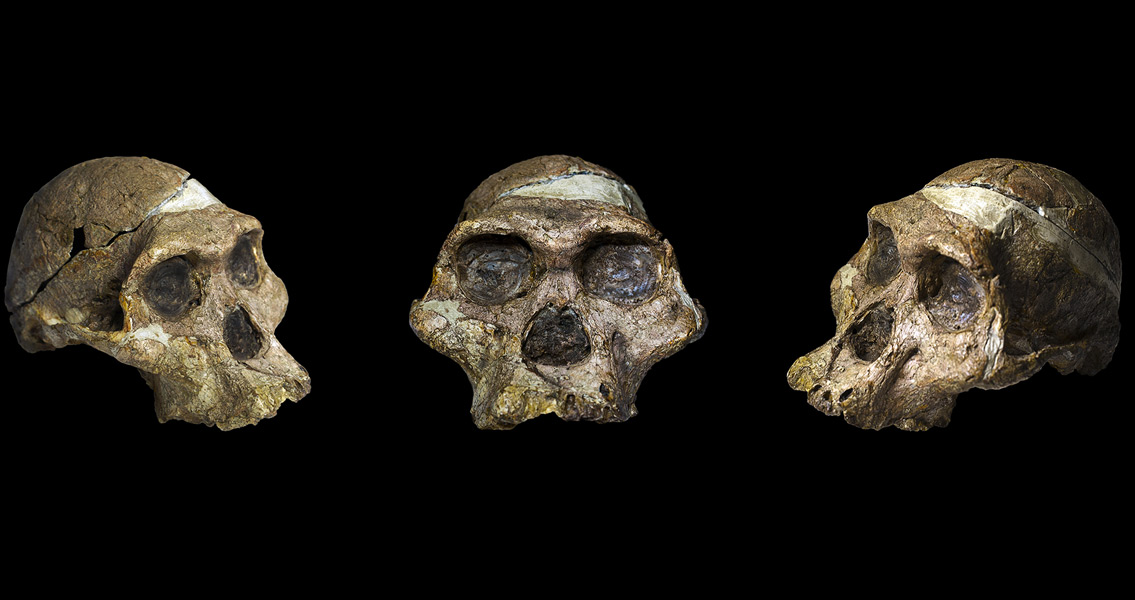
Australopithecus, first discovered 21 years ago in a cave in Sterkfontein, central Africa, is around 3.67 million years old. This makes the skeleton, nicknamed ‘Little Foot’ due to the diminutive size of its bones, one of the oldest ever found. This new date for Little Foot means that it is an older relative of Lucy, a famous 3.2 million year old Australopithecus skeleton found in Ethiopia. Australopithecus evolved in Africa about 4 million years ago before spreading across the continent, eventually becoming extinct soon after 2 million years ago. It is believed that Australopithecus is an evolutionary ancestor of modern humans, and that the genus Homo derived from Australopithecus sometime after 3 million years ago. These early hominins showed the presence of the duplicated SRGAP2 gene responsible for causing increased length and ability of the neurons in the brain. The discovery of Little Foot has a long history. In 1994, the first four footbones were found in a box of animal fossils. Three years later, the position of the end of Little Foot’s shin bone was found in a deep deposit of the Sterkfontein caves, known as Member 2, in the Silberberg Grotto. Excavations at the Silberberg Grotto were particularly difficult. Concrete-like deposits combined with the fragile and scattered nature of the bones to sow the seeds of a long and arduous excavation. It was not until 2010 that the whole skeleton had been exposed. The Sterkfontein area has been internationally famous since the 1930s, when key hominid and paleontological discoveries were made there. No direct dating of deposits, however, have been made without significant controversy. Little Foot, especially, has had a large amount of confusion surrounding its age. In 1999, palaeomagnetic dating of flowstones suggested an age of 3.3 million years. In 2003, cosmogenic nuclide burial dating of the sediments containing the fossilised skeleton proposed it was closer to 4 million years old. Later uranium-lead dating techniques indicated the age of Little Foot to be 2.2 million years old. These major discrepancies surrounding the skeleton have meant its significance has not been understood, until now. Published in this week’s issue of Nature, a collaborative study has precisely dated Little Foot to be 3.67 ± 0.16 million years old. This collaboration between Darryl E. Granger and Ryan J. Gibbon, amongst others, represents the first precise dating for Little Foot. It was made possible by two major technological advances. The first major development was using an ‘isochron’ method. An isochron uses multiple samples from the same site to check that all assumptions are correct; whether the sediment has been reworked, for example. Secondly, the team developed a gas-filled-magnet at Purdue University’s PRIME Lab. This gas-filled-magnet allows for a much better measurement of samples, meaning more precise burial dating. The new research reveals the cutting-edge of anthropological research. It allows us to more precisely map the development of early hominins and, by extension, our own species. Image courtesy of Wikimedia Commons user: Archaeodontosaurus For more information: www.nature.com]]>



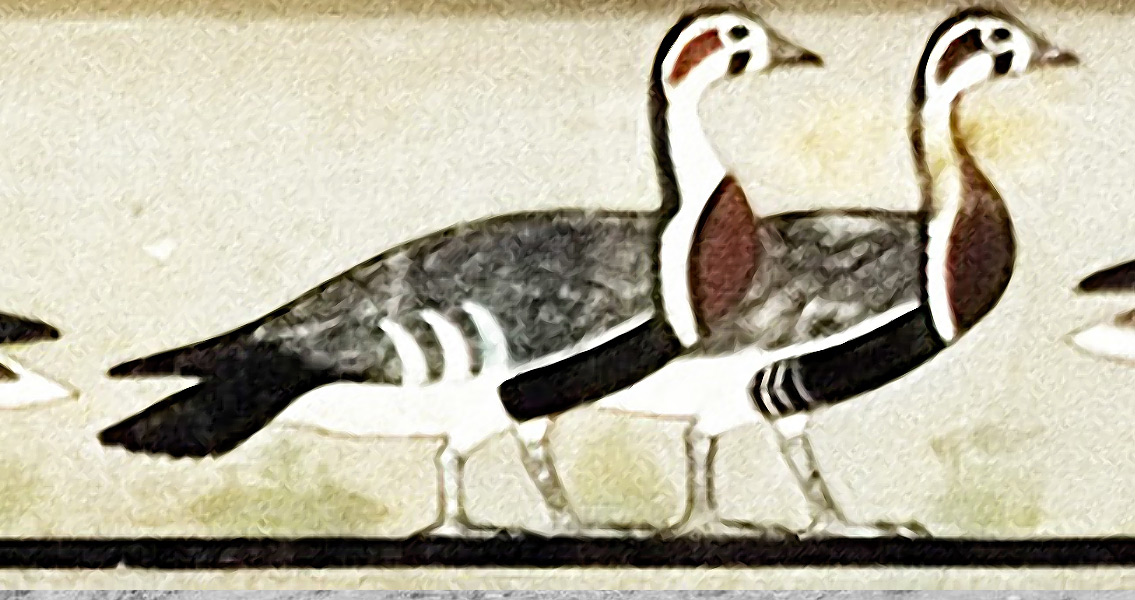
Live Science. Tiradritti’s suspicions were first aroused by the birds depicted on the Meidum Geese. Two of which were unlikely to have inhabited ancient Egypt. “The painting depicts three different couple[s] of geese, three turned to the left and three to the right,” Tiradritti wrote. Two of the geese were identified as white-fronted geese (Anser albifrons), the pair looking to the left were understood to be bean geese (Anser fabalis) and the pair facing the right were red-breasted geese (Branta ruficolis).” Bean geese breed in tundra and taiga climates, wintering as far south as northern Spain, Greece and Turkey. Red-breasted geese also breed in tundra, but rarely make it as far south as Egypt. Whilst this information regarding the species does not in itself prove the Meidum Geese to be a fake – ancient Egyptians could have known about animals which were not native to Egypt – it made Tiradritti analyse the work further. “After that, it was like to see a castle of cards collapsing,” he said. “One of the major problems with the Meidum Geese is the colours. Some of the hues (especially beige and marc) are unique in the Egyptian art. Even the shades of more common colours, like orange and red, are not even comparable with the same colors used in other fragments of painting coming from Atet’s (Nefermaat’s wife, in whose chapel the painting was supposedly discovered), chapel,” Tiradritti said. Two of the geese are leaning over, in order to make the size of all the geese balanced. This is unusual in ancient Egyptian artwork. Size often denoted importance and as such, Egyptian artists tended to deliberately draw animals or people in different sizes. Balancing size in a composition is a common feature of modern art, however. Tiradritti is due to publish his findings in the 5th April edition of Giornale dell’Arte and The Art Newspaper, in Italian and English respectively. His findings will cause the artistic world to think critically about ancient art, especially given the high prices these works can attract. For more information: www.livescience.com Image courtesy of Wikimedia Commons user: MGA73bot2 ]]>
