Categories
Breaking News

Must Farm Yields Comprehensive Picture of Bronze Age Life

Culture24. The whole settlement collapsed into the river after the fire and later it sank beneath the sediments in the river bed. Over time the artefacts sank deeper below what became fens, so today they are in a deeper palaeochannel, which has ensured their much better preservation than same-age discoveries made in shallower channels, according to the Must Farm website. This combination of circumstances has allowed researchers a glimpse into the everyday life of late Bronze Age people. Among the best preserved items are nine log boats, pots, jars, parts of clothing and personal decorations, and glass beads, Culture24 reports. The team even found footprints from the inhabitants of the settlement. There are also structural elements that have led the researchers to suggest that the settlement was protected by wooden posts. The team are now hoping to find remains from the timber structure that allowed people to go around the fens, fishing gear and more artefacts shedding light on how people in this settlement lived. However, Gdaniec added they were not looking forward to finding human remains because that would mean those people had died a violent death in the fire, a possibility which cannot be ruled out. Commenting on the latest finds, another team member, David Gibson, who is the archaeological manager of the Cambridge Archaeological Unit, told Culture 24 that the diversity of the artefacts discovered at Must Farm is pretty much unique. Usually, he said, the discoveries at late Bronze Age sites consist of pits, post holes and some metal artefacts. At Must Farm, on the other hand, a site spanning 1,100 square metres, there is evidence that can tell us a lot more about life at the time. Duncan Wilson from Historic England compared the site to the Mary Rose, the Tudor warship that contained thousands of well preserved artefacts, allowing scientists to gain vital insights into life in England under Henry VIII. The current dig season at Must Farm will take a total of nine months and is part of a four-year project. The artefacts will be put on display at the Peterborough Museum. Image courtesy of Wikimedia Commons user: Hugh Venables]]>

Categories
Breaking News

13,000 Year Old Fossilized Footprints Found in Canada

Categories
News

Seventy Years Since the Signing of the United Nations Charter

Categories
Breaking News

Dig for Necropolis Unearths Flint Tool Workshop in Bulgaria

Top Novini Razgrad reports. Initially, it was a small-scale enterprise, part of a settlement mound, but in later centuries it expanded. The archaeologists actually believe that many of the stone tools from that era found across Bulgaria came from this one workshop, which was “huge” for its time. Besides the flint tools, the team also found a number of other items, including objects shaped as animals and people, bone needles, plaster fragments, loom weights, and cult objects, which led them to suggest that there was a larger settlement in addition to the settlement mound. For now, the excavation works have been suspended but they will be renewed in September, the team leader said. That next stage of the work will extend the dig into a nearby abandoned school in Kamenovo, a small town, dating from 1910. At the time of the school’s construction, several graves were unearthed in what was to be the yard, along with artefacts dating from the same period of the Late Charcolithic. Archaeology in Bulgaria, a historical website, adds that the dig site was researched by a team of French archaeologists fifteen years ago, who believed it was the location of “workshops for prestigious flint tools”. The reason for their suggestion was the fact that such tools were found in the graves of apparently wealthy individuals from the time, providing an early example of social stratification in the region. Flint was the usual raw material for stone tools in prehistoric times in what is now Bulgaria, and it originated as a domestic practice, writes researcher Boryana Mateva in a paper on the exploitation of flint deposits in northeastern Bulgaria. The first flint people used came from the troughs of local rivers and only in later centuries, during the late Charcolith, did flint-tool making turn into an industrial activity in which the raw material was sourced from mines and processed in workshops. These workshops were part of a complex system that involved the mine, where, according to Skorpil, the initial selection of the flint was done (leaving “bad lumps” and taking only the good ones to the workshop); a primary workshop near the mine, where the pieces were initially processed; and a secondary workshop, close to the settlement, where the stones were turned into tools. Image courtesy of Wikimedia Commons user: Didier Descouens]]>

Categories
Breaking News

Scientists Carbon Date Macaw Remains from Pueblo Ruins

www.pnas.org Image courtesy of Wikimedia Commons user: Snowmanradio with permission from Tropical Birdland, Leicestershire, England. ]]>

Categories
Book Reviews

Les Fleurs du Mal

Related Books


Les Fleurs du Mal book

Les Fleurs du Mal
by Charles Baudelaire

[gap height=”20″]]]>

Categories
Breaking News

Did Ancient Greeks Believe In Zombies?

“Walking Dead and Vengeful Spirits” Image courtesy of Wikimedia Commons user: Zde]]>

Categories
Breaking News

More Evidence of Human-Neanderthal Interbreeding in Europe

Vulnerable Apes hypothesis, added another perspective to the question of interbreeding: it may well be the case that the Neanderthal who passed his or her genes to the Oase man also had Homo sapien genes from an earlier hybridisation. This suggestion points to a greater than traditionally believed complexity of human evolution, especially in light of other recent studies that have revealed the Neanderthals were far from the primitive cavemen we used to think they were. For more information: An early modern human from Romania with a recent Neanderthal ancestor Image courtesy of Wikimedia Commons user: Gregory F. Maxwell]]>

Categories
News

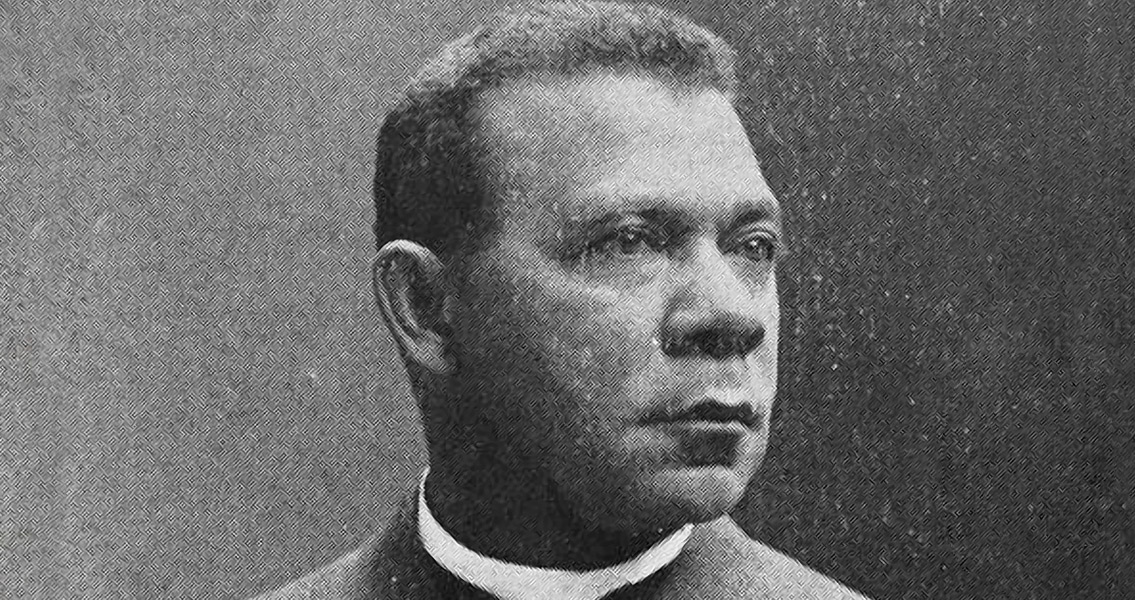
Booker T. Washington Receives Honorary Degree

Categories
Breaking News

Remains of Norman Castle Discovered in City Park