Categories
Breaking News

14,400-year-old flatbread proves baking predates agriculture by 4,000 years

14,000 year old food practices The excavation at Shubayqa 1 has unearthed 254 examples of food remains. Charred evidence of a flatbread baked 14,400 years ago has caused researchers to confirm that baking predates the advent of agriculture by at least 4,000 years. The findings indicate that bread production encouraged gatherer-hunters to cultivate cereals – therefore contributing to the agricultural revolution in the Neolithic period. The research team was comprised of academics from the University of Copenhagen, University College London and the University of Cambridge. [caption id="attachment_8845" align="aligncenter" width="500"] Dr. Amaia Arranz-Otaegui and Ali Shakaiteer sampling cereals in the Shubayqa area. Credit: Joe Roe[/caption]

From calories to culture: the evolution of eating

Nutritionally speaking, the process of making bread is entirely uneconomic. After harvesting wild cereals, the people of Shubayqa 1 had to separate the seeds, grind them down, make the dough, flatten the dough and cook it. They would have suffered a net loss of calories during the process – which suggests that the bread was not made for survival purposes. That leads us to the idea that this discovery represents a pivot in the history of human eating practices. No longer were people seeking pure nutrition from their food. For the people of Shubayqa 1, eating was now imbued with cultural, social and perhaps ideological significance. To strengthen this theory, the date and location of the flatbread places it close to the erection of the world’s oldest monumental buildings. Inside, ceremonies and rituals took place; perhaps with the first instances of socio-ideological feasting. [caption id="attachment_8846" align="aligncenter" width="500"] One of the stone structures of the Shubayqa 1 site. The fireplace, where the bread was found, is in the middle. Credit: Alexis Pantos[/caption]

Sedentary lifestyles lead to diet changes

The Danish Council for Independent Research has recently approved further funding for research into food production during the transition to the Neolithic period. University of Copenhagen archaeologist Tobias Richter, who led the excavations at Shubayqa 1 in Jordan, comments: “Natufian hunter-gatherers are of particular interest to us because they lived through a transitional period when people became more sedentary and their diet began to change.”

What came first: the chicken or the bread?

Professor Dorian Fuller from the UCL Institute of Archaeology says: “That it was produced before farming methods suggests it was seen as special, and the desire to make more of this special food probably contributed to the decision to begin to cultivate cereals.” Richter continues: “The flat bread found at Shubayqa 1 is the earliest evidence of bread making recovered so far, and it shows that baking was invented before we had plant cultivation. “So this evidence confirms some of our ideas. Indeed, it may be that the early and extremely time-consuming production of bread based on wild cereals may have been one of the key driving forces behind the later agricultural revolution where wild cereals were cultivated to provide more convenient sources of food.” The discovery comes shortly after new research revealed that barley spread across the world via multiple routes – suggesting human choices were made based on nutritional and perhaps cultural needs. Read more here.]]>

Categories
Breaking News

How barley spread across the world & helped culture formation

Different routes – an indicator of different cultures? Due to the fact that there were a number of different eastward routes for the spread of the barley population, the study suggests humans were choosing routes based on particular attributes of acting according to environmental adaptation. Choice and environment, therefore, are crucial factors for the spread of staple foods in prehistory. These different routes include ones to the north and south of the Iranian Plateau; through the Inner Asian Mountain Corridor in Central Asia, possibly connecting up to the Chinese section of the Silk Road; a high altitude spread on the southern edge of the Tibetan Plateau; a high latitude spread through the northern steppe; two distinct spreads into Japan; and a maritime route from South Asia. As previous research has provided radiocarbon dates, we know when the routes were followed. [caption id="attachment_8836" align="aligncenter" width="728"] Map showing proposed routes of spread of six different ancestral populations of barley landraces. Direct radiocarbon dates from archaeological barley grain have enabled the timing of these different routes to be elucidated. Credit: D. Lister[/caption]

Impacting rice-growing in East Asia

Lead author Dr Diane Lister, a researcher at the McDonald Institute for Archological Research at the University of Cambridge, says: “One barley population is widespread, particularly around the coastlines. This population may have travelled eastwards via a maritime route from South Asia, via Southeast Asia. This particular population is made up of winter-sown varieties of barley, which are thought to be important in rice-growing areas of East Asia, where a crop of rice is commonly grown in the summer months, and barley adapted to winter-sowing regimes can be planted after the rice harvest. The development of multi-cropping practices during prehistory is thought to have greatly increased productivity and stability, enabling more complex societies to develop.” [caption id="attachment_8837" align="aligncenter" width="257"] Diane Lister at work in the Glyn Daniel laboratory for archaeogenetics at the McDonald Institute for Archaeological Research, University of Cambridge Credit: A. Clarke[/caption]

Moulding Tibetan culture

“Another barley population predominates on the high Tibetan Plateau. This barley has a naked grain, making it a particularly attractive staple, as it doesn’t require the pearling process that hulled barley requires for human consumption. Along with the herding of yak, this naked type of barley is an essential for the Tibetan way of life, and their importance are clearly seen in the offerings of naked barley grains and yak butter in Tibetan Buddhist temples around the region. The staple carbohydrate eaten by the Tibetans is tsampa, made from roasted naked barley flour and mixed with salty Tibetan butter tea.” [caption id="attachment_8835" align="aligncenter" width="590"] Ethnically Tibetan women winnowing naked barley on a road on the edge of the Tibetan Plateau, near Xiahe, Gansu Province, China.
Photo credits Diane Lister[/caption]

New findings contribute to conversation around climate change

So what does this mean for today? Lister concludes: “Barley is an extremely hardy crop, able to grow in regions where other crops are unable to grow, and is an important staple in such environments. Understanding the spread of its cultivation during prehistory, and the various factors that affected its establishment in different regions of Eurasia, will contribute towards our understanding of climate change and its current and future effects on agriculture.” The paper has been published as a part of the Food Globalization in Prehistory project, funded by the European Research Council and awarded to Prof. Martin Jones. Additional funding was provided by a Royal Society International Joint Project grant.]]>

Categories
Breaking News

How intense Ice Age fishing led to the invention of pottery as we know it

Jōmon pottery from the Kanagawa Prefecture, Japan. Credit: Nara National Research Institute for Cultural Properties.[/caption] Examined over a course of three years by researchers from Japan, the Netherlands, Sweden and the University of York’s BioArCh, the findings indicate that ceramics were used by our gatherer-hunter ancestors to initially store and process fish. As fishing techniques evolved and intensified, the range extended to include shellfish, freshwater and marine fish and even mammals. Until recently, ceramic vessels were associated with the arrival of farming. This study, however, debunks that theory. We now know that pottery was a much earlier gatherer-hunter innovation, and was used for the consumption of fish. Professor Oliver Craig, from the Department of Archaeology and Director of the BioArCh research centre at York, who led the study, said: “Our results demonstrate that pottery had a strong association with the processing of fish, irrespective of the ecological setting.” Some of the pottery dates from the end of the Late Pleistocene period: a time when our ancestors were navigating glacial conditions. Other ceramics included in the study are from the post-glacial period, when the climate reached a level close to our current temperature, allowing pottery to be produced in a much greater quantity. Craig continues: “Contrary to expectations, this association remained stable even after the onset of warming, including in more southerly areas, where expanding forests provided new opportunities for hunting and gathering. “The results indicate that a broad array of fish was processed in the pottery after the end of the last Ice Age, corresponding to a period when hunter-gatherers began to settle in one place for longer periods and develop more intensive fishing strategies. [caption id="attachment_8832" align="aligncenter" width="634"] A reconstructed early pottery vessel from Torihama, Japan, dating to the end of the Late Pleistocene (ca 12,000 years old). Chemical analysis revealed that such vessels were used to process fish during the late Glacial period. Credit: Wakasa History and Folklore Museum, Fukui, Japan[/caption] “We suggest this marks a significant change in the role of pottery of hunter-gatherers, corresponding massively increased volume of production, greater variation in forms and sizes and the onset of shellfish exploitation.” Researchers used advanced technologies to recover diagnostic lipids from the charred surface deposits of the vessels. Most of the compounds derive from the processing of freshwater or marine organisms. Because of findings like this, we now know that ceramics played a key role in the ways pre-historic gatherer-hunters consumed fish. Lead author, Dr Alex Lucquin, from BioArCh, Department of Archaeology, University of York, said: “Thanks to the exceptional preservation of traces of animal fat, we now know that pottery changed from a rare and special object to an every-day tool for preparing fish. “I think that our study not only reveals the subsistence of the ancient Jomon people of Japan but also its resilience to a dramatic change in climate.” Dr Simon Kaner, from the University of East Anglia, who was also involved in the study, added: “The research highlights the benefits of this kind of international collaboration for unlocking some of the big questions about the human past, and the potential of engaging with established research networks as created by the Sainsbury Institute over the years.”]]>

Categories
Breaking News

Chewing the fat: gossip culture in early Neolithic food halls

PloS One demonstrates that specialised food production buildings were commonplace in the world’s earliest agricultural villages. The study shows how these buildings played a key role in maintaining and enhancing community cohesion. [caption id="attachment_8777" align="aligncenter" width="500"] View of the early Neolithic communal structure at Beidha, Jordan. Credit: Prof. Cheryl Makarewicz[/caption]

Food production encourages an organised society

Prof. Cheryl Makarewicz of Kiel University and Prof. Bill Finlayson from the University of Reading have posited that the advent of food production sparked profound changes in the ways humans organised their societies. The team undertook excavations at the Pre-Pottery Neolithic B settlement of Beidha, not far from the UNESCO World Heritage site of Petra in Jordan. The very architectural fabric of early farming villages helped to shape human interaction, which was crucial during a period when farming and animal herding were in their first incarnations. Professor Makarewicz comments: “These buildings provided a focal point for the community, a place where everyday mundane activities such as preparing food and making tools could have been undertaken by several people simultaneously.” [caption id="attachment_8778" align="aligncenter" width="377"] The Monastery, Petra, Jordan. Credit: Berthold Werner[/caption]

A place to cook, a place to chat

On top of their immediate functions, these spaces became a platform for conversation and the exchange of ideas. She continues: “These spaces were also important in that they provided a place where community members could drop by and have a chat with their neighbours. “This informal, but highly regular activity may have been all the more important in this context of increasingly large and settled populations. Community members knew information was being passed along and there was a central place to catch up on the news.”

A platform for philosophy?

The buildings have even been linked to the first hints of control and ownership in human society. “What we are also seeing here at Beidha is a really interesting example of how societies deal with managing new issues of how to access and control ownership of plant and animal resources, which might have become more contested within these increasingly populous settlements.”

The early social influence of architecture

“Also interesting is that people at Beidha dealt with these new social tensions very differently from their contemporaries to the west across the Jordan Valley,” Makarewicz adds. The research suggests that in southern Jordan, community daily practice occurred in non-residential buildings, which maintained and strengthened social structures. Conversely, nearby communities would use buildings like this for occasional, dramatic ritual practices. The researchers conclude: “There is a long history of using special-purpose architecture in the south of Jordan to structure the community, and this way of using the built environment for more than just shelter goes right back to the start of the Neolithic here. The continuation of this practice illustrates a strongly local continuity in pathways through the Neolithic revolution.”]]>

Categories
Breaking News

Social Networking Means Survival for Hunter-Gatherer Groups

Current Biology. ]]>

Categories
Breaking News

Ancient African Farming Method Could End Food Shortages

Categories
Breaking News

Competition from Hyenas Limited Humans’ Spread in Europe

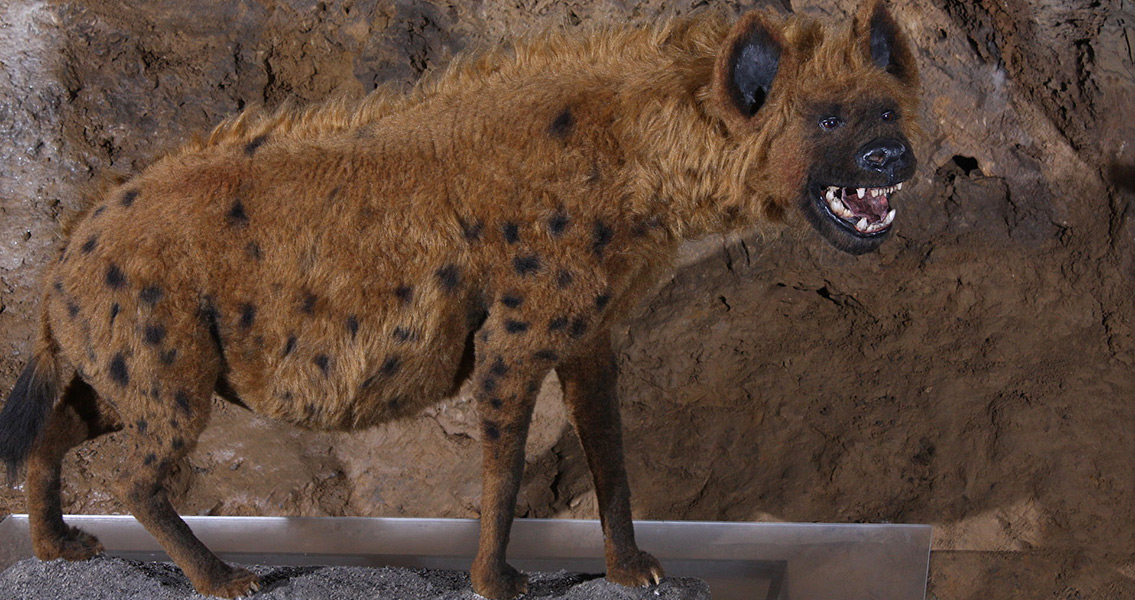
Pachycrocouta brevirostis, was more than twice as big as modern-day hyenas and it was the major competitor of Homo species for food, apparently gaining the upper hand and delaying the population of Europe by humans until the Neanderthals came along. According to the paper detailing the study, published in the journal Quaternary International, food availability was a leading limiting factor for the spread of early humans in the temperate climate of the Iberian Peninsula and western Europe as a whole, especially during the winter. In order to ensure their sustenance, these early hominids “developed scavenging strategies,” to make use of the bodies of hoofed animals. Yet, the giant hyenas were, it seems, better scavengers, greatly reducing the availability of food that could have driven a more expansive hominin spread across the continent. The authors also argue that the Villafranchian period, 1.4-1.2 million years ago, was characterised by stable climate that would have facilitated the spread of humans in Europe were it not for the hyenas. One of the popular hypotheses in the debate over why early humans did not populate Europe is that they were incapable of coping with sharp climatic changes. To come to these conclusions, the researchers analysed several large deposits of animal bones dating to the Villafranchian period of the Pleistocene, writes the Daily Mail. The bones were found at two sites in northeastern Spain, near the city of Terassa. The bones belong to large herbivores and the team of palaeontologists deduced that they were carried to these sites by Pachycrocouta brevirostis. During the same time period, caves in the region were occupied by early humans. These early humans, as another recent study revealed were not Homo erectus, as was believed earlier. They were Homo habilis, a smaller, more ape-like species that could both climb trees and walk. It was probably not very well prepared to handle large predators like the hyenas, which, according to the Spanish team, reached a height of 4 feet (not much shorter than H. habilis) and weight of 30 stone. Besides, just like modern hyenas, they had very powerful jaws that could crush the bones of animal carcasses and get to the nourishing marrow, unlike humans, ancient or modern. What’s more, say the authors, the hyenas were not the only predators that competed with our ancestors: there were a number of felid species that roamed Europe in those times, making it additionally difficult for the hominids, who lacked the hunting “equipment” of those giant cats, to survive. For more information: Were large carnivorans and great climatic shifts limiting factors for hominin dispersals? Evidence of the activity ofPachycrocuta brevirostris during the Mid-Pleistocene Revolution in the Vallparadis Section (Valles-Penedes Basin, Iberian Peninsula) Image courtesy of Wikimedia Commons user: Heinz-Werner Weber]]>

Categories
Breaking News

Must Farm Yields Comprehensive Picture of Bronze Age Life

Culture24. The whole settlement collapsed into the river after the fire and later it sank beneath the sediments in the river bed. Over time the artefacts sank deeper below what became fens, so today they are in a deeper palaeochannel, which has ensured their much better preservation than same-age discoveries made in shallower channels, according to the Must Farm website. This combination of circumstances has allowed researchers a glimpse into the everyday life of late Bronze Age people. Among the best preserved items are nine log boats, pots, jars, parts of clothing and personal decorations, and glass beads, Culture24 reports. The team even found footprints from the inhabitants of the settlement. There are also structural elements that have led the researchers to suggest that the settlement was protected by wooden posts. The team are now hoping to find remains from the timber structure that allowed people to go around the fens, fishing gear and more artefacts shedding light on how people in this settlement lived. However, Gdaniec added they were not looking forward to finding human remains because that would mean those people had died a violent death in the fire, a possibility which cannot be ruled out. Commenting on the latest finds, another team member, David Gibson, who is the archaeological manager of the Cambridge Archaeological Unit, told Culture 24 that the diversity of the artefacts discovered at Must Farm is pretty much unique. Usually, he said, the discoveries at late Bronze Age sites consist of pits, post holes and some metal artefacts. At Must Farm, on the other hand, a site spanning 1,100 square metres, there is evidence that can tell us a lot more about life at the time. Duncan Wilson from Historic England compared the site to the Mary Rose, the Tudor warship that contained thousands of well preserved artefacts, allowing scientists to gain vital insights into life in England under Henry VIII. The current dig season at Must Farm will take a total of nine months and is part of a four-year project. The artefacts will be put on display at the Peterborough Museum. Image courtesy of Wikimedia Commons user: Hugh Venables]]>

Categories
Breaking News

2-Million-Year-Old Skin Found in South Africa

Australopithecus remains have announced that one of the fossils had skin on. The six fossils discovered so far have been dated to 2 million years ago and belong to the species Australopithecus sediba, which combined features of both the original Australopithecus, the first erect hominin species, and of modern Homo species. The find is all the more fascinating because, in addition to this being possibly the oldest hominin skin ever discovered, the fossils contain traces of organic matter from the food these ancient human ancestors ate. The initial discovery was made by chance: the lead researcher’s son stumbled across a human fossil in the Malapa Reserve near Johannesburg, in 2008. Until then, science did not even know this species had existed. Since then, excavation works have expanded significantly, and the team has even built an on-site laboratory where they can examine their finds in a secure environment. So far, the site has yielded bones belonging to six individuals, including an almost complete skull. Based on the evidence, the researchers have established that representatives of the Australopithecus species were much shorter than modern humans, standing at some 1.30 metres, and with a correspondingly smaller frame. While they walked on two legs, they also had more curved fingers than later hominins, suggesting they were also skilled climbers. Yet the most striking feature, according to Lee Berger, the leader of the research team, is the Australopithecus seiba’s head, which was disproportionately small, with the brain about the size of a modern man’s fist. The skin remains found on the fossils could tell the scientists a lot about those hominins’ lifestyle, while the organic substances between the teeth of some of the fossils could reveal something about their diet. This would be possible due to the kind of rock in which the fossils were found, which, unlike other sorts of rock, is capable of preserving organic substances. Two million years ago the site used to be a cave in the ground, Berger told the Naked Scientists podcast. It later collapsed in on itself, creating conditions he compared to a pool filled with liquid concrete, in which the bones were then thrown and preserved. The team has no way of knowing how these proto-humans got into the cave but suggest it may have been a trap they didn’t notice or contained something that lured them in. The team expects to unearth more human remains from the ancient cave and in order to protect them from environmental factors, has actually built a whole laboratory on the site. This will most likely turn the place into a tourist attraction and already the scientists are allowing visitors to look at the excavation site. The endeavour was challenging because the place is part of a nature reserve but, says Berger, the team came up with a structure that organically fits in its surroundings. This has made this site a unique one, where tourists will be able to witness the ongoing work of the researchers as they further their insight into the nature of this species and possibly establish where exactly they stand in relation to modern humans. Image courtesy of Wikimedia Commons user: Lee Berger]]>