Categories
Breaking News

800-year-old 'massive' Viking skeletons found in Sicily

Credit: Henrietta Elizabeth Marshall, born 1876, interprets the Vikings[/caption]

‘Massive’ skeletons

An examination of the burials determined that three of the graves belonged to women, and another two to children. The remaining skeletons are still in the process of being identified. As no grave goods were found, the researchers were not initially sure of their heritage; but an anthropologist was able to inform the team that they were likely from Western Europe – meaning that they were probably Normans from northern France. Moździoch, who comes from the Institute of Archaeology and Ethnology of the Polish Academy of Sciences in Warsaw, says: “According to the local anthropologist, the tallness and massive build of skeletons of people buried here indicate this origin.”

Why were Vikings in Sicily?

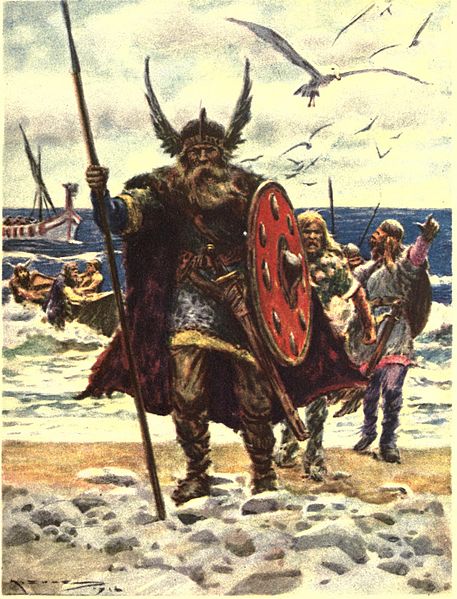
So what were the Normans doing in Sicily? During the second half of the 11th Century, the island was recaptured by a Norman nobleman, Roger de Hauteville, after having been occupied by the Arabs. It was quite usual for the Normans to send out expeditions to southern Italy, Sicily, and of course, England, Wales, Scotland and Ireland. Vikings about to invade England (4)

Western European architecture

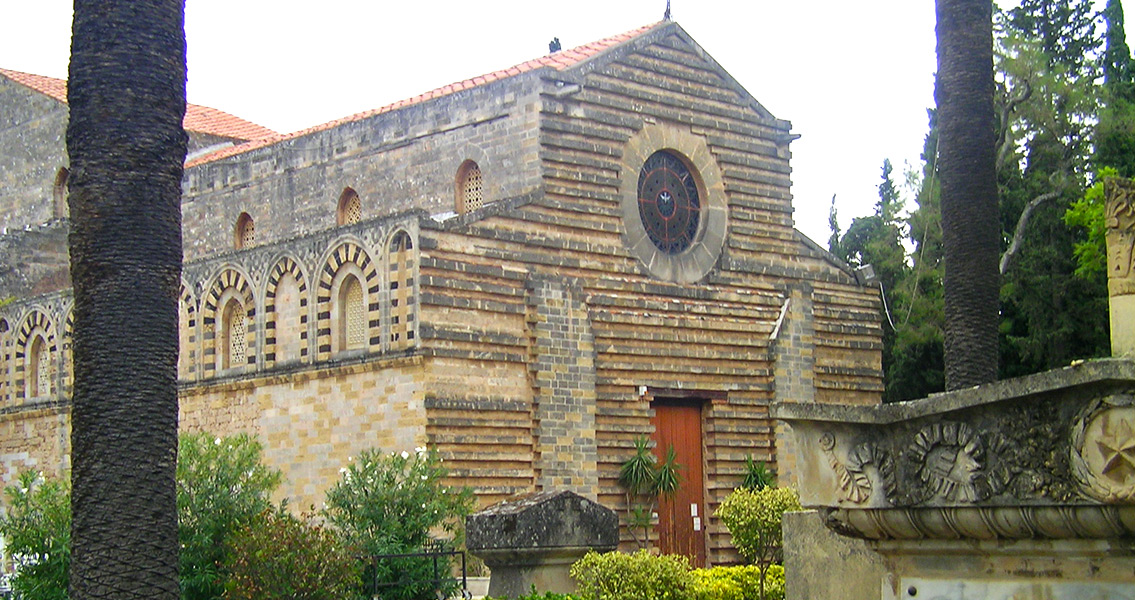
The cemetery where the bodies were found was associated with a church hospital mentioned in a 12th Century document; but no medical equipment was found on the site. They did, however, find coins that were minted in Champagne and Lucca, indicating that the builders and users of the church would have from the north of the Apennine peninsula. At the time of the church’s construction, nearby Palermo was held by Arabs. Moździoch says that the church was fortified and built on a hill so as to provide a strategic position for battle. The architecture of the church backs up the theory that these bodies were those of Viking descendants. “The Western European form of the church… [indicates] that its builders and users could have come from Normandy,” Moździoch says. “Our research has changed the previous theories concerning the church structure. It indicates that its form referred more to the western European churches of the 11th and 12th centuries than to the buildings of this type erected in Sicily during that period. To put it simply, the concept of construction was directly transferred from the north by the craftsmen brought from there,” he concluded.]]>
Categories
Breaking News

More Orichalcum Ingots Discovered on Shipwreck Near Sicily

Seeker. “It was likely caught in a sudden storm and sunk just when it was about to enter the port.” Long considered a mystery, orichalcum has, until now, never been found in any significant quantity, and its origin and composition have been widely debated. In Greek mythology, it was invented by the Phoenician founder Cadmus, who was also the first king of Thebes. Although orichalcum is mentioned in a number of ancient texts that go back to Hesiod, a Greek poet believed to have been active between 750 BCE and 650 BCE, it was the Greek philosopher Plato, from the fourth century BCE, who made it a legend. Plato’s Critias dialogue tells the story of the island kingdom of Atlantis and its failed effort to conquer Athens. In the dialogue, Critias, an Athenian figure, claims orichalcum was mined in Atlantis and used to cover the interior walls, floors and columns of Poseidon’s temple. Critias describes the metal as shiny and more precious than any other metal except gold. According to the story, the metal was so revered that inside the temple was an orichalcum pillar that had been inscribed with Poseidon’s laws. Plato wrote, “The outermost wall was coated with brass, the second with tin, and the third, which was the wall of the citadel, flashed with the red light of orichalcum.” Today, most scholars agree that while orichalcum is rare, it’s much less precious than described in Plato’s writing. It’s actually a brass-like alloy, produced in antiquity through a cementation process using zinc ore, copper metal and charcoal. X-ray fluorescence analysis indicates the recovered ingots are indeed an alloy produced using between 75 and 80 percent copper, and 15 and 20 percent zinc, along with small percentages of iron, nickel, and lead. The archeological work to fully excavate the sunken ship and retrieve its cargo is ongoing. ]]>

Categories
Breaking News

Calendar Rock to Mark the Winter Solstice Found in Sicily

Seeker, adding: “At 7:32 am the sun shone brightly through the hole with an incredible precision. It was amazing.” The 23-foot tall stone would have marked the turning point of the seasons and the change to colder weather. The moment likely had ritualistic importance as well, considering the investigation revealed the site was considered a sacred place towards the end of the third millennium BCE. A short distance away from the stone, researchers unearthed a number of complete burials referred to as grotticella tombs. Dug out of the rock, the chamber-like tombs were the primary form of burial for the Castelluccio’s, the culture that thrived in the early Sicilian Bronze Age. La Spina’s research team also located what seems to be a menhir (upright stone) to the east of the holed rock. Although lying on its side when discovered, the more than 16 feet tall stone originally stood upright, as indicated by the pit found near its base. The geological composition of the menhir and the calendar rock are not the same, suggesting the monolith was transferred to the site from another location. “It stood at a distance of 26 feet, right in front of the rock’s hole. This obviously reinforces the sacrality of the site.” La Spina is quoted as saying in Seeker. At least two additional holed stones have been unearthed in Sicily. They were discovered near Palermo by Alberto Scuderi, the Italian Archaeologist Group’s regional director and an archeo-astronomy expert, who told Seeker: “The newly found calendar rock appears to have been made by the same hand that carved the other two rocks. One lined up with the rising sun at the winter solstice, the other produced the same effect with the rising sun at the summer solstice,” adding, “For this reason, I believe that another holed calendar stone, marking the summer solstice, may be found near Gela.” ]]>

Categories
News

Worst Earthquake in European History Strikes Sicily

Categories
Breaking News

10,000-Year-Old Man-Made Monolith Found Near Sicily

Categories
Breaking News

Did Ancient Greeks Believe In Zombies?

“Walking Dead and Vengeful Spirits” Image courtesy of Wikimedia Commons user: Zde]]>

Categories
News

Sicilian Vespers

Sicilian Vespers came to an end. The night of rioting and massacre which had started on Easter Monday proved crucial in the history of Sicily and also had a significant impact on the broader history of the Mediterranean in this period. The revolt, which gets it name from the Hour of Vespers ceremony where it supposedly began, started on the 30th March and is believed to have been triggered by an Angevin soldier stopping a Palermitan woman outside the church of Santo Spirito di Palermo, to search her for weapons. Although details of the event of course vary depending on the source, it seems the soldier somehow offended the woman, triggering a riot against the Angevin-French among the local community. Reflecting the deeply ingrained tensions in Sicily’s multicultural society, the rioting spread through Palermo and then the whole of the island. The local Sicilian population attacked and killed Angevin people wherever they could be found, going as far as murdering monks and nuns. The rioters supposedly used a simple test to determine the Sicilian population from Angevin. Anyone believed to have originated from Anjou was asked to say the word “ciciri”, something native French speakers could not do in a convincingly Sicilian accent. In the annals of Medieval history, the revolt was a unique event. A spontaneous, popular uprising which affected political change. Following the night of the 30th to the 31st March the Angevin-French fled Sicily, and the people of the island eventually secured the support of the King of Aragon who sent troops there in August 1282. Although the revolt seemed to have occurred without any pre-planning, it is important to acknowledge that the uprising against the Angevin-French rulers was not completely without premeditation. Since 1266 Charles of Anjou, with the support of the papacy, had ruled Sicily from Naples. Deeply unpopular in Sicily, Charles’ strict rule incurred the wrath of normal Sicilians, but his unpopularity in a broader context was just as significant. A group of Italian nobles, known as the Ghibellines, supported the authority of the Holy Roman Emperor rather than that of Charles and the papacy. Peter III of Aragon, a rival of Charles for the Neapolitan throne and one of the main beneficiaries of the uprising, also had a clear interest in altering the status quo on Sicily. The Night of the Sicilian Vespers may have been a demonstration of popular dissatisfaction at Charles’ tyranny, but there were a diverse range of groups with an interest in ending the Angevin presence on Sicily. The revolt was followed by series of sea skirmishes and land battles between Angevin and Aragonese forces, sometimes referred to as the War of the Vespers. The fighting finally came to a close in 1302, with the Peace of Caltabellotta. The treaty saw Charles II, the son of Charles of Anjou, concede Sicily to King Frederick, a relative of Peter of Aragon. Sicily was now firmly under the sphere of Spanish influence, a situation which would persist for another five centuries. Historians have since argued that the Sicilian Vespers, and the subsequent war, proved crucial in the failure of the crusades in the Eastern Mediterranean. Charles of Anjou and the Vatican had been planning to send troops to take Constantinople when the uprising started. The need to divert resources to Sicily put this campaign on hold. Although one of many factors which ultimately led to the failure of the crusades, it is not a coincidence that the fall of Acre in 1291, a pivotal defeat for Christians in the Middle East, took place during the War of the Vespers. Indeed, the significance of events in Sicily in the broader context of Mediterranean history in this period can be seen in the theory that the Aragonese and Sicilian forces received financial support from Byzantine. Although the scope and nature of this support cannot be confirmed, it hints at the complex political workings of the period. The Sicilian Vespers revolt was an expression of popular dissatisfaction at the harsh rule of Charles of Anjou over Sicily. This moment of rebellion by Sicilians however, can only be truly understood in the broader context of Medieval history. Image courtesy of Wikimedia Commons user: Enzian44]]>