Categories
Breaking News

History News of the Week: Earthquakes Shaped Ancient Greek Culture

Did Earthquakes Shape Ancient Greek Culture? New research claims that earthquake faults could have played a central role in shaping the culture of Ancient Greece. Professor of Geoscience Communication Iain Stewart MBE, Director of Plymouth University’s Sustainable Earth Institute, has presented a host of documentaries about how the power of earthquakes has shaped landscapes and communities. Now, he claims the Ancient Greeks could have deliberately built sacred or treasured sites on land affected by seismic activity. It has previously been argued that Delphi, once home to a legendary oracle, gained its important role in Classical Greek society as a result of a scared spring and intoxicating gases that emanated from a fault line formed by an earthquake. Stewart argues that Delphi might not be the only such case, suggesting that the cities of Mycenae, Ephesus, Cnidus and Hierapolis could have all been constructed around fault lines. “Earthquake faulting is endemic to the Aegean world, and for more than 30 years, I have been fascinated by the role earthquakes played in shaping its landscape. But I have always thought it more than a coincidence that many important sites are located directly on top of fault lines created by seismic activity,” Professor Stewart said. “The Ancient Greeks placed great value on hot springs unlocked by earthquakes, but perhaps the building of temples and cities close to these sites was more systematic than has previously been thought.” The Aegean region has an abundance of fault lines and ruined ancient settlements, but Stewart claims that many seismic fault traces in the region run through the heart of some ancient settlements’ most sacred structures. In Delphi, for instance, a sanctuary was destroyed by an earthquake in 373BCE. The city’s temple was subsequently rebuilt directly on the same fault line. It’s previously been suggested that legendary tales of individuals descending into the underworld to gain oracular status, could be referring to caves or grottoes formed by seismic activity. Professor Stewart concludes: “I am not saying that every sacred site in ancient Greece was built on a fault line. But while our association with earthquakes nowadays is that they are all negative, we have always known that in the long run they give more than they take away. The ancient Greeks were incredibly intelligent people and I believe they would have recognised this significance and wanted their citizens to benefit from the properties they created.” Frog and Salamander Ancestors had a Full Mouth of Teeth Modern frogs and salamanders are close to toothless, but a new study from the University of Toronto highlights that this was far from the case with some of their ancestors. According to the study, published online in the journal PeerJ, the ancient amphibian ancestors had a full array of teeth, large fangs and thousands of tiny hook-like structures called denticles on the roofs of their mouths that would snare prey. The authors of the paper, Professor Robert Reisz and his colleagues Bryan Gee and Yara Haridy, two graduate students, believe that the tooth bearing plates “were ideally suited for holding on to prey, such as insects or smaller tetrapods, and may have facilitated a method of swallowing prey items via retraction of the eyeballs into the mouth, as some amphibians do today.” In many vertebrates, ranging from fish to early synapsids (ancestors of mammals), denticles are commonly found in dense concentrations on the bones of the hard palate (roof of the mouth). However, in one group of tetrapods, temnospondyls (which are thought to be the ancestors of modern amphibians), these denticles were also found on small, bony plates that filled the large soft part of the palate. Suspended in soft tissue, these toothy palettes are often lost during the process of fossilisation. “Denticles have all of the features of the large teeth that are found on the margin of the mouth,” says Reisz. “In examining tetrapod specimens dating back ~289 million years, we discovered that the denticles display essentially all of the main features that are considered to define teeth, including enamel and dentine, pulp cavity and peridontia.” The team’s study saw them analyse specimens unearthed from the fossil rich Dolese Brothers Limestone quarry near Richards Spur, Oklahoma. Reisz and colleagues claim that the next area of study will be determining why modern amphibians have reduced or no teeth, but their ancient ancestors had mouths full of them. Nazi Relics Discovered in Austrian Parliament A range of Nazi artefacts have been discovered in the Austrian parliament building in Vienna during renovation works, the Jerusalem Post reports. Two busts of Hitler, four Nazi era paintings and a relief were discovered in a box hidden in the building’s basement, reports claim. Following the Anschluss, when Nazi Germany annexed Austria in 1938, the parliament building was turned into a “Gauhaus”, a local Nazi party headquarters. It continued to serve as the Nazi base in Vienna until the end of the Second World War. According to the Jerusalem Post, the Nazi artefacts have now been handed to University of Vienna historians Bertrand Perz and Verena Pawlowsky, who are exploring the building’s Nazi history. They will make recommendations on how best to preserve the relics for the future, the Jerusalem Post writes, citing Austrian newspaper Der Standard. Image courtesy of Free On Line Photos [Copyrighted free use], via Wikimedia Commons]]>

Categories
Breaking News

Massive Earthquakes More Frequent Than Thought in Pacific Northwest

Marine Geology. The analysis was carried out with researchers from OSU, Camosun College in British Columbia and Instituto Andaluz de Ciencias de la Tierra in Spain. Running from northern California to British Columbia, the Cascadia Subduction Zone separates the Explorer, Gorda and Juan de Fuca plates from the North American one. In the past 10,000 years there have been 43 major earthquakes on the subduction zone, some affecting the whole zone at once, others only parts of it. The occasions when the whole zone is involved are believed to be capable of generating earthquakes of 9.1 magnitude. It is widely believed that the southern portions of the Cascadia Subduction Zone, south of Newport, Oregon, tend to rupture more frequently. From Newport to Coos Bay ruptures occur every 300 – 380 years, and every 220 – 240 years from Coos Bay to Eureka, California. Although the latest study doesn’t deny that the ruptures in the subduction zone occur more often in the southern section, it has found they’ve occurred more frequently than traditionally thought in the north. The data used in the study is the most comprehensive ever collected. 195 core samples containing submarine landslide deposits caused by subduction zone earthquakes were analysed by the team. Previous research was restricted to only a dozen such core samples. The findings could have significant implications for the major cities in the northern sections of the subduction zone, such as Vancouver, Seattle and Portland. A section of the zone stretching from Newport to Astoria, Oregon, was believed to rupture only once every 400 – 500 years. The new study suggests that in reality that average is every 350 years. Further north, a section from Astoria to Vancouver island has been found to rupture every 430 years, much more often than the previously believed average of every 500 – 530 years. “What this work shows is that, contrary to some previous estimates, the two middle sections of the Cascadia Subduction Zone that affect most of Oregon have a frequency that’s more similar than different,” said Goldfinger. Based on the results, the possibility of earthquakes in the next fifty years have been revised upwards. On the part of the zone off central and northern Oregon, the chances of an event in the next half a century have been changed from 14-17% to 15-20%. In the northern most section, off Washington and British Columbia, the chances have been increased from 8 – 14% to 10-17%. The results also suggest that the biggest earthquakes: caused by the entire Cascadia Subduction Zone rupturing at once, occur more frequently than previous research suggested. The new data suggests that of all the ruptures in the Cascadia Subduction Zone over half affect the whole zone, previously that was thought to be the case only 50% of the time. It was in January 1700 that the last major earthquake occurred on the Cascadia Subduction Zone. The event is well documented, as it triggered a massive tsunami which crossed the Pacific Ocean and struck Japan. The new findings have allowed scientists to use the past to gain a greater understanding of what lies ahead. “Part of what’s important is that these findings give us more confidence about what’s coming in our future,” said Goldfinger. For more information: www.sciencedirect.com ]]>

Categories
Breaking News

Quake Damage to Ancient Temples Tracks Seismic History

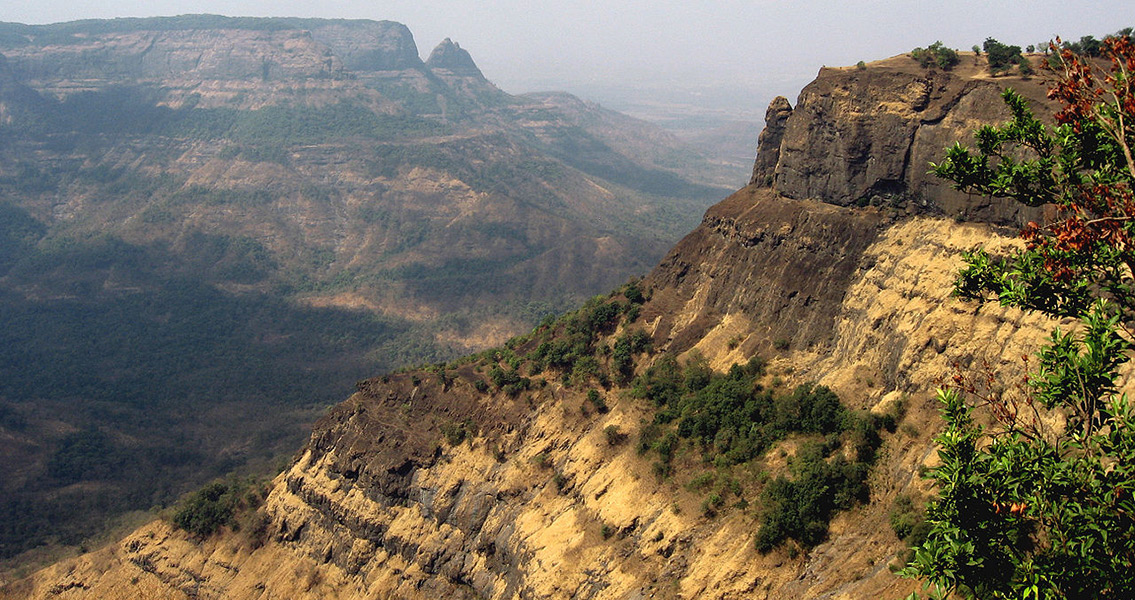
Seismological Research Letters, is available online here Image courtesy of Mayank Joshi]]>

Categories
News

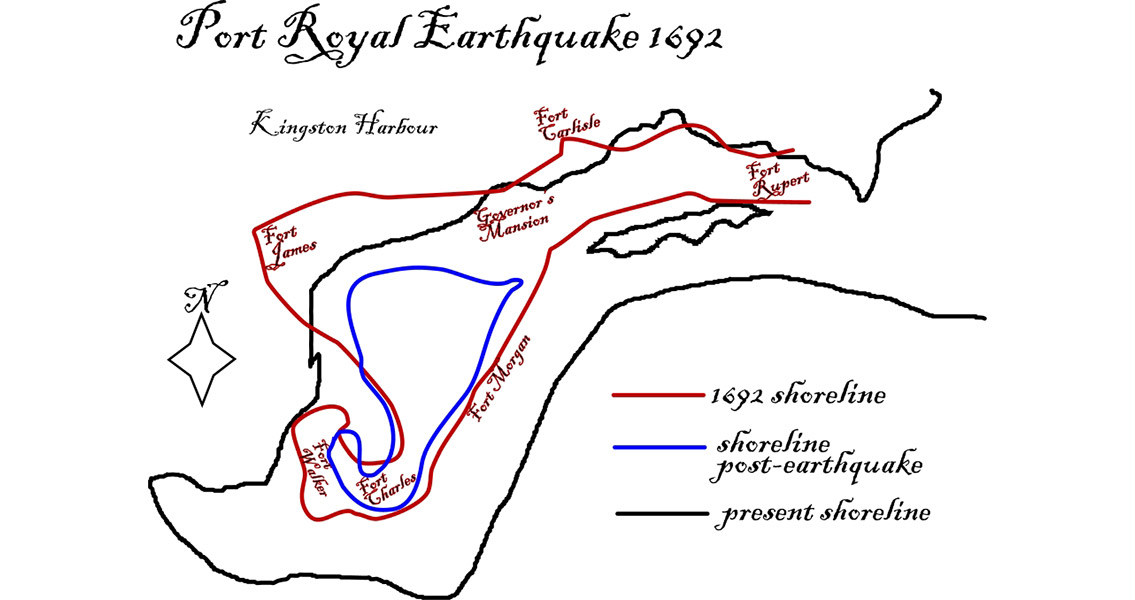
Huge Earthquake Destroys Port Royal

HMS Swan, out of the sea, and deposited it on a building in the city. The geology of Port Royal only added to the scale of the damage wrought by the earthquake. Much of the town had been built on tightly packed soil rather than bedrock. During the quake, this soil was shaken loose and almost turned completely liquid. Buildings sank into the ground, and many of those that had survived the initial earthquake and subsequent tsunami were nonetheless rendered uninhabitable, including two forts. One particularly morbid consequence of this loose soil saw corpses from the city’s cemetery dislodged from their graves and floating in the harbour. By the end of the event, two thirds of the city had been annihilated. Thousands of people had been killed, while aftershocks rocked the island for days after. A lively, bustling city and centre of trade in the Caribbean, Port Royal also had the dubious accolade of being referred to as the “the most wicked and sinful city in the world.” During the seventeenth century, it was considered a dangerous place, home to pirates, smugglers and debauchery. It was said at the time that a quarter of the buildings in the city were either a brothel or a bar. Located away from the Jamaican mainland, it became the perfect hiding place for the real life Pirates of the Caribbean, allowing them to prey on shipping before escaping into the bustle of the busy city. Remarkably however, the city also served as a base for the British Royal Navy in the seventeenth century. For the clergy of the seventeenth century, the shocking disaster which befell Port Royal was seen as divine retribution for the city’s vices, a biblical punishment for a city considered sinful on a biblical scale. Some historians however, suggest that the size of the cataclysm that befell Port Royal actually distorted the history of the city. The sins of the island were exaggerated after 1692, to match the narrative of the earthquake being a punishment from God. Port Royal was never again settled to the same extent it had been before the 1692 earthquake, the damage caused deterred people from returning, meaning it is now the site of a just a small fishing village. ]]>

Categories
News

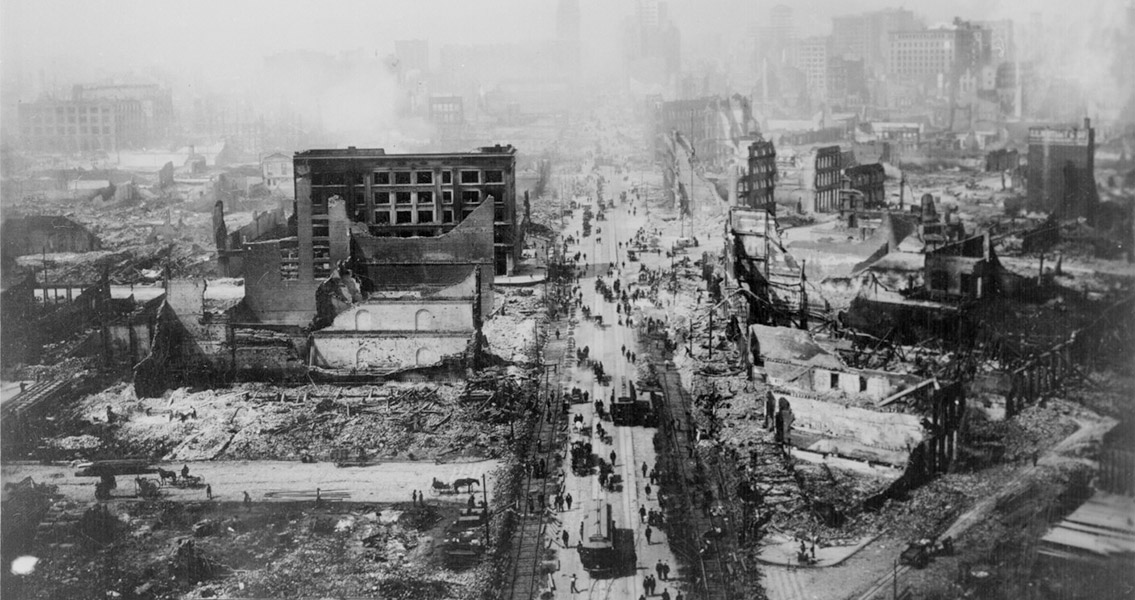
1906 San Francisco Earthquake Leaves Half the City Homeless

Categories
Breaking News

7.5M Earthquake Threat to Modern Istanbul Shown in History

www.sciencedirect.com ]]>

Categories
News

Worst Earthquake in European History Strikes Sicily

Categories
News

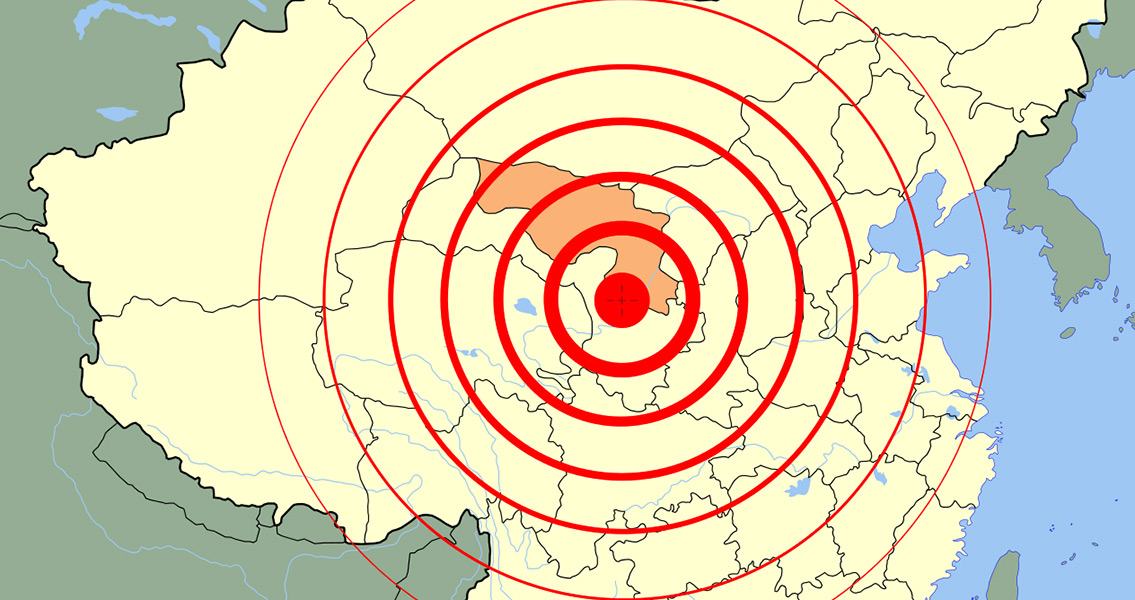
Anniversary For Two Of History's Most Shocking Earthquakes

Categories
Breaking News

The Eastern Mediterranean Earthquake, 365 CE

study by Stathis C Stiros, published in the Journal of Structural Geology, used historical and archaeological evidence to argue that the 365 CE earthquake was just the worst example of an “unusual clustering of destructive earthquakes” in the Eastern Mediterranean between the fourth and sixth centuries. The study suggests that the seismic activity may have been the result of a reactivation of the tectonic plate boundaries in the region. The tsunami which resulted from the earthquake struck the Nile Delta, obliterating many small communities. Eye witness accounts provide a description of the tidal wave as it struck the city of Alexandria. The historian Ammianus Marcelinnus wrote in his work Res Gestae “…the solidity of the whole earth was made to shake and shudder, and the sea was driven away, its waves were rolled back, and it disappeared, so that the abyss of the depths was uncovered and many-shaped varieties of sea-creatures were seen stuck in the slime… The waters returning when least expected killed many thousands by drowning.” As the wave struck Alexandria, ships were hurled over the sea walls and landed on buildings in the city. Approximately 5,000 people in the city lost their lives and 50,000 homes were destroyed. Outside of the city, farmland around the Nile Delta was rendered useless for years as a result of contamination from salt water. Other coastal towns and cities around the Mediterranean were hit at the same time as Alexandria, with the tsunami responsible for destroying settlements in West Cyprus, Libya, and Sicily. In the years following the devastation Alexandria was gradually flooded by sea water, eventually consuming most of the city. It wasn’t until 1995 that the historic centre of the city was recovered by archaeologists. Image courtesy of Wikimedia Commons user: Jona Lendering]]>

Categories
Breaking News

Volcanoes May Have “Helped” Drive Last Mass Extinction