Categories
Breaking News

Archaeologists: Stonehenge Not So Hard to Build After All

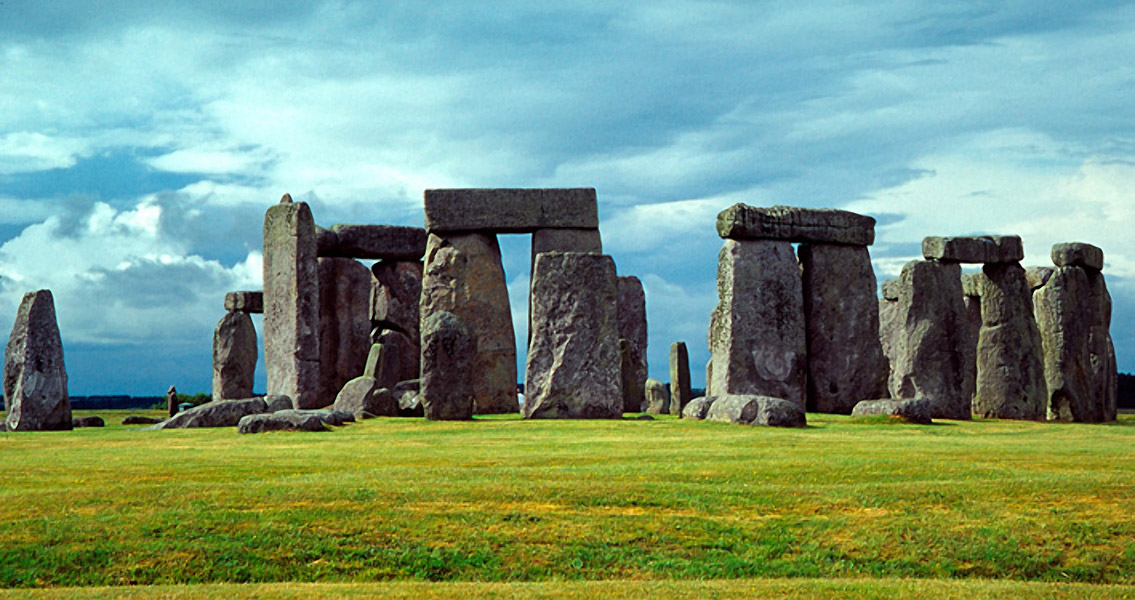
Telegraph about his experiences, expressing surprise on how few people had actually been needed to shift the massive stone. Harris recounted that the original plan was to need at least 15 people to move the stone effectively; the fact that only 10 people were needed to do so was quite the shock. The doctoral student did acknowledge that the conditions of the test – which involved conducting it on flat ground in London’s Gordon Square – didn’t exactly match the terrain of the Preseli Mountains. There would have been some steep slopes that workers would have had to navigate, but Harris maintained that the system used during the experiment would have worked well in such situations. In fact, sledges of the kind used in the experiment are still in use today in India, where the Maram Naga, a pre-industrialized society, uses them to help construct massive stone monuments. Additionally, Harris remarked that sleighs with similar designs have been found to have been involved in moving megaliths as early as 2000 BCE in Japan, while the ancient Chinese also used sleighs. Some of the blocks used to build the Forbidden City are more than 120 tons, making those used at Stonehenge almost dismissively small in comparison. ]]>

Categories
Breaking News

New Study Finds Evidence of Human Re-Migration into Africa

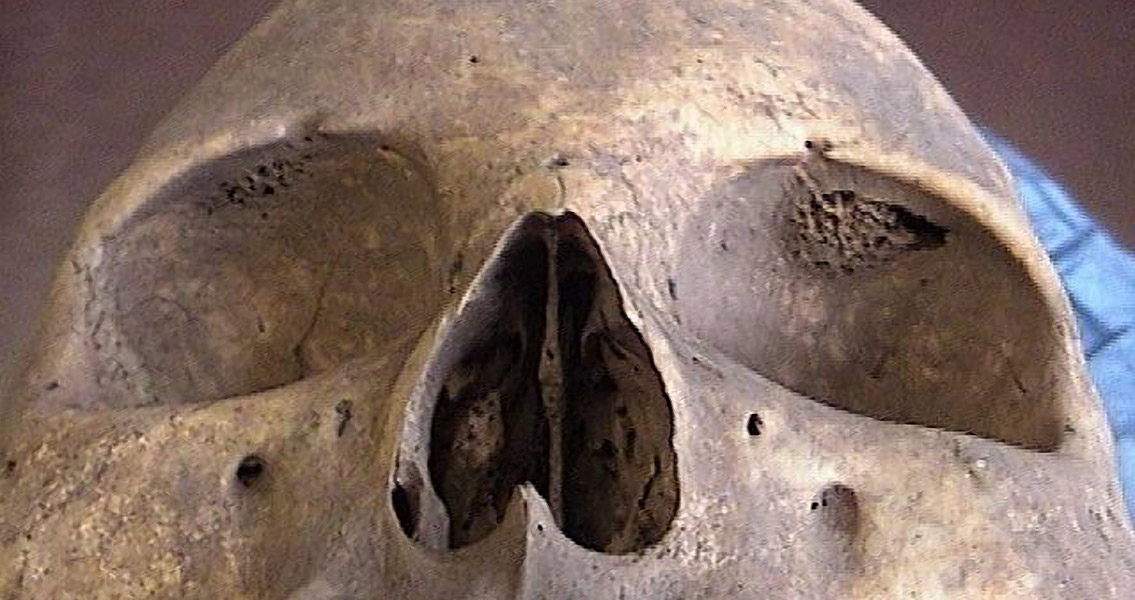
Scientific Reports, can be found online here Image courtesy of E. Trinkaus and A. Soficaru]]>

Categories
Breaking News

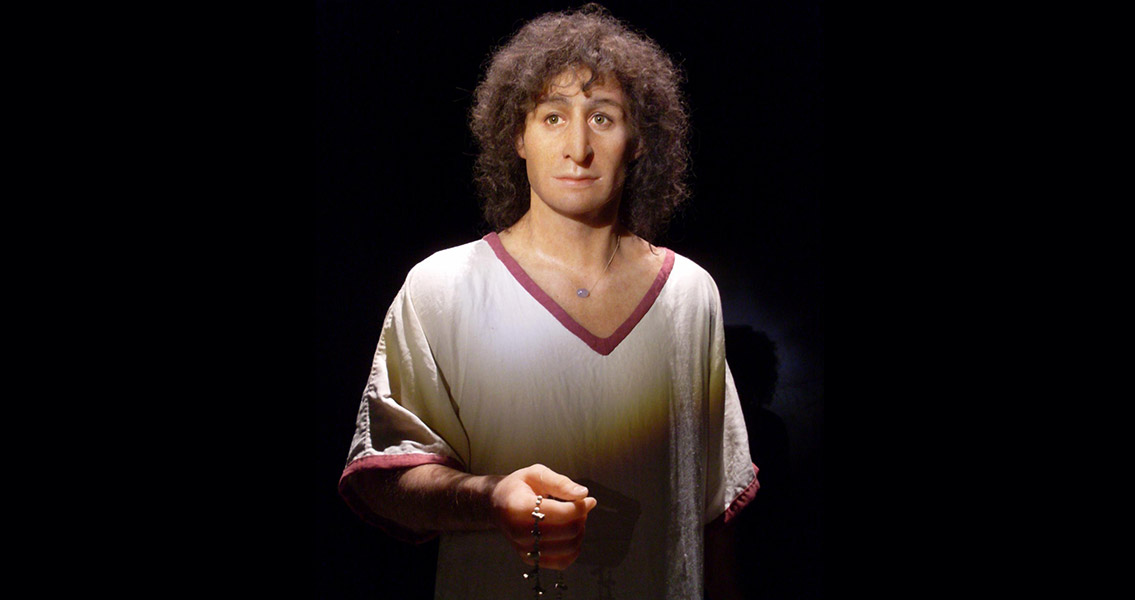
Ancient Phoenician Found in Carthage Had European DNA

PLOS ONE Image courtesy of M.Rais]]>

Categories
Breaking News

Site of Bear River Massacre Pinpointed by Historians

Idaho State Journal, was part of a team from Utah State University that has been investigating the Bear River Massacre site for the last three years. The archaeologist presented the team’s findings at a meeting of the Pocatello Historic Preservation Committee at Idaho State University. It has not been an easy endeavor to find the site of the massacre, thanks to the shifting riverbed of the Bear River. The path of the river has changed numerous times over the last 150 years, which required the researchers to engage in innovative approaches to find definitive answers. Starting with maps that had been penned by soldiers who were part of the massacre in 1863, the team used modern technology to make a closer determination of the location. As a result, the riverbed as it wound during the 1860s was found; the site of the camp, which had been situated at the confluence between Bear River and Battle Creek, had moved about 700 meters southward since that fateful day in early 1863. The original site, near Preston within Franklin County, is located within a 718-acre swathe of land that was set aside by the National Park Service in 1990 in order to commemorate the bloody battle. However, the exact site had been in question up until Reid and his research team pinpointed it. However, the site of the slaughter was not a mystery to everyone, according to Darren Perry, who was also at the ISU event. The vice chairman of the Northwest Band of the Shoshone Nation said that the survivors of the battle, which numbered around 160 women and children, kept the memory alive. Perry remarked that his grandmother would show him where his people’s lodges once stood, much as her grandfather had shown her. Perry’s great-grandfather was an eyewitness to the event, having been just 12 years old at the time. Despite the atrocities committed so long ago, Perry lauded Reid and his research team for their diligence in working on laying bare the history of the Bear River Massacre. “To me, the more knowledge you can get, the better off you are.” Perry remarked to the Idaho State Journal. “All they are trying to do is tell us the story.” Reid says that the impetus behind the attack by white settlers was part of a policy to deter any raids by Native Americans. The second, and perhaps more important reason, was to make it easier for Mormon farmers to settle the nearby Cache Valley. Image courtesy of Wikimedia Commons user: Robert Scott Horning]]>

Categories
Breaking News

Ancient Chinese Beer Recipe Unearthed by Archaeologists

Business Insider, the study’s co-author, Professor Li Liu, discovered that some of the pottery found on site held a striking resemblance to brewing equipment that had been found elsewhere dating back to between 3400 BCE and 2900 BCE, and might have been involved in the brewing of alcohol as well. This represents the earliest direct evidence for beer brewing within the region. The artifacts were subjected to analysis where yellowish residue was extracted and studied. This residue was found not just in pottery but in funnels and stoves inset in earthen pits discovered on site – suggesting that these stoves had been put to use during the brewing process. Additional discoveries to support the theory of on-site brewing included traces of oxalate, a substance that is a common byproduct of brewing and is formed as part of the fermentation process. The starch grains discovered within the artifacts were also subjected to analysis, revealing that they were composed of tubers, barley, broomcorn millet and a grain known as Job’s ears. The combination of grains, roughly equated to a “recipe” by the researchers, incorporates the use of Chinese grains as well as Western ones, according to lead author and Stanford University Ph.D. student Jiajing Wang in an email interview with Business Insider. All the grains save for barley are considered native to the Central Plains. Such an early appearance of barley has raised suggestions that the grain may have been introduced to the Central Plains specifically in order to brew alcohol, instead of for strict agricultural purposes. This runs in the face of earlier evidence that supported the idea that barley was introduced to China 1,000 years later exclusively for farming and not for brewing. The study’s authors say that the brewing of alcoholic beverages in the Central Plain may be associated with higher levels of social complexity during the fourth millennium BCE. Beer could have lubricated the social development of the ancient Chinese people known as the Yangshao, contributing to the rise of hierarchical societies within the region 5,000 years ago, the researchers suggest. The new research study, which was recently published in the journal the Proceedings of the National Academy of Sciences, is available online]]>

Categories
Breaking News

Ancient Jewelry Made from Human Jawbones Found in Mexico

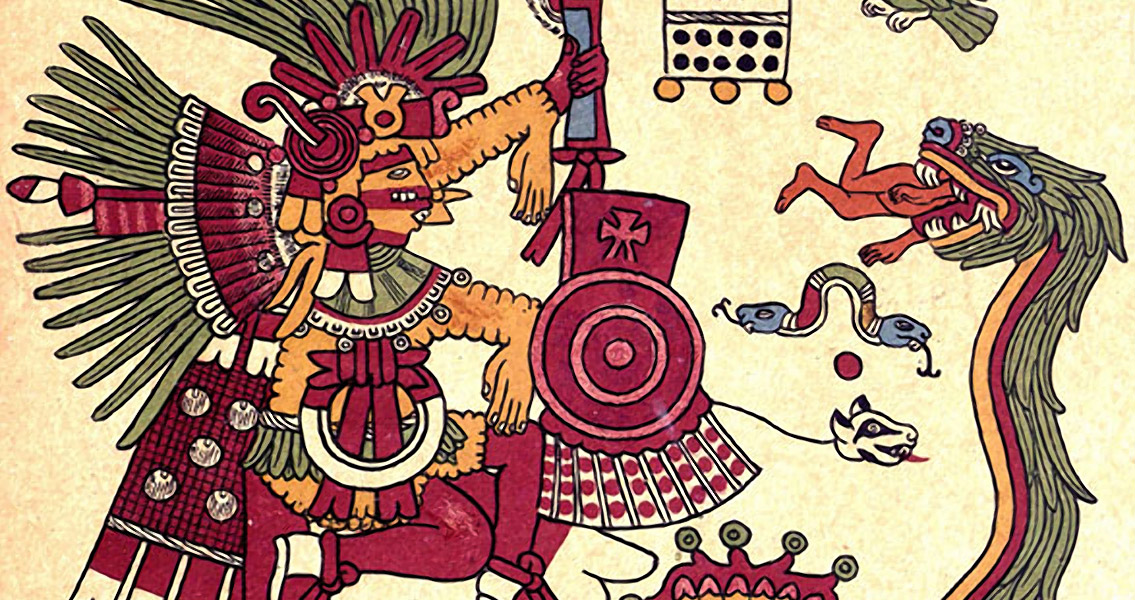
Live Science, the ceremonial site was first uncovered during the spring and early summer of last year in the Oaxaca Valley, situated in southern Mexico. The site, known as Dainzú-Macuilxóchitl, was once inhabited by the Zapotec people who still reside in the region today. The ceremonial site was part of a larger Zapotec residential complex. Oregon State University’s Jeremias Pink recently led a discussion on the research findings at the annual meeting of the Society for American Archaeology. The research study associated with the discovery is currently being prepared for publication. Archaeologists said that while Xipe Totec does have a reputation for being associated with human sacrifice, the painted jawbones might not have been from human sacrifices themselves. In fact, they may have been a form of ancestor worship and veneration for those Zapotec who had lived there previously. The complex had been used for human habitation for at least four centuries, researchers found upon excavating the area. Pink, who spearheaded excavations of the ceremonial site, said that the nearby residences were likely occupied by the same interrelated family groups over that span of time. Researchers say that during this long period of habitation, bones of long-dead residents were purposefully exhumed and decorated before being turned into jewelry. Pink remarked that local residents were likely delving into the tombs associated with their ancestors in order to retrieve the skeletal remains and ritualize them, demonstrating the ancestral link between their long-dead relations and themselves. It was likely a way to legitimize their position within the existing community, the grad student added. Although this might strike modern Westerners as gruesome or at the very least quite odd, ancestor rituals were widespread in ancient Mesoamerica, according to Ronald Faulseit, the excavation director at Dainzú-Macuilxóchitl. The Chicago Field Museum postdoctoral fellow said in an interview with Live Science that many instances of otherwise macabre ancestor worship are still widespread today, an example being the “Day of the Dead” celebrated in early November every year by many Mexicans. While there are no exhumations of skeletal remains as part of the celebration, Mexicans do use the day to remember their ancestors. As to why so many of the other items found at the ceremonial site, such as the whistles and the figurines, were deliberately smashed, Pink says there’s nothing but speculation. These artifacts are currently under ongoing analysis, he added. Images of the artifacts can be found here ]]>

Categories
Breaking News

Egyptian Papyri Found to Contain R-Rated Magic Spells

Categories
Breaking News

Roman-Era Treasure Trove Found Off Israeli Coast

Categories
Breaking News

Foundations of Shakespeare’s Curtain Theatre Found in Shoreditch

Guardian, renowned Shakespeare archaeologist Julian Bowsher, who specializes in the locations of the sites the Bard performed at as an actor and the locations where his plays themselves were performed; indicated that the Curtain’s rectangular design was a bit of a shock. As the site where the very first performances of such plays as Henry V and Romeo and Juliet might have taken place, the Curtain’s squared-off shape clashes with Henry V’s famous prologue, where the stage was referred to in shape as a “wooden O”. Bowsher said that he’ll have to revise his previous scholarship on The Curtain, as the evidence seems clear that before it was a playhouse, it had likely been an Elizabethan-era tenement. All indications point to the theater being converted once more into a block of flats after The Curtain was no longer in use as a playhouse, the archaeologist added. According to Heather Knight, the excavation’s senior archaeologist, the theater’s remains are some of the best preserved of all of the Tudor-era playhouses excavated to this day. The key to the preservation is actually due to its status as a conversion, the theater being reused as a tenement house led to far more of the structure surviving to the modern era, much more than the South Bank theaters known to have been some of Shakespeare’s most famous haunts, the Rose and the Globe. The current Globe is of course a reconstruction, while the original structures are nothing more than barely visible traces of foundation. The curtain’s architectural remains include a collection of brick walls, some as tall as 1.5 meters. Additionally, the area within the stage where the groundlings would have stood, a sloping surface covered in gravel, has also survived partially. Also surviving are some limited documentation from the era that tell us that the Curtain was set just 100 meters from another playhouse on the outskirts of the city of London, and stood in a fair meadow. The name of the playhouse itself comes from Curtain Road, a medieval pathway that ran parallel to a priory’s old curtain wall. Additionally, the theater was the site of one of Shakespeare’s performances as an actor in 1598, when he appeared in ‘Every Man In His Humour’, by Ben Jonson. Apparently the neighborhood the Curtain was situated in was less than idyllic. Theater manager Richard Burbage, a close friend of Shakespeare, had been fined regularly for running an unlicensed tavern, or “tippling house,” in close proximity to the playhouse, according to surviving records. Fights seemed to have been common, such as an incident where a Thames ferryman assailed two actors for not paying their fares. The backstage area of The Curtain is still being excavated. Tours of the site are available every Friday from now until June 24th. ]]>
Categories
Breaking News

Skull Condition Thought Lost to Time Re-Emerges

Clinical Anatomy, can be found online here Image courtesy of Ann Ross]]>