Categories
Spanish Armada Sets Sail From Corunna


The Sun newspaper has released video footage from the 1930s showing Queen Elizabeth II performing a Nazi salute. Saturday morning’s physical edition of the newspaper features a black and white photo of a young Elizabeth, along with her sister, mother and uncle; the future Edward VIII, on the cover. Elizabeth and her mother are both seen performing the deeply controversial gesture. On The Sun‘s website the full home movie filmed at the royal residence in Balmoral, from which the cover photo was taken, has been published. It shows Edward VIII encouraging the seven year old Elizabeth, and her sister Margaret, to perform the ‘Hitler’ salute as they frolic outside. The images are believed to originate from 1933 or 1934. The story and video have of course stirred up a lot of attention, and led to stern criticism being directed at The Sun from Buckingham Palace for having published it. Although there is no evidence that Queen Elizabeth is, or ever was, a Nazi symphathiser, the release of the home movie provides an interesting insight into perceptions of Hitler in the years leading up to the war. It is far from revelatory, for example, that Queen Elizabeth’s uncle Edward VIII agreed with some Nazi policies and disapproved of Britain’s war against them. Famed for abdicating the thrown in 1936, Edward VIII visited Nazi Germany and personally met Hitler in October 1937. Among their topics of discussion was Hitler’s plan for an international movement for peace, one which would have had Edward VIII as its figurehead. Edward VIII’s sympathies were not unusual for someone of his class and status at the time. Much of Europe, and particularly Germany, had descended into chaos in the aftermath of the First World War. The first years of the Nazi regime however, saw relative stability return to Germany. For aristocrats and royalty living in England the Nazis, at least from the outside, represented stability and a buffer from Communism – the political ideal which by definition stood against wealth and privilege. A July 1933 diary entry from the diplomat Robert Vansittart describes a party he and Edward VIII had both attended, in which the subject of Hitler’s rise to power came up. “The Prince of Wales (Edward VIII’s title at the time) was quite pro-Hitler and said it was no business of ours to interfere in Germany’s internal affairs either re- the Jews or anyone else, and added that dictators are very popular these days and we might want one in England.” Some historians have gone even further in their depictions of Edward VIII’s sympathies for the Nazis. In a book published earlier this year, the German historian Karina Urbach claims that Edward VIII was a severe anti-Semite who blamed the Jews for the outbreak of the war and hoped that Germany would ultimately beat Britain into submission. Her suggestions come as part of a broader study she undertook into the role European aristocrats played in keeping Hitler in power. The extent of Edward VIII’s sympathy for fascist ideology, or his relationship with Hitler, are impossible to truly know. What is clear however, is that his support for fascism was far from exceptional in 1930s Britain. The British Union of Fascists, led by Oswald Mosley, was a serious political force in Britain in the decade, until it was disbanded in May 1940. Up until 1934 it had enjoyed support from national newspapers, including the Daily Mail. At the time, and since, accusations have frequently been made that the BUF received support from Hitler’s Nazi party, although this has never been proved. Of course, as a seven year old, Queen Elizabeth would have had no idea about the meaning of the gesture she is seen performing in the video. Nevertheless, the release of the video raises important questions, not just about the extent of fascist sympathies in the royal family in the 1930s, but in British society as a whole. ]]>



www.sciencedirect.com Image courtesy of Wikimedia Commons user: William Warby]]>
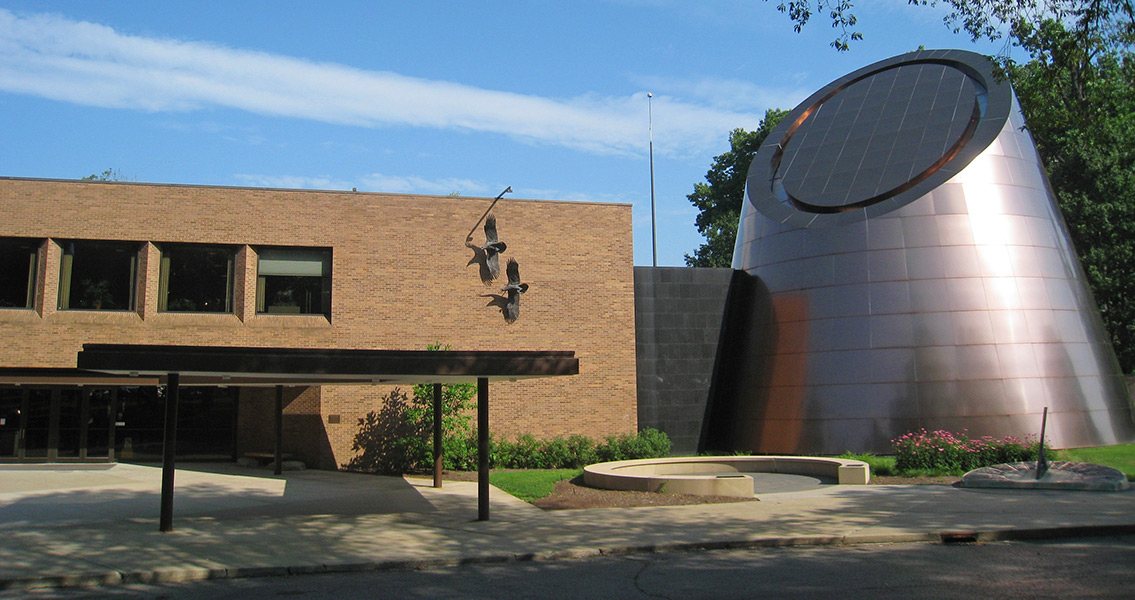
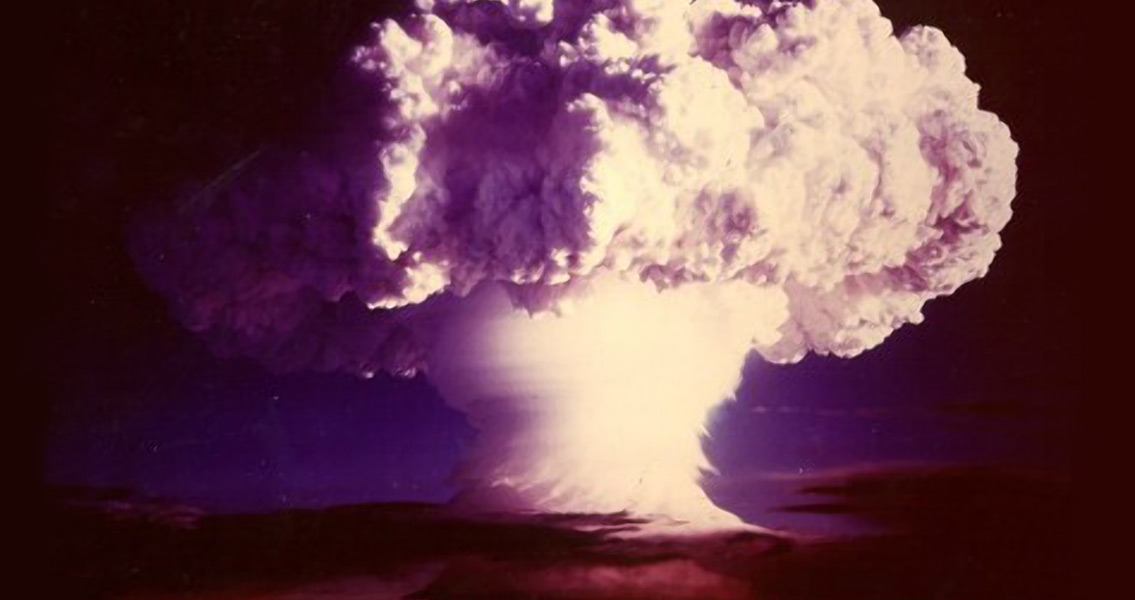
Enola Gay dropped an atomic bomb on Hiroshima, Japan. Less than a week later, the USA launched a second atomic attack on Nagasaki. The devastation caused by this frightening weapon ultimately led to Japan’s surrender in the Second World War, on 15th August. The death toll from the two attacks and their aftermath is estimated to have been between 129,000 and 246,000 people. Although the morality and necessity of the two atomic bomb attacks remain hotly debated, undoubtedly the work carried out by the Manhattan Project in developing the atomic bomb was hugely significant in the closing period of the Second World War. Even now, the consequences of the development of nuclear weapons are abundantly clear across the globe, as shown in the recent negotiations aimed at restricting Iran’s nuclear capability. Attempts to weaponise the fission process actually date back to 1939, when a group of scientists, many of them refugees from fascism in Europe, took steps to win support from the US government for the project. Enrico Fermi, an Italian emigre, met with representatives from the US Navy to discuss the military potential of fissionable material. It was the first such meeting with the US Government concerning what would become nuclear weapons. Later in 1939, Albert Eintein presented the potential of a fission reaction in a letter to President Franklin D. Roosevelt. By February 1940, $6,000 had been awarded to commence research into nuclear weapons. The USA’s entry into the Second World War in early 1942 saw its investment in the program increase dramatically, with all resource limits on the project removed. Taking in the work of scientists from across the USA in collaboration with those from Britain and Canada, the Manhattan project saw the USA divert huge sections of its industrial and economic might towards creating a weapon which could be decisive in the war. Named the ‘Manhattan Project’ in reference to the place where the research began, the first stages of the project involved months of theoretical research, with a key breakthrough taking place at the University of Chicago when Fermi set off the first fission chain reaction. Countless other scientists and engineers working across the USA made important progress in both harnessing radioactive material and developing the means by which it could be weaponised, helping turn the idea of the atomic bomb into a reality. The initial theoretical stage coalesced with the practical at a 428,000 acre industrial complex in the New Mexican desert. Here, a team led by Robert J. Oppenheimer had to develop a method to reduce fissionable materials to pure metals before fabricating them into shapes which could be used in a weapon. They then needed to develop means to bring the materials together quickly enough to trigger a nuclear explosion, and finally a system where this process could be executed within a bomb dropped from a plane. By the summer of 1945, sufficient quantities of plutonium for a nuclear explosion had been produced at the large scale production reactors at Hanford Engineering Works, and the team at the industrial facility in New Mexico had developed technology advanced enough to carry out the first bomb test. Two hemispheres of plutonium, which combined were about the size of a tennis ball, were moved to the test site. In the run up to the test, the scientists involved were unsure what would happen. Some speculated it wouldn’t work, and the bomb would fail to explode. Fermi had a much more apocalyptic view, believing the detonation would set fire to the earth’s atmosphere and create fires around the world. Of course, the test was a success, and the bomb generated an explosive power equivalent to 15,000 tons of TNT. By this point the US government’s investment in the Manhattan Project had risen to $2 billion, an incredible amount for the time. The first ever atomic bomb detonation on the 16th July, 1943, was significant for a number of reasons. It marked the start of a new era in history, and revealed the terrifyingly destructive power which could be achieved through modern technology, vast resources, and human ingenuity. Image courtesy of Wikimedia Commons user: U.S. Department of Energy]]>