www.pnas.org Image courtesy of Wikimedia Commons user: Great Basin]]>
www.pnas.org Image courtesy of Wikimedia Commons user: Great Basin]]>
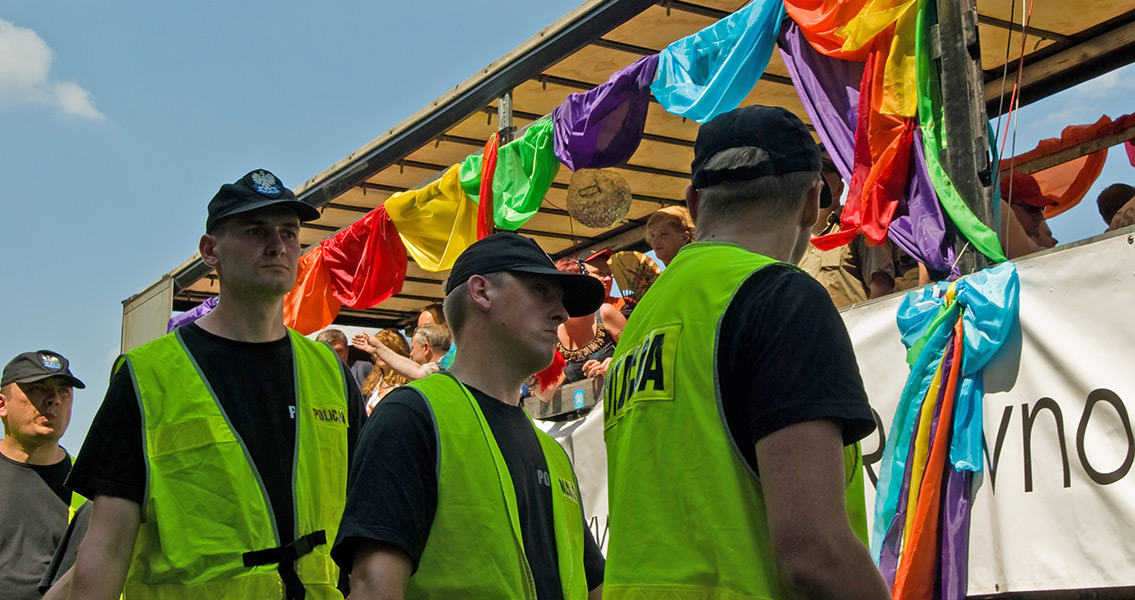
Obergefell vs. Hodges that state level bans on same-sex marriage were unconstitutional. In Europe, the 2015 Europride – a pan-European international event dedicated to LGBT pride on the continent – was held in Riga, Latvia, marking the first time in the annual event’s twenty-three year history that it was held in a former communist country on the EU’s eastern border. Just last week a photo of a tearful teenage boy by renowned “Humans of New York” photographer Brandon Stanton, captioned “I’m homosexual and I’m afraid about what my future will be and that people won’t like me”, went viral, resulting in an international outpouring of support for the teenage boy. The post even grabbed the attention of Hilary Clinton. Undoubtedly there are still places in the world where Lesbian, Gay, Bi-sexual and Transgender people face persecution, from both their fellow citizens and their own governments. The image, and the response to it, highlight the continued concerns and anxieties for LGBT people, but also how much attitudes have changed in a comparatively short space of time. A look at the history of perceptions of homosexuality in Britain and the USA can provide clear examples of just how drastically ideas have changed, at least politically and legally, over the last seventy years. Just 130 years ago, in 1885, the Labouchere Amendment was passed in Britain which created the offence of gross indecency. This made all sex acts between men illegal, the law clearly targeted at criminalising homosexuality. A decade later Oscar Wilde, author of ‘The Picture of Dorian Grey’, was prosecuted under indecency laws and sentenced to two years imprisonment. The judge at the trial stated that he thought the punishment he’d administered, the harshest he legally could, was inadequate for Wilde’s ‘crime’. In 1952, Alan Turing, the key figure in the cryptoanalytic work at Bletchley Park which cracked the Enigma codes, and a pioneering engineer in the development of the computer, was brought to trial on charges of having a sexual relationship with a man. Turing made no attempt to deny or defend his actions, instead making clear that he felt that there had been nothing wrong in his actions. Inevitably found guilty, Turing opted to receive sterilising injections for a year instead of facing a lengthy prison sentence. After the Second World War had ended, Turing worked at the secretive intelligence agency, GCHQ, (Government Communications Headquarters). Following the revelations about his sexuality however, Turing lost his security clearance to work at GCHQ, highlighting Cold War fears that homosexuals presented a security risk. A similar pattern occurred in the USA. Throughout the 1940s and 1950s countless reports were published arguing that homosexuality was a serious threat to society. The 1950 Senate Commissioned report “Employment of Homosexuals and Other Sex Perverts in Government”, argued that homosexuality was a mental illness which constituted a national security risk. Most shockingly, this report openly admitted that the federal government had covertly monitored its employees sexual persuasion in the early years of the Cold War. Highlighting just how seriously these views on sexuality could affect people’s lives, some 4,380 gay men and women had been discharged from the military, and 500 fired from their jobs in the US government in the years leading up to the publication of the report. In April 1953, President Dwight D. Eisenhower signed a bill prohibiting homosexuals from working in the federal government or for any of its contractors. Britain only decriminalised homosexuality in 1967, through the Sexual Offences Act. Even then, homosexual relationships were still burdened with strict restrictions when compared to heterosexual relationships. It would be decades for example, until the same age of consent was applied to homosexual relationships as heterosexual. In the USA reform started in 1962, when the state of Illinois decrimininalised same sex relationships. From there a gradual process started, as other states slowly implemented similar reforms. It wasn’t until 2003 that the Supreme Court struck down the sodomy laws in the fourteen states that still had them. Of course, throughout this period and before, in both the UK and the USA, there were a plethora of campaigners working tirelessly to win acceptance for LGBT rights and to push for legal reforms, laying the groundwork for the increased acceptance we can see today, most explicitly in the response to Stanton’s photograph. It is of course vital to celebrate and acknowledge these campaigners endeavors. Attitudes to homosexuality have had varied histories around the world. In the case of the USA and UK however, the legal, political and social acceptance of homosexuality just seventy years ago was almost unrecognisable to what it is today. Image courtesy of Wikimedia Commons user: Nikodem Nijaki ]]>
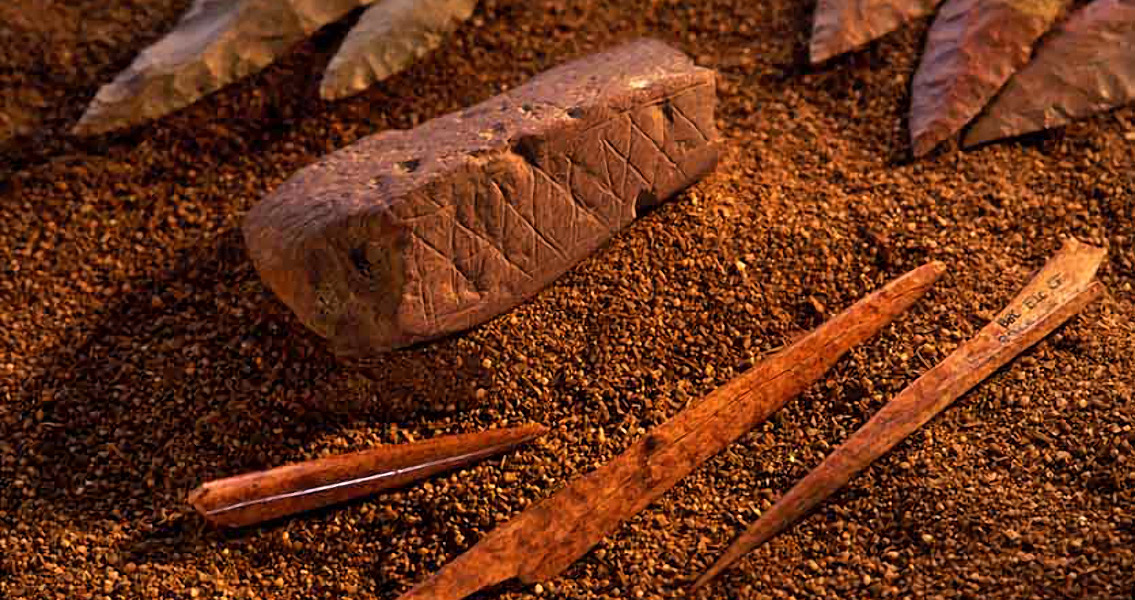
PLOS ONE, found that South African settlements existing some 1,000 kilometers apart during the MSA were using similar types of stone tools at the same time. Scientists found that these tool-making tribes of humans, which existed around 71,000 years in the past, were likely to have developed independently of each other – especially since the methods used to create these tools diverged even though the end products were so similar. This is in stark contrast to archaeological evidence dating back to just 65,000 years ago, says Lyn Wadley, who remarked in a press release that the older civilizations didn’t seem to demonstrate the same level of disseminated cultural and social tradition as the settlements dating to just 6,000 years later. One of the authors of the new study, Professor Wadley, teaches archaeology at Johannesburg’s University of the Witwatersrand. The dig sites involved in the study, Sibudu in KwaZulu-Natal and Blombos Cave in the Western Cape region, are among the most famous within South Africa. The exact locations of each dig are known as Howiesons Poort and Still Bay respectively; these sites have yielded up much of what modern archaeology has been able to deduce about the earliest forms of human civilization, how human tradition began to develop through cross-cultural contact with individual tribes of early humans in the MSA, and when that development first began to occur. There’s precedent for the idea of cultural exchange between such relatively isolated pockets of early humanity, as earlier research into stone tools made around 65,000 years in the past shows that the processes used to create tools at both locations were similar, despite the difference in the types of stone found in each place. However, the new research shows little in the way of this evidence from 71,000 years ago; this is an indication that socialization among disparate groups of human settlements developed over the gap between the two time periods, especially since the evidence from the settlements dating back to 65,000 years ago has shown several different examples of this cultural cross-pollination. Currently, the differences in stone tool making methods discovered by Professor Wadley and the other members of the research team involved in the study is some of the only evidence of its type in existence. While the results are certainly promising, the archaeologists say that additional research is going to be needed before a definitive date can be pinned down as to when humanity began to come together through important concepts such as tool making techniques passed down from generation to generation. For more information: www.journals.plosone.org Image courtesy of Wikimedia Commons user: Chenshilwood]]>

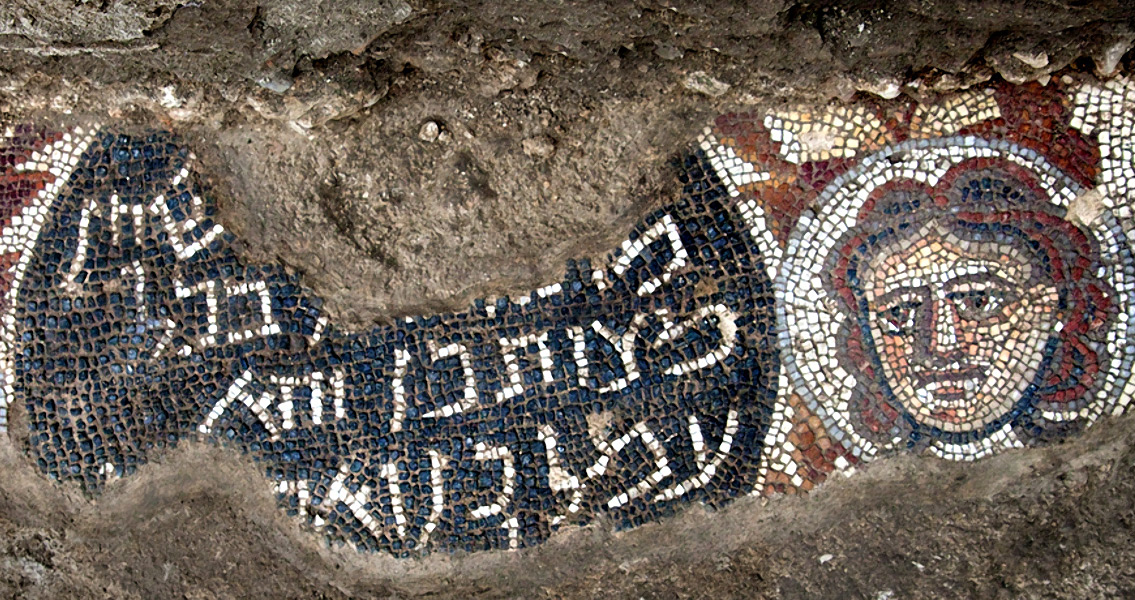
Livescience in July 2012 that the synagogue had likely been the only place of worship in the small village of Huqoq. She explained that the lavish designs of the synagogue would have been unusual for such a small village, suggesting Huqoq could have been a particularly affluent place. Magness and the other scholars working at the site are currently trying to work out why the synagogue featured the prominent, non-secular mosaic. Further excavations at the site are scheduled for summer 2016. For more information: www.uncnews.unc.edu Image Courtesy of Wikimedia Commons user: Jim Haberman ]]>


Proceedings of the National Academy of Sciences of North America (PNAS) last week, the study by Miikka Tallavaara, Miska Luoto, Natalia Korhonen, Heikki Järvinen and Heikki Seppä deployed ethnographic and climate data to model population sizes during the LGM. An understanding of past human population sizes and densities is hugely important in studying prehistoric cultural and genetic development, the impacts of climate change, and the effects humans have had on ecosystems, and other species. As the study authors explain, large groups of interacting humans experience different cultural and genetic evolution compared to smaller, seperated groups. “Large pools of interacting individuals can create and maintain adaptive skills, as well as phonological variation, more effectively than small populations, and they are also capable of faster cumulative cultural evolution. A decrease in population size may even result in a loss of complex cultural traits.” Despite the significance of prehistoric population history however, it has hitherto remained difficult to reconstruct. Previous attempts to model population size have used archaeological and genetic data, methods the study authors argue make it “extremely difficult to meaningfully compare DNA-based population reconstructions with the records of cultural or environmental changes.” The authors of the study used recent developments in climate envelope modelling, which allow estimates to be made about the suitability of the climate to maintain a species population, to simulate the development of hunter-gatherer populations during the climate change of the LGM. According to their simulation, the population size shrunk from 330,000 people 30,000 years ago to a minimum of 130,000 people 23,000 years ago, as the LGM reached its coldest, most uninhabitable point. The human population in Europe then began to increase, and by 13,000 years ago had reached 410,000 people. Although the general trends in population size from the simulation match those offered by archaeological evidence, the authors point out that their work suggests the population of Europe was substantially higher during the LGM than is typically thought. One explanation offered by the team for this anomally is that the archaeological evidence provides an incomplete representation of population dynamics. The size of the archaeological record varies between different places and time, and can be affected by different rates of erosion and decay. The study concludes that even during the harshest period of the LGM, 36% of the continent remained inhabitable for humans. The conclusions the study makes about population dynamics could be hugely beneficial for future studies of human’s genetic and cultural evolution. For more information: www.pnas.org Image courtesy of Wikimedia Commons user: Christine Zenino]]>

Vincennes shooting down an Iranian passenger airline in 1988. In the 1990s, the US accused the Iranian government of having sponsored terrorist attacks around the globe, from Argentina to Saudi Arabia. A constant theme throughout was mistrust, Western governments regularly associated Iran with terrorism (to the extent President George Bush Jr. placed it in an ‘Axis of Evil’ with North Korea and Iraq in 2003), while past interference in Iranian affairs made it easy for the most conservative of Iran’s political and religious leaders to advocate cynicism of the West, particularly in regard to the USA. Following decades of tension and fractured diplomacy, representatives from the West and Iran are attempting to negotiate a compromise on Iran’s nuclear program. The negotiations could herald a comparative thawing of relations between Iran and the West, when the history of conspiracy, aggression, and conflict that has formed between the leaders of the involved parties is considered. Put in this context, the current obstructions to an agreement are perhaps easier to understand. Image courtesy of Wikimedia Commons user: Fabienkhan]]>