Categories
News

History of Shawnee County, Kansas

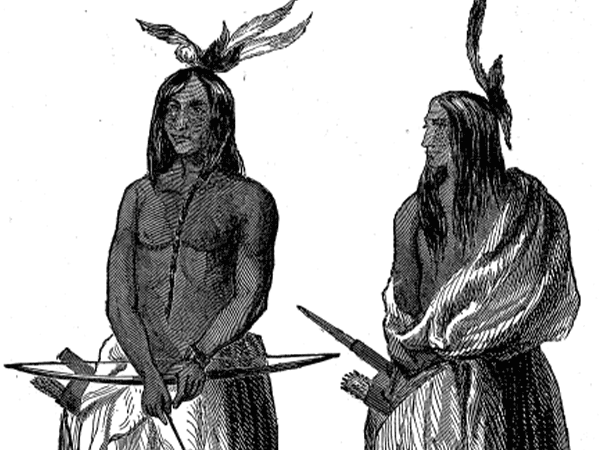
Someone would expect that a small town in Illinois of 7,970 people would not have much history. But recently, a group of archaeologists have found evidence of a nearly 1,000 year old Native American village in Murphysboro, which is near the Southern Illinois Airport. This village would have pre-dated any European contact. This find was actually by accident. The group of archaeologists that found the historic land were from the Illinois Archaeological Survey, and their purpose was to survey land in order for the state of Illinois to build. Instead of finding good land for a modern road to be built on, they found something even more valuable.  It is not known for certain the tribe or culture that the archaeologists dug up, but they found material such as clay that was used to make pots, which gave them a few ideas. There are about four known Native American tribes that currently live or have lived in Illinois: Kaskaskia, Moingwena, Peoria and the Moingona. They were part of the Shawnee people that came from the American Midwest. The history of the Shawnee people began in the late Pleistocene age, where at that time they were known as the Paleo-Indians. They hunted large animals such as bison, mastodons, caribou and mammoths. Some of these Paleo-Indians moved to the Ohio region, and settled there. At around 1000 AD, they started to flourish and took up a culture known as the Fort Ancient culture. They were known as the mound builders, as they constructed massive earthen mounds for homes, burials and also for ceremonial purposes. They grew mostly maize and had year-round nuclear families that lived in settlements of about 40 to 50 individuals. These settlements would be scatted along terraces that overlooked rivers and also on flood plains. Some groups had habits of moving to different locations. Now, there are only 1.03% Native Americans in the small town of Murphysboro, and an even meager 0.3% in the whole state of Illinois. 

Patrick Durst, the Senior Researcher of the Illinois State Archaeological Survey, stated that the find has opened up a new area of study for him and his team. They will conduct further research to find out if the groups that lived in this location formed any of the tribes that are known today, or if they stayed in the area and became something else. The tribes today actually came after the remnants of what were found at the site. 

Charcoal was found in the soil, which caused Durst and his team to believe that several homes were burnt down. The excavation also brought up old clay pots, tools and stones. They also found mussel shells and deer and fish bones on the site, which correlates to the way of the Fort Ancient culture of hunting and settling around the local rivers. The artifacts will be further analyzed to better identify the people the artifacts belonged to and their way of life.

]]>
Categories
Breaking News

Archaeologists Unearth a 70000 Year Old African Settlement

Categories
News

Ancient Roman Pothole Repairs Discovered

Categories
Editorial

Why We Need to Learn from the Past

society is causing tension and problems in the US and Europe. The experience of Ancient Greece can surely provide some insight into the modern situation. On a more practical level, the U.S. is suffering from water shortages in several major areas. This is a situation with historical precedent. The Pueblo ruins in the South-west reveal a sophisticated society that abandoned its settlements between the twelfth and thirteenth century A.D. Archaeological studies suggest that the reason the society disbanded was a dramatic shift to an arid climate in this period. In contrast, there is evidence of states in the Eastern Mediterranean and Middle East that succeeded through periods of drought between 1200-1000 BC and 2200-2000 BC. Archaeology and historical studies allow us to analyse why some societies succeed and others failed. They teach us valuable lessons that could have a positive impact on policy in the future. Unfortunately, in both the US and UK, funding for archaeology is in decline, and is often insignificant in comparison to Europe and China. It is vital for us to learn about the past, not just to preserve our heritage, but to teach us about the present and future as well.]]>

Categories
News

Ancient Cypriot City Discovered

Categories
News

The Neanderthals Were Omnivores, According to Recent Study

PLOS ONE online journal, the paper written by a group of geologists stated that the feces of the Neanderthals contained high portions of plant sterols which show that they did indeed eat plants. They also found much higher portions of cholesterol and coprostanol which supports the idea of high meat consumption. The scientists in this study were Ainara Sistiaga, a geo-archaeologist from the University of La Laguna in Tenerife, Spain, and Roger Summons, a geobiologist from the Massachusetts Institute of Technology in Cambridge, Massachusetts, USA. They looked at different biomarkers of meat and plants in fossilized feces from five different places at El Salt. This is more indicative of an omnivorous diet than the study that found the nitrogenous compounds in the teeth of the Neanderthals, Sistiaga states, as these biomarkers were in their feces. Only humans and other primates are able to convert cholesterol to copropostanol in the form of 5B-stigmastanol, hence why they were so sure that the feces were of human origin and not another mammal. They also made sure that it wasn’t any other primate by looking for any bones belonging to other primates in the surrounding area, and found none. The researchers also looked at the parasites and coprolites in the soil, and discovered only species associated with humans. Some scientists are not convinced with this finding, however. Michael Richards, paleoanthropologist at the University of British Columbia, states that it is difficult to identify the species of coprolites, and that animals passing by that area over thousands of years could have passed by and even settled in the area Neanderthals were, which would produce feces with similar biomarkers as the Neanderthals. Amanda Henry, paleobiologist at the Max Planck Institute for Evolutionary Anthropology in Leipzig, Germany, thinks the study is very exciting and could disprove the idea that Neanderthals were only carnivores, but says the study is incomplete as the researchers would have been better off using DNA or parasites unique to humans to make the findings conclusive.]]>

Categories
News

Chapel of 11th Dynasty Egyptian Pharaoh Unearthed

Categories
News

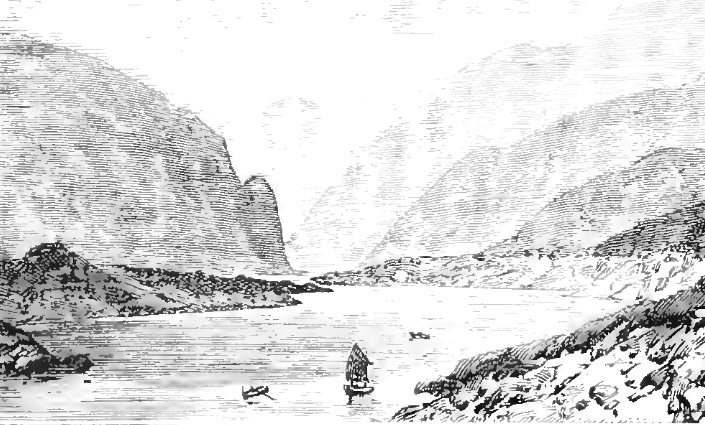
Ancient Chines Levees Caused Environmental Change

Categories
News

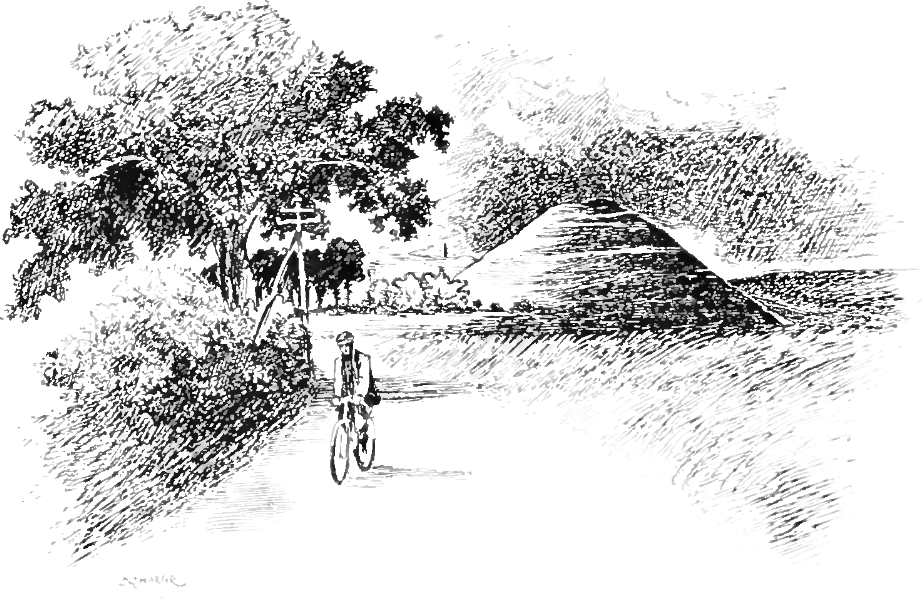
Story of the Largest Pre-Historic Mound in Europe: Silbury Hill