Categories
Breaking News

Bird Evolution Shaped by Climate Change and Tectonics

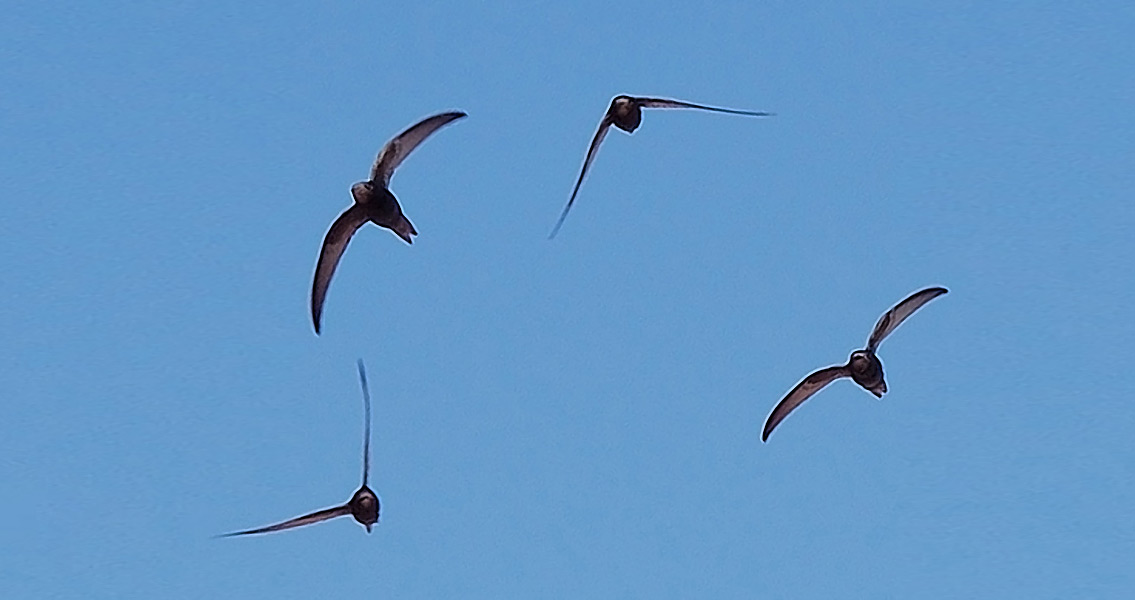
Palaeognathae, Galloanseres, and Neoaves) major crown clades occurred more or less simultaneously around (and probably before) the K-Pg event, thus suggesting common causal factors.” They write in their study. “All avian orders originated during the Paleocene, except for Anseriformes and Galliformes, which originated in the latest Cretaceous, and some orders within the higher ratites, which may have originated in the late Paleocene or early Eocene, taking into account uncertainty.” Two main dispersion routes for birds are mapped out in the study, with the authors theorising that birds reached the Old World through North America, and Australia and Zealandia via Antarctica. Although relying on the existence of a Late Cretaceous and Paleogene landbridge between South and Middle America, something which is hotly debated among experts, Claramunt and Cracraft’s results provide an outline of the connection between bird dispersal and tectonic movements. Another key finding of the paper is that bird diversification rates increased during periods of global climate cooling. “The new time tree also reveals a striking pattern in which avian net diversification rates increased during periods of global climatic deterioration. This pattern is consistent with a model of climate-induced vicariance in which biome fragmentation triggers speciation pulses across entire avifaunas.” claims the study. “This work provides pervasive evidence that avian evolution has been influenced by plate tectonics and climate change.” said Cracraft in the press release. For more information: www.advances.sciencemag.org Image courtesy of Wikimedia Commons user: Keta]]>
Categories
Breaking News

Modern Birds 6 Million Years Older than Thought

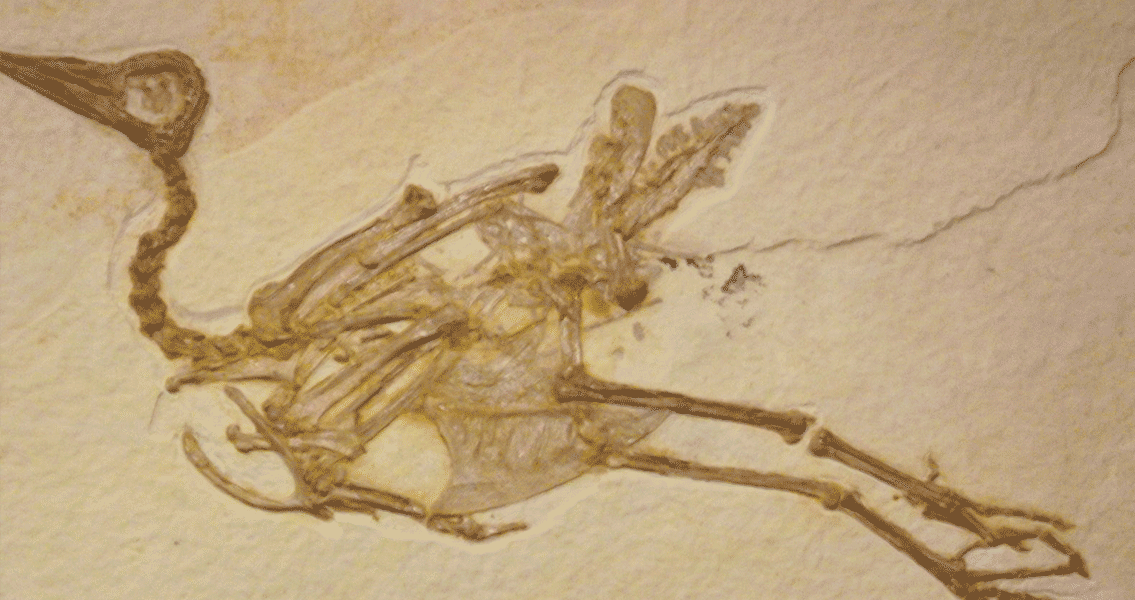
Archaeornithura meemannae. The remains have been dated to 130.7 million years ago, around 30 million years after the first birdlike dinosaurs appeared on the scene and set off bird evolution. To compare, what was believed to be the oldest representative of the bird family lived 125 million years ago. Both belong to the Ornithuromorpha clade (a group encompassing all representatives of a life form, from the first one to all their descendants), which also includes all modern birds. The fossils were unearthed in 2013, but only now have analyses been completed that date them and classify them as being from a new species. An artist’s recreation of the ancient bird’s appearance shows that it was remarkably similar to many modern birds. In fact, the only feature out of place was the pair of small claws at the central joints of its wings. Otherwise it was covered in feathers, apart from the legs, which suggests it was a wading bird, and had a beautiful purple plumage on its head, while the rest of it was mostly gray. The bird was a small one, just 15 cm, and it is unclear whether it had teeth – a common feature of early Cretaceous birds – or not. Among the suggestions the researchers were able to make based on the fossil evidence, is that it was probably a herbivore and that it used gastroliths (stomach stones) to help digestion, study co-author Wang Min from the Chinese Academy of Sciences said. This discovery adds to a growing, though still scarce, body of evidence about the early stages of birds’ evolution. Just recently, again in China, scientists discovered an ancestor of the avian class with bat-like, skin-covered wings. This pigeon-sized dinosaur represents a stage in bird evolution before the Archaeopteryx, so far considered the earliest known example of a creature between a dinosaur and a bird. The Archaeopteryx was a feathered dinosaur that had bird-like characteristics, such as skeletal structure and possibly the ability to fly. The bat-winged dinosaur, on the other hand, most probably comes from an earlier time, before some reptiles started growing feathers and became warm-blooded, effectively ceasing to be reptiles. Early birds, however, were not the only masters of the air during the Mesozoic era, which spanned a huge period, from 252 to 66 million years ago. This other group of flying animals were called Enantiornithes. Although these apparently looked very similar to birds, they had teeth and claws, like dinosaurs. More than 50 separate species have been identified, with some only represented by a single bone, but they all died out during the latest mass extinction on the planet, around 66 million years ago, at the boundary between the Cretaceous and the Paleogenic eras. Enantiornithes are believed to have left no currently surviving descendants. Image courtesy of Wikimedia Commons user: Acabashi]]>

Categories
Breaking News

Unique Bat-Like Dinosaur Found in China

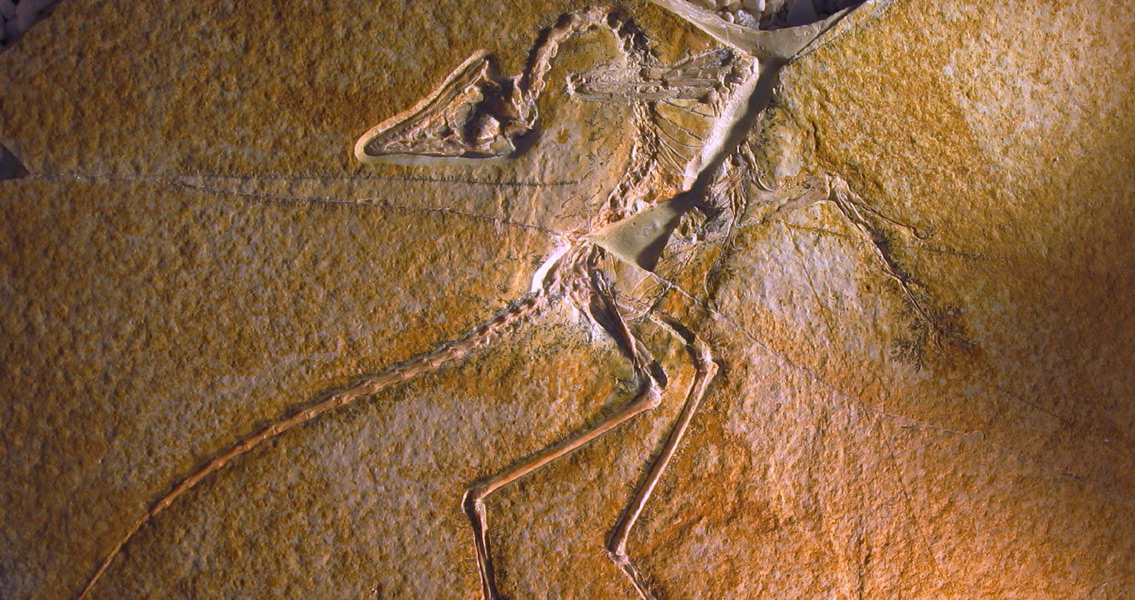
scansoriopterygids, characterised by their long hands, that lived 160 million years ago. All fossilised remains from this group come from China and none of them have such a bone connected to their wrists. This, coupled with the fact that bats and flying squirrels have similar bones on their hands, led the scientists to the suggestion that the dinosaur had wings made from skin, not feathers. The team, including Xu Xing and Corwin Sullivan from the Chinese Institute of Vertebrate Paleontology and Paleoanthropology, and Zheng Xiaoting from Linyi University, named the creature Yi qi, meaning “strange wing”. They explained that at this stage it is impossible to determine whether the wings were used for flapping or gliding but in any case no other dinosaurs that have been discovered in this group of species had anything like them. Zheng said that Yi qi must have been a flight pioneer, given that it lived in the Jurassic era, long before feathered dinosaurs took to the air. However, the evidence is scarce, so it is likely that the publication detailing the find and the scientists’ conclusions will cause controversy. Although it has been long suspected that modern birds evolved from dinosaurs, until recently there was no hard evidence proving the link. Just last year, paleontologists completed a comprehensive family tree of a group of carnivorous dinosaurs from which birds are thought to have evolved. The tree reveals that, unlike with humans, this evolutionary process was gradual, with no “missing links”. Simply put, 150 million years ago a group of small dinosaurs started changing, acquiring bird-like skeletons, beaks and feathers. This process took tens of millions of years, accelerating over time. This, paleontologists explain, is because once the bird skeleton was in place, it greatly increased the potential for further evolution and diversity. For the sceptics, bird DNA has also been linked to dinosaur DNA, including that of the Tyrannosaurus Rex. In 2007, US researchers managed to extract collagen, a protein from the soft tissue of a bone, from the remains of a Tyrannosaurus that had lived 68 million years ago. The closest collagen type found in a modern animal was that in chicken bones. This discovery helped add more weight to the hypothesis that birds evolved from dinosaurs. Image courtesy of Wikimedia Commons user: H. Raab]]>

Categories
Breaking News

Birds Lost Their Teeth Over 100 Million Years Ago, Researchers Say

Image courtesy of: Magnus Manske]]>

Categories
Breaking News

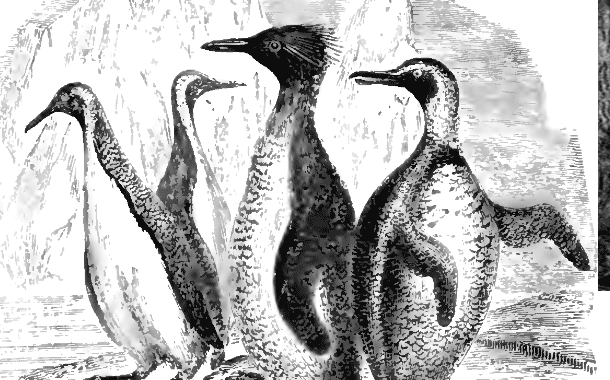
Prehistoric Penguins Found That Were as Large as Humans