Categories
Breaking News

New Species of Flying Dinosaur Discovered in Patagonia

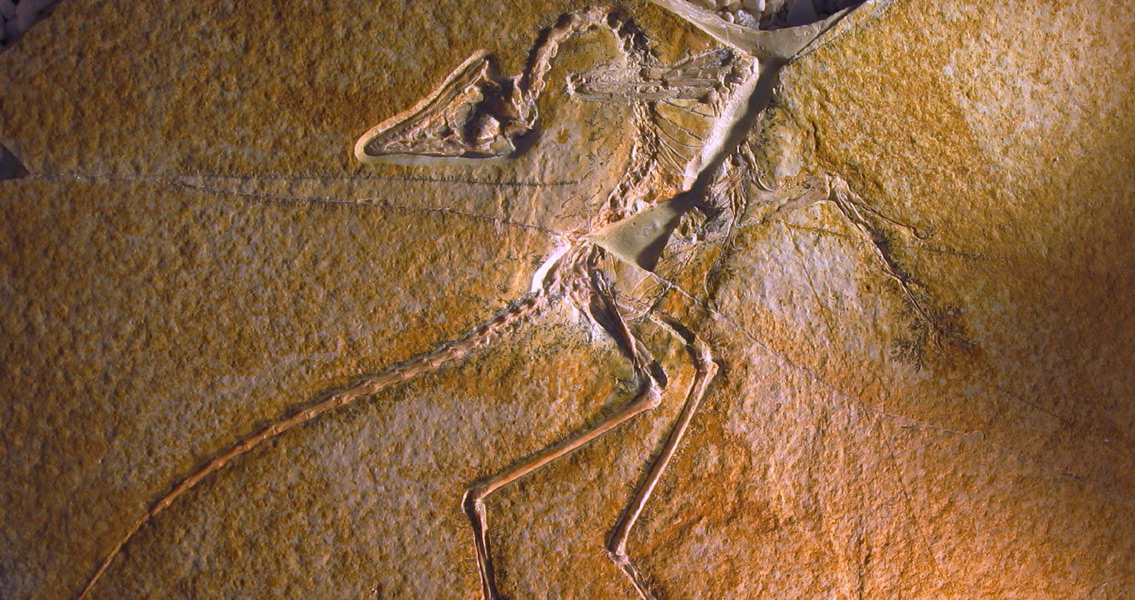
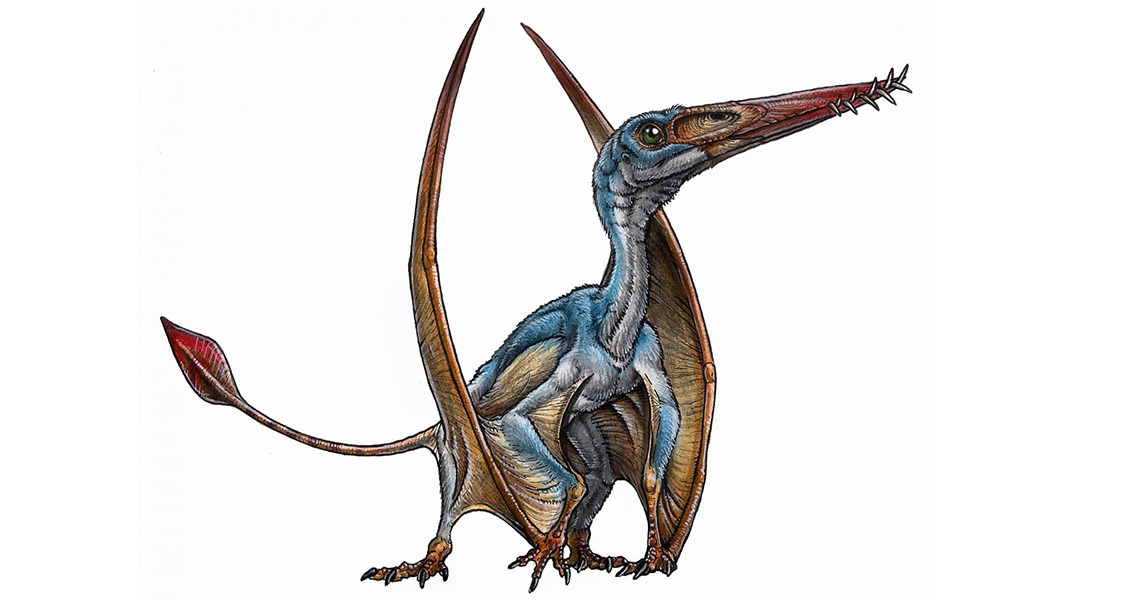
Allkauren koi by the researchers behind the discovery. Preserved in remarkably good condition, the skull remains have revealed new information about the evolution of the braincase of pterodactyloids, a major suborder of Pterosaurs. The name Pterosaur comes from the Greek for ‘wing lizards’. These spectacular creatures dominated the skies during the Jurassic and Cretaceous periods, and included the largest vertebrate ever known to fly: Quetzalcoatlus from the late Cretaceous period. Members of the long extinct group were incredibly diverse, ranging from the size of a sparrow to the size of an airplane. Intriguingly however, Pterosaurs evolved flight separately from bats and birds; they are not closely related to either creature. The group had extraordinary adaptations enabling them to take to the skies: pneumatic bones drastically reducing their weight and an elongated digit supporting a wing membrane. The neuroanatomy of Pterosaurs has remained shrouded in mystery however, the consequence of a paucity of three dimensionally preserved remains. It is this that has afforded the latest discovery such importance, giving new insight into the intermediate forms of Pterosaurs. The study describing Allkauren koi, published in the journal PeerJ, provides new information about the origin, tempo and mode of evolution in the Pterosaur group. Allkauren koi has been named from the language of the Tehuelche, the group of indigenous peoples of Patagonia. ‘All’ comes from the Tehuelche word for ‘brain’, while ‘kauren’ is their word for ‘ancient’. It joins the over 150 other species of Pterosaur discovered so far. The remains, including the amazingly preserved, uncrushed braincase, were discovered in northern central Chubut Province, Patagonia Argentina. Through computer tomography, the researchers have been able to study the creature’s cranial anatomy, observing in three dimensions the cranial endocast and the inner ear. From this starting point a comprehensive phylogenetic analysis of the Pterosaur group was performed, one which “fills an important gap”, according to the study. “Allkaruen, from the middle lower Jurassic limit, shows an intermediate state in the brain evolution of pterosaurs and their adaptations to the aerial environment”, said Dr. Diego Poll, a member of the research team, in a PeerJ press release. “As a result, this research makes an important contribution to the understanding of the evolution of all of pterosaurs.” ]]>
Categories
Breaking News

Largest Feathered Dinosaur Found in China

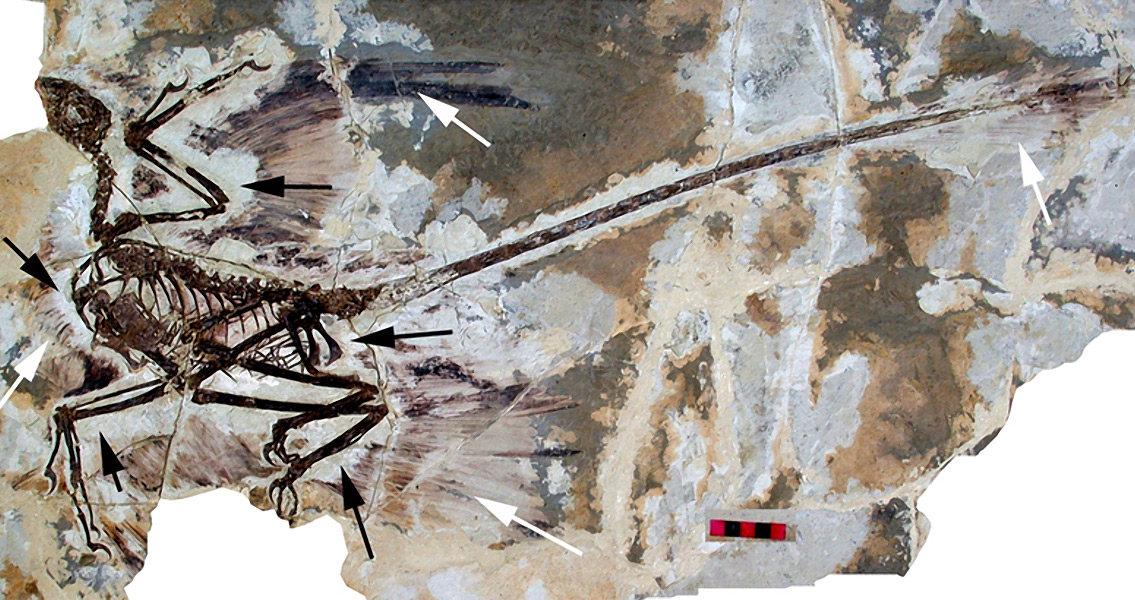
Zhenyuanlong by the researchers who examined it, the dinosaur was a close relative of the Velociraptor and lived around 125 million years ago. The fossil was discovered accidentally by a farmer in northeastern China, just like another recent discovery, this time of a bat-like dinosaur, in the same part of the country. In a paper published in Nature, researchers Steve Brusatte from the University of Edinburgh and Junchang Lu from the Chinese Academy of Geological Sciences detail the find, explaining it belonged to the dromaeosaurids, a clave of very close bird relatives including the Velociraptor – a species that gained notoriety with the Jurassic Park film series. All the specimens belonging to that clave have been found in northeastern China, in Liaoning province. So far they have been classified into five species groups, some of them containing just one species. Most of the dromaeosaurids were very small, the authors say in the paper, close in size to a modern cat or a medium-sized dog, and they all had long arms. The only exclusion from these characteristics was a fossil of a species named Tianyuraptor, which was close to two metres long and whose arms were around half the length of its legs. However, no evidence of feathers was found on that fossil. The newly discovered fossil, slightly smaller than a Tianyuraptor, was covered in feathers. This was a stroke of luck for the researchers as they had previously believed these larger bird ancestors were not very good at flying, if they could fly at all. The Zhenyuanlong, on the other hand, almost certainly could and did fly. The dinosaur had large wings and on them, as well as on its tail, the researchers found pennaceous feathers, also called quill feathers, which are essential for flying and are present in all modern flying birds. This led the team to suggest that the non-flying and flying dinosaurs were contemporaries during the early Cretaceous. As regards the individual characteristics of the fossil, examination revealed it was a young specimen based on the extent of fusion between different bones, including the vertebrae. The last year and a half has been very productive for palaeontologists who focus on the evolution of birds. In addition to the many discoveries of feathered dinosaurs, last year a team of scientists also linked dinosaur bones with bird bones, something that had not previously been possible because of the hard line distinguishing developmental biology from palaeontology. That team, however, was interdisciplinary and looked both at dinosaur fossil bones from the wrist and the wrist bones of modern bird embryos, identifying at least one bone that was present both in dinosaurs and in birds. For more information: “A large, short-armed, winged dromaeosaurid (Dinosauria: Theropoda) from the Early Cretaceous of China and its implications for feather evolution” Image courtesy of Wikimedia Commons user: David W. E. Hone, Helmut Tischlinger, Xing Xu, Fucheng Zhang]]>

Categories
Breaking News

Unique Bat-Like Dinosaur Found in China

scansoriopterygids, characterised by their long hands, that lived 160 million years ago. All fossilised remains from this group come from China and none of them have such a bone connected to their wrists. This, coupled with the fact that bats and flying squirrels have similar bones on their hands, led the scientists to the suggestion that the dinosaur had wings made from skin, not feathers. The team, including Xu Xing and Corwin Sullivan from the Chinese Institute of Vertebrate Paleontology and Paleoanthropology, and Zheng Xiaoting from Linyi University, named the creature Yi qi, meaning “strange wing”. They explained that at this stage it is impossible to determine whether the wings were used for flapping or gliding but in any case no other dinosaurs that have been discovered in this group of species had anything like them. Zheng said that Yi qi must have been a flight pioneer, given that it lived in the Jurassic era, long before feathered dinosaurs took to the air. However, the evidence is scarce, so it is likely that the publication detailing the find and the scientists’ conclusions will cause controversy. Although it has been long suspected that modern birds evolved from dinosaurs, until recently there was no hard evidence proving the link. Just last year, paleontologists completed a comprehensive family tree of a group of carnivorous dinosaurs from which birds are thought to have evolved. The tree reveals that, unlike with humans, this evolutionary process was gradual, with no “missing links”. Simply put, 150 million years ago a group of small dinosaurs started changing, acquiring bird-like skeletons, beaks and feathers. This process took tens of millions of years, accelerating over time. This, paleontologists explain, is because once the bird skeleton was in place, it greatly increased the potential for further evolution and diversity. For the sceptics, bird DNA has also been linked to dinosaur DNA, including that of the Tyrannosaurus Rex. In 2007, US researchers managed to extract collagen, a protein from the soft tissue of a bone, from the remains of a Tyrannosaurus that had lived 68 million years ago. The closest collagen type found in a modern animal was that in chicken bones. This discovery helped add more weight to the hypothesis that birds evolved from dinosaurs. Image courtesy of Wikimedia Commons user: H. Raab]]>