www.sciencedirect.com Image courtesy of Wikimedia Commons user: Kameraad Pjotr ]]>

www.sciencedirect.com Image courtesy of Wikimedia Commons user: Kameraad Pjotr ]]>
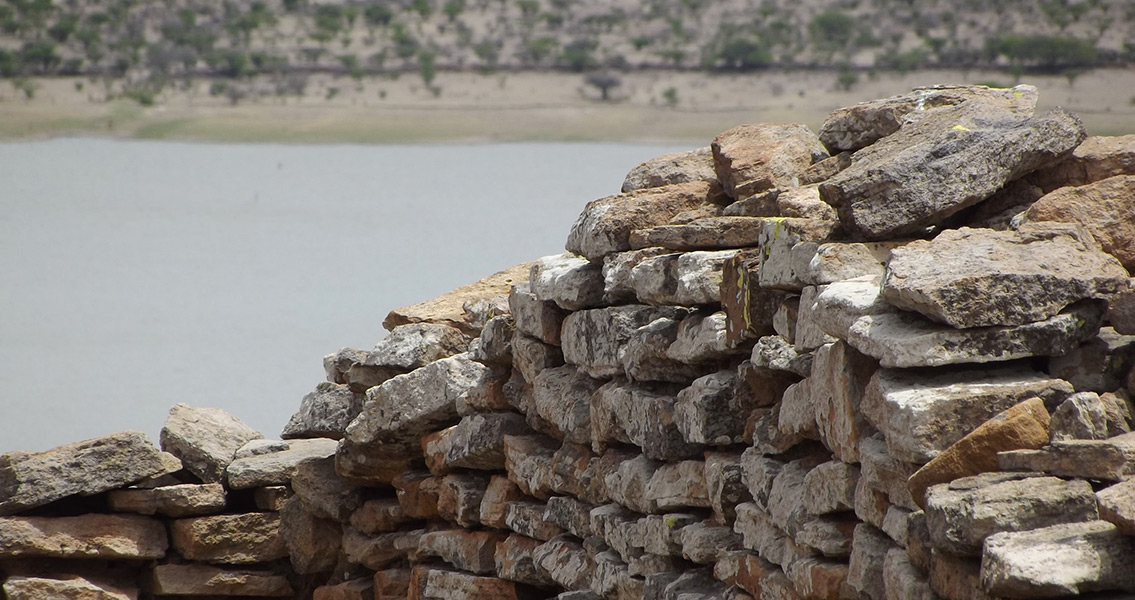
Proceedings of the National Academy of Sciences, looked at human remains in north west Mexico to develop an understanding of interethnic violence and attitudes towards the dead during the Epiclassic Period of Mesoamerican history. Accounts from Spanish settlers in the Northern Frontier of Mesoamerica in the sixteenth century reveal that the region was characterised by a broad range of ethnic identities. Studies by historical linguists since have speculated that the divergence in languages occurred in the region between 4,500 and 6,000 years ago, suggesting that ethnic divisions were deeply routed in the region before the arrival of European settlers. Over thirty languages were spoken in the Northern Frontier, which has led the authors of the new study; Ben A. Nelson and Debra L. Martin, to suggest that “the relation between any pair of regional centers probably was interethnic”. In a period of great social upheaval and change, such ethnic diversity undoubtedly led to conflict. In their article entitled ‘Symbolic bones and interethnic violence in a frontier zone, northwest Mexico, ca. 500–900 C.E.’, Nelson and Martin note that there is substantial evidence that between 500CE and 900CE (the Epiclassic Period), the struggle by people to assert themselves in a volatile, changing social landscape lead to “long-term social violence”. The Epiclassic Period started with the dissolution of the massive city of Teolihuacan, an event which foreshadowed a time of massive cultural change. Filling the power vacuum left by the centralised authority of Teolihuacan were small scale polities. Styles of architecture, clothing and iconography changed as they merged across boundaries. For their study, Nelson and Martin carried out detailed bioarchaeological analysis of the extensive deposits of disarticulated, commingled human bones that can be found in what was the Northern Frontier of Mesoamerica, focusing in particular on those found in what had been the polity of La Quemada. Through doing so they have gained a better understanding of the interethnic violence which dominated the region, and the relationships between communities and their dead. They conclude that the prominent presence of human bones in ceremonial centers and living spaces served a variety of cultural functions. Several clusters of bones from both males and females of all ages kept inside a temple at La Quemada were largely untampered with aside from some signs of simple de-fleshing. This lack of desecration points to the bones having been kept as a form of ancestor veneration. Conversely, other clusters showed signs of processing of long bones, and drilled crania, suggesting they had been displayed. The desecration was most likely part of a ritual which saw vanquished enemies put on public display. The authors claim that this was probably a tool for remembering past battles, but possibly also a means of trying to prevent further interethnic conflict. Nelson and Martin’s study provides insight into the extent of interethnic conflict in the Epiclassic Period. They conclude that the bones found at La Quemada are representative not only of the violence between different ethnic groups, but also the cultural relationship between the living and the dead. The authors’ conclusions have the potential to greatly further the understanding of the transition towards large, multicultural societies. For more information: www.pnas.org Image courtesy of Wikimedia Commons user: Oscarthepatron ]]>
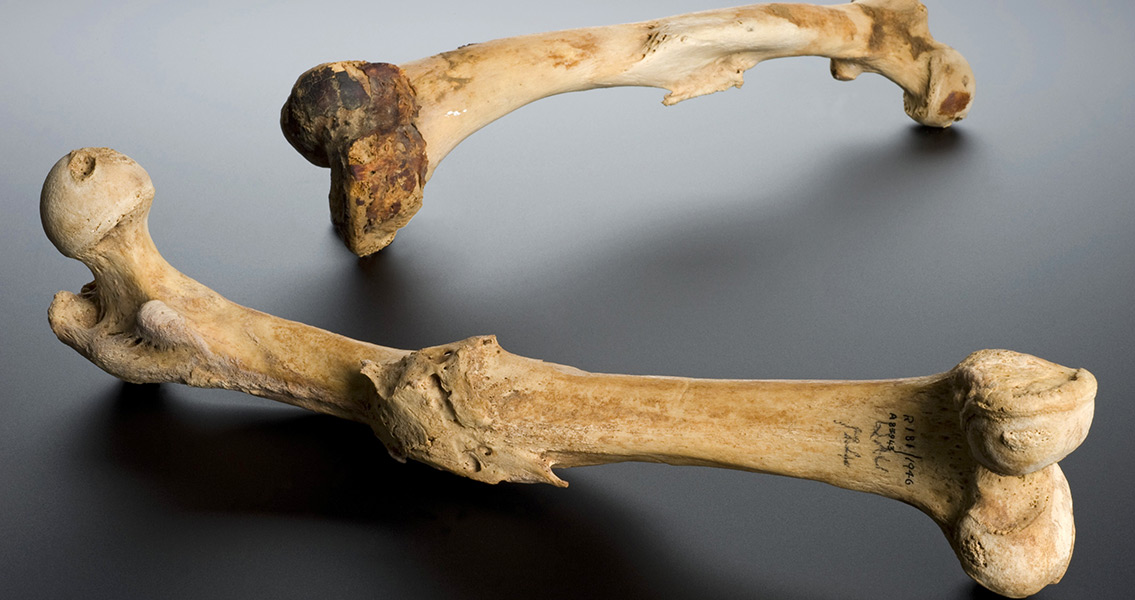
Antiquity. When the team began excavating the religious complex of Khonkho Wankane a decade ago, little was expected of the site. It was located a fair distance from the sunken temples of Khonkho, the original focal point of excavations. What Smith and Pérez uncovered, however, was truly remarkable. They found a circular building containing a floor strewn with a variety of exciting artefacts. Of particular interest were small blocks of a white, chalky substance. Tests revealed these blocks were quicklime, made by heating limestone. Quicklime, when mixed with water, has a particular use in that it can remove tissue and fat from bones. When exposed to air, quicklime-water mixtures turn into a white plaster. Within the mortuary, a number of body parts coated with this quicklime-water plaster were found. Nearly 1,000 teeth and small bones, mostly from feet and hands, were found along with pieces of skull. Outside the mortuary, carvings on a pillar were found which depicted a human with an exposed ribcage. The bones, when taken together with the quicklime found at the site, suggest that bodies were dismembered, stripped of flesh and cleaned in lime water. Bones were then taken away from the site, Smith and Pérez suggest. Dead family members were a prominent part of life in nearby communities. “Human remains were central to the creation of community,” Smith and Pérez state in their study. “The dead helped to anchor social identity in a collective understanding of the past and embedded lineage in the landscape.” People who stopped at Khonkho were probably no different, but they had mobile lifestyles and were unable to live near burial sites. The evidence from Khonkho Wankane suggests that these people took their dead on the road with them. “Khonkho Wankane,” Smith and Pérez wrote, “was a ritual centre to which the dead were brought for processing and then removed for final burial elsewhere.” For more information: www.journals.cambridge.org Image courtesy of Wikimedia commons user: Fæ ]]>


