Categories
Breaking News

Genome of Deadly 800 Year Old Infection Found in Byzantine Skeleton

Staphylococcus, a family that includes the highly pathogenic species S. aureus. Determined to find out more, the researchers sent the nodules to Hendrick Poinar at McMaster University, an expert in ancient DNA. “Amazingly, these samples yielded enough DNA to fully reconstruct the genomes of two species of bacteria, Staphylococcus saprophyticus and Gardnerella vaginalis, which infected the woman and likely led to her death,” said Poinar, in the press release. According to Pepperell, the newly reconstructed genome contributes to “a pretty short list of ancient bacteria — cholera, tuberculosis, leprosy, plague – for which we have DNA.” Joining forces, Poinar and Pepperell led a team to produce a “portrait” of the ancient infection. Their results, published in the journal eLife, provide a history of the infection Staphylococcus saprophyticus. What is most remarkable is the sheer amount of information extracted from the nodules. “Calcification made little tiny suitcases of DNA and transported it across an 800-year timespan”, explained Pepperell. “In this case, the amount and integrity of the ancient DNA was extraordinary. One typically gets less than 1 percent of the target organism.” According to the study, between 31 and 58 percent of the preserved DNA came from the woman’s infection. “The quality of the (genetic) data is unparalleled.” said Pepperell. It seems that the woman, who lived in the final years of the Byzantine Empire, died of chorioamnionitis, a bacterial infection of the placenta, amniotic fluid and membranes surrounding the fetus. The fact the researchers also identified ancient Y-chromosome DNA suggested she died during pregnancy, possibly as a complication associated with the male fetus she was carrying. By reconstructing the diseases’ genome, the team have gleaned remarkable new insights into rural life in the thirteenth century. The strain of Staphylococcus saprophyticus which infected the woman is different to the kinds found today, and is not typically associated with human disease in the modern world. Its discovery in the eight hundred year old remains suggests that Byzantine peasants lived with their livestock. “The strain from Troy belongs to a lineage that is not commonly associated with human disease in the modern world,” Explained Pepperell. “We speculate that human infections in the ancient world were acquired from a pool of bacteria that moved readily between humans, livestock and the environment.” Examination of other remains found in the graveyard helped fill out the image of the tough life endured in the countryside as the Byzantine Empire was coming to its end. “People were struggling with physical strains and infectious diseases and only a few lived beyond the age of 50,” explained Kiesewetter an archaeologist affiliated with Project Troia at Tüebingen University. “Many newborns did not survive infancy and almost all skeletons of children show signs of malnutrition and infection.” Image courtesy of Gebhard Bieg ]]>
Categories
Breaking News

New Insight into the Deadly Reach of Sixth Century Plague

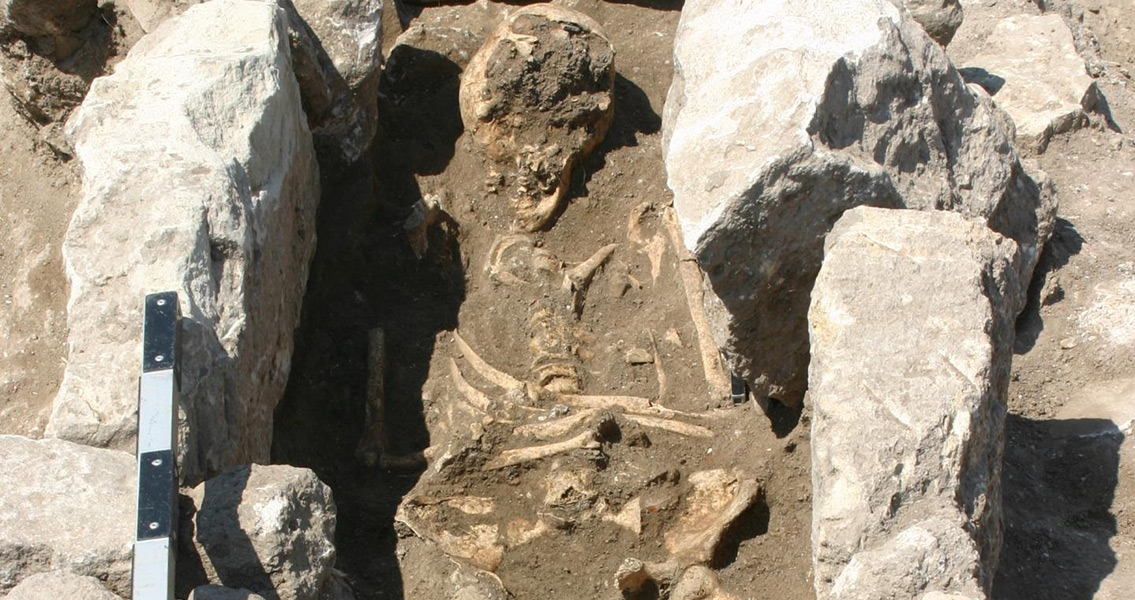
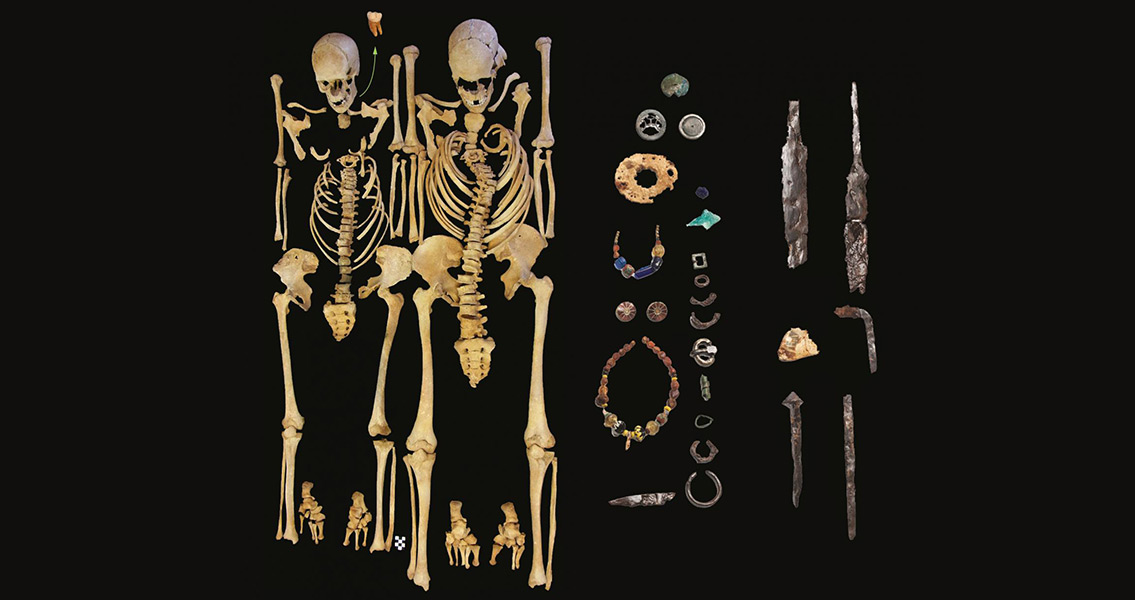
Yersinia pestis, the bacterium behind the Black Death, could also have been behind the sixth century plague epidemic. Michal Feldman, Johannes Krause and Michaela Harbeck, scientists based in Germany who are among the authors of the study, have recovered the bacterial culprit from sixth century skeletons found in Altenerding, an ancient southern German burial site near Munich. The genome found at Altenerding dates back to the beginnings of the outbreak of the plague, and confirms Yersinia pestis was the bacteria behind the outbreak. The new sequence reveals new insights into the molecular evolution of Yersinia pestis since the Byzantine period. It has also revealed new features that couldn’t be detected in a previous ‘draft genome’ of the bacterium, including 30 newly identified mutations and structural rearrangements unique to the Justinianic strain. “The fact that the archeological skeletons which gave these exciting insights were excavated over 50 years ago underscores the importance of maintaining well curated anthropological collections,” said Harbeck. “We were very fortunate to find another plague victim with very good DNA preservation in a graveyard just a few kilometers from where the individual analyzed in Wagner et al. [a recent study describing a draft genome] was found. It provided us with the great opportunity to reconstruct the first high quality genome in addition to the previously published draft genome.” Harbeck and colleagues’ results suggest that the strain of Yersinia pestis behind the Justinian Plague was more genetically diverse than previously thought. They are still unable to determine how and why the lethal pathogen reached Germany, however. Beyond simply analysing the development of a sixth century disease, the study could have far reaching applications. The authors have used the results to develop new guidelines that may improve the quality and authenticity of genetic data recovered from ancient pathogens. In addition, with plague re-emerging in certain regions of the world, the study provides a historical resource for the evolutionary changes, adaptation and human impact of the disease. “Our research confirms that the Justinianic plague reached far beyond the historically documented affected region and provides new insights into the evolutionary history of Yersinia pestis, illustrating the potential of ancient genomic reconstructions to broaden our understanding of pathogen evolution and of historical events,” said Feldman. “Our reanalysis of previous datasets stresses the importance of following strict criteria to avoid errors in the reconstruction of ancient pathogen genomes.” Image courtesy of State Collection of Anthropology and Palaeoanatomy Munich]]>

Categories
News

The Fall Of Constantinople

Categories
Breaking News

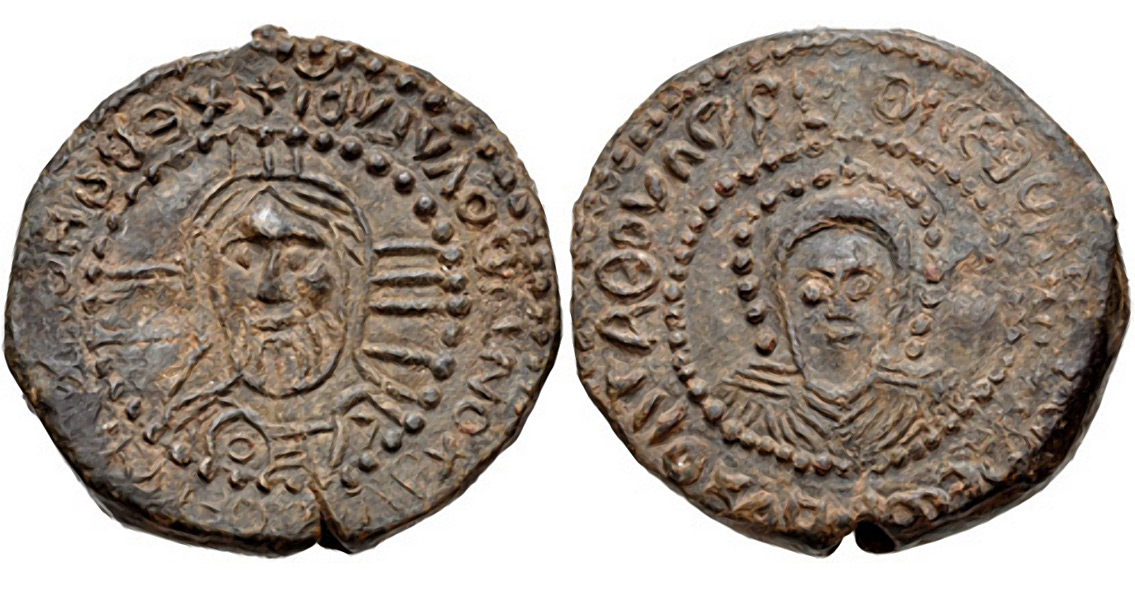
Byzantine Diplomacy Explored

History Compass, Ian Mladjov, from the Department of History, Bowling Green State University, Ohio, USA, noted that “when it comes to diplomatic relations, the phrase ‘too close for comfort’ perfectly describes the relationship between the medieval Byzantine and Bulgarian states in the Balkan peninsula.” The Byzantine Empire was the predominantly Greek-speaking remains of the Eastern Roman Empire. Its citizens referred to themselves as ‘Romans’ and the ruler retained the title of ‘Emperor’. Mladjov argues that the conflict between Bulgaria and the Byzantine Empire was about more than simple territory or wealth. The bloody conflict was rooted in prestige. Interestingly, the siege of Constantinople in 912 did not end in an agreed peace. At a ceremony between the Patriarch of Constantinople and Simeon, the Bulgarian king was placated and given a crown, although not the imperial title. Simeon returned home after the meeting, laden with gifts, but with no formal peace treaty being signed. After returning to Bulgaria, Simeon began using the imperial title and, curiously, even styled himself ‘Emperor of the Romans.’ In all contemporary sources, it is made very clear that Simeon was never offered the title of emperor. In fact, it appears that Byzantine rulers went to great lengths to preserve the Byzantine emperor’s exclusive monopoly on the Roman imperial title. “For a long time, the significance and importance of [this] event were overlooked,” Mladjov explains. Much more attention has been paid to subsequent events, particularly Simeon’s adoption of the imperial title. For Mladjov, the crowning of Simeon by the Patriarch is of crucial importance, revealing a tremendous amount of information about how the Byzantine Empire conducted itself with its neighbours. “Clearly, the form a crown took was less important than the coronation itself,” Mladjov writes. “Whatever the idiosyncrasies of Simeon’s coronation by Patriarch Nicholas in 913, it must have been considered acceptable to him. The implications of our sources are clear: Simeon had been recognized as emperor, apparently only of his own people, by the Byzantine court and left for home in peace.” Simeon seems to have sought parity with the Byzantine Empire. Mladjov argues that Simeon identified recognition as fellow emperor as a means to redress the situation where the Byzantines claimed authority over Bulgaria. Diplomatic relations in the medieval world were rife with states posturing for status. The Byzantine Empire, in particular, wanted to maintain an aura of superiority to other states. As this episode shows, the Empire’s neighbours desired parity and respect from the Byzantines. Sometimes, this was expressed in demands for recognition as fellow emperors. The Byzantine Empire’s response to this was impressively nuanced, they crowned Simeon I as emperor and of the same rank as the Byzantine emperor. Importantly, however, Byzantium never conceded the title of emperor of the Romans; instead they crowned Simeon the emperor of his own, non-Roman people. For more information: www,onlinelibrary.wiley.com Image courtesy of Wikimedia Commons user: Cplakidas ]]>