Categories
Breaking News

Mystery Ancient Fossil Identified

Canadia sparsa, a misnomer as he had mistakenly identified it as an ancestor of today’s earthworms and leeches. The specimen was reported to have had seven pairs of spiny legs and a row of soft tentacles along its back. It was considered to be an evolutionary misfit because of its features. Now scientists have reclassified the species as a worm. About sixty years after its discovery, Canadia sparsa was renamed Hallucigenia sparsa because scientists had started to disagree with Walcott’s annelid classification. Twenty years later, in 1991, Lars Ramskold of the Swedish Museum of Natural History led a team that realized that the tentacles reported to be on the specimen’s back were actually legs, what were thought to be spiny legs were just spines, and the featureless grey head was actually the tail. They argued that the fossil had initially been interpreted backwards and upside-down. Now scientists from Cambridge University have concluded that Hallucigenia was an ancestor of the velvet worms mostly found in tropical rainforests around the world, ending fears that the specimen signified an evolutionary dead end. The scientists at Cambridge used the specimen’s claws to identify the Cambrian species. Based on fossil records the Cambrian Radiation, or Cambrian Explosion, refers to the rapid appearance of major phyla in the animal kingdom, around 530 million years ago. Before this, life on earth was mostly made up of single-celled organisms, which sometimes organized themselves into colonies. Over a period of 70 to 80 million years, the rate of evolution sped up to develop the species that are similar to the animals we see today. The Cambrian expansion ended about 488 million years ago. Since the 1970s, the Hallucigenia was thought to be closely related to the velvet worm, but evidence linking them was hard to find, plus the Hallucigenia’s claws hadn’t been studied in detail like they were recently. It was through analysis of the claws that the connections between the prehistoric creature and today’s creatures were drawn. The scientists found that the spines on the worm’s back were made of a keratin-like substance, similar to that in our fingernails. This can also be found in the jaw regions of today’s velvet worms. Modern velvet worms are themselves very unusual creatures. They are divided into eighteen species which all prey on smaller insects. They capture their prey by secreting a sticky substance. They are also able to produce live young. One of the biggest talking points will be the link found between onychophorans (velvet worms) and arthropods (insects, crustaceans and arachnids). The Hallucigenia find shows that they are distant cousins. Research shows that arthropods are actually closer relations to water bears, which are able to survive vacuums and sub-zero temperatures. The Cambridge scientists see the recent discovery as a bridge linking pre-Cambrian organisms to what we have today. The study was published in the journal “Nature”. ]]>

Categories
News

New Study on Mankind’s Road to Civilisation

Categories
Breaking News

Dinosaurs May Have All Had Feathers

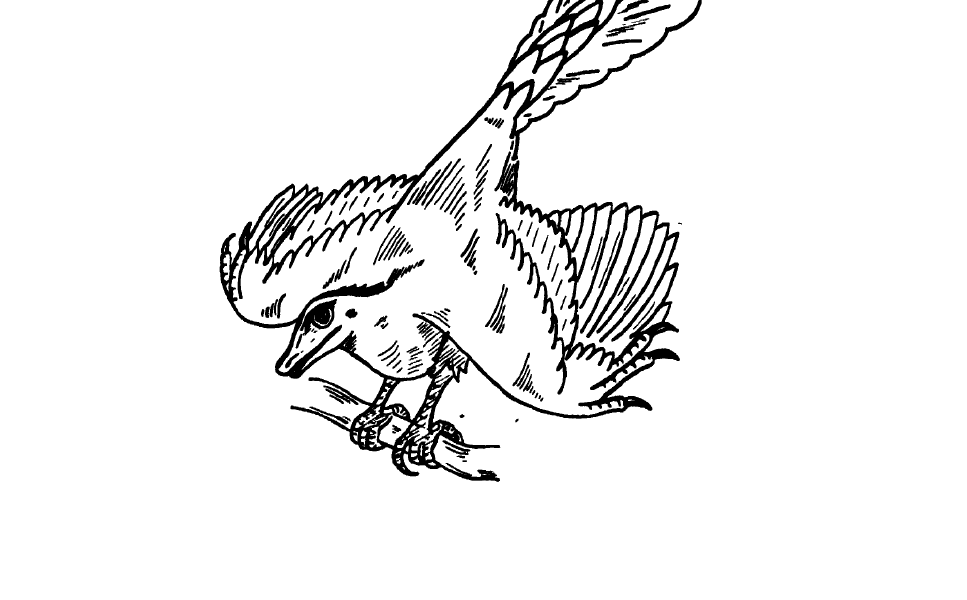
Kulindadromeus zabaikalicus, which had feathers. For nearly two centuries it has been taught that dinosaurs were large reptiles that had tough scales and a lizard-shaped head. The recent discovery may prove years of schoolwork wrong. The dinosaur found was 4.5 feet (1.5m) long, beaked, with large legs, short arms, a long tail and is thought to have been bipedal. This is actually not the first feathered dinosaur of its kind to be found. Way back in the 1990s, scientists have found at least five species of dinosaurs in China that had feathers. These dinosaurs were theropods (a type of dinosaur) and  carnivores. The infamous Tyrannosaurus rex is a part of this group. However, the dinosaur that was recently found was a herbivore and from a different dinosaur family, which meant that it could not have been related to the older feathered species found. The Kulindadromeus must have evolved differently than the rest of these dinosaurs, and hence many other dinosaurs may be the same way. Because of this, scientists are rethinking what dinosaurs may have looked like. The Kulindadromeus genus of dinosaur lived in Siberia, near the Kulinda River. Its legs and elbows were feathered, and there were streamlined feathers on its back. At least six skulls of this dinosaur was found in a fossil bed at the bottom of a lake, and they were all juveniles, which has scientists believe that they did not die in a catastrophe, but rather separate events. The skulls were buried under volcanic ash, preserving much of the feather imprints on the fossil bones. “Kulindadromeus” means “Kulinda River running dinosaur”, while “zabaikalicus” relates to the region of Siberia where it was discovered, Zabaikalsky Krai. The skin of the dinosaur resembled the skin of some birds, which provides even more evidence that today’s birds have evolved from the dinosaurs, according to the study. Lead author on the paper, Pascal Godefroit, is a paleontologist from the Royal Belgian Institute of Natural Science in Brussels. He and his colleagues state that while this find is significant, more studies should be done on this subject. There is a lack of evidence that feathers developed in all dinosaurs, since fossil records with feathers are in the minority. Before this, birds were thought to have come from the line of the archaeopteryx and other winged creatures. These feathers may have served as a method for insulation, such as in the case of Kulindadromeus, which lived in colder climates. Larger dinosaurs also may have had fewer feathers than smaller dinosaurs, as they would conserve heat more easily. We’re still a long way off from confirming whether or not all dinosaurs had feathers, but what it does mean is that feathers did not start off with birds, instead they evolved very early in history with the dinosaurs.]]>

Categories
News

The Neanderthals Were Omnivores, According to Recent Study

PLOS ONE online journal, the paper written by a group of geologists stated that the feces of the Neanderthals contained high portions of plant sterols which show that they did indeed eat plants. They also found much higher portions of cholesterol and coprostanol which supports the idea of high meat consumption. The scientists in this study were Ainara Sistiaga, a geo-archaeologist from the University of La Laguna in Tenerife, Spain, and Roger Summons, a geobiologist from the Massachusetts Institute of Technology in Cambridge, Massachusetts, USA. They looked at different biomarkers of meat and plants in fossilized feces from five different places at El Salt. This is more indicative of an omnivorous diet than the study that found the nitrogenous compounds in the teeth of the Neanderthals, Sistiaga states, as these biomarkers were in their feces. Only humans and other primates are able to convert cholesterol to copropostanol in the form of 5B-stigmastanol, hence why they were so sure that the feces were of human origin and not another mammal. They also made sure that it wasn’t any other primate by looking for any bones belonging to other primates in the surrounding area, and found none. The researchers also looked at the parasites and coprolites in the soil, and discovered only species associated with humans. Some scientists are not convinced with this finding, however. Michael Richards, paleoanthropologist at the University of British Columbia, states that it is difficult to identify the species of coprolites, and that animals passing by that area over thousands of years could have passed by and even settled in the area Neanderthals were, which would produce feces with similar biomarkers as the Neanderthals. Amanda Henry, paleobiologist at the Max Planck Institute for Evolutionary Anthropology in Leipzig, Germany, thinks the study is very exciting and could disprove the idea that Neanderthals were only carnivores, but says the study is incomplete as the researchers would have been better off using DNA or parasites unique to humans to make the findings conclusive.]]>