Categories
Breaking News

History of Human Migration to be Rewritten? – The History News of the Week

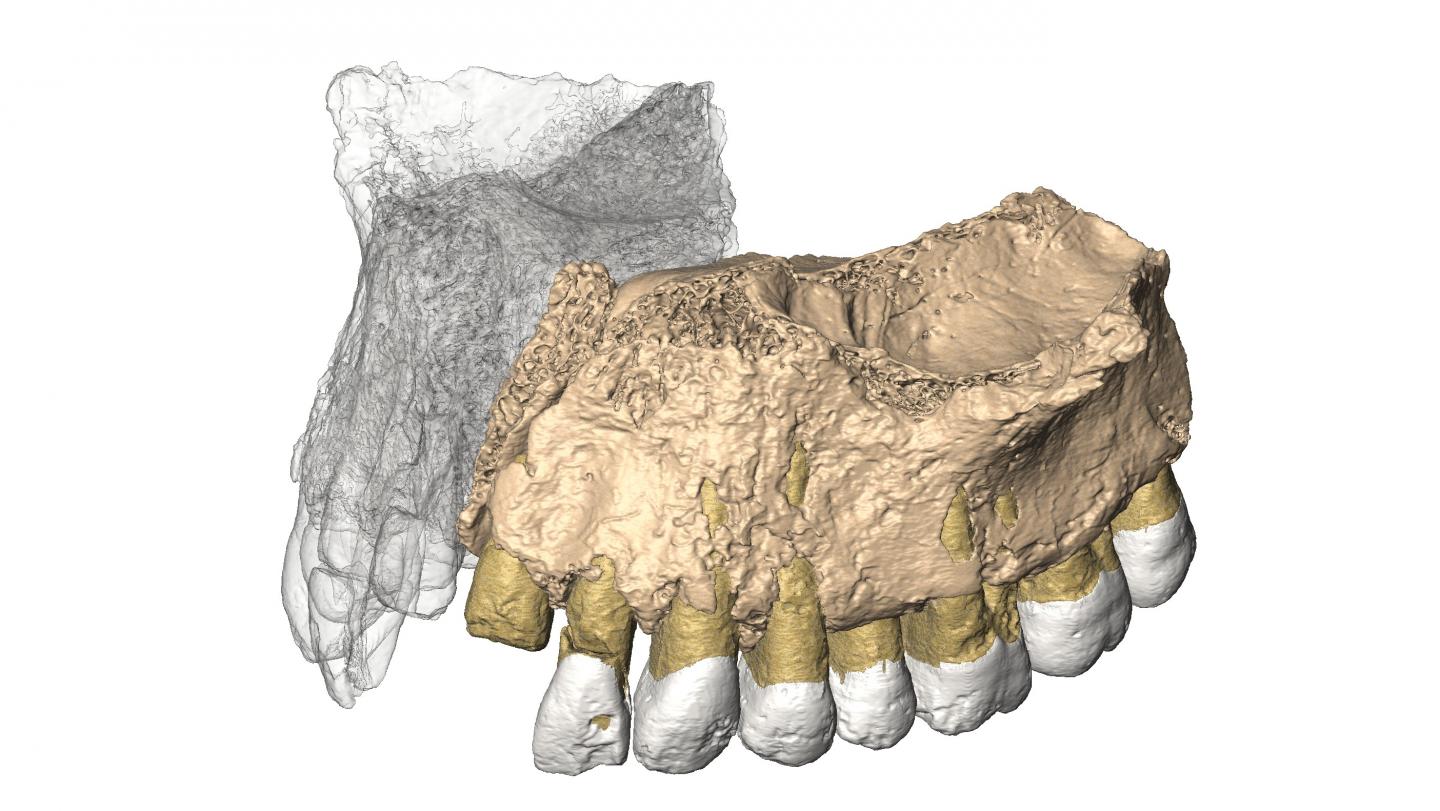
Science. According to Hershkovitz, the findings provide new context for a range of other recent discoveries. “Our research makes sense of many recent anthropological and genetic finds,” Prof. Hershkovitz said. “About a year ago, scientists reported finding the remains of modern humans in China dating to about 80,000-100,000 years ago. This suggested that their migration occurred earlier than previously thought, but until our discovery at Misliya, we could not explain it. “Numerous different pieces of the puzzle — the occurrence of the earliest modern human in Misliya, evidence of genetic mixture between Neanderthals and humans, modern humans in China — now fall into place,” he continued. Horse Skeleton in South Florida Museum Horse Evolution Mystery Solved? The genetic ancestors of the modern horse were animals with five toes. Generally, it is believed that horses evolved to have fewer digits, but new research is challenging that theory and arguing that remnants of the five toes are still present in modern hooves. Humans and horses actually evolved from the same common ancestor, a creature with five digits. As a consequence of living on open grassland, horses adapted to move across these plains. Scientist’s widely believe that this adaption saw horses evolve to have fewer digits. The first horse only had four digits, its later descendant had three, while modern horses have just a central digit, known as the metacarpal. In research published in a recent issue of Royal Society Open Science, a team of scientists are proposing that rather than horses simply losing four digits, all five merged to form the compacted forelimbs with hooves seen today. Currently, scientists accept that splints, small bones found along the outer sides of the metacarpal in modern horses, are partially formed remnants of second and fourth digits. Tapering mid-way down the metacarpal, these fragments were inherited from an earlier ancestor, but ceased to develop into fully formed digits in modern horses. The authors of the new paper claim that this theory is incomplete, failing to account for the animals’ first and fifth digits. “With a distinct surface from the metacarpal, we know the splints on today’s horses to be the remnants of the second and fourth digits,” said Nikos Solounias, a paleontologist from New York Institute of Technology (NYITCOM) and an author on the study. “However, these partially formed digits also appear to contain their own elevated surfaces which hold additional evolutionary clues. We find these ridges, located on the posterior of each splint, to be the partially formed remains of the first and fifth digits, which were once connected to the cartilages of the hoof.” Key to the research are the famous Laetoil footrprints in Tanzania, which show that the famous, eight-million-year-old horse known as Hipparion primigenium walked alongside early humans and had three digits. According to a NYITCOM statement, Solounias analysed the footprints and came to the conclusion that Hipparion actually had five compacted toes, the forelimb divided into five sections – suggesting the small toes had binded together. “Interestingly, we not only find hints of the missing digits on the modern horse, but also its ancestors, such as Hipparion and Mesohippus, two species believed to have three toes,” said Solounias. Neurovascular evidence has provided further support to the NYITCOM researchers’ theory, with dissections of modern equine foetus forelimbs revealing a greater number of arteries and nerves than would be expected in a single digit. “If today’s horse does indeed have one digit per forelimb, we would expect each forelimb to have a total of two veins, two arteries, and two nerve bundles,” said Melinda Danowitz, a recent NYITCOM graduate who worked with Solounias on the study. “However, our dissections found between five and seven neurovascular bundles per forelimb, suggesting that additional toes begin to develop, but do not become fully differentiated.” King Ramses Statue Moved to New Home A colossal, 83 tonne, 3,200 year old statue of the Ancient Egyptian King Ramses II has been moved to a new home, according to Reuters. The complex operation, which saw the statue moved 400m to Cairo’s new Grand Egyptian Museum, required army engineers and specialist contractors. Reuters reports that the statue was put inside a cage, mounted on a truck and suspended from a steel beam to help reduce the impact of any jolts during the journey. Road surfaces on the route were treated with special materials to ensure they could adequately take the massive weight of the statue. The entire operation cost 13.6 million Egyptian pounds ($770,000). The statue was first discovered at the Mit Rahina archaeological site in 1820. Brought to Ramses Square in Cairo in 1955, it was moved again in 2006 due to pollution and congestion, according to Reuters. It was placed in a storage area away from public view, until now. It will be the first site visitors to the Grand Egyptian Museum will see. The museum is set to partially open this year, before its full launch in 2022. Featured image: Reconstruced maxilla from microCT images of the jawbone discovered in Israel. Image credit: Gerhard Weber, University of Vienna, Austria]]>
Categories
Breaking News

Sharing Rather Than Migration Behind Stone Age Revolution

Current Biology, the latest study suggests that migration was not a ‘universal driver’ for the spread of farming through Europe. Although archaeology shows that the technologies of the Neolithic Package did reach the Baltic region, the genetics of the populations there remained the same as those of the hunter-gatherers throughout the Neolithic. “Almost all ancient DNA research up to now has suggested that technologies such as agriculture spread through people migrating and settling in new areas” said Andrea Manica from the University of Cambridge, a senior author on the study. “However, in the Baltic, we find a very different picture, as there are no genetic traces of the farmers from the Levant and Anatolia who transmitted agriculture across the rest of Europe.” “The findings suggest that indigenous hunter-gatherers adopted Neolithic ways of life through trade and contact, rather than being settled by external communities. Migrations are not the only model for technology acquisition in European prehistory.” The team reached their conclusion by extracting ancient DNA from a number of remains discovered in Latvia and Ukraine dating to between 5,000 and 8,000 years old. The remains spanned the Neolithic period, and the transition from a hunter-gatherer way of life to one based on food production. Fascinatingly, the team’s results also shed new light on the spread of Indo-European languages. Although showing no influence from Levantine farmers, one of the Latvian genomes did show signs of an external influence which the scientists believe could be from the Pontic Steppe in the East. Lead author Eppie Jones, from Trinity College Dublin and the University of Cambridge, explained: “There are two major theories on the spread of Indo-European languages, the most widely spoken language family in the world. One is that they came from the Anatolia with the agriculturalists; another that they developed in the Steppes and spread at the start of the Bronze Age.” “That we see no farmer-related genetic input, yet we do find this Steppe-related component, suggests that at least the Balto-Slavic branch of the Indo-European language family originated in the Steppe grasslands of the East, which would bring later migrations of Bronze Age horse riders.” Combined with archaeological data, the new study suggests the arrival of the Neolithic Package to the Baltic region was a much more gradual process than elsewhere in Europe, facilitated by trade networks rather than rapid migration and interbreeding. Manica concluded: “It seems the hunter-gatherers of the Baltic likely acquired bits of the Neolithic package slowly over time through a ‘cultural diffusion’ of communication and trade, as there is no sign of the migratory wave that brought farming to the rest of Europe during this time. “The Baltic hunter-gatherer genome remains remarkably untouched until the great migrations of the Bronze Age sweep in from the East.”]]>

Categories
Breaking News

Fossils Support Human’s Levant Route into Europe

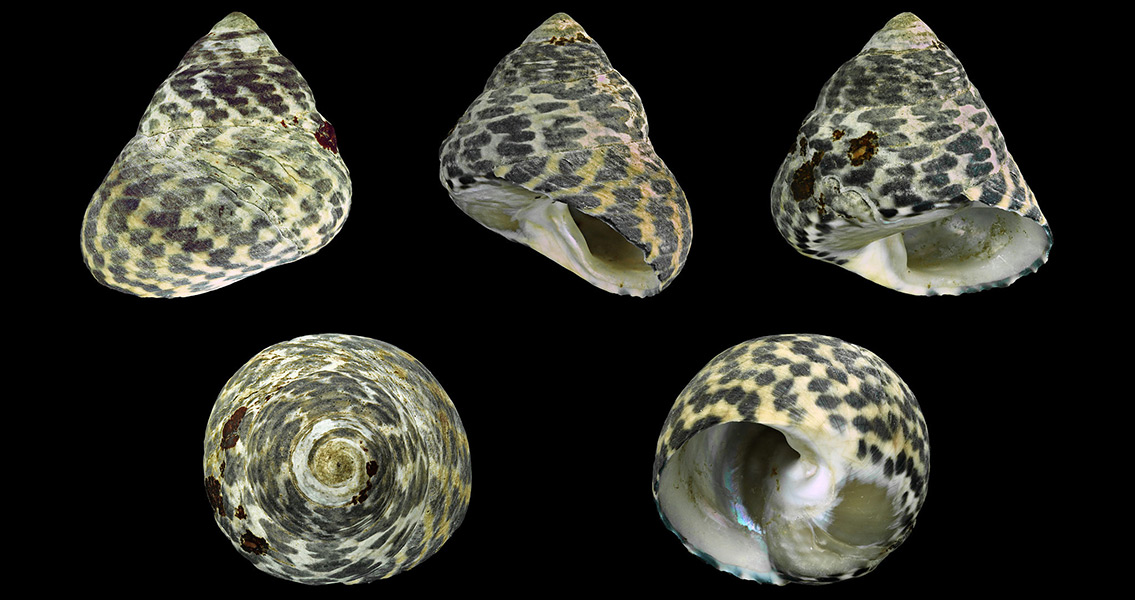
Phorcus turbinatus, an edible mollusc that early humans ate, as evidenced by the broken upper shells of the animals. The fossils were uncovered at the Ksar ‘Akil site, where two sets of human remains from the Upper Paleolithic had been discovered previously. Combining the age of the mollusc fossils with that of the human remains, the researchers concluded that modern people lived in the Levant as early as 45,900 years ago, according to a press release by the Max Planck Institute. This is before the time modern humans settled in Europe, so the suggestion that they spread across the continent from the Near East was, according to the researchers, the only logical one. Another important suggestion from the study is the timing of this spread. This has also been subject of debate for a long time, mainly because there is scarce human fossil evidence from the early Upper Paleolithic period, Jean-Jacques Hublin, co-author of the study, said in the press release. Two human fossils, however, were found at the Ksar ‘Akil and have now been dated more accurately. One of the fossils, a man nicknamed Egbert by the team who discovered him, lived in the region around 43,000 years ago, during the early Upper Paleolithic. The other fossil, of a woman dubbed Ethelruda, was older, dated back to 45,900 years ago, a period that researchers call the initial Upper Paleolithic. Both fossils were associated by researchers with tools typical for the Upper Paleolithic and both were older than any Paleolithic human fossils from European archaeological sites. This, says co-author Johannes van der Plicht from the University of Groningen, suggests that modern human’s entry into Europe took place some time between 55,000 and 40,000 years ago. The conclusions of the scientists about the route of dispersal into Europe were supported by radiocarbon dating of the molluscs, an endeavour usually extremely difficult on shell remains. The team, however, used a new approach, as explained by Van der Plicht and another co-author, Marcello Mannino. They combined radiocarbon dating with biochemical datasets for more accurate results, including a technique examining the state of amino acids contained in the shells. What these revealed was a confirmation of the dating of the human fossils: modern humans lived in what is today Lebanon before they ventured northwest into Europe and spread across it, displacing the continent’s former masters, the Neanderthals. Image courtesy of Wikimedia Commons user: H. Zell]]>