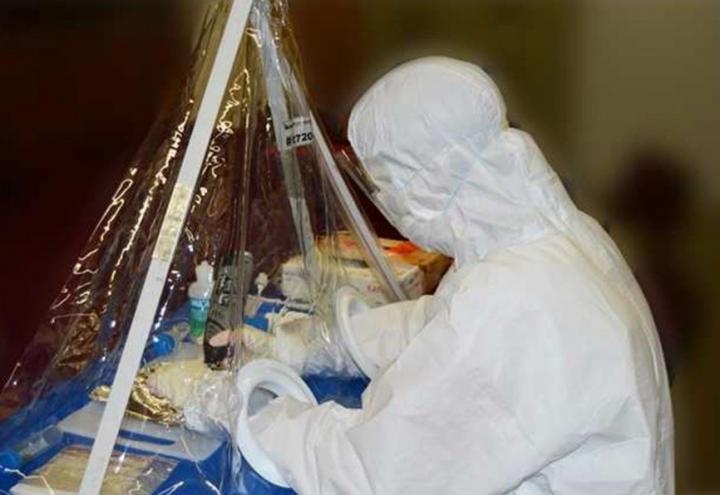
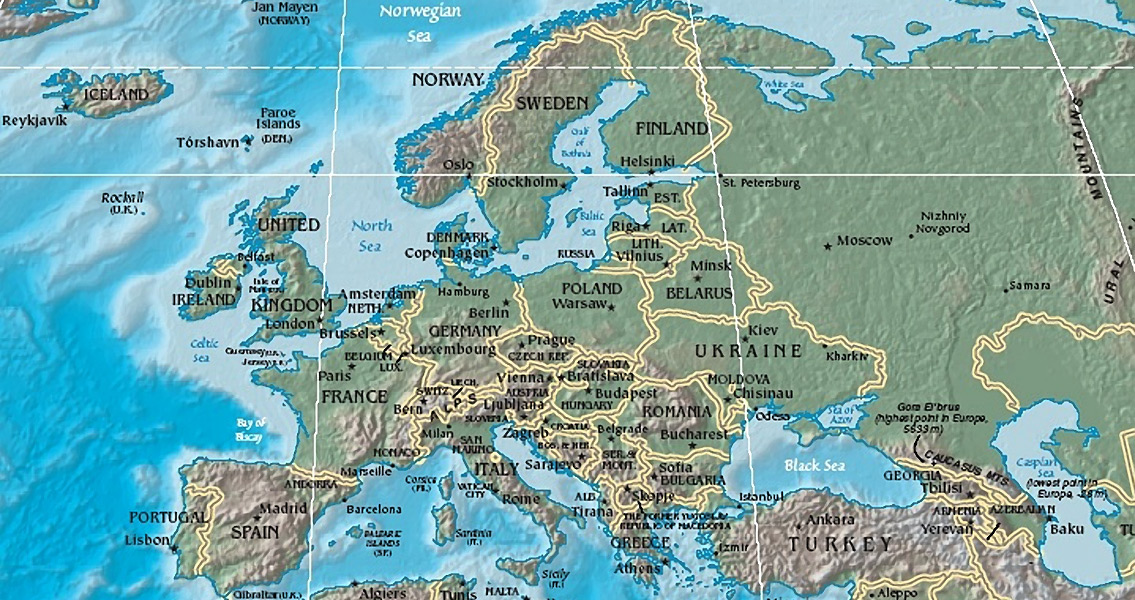
Modern Humans Emerged 300,000 Years Ago A new study claims that modern humans originated much earlier than previously thought, suggesting that the split between modern humans and earlier human groups occurred between 350,000 and 260,000 years ago. Researchers from the Universities of Witwatersrand and Johannesburg in South Africa, and the University of Uppsala in Sweden, used the 2000-year-old remains of a boy discovered in Ballito Bay in KwaZulu-Natal during the 1960s to make their conclusions. They reconstructed the Ballito Bay child’s entire genome, as well as the genome of six other individuals from KwaZulu-Natal who lived between 2300 and 300 years ago. Because the child from Ballito Bay was of hunter-gatherer descent, his DNA could be used to estimate that the split between earlier human groups and modern humans took place between 350,000 and 260,000 years ago. “This means that modern humans emerged earlier than previously thought”, says Mattias Jakobsson, population geneticist at Uppsala University, who headed the project together with Marlize Lombard from the University of Johannesburg. Significantly, the 350,000 to 260,000 years ago period coincides with the Florisbad skull, which would have been a contemporary of the small brained Homo naledi in what is now South Africa. “It now seems that at least two or three Homo species occupied the southern African landscape during this time, which also represents the early phases of the Middle Stone Age”, said Professor Marlize Lombard from the University of Johannesburg, who initiated the research. Interestingly, the fossil, ancient DNA and archaeological records indicate that the transition from archaic to modern humans might not have occurred in only one place in Africa. It seems likely that regions including southern and northern Africa also played a role. “Thus, both palaeo-anthropological and genetic evidence increasingly points to multiregional origins of anatomically modern humans in Africa, i.e. Homo sapiens did not originate in one place in Africa, but might have evolved from older forms in several places on the continent with gene flow between groups from different places”, said Carina Schlebusch, who worked on the study. The team’s research has been published in a recent edition of the journal Science. Sabre-toothed Kittens Born with Thicker Bones New research claims that although sabre-toothed kittens were born with thicker bones than contemporary kittens, they had a similar pattern of bone development. Previous research has pointed towards sabre-toothed cats from the Pleistocene Era having more robust bones than other wild cats of the time. However, how and when these stronger bones developed remained a mystery. Katherine Long from California State Polytechnic University, USA and colleagues measured and analysed hundreds of bones at various stages of development from both Smilodon fatalis and the contemporary tiger-sized cat Panthera atrox in the La Brea Tar Pits museum. It was discovered that rather than the difference in strength of the cats’ bones developing as the animals matured, the sabre-toothed cats were in fact born with more robust bones. Like other primitive cat species, Smilodon fatalis’ bones grew longer and slenderer as the creature aged. “Sabre-tooth cats had extraordinarily strong front limbs for tackling and subduing prey before they slashed their throats or bellies with their saber-like canine teeth,” said study co-author Don Prothero. “Using the extraordinary collection of limb bones of saber-tooth kittens at La Brea tar pits, we found that their limbs don’t become more robust as they grew up, but instead retain the stereotypical growth pattern where the limbs grow longer more quickly than they grow thick. To compensate, saber-tooth kittens were born with unusually robust limbs and retained that pattern as they grew.” The research has been published in the open access journal PLOS. Ancient Scandinavian Farmers Exchanged Terminology with Indo-Europeans New linguistic research shows that the proto-Indo-European language that arrived in Europe around 5,000 years ago absorbed vocabulary from the local languages it ultimately replaced. When the Yamnaya culture migrated into Europe from the Caspian Sea it brought with it the proto-Indo-European language that would replace local languages over the coming millennia and form the basis of most modern European languages. Researchers from the University of Copenhagen have now shown that local cultures also influenced the new language, particularly in southern Scandinavia where Neolithic farmers made lasting contributions to Indo-European vocabulary before their own language went extinct. Historical linguists generally agree that many of the words in modern European languages can be traced back to the Yamnaya people, however, not all of the words in modern European languages are of proto-Indo-European origin. There are words for flora and fauna which must have been incorporated into Indo-European languages from local cultures, which raises questions as to where this exchange took place. According to the new study published in the American Journal of Archaeology by archaeologist Rune Iversen and linguist Guus Kroonen from the University of Copenhagen, southern Scandinavia 2,800 BCE provides a perfect setting for such an exchange. “The archaeological evidence tells us that between 2,800 and 2,600 BCE two very different cultures co-existed in southern Scandinavia: there was the local, Neolithic culture known as the Funnel Beaker Culture with its characteristic funnel-shaped ceramics and collective burial practices and the new Single Grave Culture influenced by the Yamnaya culture. The Funnel Beaker Culture was eventually superseded by the Single Grave Culture, but the transition took hundreds of years in the eastern part of southern Scandinavia, and the two cultures must have influenced each other during this time, ” said Iversen. Kroonen points to a number of words which are clearly not derived from an Indo-European language. “There is a cluster of words in European languages such as Danish, English, and German – the Germanic languages – which stand out because they do not conform to the established sound changes of Indo-European vocabulary. It is words like sturgeon, shrimp, pea, bean and turnip that cannot be reconstructed to the proto-Indo-European ancestor,” Guus Kroonen explained. “This tells us that these words must have entered Indo-European after it had spread from the Caspian steppe to the various parts of Europe. In other words: the new Single Grave Culture is likely to have adopted much farming and hunting terminology from the local Funnel Beaker Culture that inhabited southern Scandinavia and Denmark till around 2,600 BCE. When Indo-European in Northern Europe developed into Proto-Germanic, the terminology for local flora and fauna was preserved, which is why we know and can study the terms today.” Featured image: Dr. Helena Malmström (Uppsala University) sampling in South Africa for ancient human DNA. Credit: Mattias Jakobsson (Uppsala University) ]]>