Categories
Breaking News

Revealed: How Leprosy Came To Britain

PLOS ONE. The man’s skeleton shows the signs of having been afflicted by leprosy: the toe bones have narrowed and there is damage to the joints. By conducting modern DNA testing the team confirmed that the man, probably aged in his twenties, suffered from leprosy and may well have come to Britain from southern Scandinavia. The team tested the skeleton for bacterial DNA and lipid biomarkers which are characteristic of leprosy. What they found was quite remarkable. “Not every excavation yields good quality DNA,” Professor Mike Taylor, a Bioarchaeologist from the University of Surrey, said, “but in this case, leprosy DNA isolated from the skeleton was so good it enabled us to identify its strain.” Results of the tests showed the specific lineage which the leprosy strain belonged to. The lineage, called 3I, has previously been found in burial sites from Medieval Scandinavia and southern Britain. In the case of the team’s research, the leprosy strain comes from a much earlier period, dating from the fifth or sixth Century CE. By comparing the identified fatty molecules known as lipids from the different leprosy bacteria, the team confirmed that the 3I leprosy found in the Great Chesterford skeleton was different to later strains. Isotopic analysis of the man’s teeth also provided some interesting results. It seems that the Great Chesterford man did not come from Britain; he most likely grew up elsewhere in northern Europe, perhaps southern Scandinavia. It is possible, therefore, that he brought a Scandinavian strain of the leprosy bacterium with him when he traveled to Britain. Project leader Dr Sarah Inskip of Leiden University stated: “The radiocarbon date confirms this is one of the earliest cases in the UK to have been successfully studied with modern biomolecular methods. This is exciting both for archaeologists and for microbiologists. It helps us understand the spread of disease in the past, and also the evolution of different strains of disease, which might help us fight them in the future. We plan to carry out similar studies on skeletons from different locations to build up a more complete picture of the origins and early spread of this disease.” Leprosy today is mainly confined to tropical areas, but in the past it occurred in Europe. Human migration helped to spread the disease, with skeletons from the seventh century onward in particular exhibiting signs of it. The origins of leprosy and how it spread are, however, shrouded in mystery. The recent study of the Great Chesterford skeleton has given us a fantastic opportunity to understand leprosy and, in particular, how it spread. For more information: www.journals.plosone.org Image courtesy of Wikimedia Commons user: Netha Hussain]]>
Categories
Breaking News

New Research Explores Jews in Abbasid Baghdad

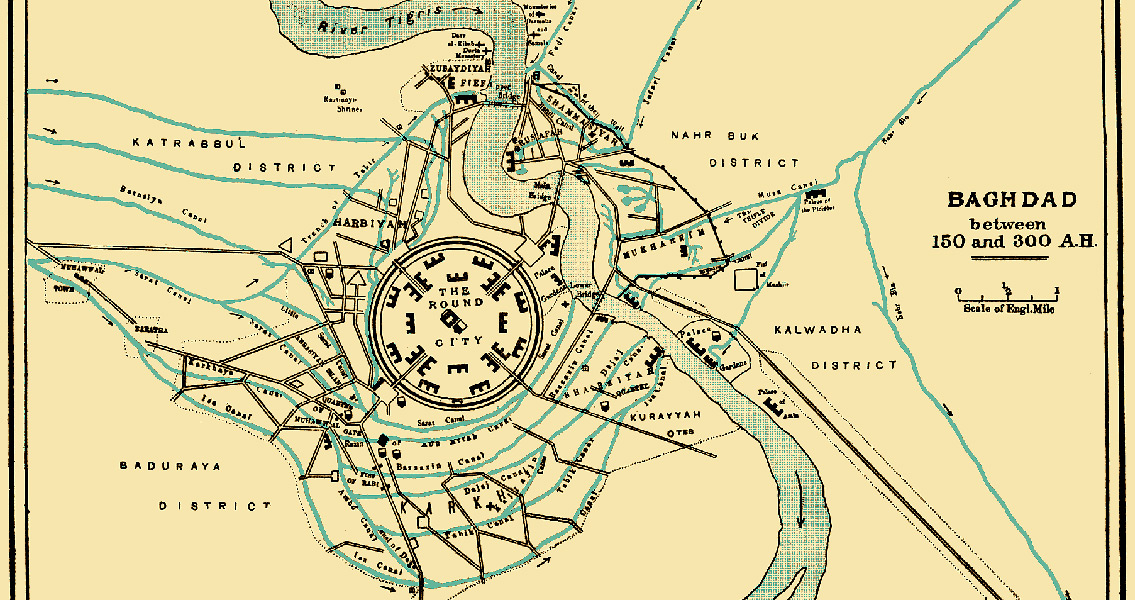
Jewish History. “Yet these narratives can often be dismantled when the primary sources that support the narrative are revisited.” Interestingly, Ackerman-Lieberman argues that the supposed move away from an agricultural economy towards a more urbanised, artisan way of life was merely a coincidence. Migration to the cities, he argues, simply coincided with the fact that agriculture was no longer the main source of income for Jews in the Middle East in the eighth and ninth centuries. Ackerman-Lieberman suggests that urbanisation was not the only process occurring in this period. Not only were urban centres growing, but rural areas were also. “Burgeoning irrigational infrastructure and the expansion of river transport led to intensified rural settlement akin to that seen in the urban areas,” he argued. It appears that there would have been little economic incentive for rural Jews to head towards urban centres, as agriculture was still a profitable business along the Tigris and Euphrates. Importantly, for the vast majority of Jewish farmers, it was not especially profitable for them to up sticks and change their means of generating an income. The impoverished majority of Jewish tenant farmers, Ackerman-Lieberman argues, simply lacked the financial capital to become merchants, while wealthier Jews could expand their rural holdings by engulfing smaller farms. One of the central tenets surrounding the supposed Jewish urbanisation is that there are very few mentions of Jews in historical records. Ackerman-Lieberman, however, views this silence in a different way. He argues that the record of Jewish agricultural pursuits is poor not because Jews were not involved in agriculture, but because what survives tends to be legal and mercantile letters, not agricultural correspondence. Also, much agricultural and commercial law had been settled before the Abbasids came to power. As a result, what legal records there are do not refer to numerous Jewish farmers in the law reports. “Without clearer evidence that the bulk of the Jewish population moved to the garrison cities in the eighth century,” Ackerman-Lieberman concluded, “the very reasonable explanation that Jews continued in their agricultural pursuits should be maintained.” It is important to note that Ackerman-Lieberman does not provide a clear explanation of what did happen to the Jewish population under the Abbasid caliphate. What he does do, however, is critically engage with an established narrative in Jewish history and effectively call into question many long-held assumptions. For more information: www.link.springer.com Image courtesy of Wikimedia Commons user: Andres rojas22]]>

Categories
Breaking News

Cattle Teeth Challenge Theory about African Herder Migration

Proceedings of the National Academies of Sciences. Image courtesy of Wikimedia commons user: Justin Jerez]]>

Categories
Breaking News

DNA Analysis Reveals Missing Link in European Ancestry

Categories
Breaking News

Study Challenges Our Understanding of American Migration

www.ingentaconnect.com Image courtesy of Wikimedia commons user: OgreBot]]>