Categories
Breaking News

New Native American Population Could Rewrite History – The History News of the Week

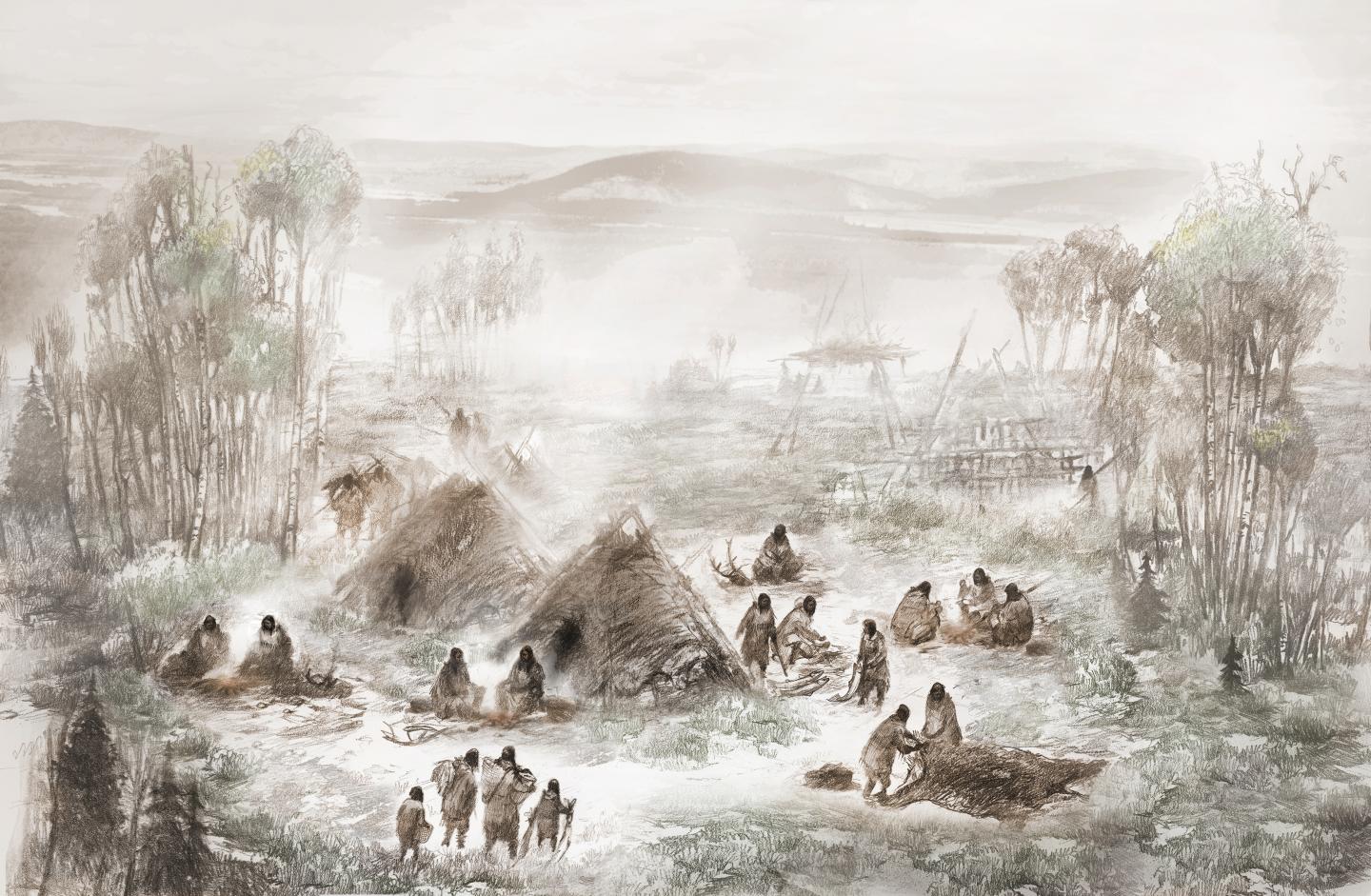
New Native American Population Could Rewrite History of North America Scientists have found evidence of a previously unknown population of Native Americans, a discovery that could cause a drastic rethink on the history of how humans populated the Americas. The revelation came from the genetic analysis of ancient DNA from the remains of a six-week old infant found at an Interior Alaska archaeological site. The new Native American group have been named “Ancient Beringians”. “We didn’t know this population existed,” said Ben Potter, one of the lead authors of the study published in the journal Nature, and a professor of anthropology at the University of Alaska Fairbanks. “These data also provide the first direct evidence of the initial founding Native American population, which sheds new light on how these early populations were migrating and settling throughout North America.” The discovery suggests two new scenarios for the populating of the Americas. One possibility is that there were two distinct groups of people who crossed the Beringian land bridge prior to 15,700 years ago. The second is that a single group crossed the land bridge and then split in Beringia into two groups, the Ancient Beringians, and other Native Americans, with the second group moving south of the ice sheets 15,700 years ago. Combined with archaeological evidence, the DNA results suggest that Athabascan ancestors moved north again, possibly around 6,000 years ago, and eventually either absorbed or replaced the Ancient Beringian population. “There is very limited genetic information about modern Alaska Athabascan people,” Potter explained. “These findings create opportunities for Alaska Native people to gain new knowledge about their own connections to both the northern Native American and Ancient Beringian people.” New Method for Determining a Skeleton’s Age of Death Christine Cave, an archaeologist from the Australian National University, has developed a new way to determine a skeleton’s age of death based on how worn the teeth are. The breakthrough could cause a drastic rethink on just how long people lived prior to the arrival of modern medicine. The method involves analysing the wear on teeth and comparing it to living populations of comparable cultures. Cave applied the technique to skeletal remains from three Anglo-Saxon cemeteries for people buried between 475CE and 625CE. “People sometimes think that in those days if you lived to 40 that was about as good as it got. But that’s not true.,” Cave said in an Australian National University press release. “For people living traditional lives without modern medicine or markets the most common age of death is about 70, and that is remarkably similar across all different cultures.” Cave believes that this myth about ancient populations dying young comes from difficulties in categorising the elderly in archaeological studies. “Older people have been very much ignored in archaeological studies and part of the reason for that has been the inability to identify them,” she said. “When you are determining the age of children you use developmental points like tooth eruption or the fusion of bones that all happen at a certain age. Once people are fully grown it becomes increasingly difficult to determine their age from skeletal remains, which is why most studies just have a highest age category of 40 plus or 45 plus. “So effectively they don’t distinguish between a fit and healthy 40-year-old and a frail 95 year old. It’s meaningless if you are trying to study elderly people.” Cave’s new method allowed her to notice a significant difference in the way male and female people of old age were buried in the Anglo-Saxon period. “Women were more likely to be given prominent burials if they died young, but were much less likely to be given one if they were old,” she said. “The higher status men are generally buried with weapons, like a spear and a shield or occasionally a sword. Women were buried with jewellery, like brooches, beads and pins. This highlights their beauty which helps explain why most of the high-status burials for women were for those who were quite young.” Cave’s research has been published in the Journal of Anthropological Archaeology. She is a PhD scholar at the Australian National University’s School of Archaeology and Anthropology. Mummy’s Name Finally Revealed A new scanning technique has revealed the name of an ancient Egyptian mummy, according to the Daily Express. The new technique was developed by researchers from University College London and the University of Manchester in collaboration with scientists from the USA. It revealed the name of the mummy, a man named Irethoreu. Irethoreu’s name was hidden on the foot plate of the coffin. According to the Daily Express, the international team of researchers used different frequencies of light to read hieroglyphics painted on scraps of papyrus used to make the case. Without this innovative technique, the only way to have read the name would have been by destroying the coffin. The name means “The Eye of Horus”. It’s believed that Irethoreu lived sometime between 664 CE and 30 CE. Featured image: A scientific illustration of the Upward Sun River camp in what is now Interior Alaska. Illustration by Eric S. Carlson in collaboration with Ben A. Potter ]]>
Categories
Breaking News

Study Examines Centuries Old Efforts to Prevent the Dead from Rising

Journal of Archaeological Science. ]]>

Categories
Breaking News

2,400-year-old Skeletons Discovered in Northern Iraqi Tomb

Categories
Breaking News

Radiocarbon Dating Verifies the Oldest Monastic Cemetery in the UK

Live Science: “It is great to show that a community excavation can produce results that revolutionise our view of the origins of monasticism in Britain and Ireland. Archaeology is providing evidence that can get us beyond the uncertainty of the historical sources. The ancient origins of the Beckery site may explain why later medieval writers linked it to figures such as King Arthur and Saint Brigit.” Beckery, a small, rocky island, is part of the Avalon Marshes near Glastonbury. The name means either ‘bee-keeper’s island’, which is the Old English translation, or ‘Little Ireland’ in the Irish language. Smaller islands like this one were generally chosen as the sites for monasteries and hermitages during this time period, primarily because the separation from the regular work was conducive to spiritual enlightenment. The Chapel is already known as being the place where King Arthur reportedly had a vision of Mary Magdalene and the baby Jesus. These new findings, however, tell researchers considerably more about the location, for example, that it was constructed prior to the region being defeated by the Saxon kings of Wessex in the seventh century. ]]>

Categories
Breaking News

Site with Reburied Skeletons Discovered by Accident

Western Digs: “This is one of the few archaeological contexts registered by archaeologists in this region, if we confirm the hypothesis [that this burial dates from] the Late Archaic, we could have a site with information about the transition to agricultural, sedentary communities in the region.” A number of the remains, both avian and human, had been naturally mummified by the arid climate. In addition to the skeletons and bird remains; textiles, baskets, stone points and other artifacts were also found. The two sets of remains were surrounded with an array of goods, including a large sea shell and a dress or bag made from deer hide. The gender and exact age of the child is unknown, although the size suggests at the time of death they were between one and three years old. The partial adult skeleton had large leg bones that had been tied together, similar to other, later finds in northern Mexico. The practice of reburying partial skeletons was not uncommon. Starting around 1100, the citizens of Paquime are known to have dug up and then re-buried their dead, sometimes collecting the bones in large jars or bundles, possibly to be buried with relatives. If this new cave site predates Paquime, the burial may be earlier evidence of the practice. Not found at the graves were artifacts, such as ceramics, associated with the Puebloans who built and then settled in trade centers like Paquime during the Medio Period. This absence indicates the graves predate the creation of Paquime, which happened around the year 700. The early date also makes the discovery of the bird, a scarlet macaw, especially significant because tropical birds are not indigenous to the high desert region of Chihuahua. The discovery of the macaw in this pre-Medio Period site indicates the presence of long-distance trade in exotic goods which pre-dates Paquime by centuries. “This finding verifies once again that the [mountains of Chihuahua] have been a cultural corridor between the coast and the desert north with the south,” Gallaga is quoted as saying in Western Digs. “At the end of the day, this discovery shows us that there is still a lot to do in the northern Mexico region, archaeologically speaking.” Gallaga’s team was called to the site when the property owner uncovered the strange remains while using heavy equipment to level the cave’s floor. “Many archaeological discoveries are the result of planned research and are conducted during years of intellectual efforts,” Gallaga says in Western Digs. “Others are the result of an accident.” ]]>

Categories
Breaking News

Never Seen Before Headless Burials Discovered in Siberia

Siberian Times: “Burials without heads are quite common. Usually it is because of war. There was a widespread practice in which bowls were made of the heads of defeated enemies.” As he describes it, eating from the enemy’s skull was the ultimate victory celebration. “But this is obviously a different case,” he added. In other burials, the heads were not placed in the same grave as the body. Also unusual, if these were the remains of enemies, was the care taken to ensure the deceased received the rituals associated with an honored death, such as being well dressed. When burying their own, as opposed to war enemies, the Pazyryks typically took great care to not distort the bodies of the diseased. Additionally, tombs containing headless children have never been seen before now. The archeologists have considered whether grave-robbers, in the act of stealing the ornaments buried with the bodies, might have severed the heads on purpose and then placed them by the knees for some unknown reason. However, the skeletons had not been disturbed, as one would expect after such an act. The discovery has resulted in more questions than answers, Dr. Konstantinov admitted in the Siberian Times, adding, “We have no similar cases, so we need to investigate this one very thoroughly. We will continue the research of these skeletons. We need to determine their gender and (approximate) age. It is also important to study the traces on their cervical vertebrae to understand how and when the heads were cut off or separated in some other way. We hope to get the first results in December or January.” Photos of the burial can be found here: siberiantimes.com ]]>

Categories
Breaking News

Roman Infanticide Was Less Common than Thought

Daily Mail. “The ability to more accurately differentiate between stillborn and short-lived infants, without having to alter precious archaeological skeletons, will profoundly impact on the study of past human life.” Historians have long believed that infanticide was a fact of life for the ancient Romans. A number of explanations have been given, including attempts to manipulate the gender ratio, to control the size of families, or even as mercy killings to alleviate suffering. Some historians suggest that poor families may have killed newborns if they felt they were unable to provide for the child. Infanticide is an issue apparent even in ancient Rome’s foundation story: Romulus and Remus, the two sons of the god of war, Mars, narrowly survive after being thrown into the Tiber river. Seeming horrifically inhumane to modern eyes, in ancient Roman society babies were not considered fully human at birth. Rather, their humanity was thought to develop over time. Although not ruling out infanticide in ancient Roman society, the study results suggest it was not as prevelant as widely believed. Of course, the study was limited to a sample of just ten individuals from a single region, and is therefore far from conclusive. Other Roman burial sites at other locations would need to be studied in order to make a concrete conclusion. Meanwhile, the researchers behind the study intend to apply the x-ray microtomography technique to other remains in the Museum of London, to learn more about the history of the people of London in the Roman period and beyond. “The size of the Museum of London’s 20,000-strong collection of skeletons means we are uniquely placed to investigate research questions such as this one, as well as to provide meaningful interpretation of the results with our detailed archive information.” said Dr Rebecca Redfern, a co-author of the study in the Daily Mail interview. “We can now apply this research to infant skeletons in our collection from periods other than Roman London to investigate mortality risks and how these relate to London’s ever-changing environment and population.”]]>

Categories
Breaking News

Archaeologists Discover a Neolithic Burial Ritual Like No Other

Categories
Breaking News

Study Challenges Our Understanding of American Migration

www.ingentaconnect.com Image courtesy of Wikimedia commons user: OgreBot]]>

Categories
Breaking News

2,000 Year Old Polish Skeletons to be Analysed