Categories
Breaking News

Bison Fossils Shed Light on 'Ice Free Corridor' Migration

Proceedings of the National Academy of Sciences, their study argues that the corridor was fully open by around 13,000 years ago. The results suggest that although the corridor could account for the later movement of humans and animals, both northward and southward, it couldn’t explain the initial dispersal of humans from Alaska into the rest of North America. Around 15,000 years ago the first humans migrated southwards from the furthest reaches of North America, colonising the rest of the continent. In the 1970s, geological evidence was taken as proof that this initial movement was facilitated by the ice free corridor through the Rocky Mountains. More recent research suggested that the Cordilleran and Laurentide ice sheets merged together at the peak of the last Ice Age, closing the corridor before humans made their initial migration. It was a revelation which pointed to a Pacific coast route for humans into southern North America, yet the Rocky Mountain corridor has long remained a source of interest. “The opening of the corridor provided new opportunities for migration and the exchange of ideas between people living north and south of the ice sheets,” said Peter Heintzman, a postdoctoral researcher at UC Santa Cruz and lead author of the study. Previous work by one of the co-authors of the study, Ben Shapiro, had shown that the bison populations north and south of the ice sheets were distinct by the time the corridor opened. This meant that through genetic analysis it was possible for scientists to track the movement of both northern and southern bison through the corridor. “The radiocarbon dates told us how old the fossils were, but the key thing was the genetic analysis, because that told us when bison from the northern and southern populations were able to meet within the corridor,” explained Heintzman. From the genetic analysis, it became clear that the southern bison started moving northward around 13,400 years ago, suggesting the southern part of the corridor had opened first. The corridor became fully open by around 13,000 years ago, allowing the northern bison to migrate southward and shown in the first signs of population overlap within the corridor. As for human migration through the corridor, Shapiro suggests it was mostly from south to north. Sites from the Clovis culture were abundant south of the corridor by around 13,000 years ago, but declined from south to north in the corridor region. “When the corridor opened, people were already living south of there. And because those people were bison hunters, we can assume they would have followed the bison as they moved north into the corridor,” Shapiro said. Image courtesy of Government of Yukon]]>

Categories
Breaking News

Ice Age Migration and Displacement Shown in Study

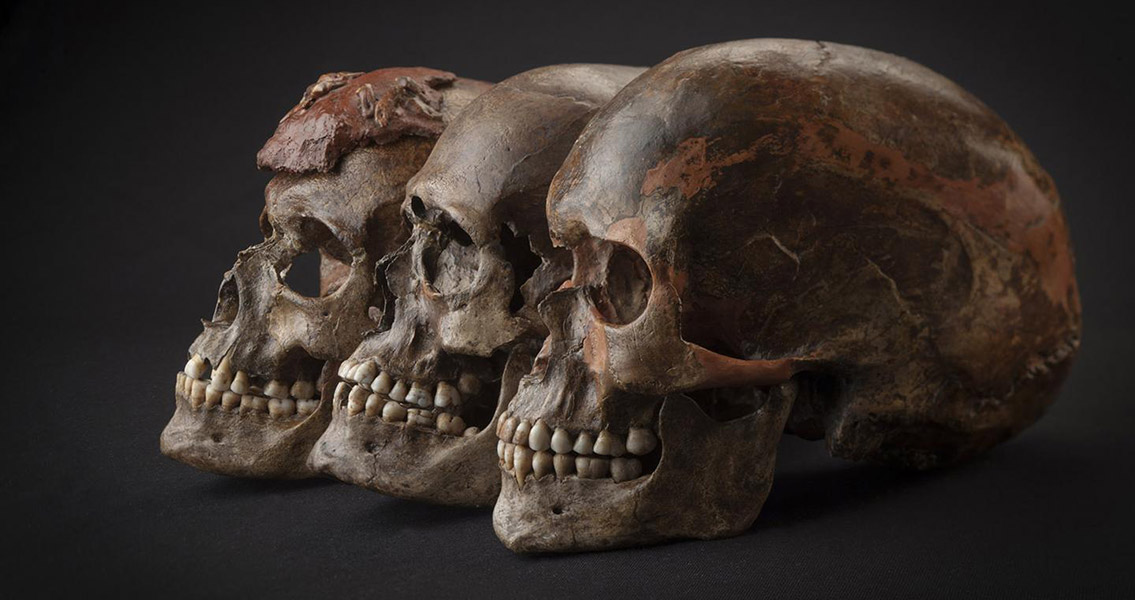
Nature on 2nd May, the study analysed the DNA of prehistoric humans to chart population changes over a period that stretched from the initial inhabitation of Europe by modern humans, to the end of the last Ice Age. The research was led by David Reich, Howard Hughes Medical Institute Investigator at Harvard Medical School. Two massive changes in prehistoric populations are revealed by the genetic data used in the research, which seem to be related to the end of the Ice Age around 19,000 years ago. The first has been documented previously, although in less detail. As the ice sheet retreated, northern Europe was repopulated by prehistoric humans from regions of southwest Europe, such as Spain. A second, more surprising event came some 5,000 years after that initial re-population. Populations from the southeast of Europe, such as what is now Turkey and Greece, migrated into Europe and displaced the first group of humans who had relocated there. The findings have the potential to cause a drastic rethink on how we understand the history of European migration and population. Previously, genetic data were only available for four samples of prehistoric European modern humans between 45,000 and 7,000 years old, but Reich and colleagues’ study has changed that; allowing much better insights to be gleaned on human populations in this distant period. “Trying to represent this vast period of European history with just four samples is like trying to summarize a movie with four still images. With 51 samples, everything changes; we can follow the narrative arc; we get a vivid sense of the dynamic changes over time,” said Reich, in a press release from the Howard Hughes Medical Institute. “And what we see is a population history that is no less complicated than that in the last 7,000 years, with multiple episodes of population replacement and immigration on a vast and dramatic scale, at a time when the climate was changing dramatically.” According to the team’s findings, all Europeans come from a single 37,000 year old population that survived through the last Ice Age. One of the branches of this population, which was represented by a specimen from Belgium, was displaced from most parts of Europe around 33,000 years ago, during the height of the last Ice Age. Some 19,000 years ago, a population related to it expanded across Europe, which the researchers believe could have originated in Spain. The second event took place 14,000 years ago, and would define Europe’s population until the advent of agriculture. “We see a new population turnover in Europe, and this time it seems to be from the east, not the west,” said Reich. “We see very different genetics spreading across Europe that displaces the people from the southwest who were there before. These people persisted for many thousands of years until the arrival of farming.” Fascinatingly, the study also showed the percentage of Neanderthal DNA in humans is decreasing, it consisting of between 3% and 6% of the prehistoric humans’ genetic makeup, but only 2% in most humans today. The results suggest that natural selection could be removing the toxic Neanderthal DNA. Reich and colleagues’ study shows that migration has long been an integral, complicated part of human history, shaping the world’s populations for thousands of years. Image courtesy of Martin Frouz and Ji?í Svoboda]]>

Categories
Breaking News

Neanderthals Could Have Lived in Southern Scandinavia

Quarternary International, the new study questions this idea. Although not proving either way whether Neanderthals actually made it as far as Southern Scandinavia, it shows that climate constraints wouldn’t have been enough to stop them. Two main hypotheses exist regarding Neanderthal inhabitation of Southern Scandinavia. The first, and by far the most widely held, is that climate constraints and dispersal barriers made it an impossibility. The second hypothesis claims that they did migrate north of 55°N, but they have for some reason remained invisible to the archaeological record. Led by Trine Kellberg Nielsen from Aarhus University, the authors of the study constructed climate models of where Neanderthals are known to have lived, and where they could have lived. Palaeoenvironmental reconstruction techniques were used to model the environment of Northern Germany and Southern Scandinavia during the Last Interglacial Complex. “Our results are inconsistent with the claim that climatic constraint and/or a lack of suitable habitats can fully explain the absence of Neanderthals in Southern Scandinavia during the Eemian Interglacial and Early Weichselian Glaciation”, they write in the abstract to the study. For years a cast of roe deer bones held in Denmark’s National Museum were considered evidence that Neanderthals had reached Southern Scandinavia. Archaeologists argued that the bones, discovered in 1955, showed signs of having been manipulated by Neanderthals. In 2013 this evidence was debunked by a team specialising in genetic engineering, from Aarhus University. Other evidence for a Neanderthal presence in Denmark comes in the form of Coups de poing, Lower Paleolithic hand axes. Around fifteen such axes which could have been used by Neanderthals have been found in Denmark. This evidence is far from conclusive however, human stone age hunters also used the primitive stone axes, and the examples found in Denmark were all unearthed from mixed soil, making it impossible to definitively date them. The timing and extent of Neanderthal migration throughout Europe is under constant revision and revaluation. Late last winter a study argued that Neanderthals had reached Italy 100,000 years earlier than previously thought. Significantly, Nielsen and colleagues’ study does find evidence that a geographic barrier may have impeded northerly migrations during the Eemian Interglacial Period between 130,000 and 115,000 years ago. The higher temperatures of the Interglacial Period inevitably led to higher sea levels, and there is a strong indication that the Baltic and North Seas were connected over southern Denmark. As such, even if the climate was warm enough for Neanderthals to have lived in Southern Scandinavia, a sea could have prevented them from walking there. Neanderthals lived across Eurasia between 200,000 and roughly 30,000 years ago, although these dates are far from agreed upon. Their duration, and the breadth of the area they inhabited: from the Middle East to the British Isles, shows the Neanderthals’ flexibility and endurance, especially when one considers the period they lived in included the last Ice Age. Nielsen et al’s study shows just how much there is still to learn about our closest extinct relatives. For more information: www.sciencedirect.com]]>

Categories
Editorial

History of 2015: Migration, Conflict and Society

study by Nick and Isabelle Winder suggested that compassion and a willingness to accommodate ‘defective’ members of a community played a key role in our evolution and development. The study stands in stark contrast to readings of evolution which focus on competition and ‘survival of the fittest’. The Winders’ “Vulnerable Ape hypothesis” argues that small, isolated hominin communities provided few opportunities to enrich the gene pool. Rather than choosing not to mate, early hominins would often pick a close genetic relative, heightening the risk of offspring with ‘faulty’ genes which would put them at a disadvantage. The hypothesis argues that parents had to learn to work together as a community to cope with these disadvantages and ensure the survival of their genes. As Isabelle Winder summarised: “Genetic vulnerability was the trigger that set our ancestors on the path to symbolic language, innovation and pro-social co-operation.” Another study, carried out by the University of Utah’s Professor David Carrier, has added weight to a very different reading of human development. The “Primal Pugilism” theory suggests that aggressive behaviour, and particularly the ability to throw punches, had an important role to play in the development of the human hand. Carrier and his team took the arms of eight different cadavers, and carried out a variety of tests on them to prove that hands clenched in a fist were capable of hitting with more than double the force of an open hand. This was taken as support of the theory that aggression was an evolutionary advantage to early primates. Carrier and colleagues have done previous research along similar lines, including a study arguing that early hominins evolved to have skulls and faces more resistant to violence. The Primal Pugilism or Aggressive Ape theory is a controversial one, placing aggression and violence as drivers of early hominin evolution. In 2014 an article was published in National Geographic accusing the theory of being too simplistic, referring to it as “bro-science”. Whatever one’s opinions on Carrier’s ideas, the strong reactions the theory can trigger surely provide an insight into modern sensitivity and concerns. In November, Dr. Penny Spilkins conducted a new study on human dispersal in the Late Pleistocene around 100,000 years ago. Dr. Spilkins argues that a dramatic shift in the rate and pattern of human dispersal during the period can not be explained by population growth or environmental factors. Instead, Dr. Spilkins argues in the study that humans’ movement out of Africa and to the furthest corners of the globe can be explained in terms of social developments. As human relationships became more complex, laying the foundations for the bonds needed for early societies, so did the potential causes of conflict. The dark side of stronger social bonds was that the level of repulsion one felt at a betrayal, and the desire for revenge became stronger. This, Dr. Spilkins argues, could push humans into living further apart: outcasts forming groups and moving away from the community at large, eventually crossing oceans in search of isolation. The above studies show how a myriad of new techniques and information can be applied to our study of history. All of them are theories, models which attempt to explain the complexities of our development, and are not necessarily mutually exclusive to each other or other theories. The fact that the conclusions they’ve reached can at times seem so controversial, shows just how much value is placed on the past, and just how much there is still to learn. ]]>

Categories
Breaking News

Hunting Contributed to Mammoth Demise

with giant reptiles. Another one, from this month, suggested that humans change the habitats they enter much more quickly than previously thought, at least in some ecosystems. For more information: Test of Martin’s overkill hypothesis using radiocarbon dates on extinct megafauna ]]>

Categories
Breaking News

Infant Fossils Shed Light on Native American Lineages

Categories
Breaking News

Plague Emerged in the Bronze Age

Yersinia pestis, was common among humans much earlier than the first historical records of plague epidemics suggest. An analysis of DNA extracted from Bronze Age human teeth showed that Y. pestis affected people in Asia and Europe as far back as 4,800 years ago. However, it was not for another thousand years that the bacterium developed characteristics allowing it to cause bubonic plague, the disease typically associated with it. What led the scientists, from the Universities of Gothenburg and Copenhagen, to believe that the plague is much older than commonly thought was an earlier genomics study they did on people from the Bronze Age, EurekAlert reports. That study revealed that the period, between 3000 BCE and 1500 BCE, was very dynamic in terms of migratory trends. These trends were found to have had a substantial effect on the modern-day demographic make-up of Europe and Asia. The team’s interest was sparked by the reasons behind these migrations. One of the authors of the study, Morten Allentoft from the Centre of GeoGenetics at the University of Copenhagen, told EurekAlert that one of the reasons for migration could have been epidemics that drove people away from a certain area, or decimated the population in another area, creating conditions for its repopulation. The question they asked themselves was whether these epidemics may have been caused by pestilence. To find an answer, they studied 89 billion raw DNA sequences extracted from the teeth of 101 Bronze Age and early Iron Age individuals taken from archaeological digs and museums. In seven of the samples, dated to between 2794 BCE and 951 BCE, there was evidence of the Y. pestis bacterium. Further analysis suggested that the original pathogen that Y. pestis evolved from first emerged around 5,783 years ago. To compare, the first historical records of plague-like epidemics appear in the common era, first in the sixth century, with the so-called Plague of Justinian, and then, of course, in the Middle Ages, when the Black Death took the lives of as much as half the population of Europe. There have been suggestions that Y. pestis was responsible for the Plague of Athens from 2,500 years ago and the Antonine Plague, but no hard evidence in support of this suggestion has been presented so far. Interestingly, the DNA analysis showed that even though they could get infected by the pathogen, Bronze Age people did not get it from fleas, which are among the main vectors of plague transmission. The bacterium apparently only developed the gene that allowed it to survive in the gut of fleas later, in the Stone Age. One earlier study that New Historian recently reported, suggested that the plague is in fact older than humans, by tens of millions of years, and even as early as that a strain of it could be transmitted by fleas. For more information: “Early Divergent Strains of Yersinia pestis in Eurasia 5,000 Years Ago” ]]>

Categories
Breaking News

DNA Sequencing Confirms Ancient Migration Back to Africa

“Ancient Ethiopian genome reveals extensive Eurasian admixture throughout the African continent” Image courtesy of Wikimedia Commons user: Thomas Splettstoesser]]>

Categories
News

New Tool For Studying Extinct Animals

www.onlinelibrary.com ]]>

Categories
Breaking News

European and Asian Cultures Born From Mass Migration

Population genomics of Bronze Age Eurasia ]]>