

Siberian Times, adding, “The ornamentation on the plates can be individual, that is after the thorough analysis we could say how many warriors left armour here, judging by the style of decorations.’” The largest plates are between 23 and 25 centimeters long and in ancient times would have been attached to a leather surface, offering a dependable type of protection. Other plates, which are are between 12 and 14 centimeters in length, are thinner and richly ornamented. Conical shaped armor has also been seen on the plated helmets which were worn by ancient warriors in the taiga zone (also known as boreal forest) of Western Siberia. The discovery of iron helmets is extremely rare, however, bronze images from the middle of the first century CE that show people wearing headdresses that clearly resemble helmets have been found. The armor resembles the armor worn by warriors of the Kualai people, fishermen and hunters indigenous to the taiga. Previous finds at the site include a 2,000-year-old ring, believed to be evidence of a bear cult. These ancient people didn’t leave any written records. Made using high quality bronze, the ring, so tiny in diameter researchers believe it was put on a bear claw, features the image of the head and paws of a bear. Experts theorize that the ring was on the claw of a previously slain bear, an animal that was worshipped by Khanty tribes as sacred and an ancestor. After the slaying of the bear, the paws and head were adorned with rings and a handkerchief, followed by a festival honoring the animal. Image courtesy of Andrey Gusev ]]>

Seeker, adding: “At 7:32 am the sun shone brightly through the hole with an incredible precision. It was amazing.” The 23-foot tall stone would have marked the turning point of the seasons and the change to colder weather. The moment likely had ritualistic importance as well, considering the investigation revealed the site was considered a sacred place towards the end of the third millennium BCE. A short distance away from the stone, researchers unearthed a number of complete burials referred to as grotticella tombs. Dug out of the rock, the chamber-like tombs were the primary form of burial for the Castelluccio’s, the culture that thrived in the early Sicilian Bronze Age. La Spina’s research team also located what seems to be a menhir (upright stone) to the east of the holed rock. Although lying on its side when discovered, the more than 16 feet tall stone originally stood upright, as indicated by the pit found near its base. The geological composition of the menhir and the calendar rock are not the same, suggesting the monolith was transferred to the site from another location. “It stood at a distance of 26 feet, right in front of the rock’s hole. This obviously reinforces the sacrality of the site.” La Spina is quoted as saying in Seeker. At least two additional holed stones have been unearthed in Sicily. They were discovered near Palermo by Alberto Scuderi, the Italian Archaeologist Group’s regional director and an archeo-astronomy expert, who told Seeker: “The newly found calendar rock appears to have been made by the same hand that carved the other two rocks. One lined up with the rising sun at the winter solstice, the other produced the same effect with the rising sun at the summer solstice,” adding, “For this reason, I believe that another holed calendar stone, marking the summer solstice, may be found near Gela.” ]]>


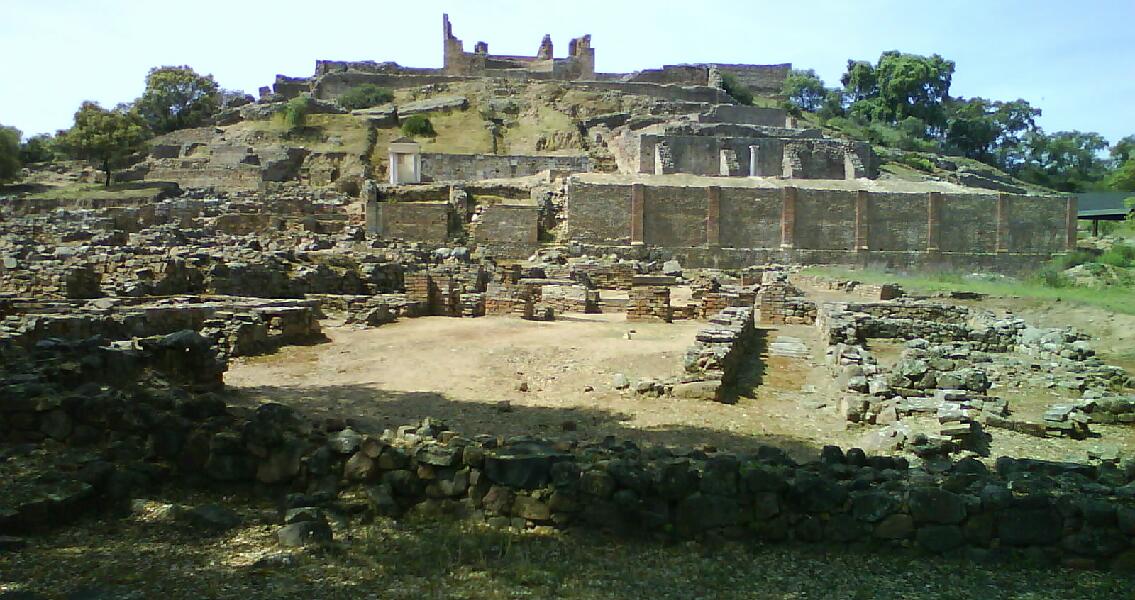
Live Science: “It is great to show that a community excavation can produce results that revolutionise our view of the origins of monasticism in Britain and Ireland. Archaeology is providing evidence that can get us beyond the uncertainty of the historical sources. The ancient origins of the Beckery site may explain why later medieval writers linked it to figures such as King Arthur and Saint Brigit.” Beckery, a small, rocky island, is part of the Avalon Marshes near Glastonbury. The name means either ‘bee-keeper’s island’, which is the Old English translation, or ‘Little Ireland’ in the Irish language. Smaller islands like this one were generally chosen as the sites for monasteries and hermitages during this time period, primarily because the separation from the regular work was conducive to spiritual enlightenment. The Chapel is already known as being the place where King Arthur reportedly had a vision of Mary Magdalene and the baby Jesus. These new findings, however, tell researchers considerably more about the location, for example, that it was constructed prior to the region being defeated by the Saxon kings of Wessex in the seventh century. ]]>

International Journal of Nautical Archaeology (IJNA). Wegner adds that: “some images are small and simple, the smallest reaching only about 4 inches (10 centimeters) in length.” 120 boat images have survived, but it’s believed that there would have been more etched onto the walls of the building in ancient times. Additionally, the tableau contains etchings of cattle, gazelle and flowers. Near the building’s entrance, which measures 68 feet by 13 feet (21 meters by 4 meters), archaeologists found over 145 pottery vessels, a majority of which were buried with their necks facing the building’s entrance way. “The vessels are necked, liquid-storage jars, usually termed ‘beer jars’ although probably used for storage and transport of a variety of liquids”, writes Wegner in IJNA. The building was first documented in a 1904 report by an archeological team working at Abydos from 1901 to 1903. The team, however, didn’t have time for excavations at the building site and had no idea what it contained. The discoveries have left archaeologists with a number of mysteries they’re hopeful future excavations will help solve. For example, the creators of the tableau remain unknown, as does the reason for its creation. It’s possible that whoever built the boat also drew the tableau, or that a group of people participating in a funerary ceremony following pharaoh Senwosret III’s death drew the images on the walls of the building. Another possibility is that people accessed the building after the pharaoh’s death and created the etchings. Archaeologists have determined a group of individuals did enter the building sometime after the pharaoh died and salvaged the boat in order to reuse the planks. Also puzzling to archeologists is the purpose of the pottery vessels discovered by the building’s entrance. It’s possible that liquid from the vessels was spilt on the ground purposefully to imitate the boat “floating” into place. It’s also possible the wooden boat had been moved across the desert on a wooden sledge. The liquid in the vessels would then have been used to solidify and lubricate the ground along the path of the boat. Wegner says in IJNA “the ceramic vessels used in this journey may themselves have taken on a ritual significance, and both boat and jars were then buried together as ceremonial interment of objects associated with royal mortuary rites.” Excavations by the team are planned in the future, in collaboration with Egypt’s Ministry of State for Antiquities. ]]>
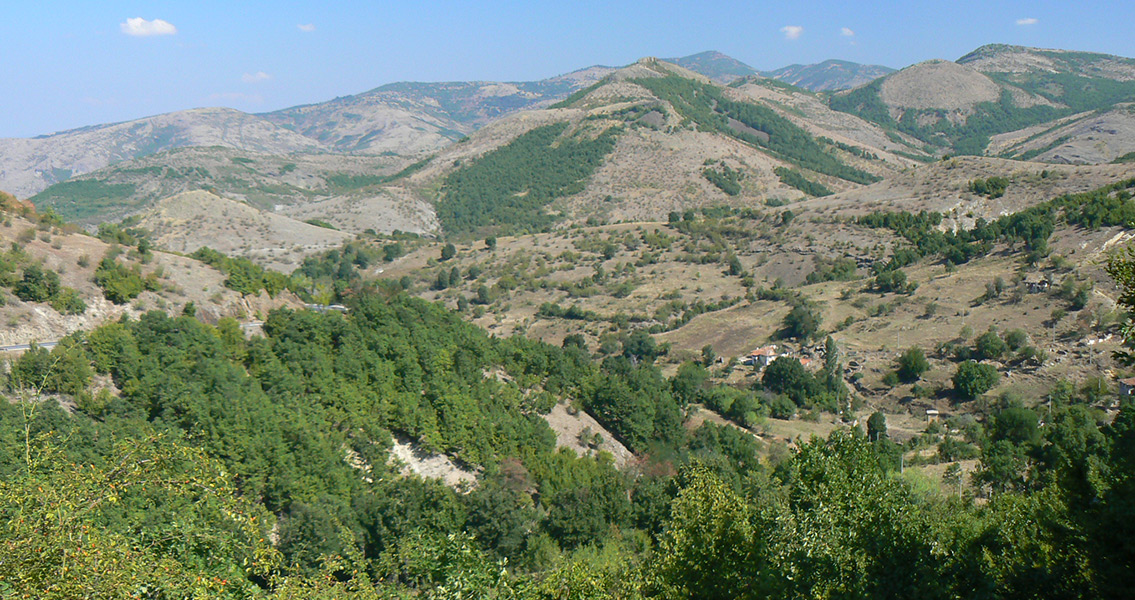
Archaeology of Bulgaria as Hellenistic period body and head adornments, with 11 rings that bear the images of ancient deities like Nike, the victory goddess. Archaeologists also found a silver coin used in the ancient Greek city of Maroneia, which was located on the coast of the Aegean Sea. The coin, a tetradrachm, was used as an obol, a coin which was ritually placed under the tongue of a deceased person as payment to the Charon, the mythical ferryman of Hades who transported the souls of the deceased across the rivers Acheron and Styx to the underworld. Several of the artifacts recovered from the grave are believed to have been produced in either Maroneia or other Greek cities along the Aegean coast, which is only 100 km away. Some however, were made in the prehistoric Thracian Odrysian Kingdom. The combination of imported and locally made items is believed to be evidence of the material culture enjoyed by these ancient people. The Thracians were actually a group of individual Indo-European tribes that inhabited a large region in southeastern Europe. It’s generally accepted that the Thracian people were in existence starting in the early Bronze Age. In Greek mythology, Thrax (also known as Thracian) was known as one of the sons of the god Ares. The excavations are being privately funded by businessman Alexander Mitushev, who made headlines last year when he purchased a Bronze Age archaeological artifact; a toy stork which could be the oldest children’s toy in Europe. An amateur archaeologist, Mitushev discovered a stone altar last year only 4 meters from the rock grave. ]]>
