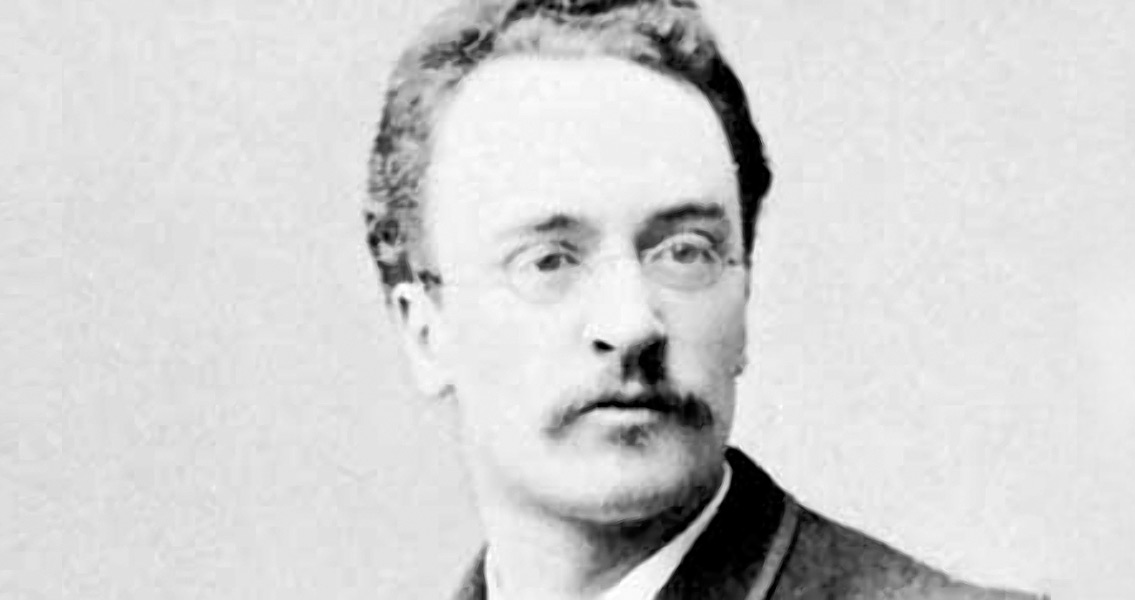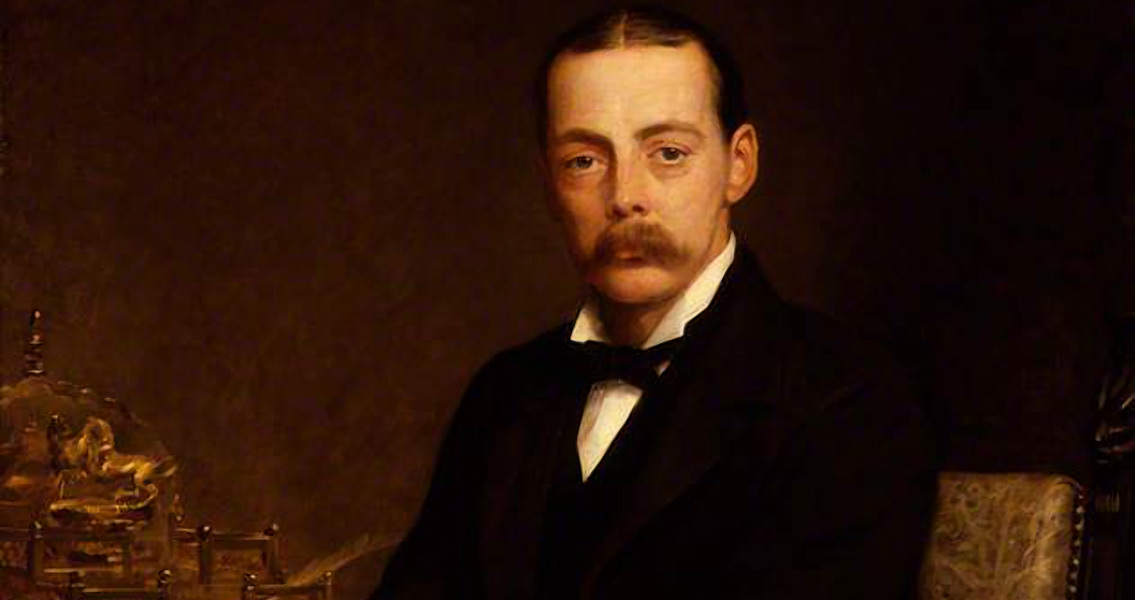

Montague John Druitt For many Druitt is the prime suspect, but the actual evidence linking him to the Whitechapel Murders is mainly circumstantial. From a privileged background, Druitt worked parallel jobs at the time of the murders, pursuing a career as a barrister while also working as the assistant master at a boarding school. Late in 1888 he committed suicide, shortly after the Ripper murders came to an end, a link some think is more than a coincidence. Druitt was at the top of the head of Scotland Yard, Melville Macnaghten’s list of subjects. As Macnaghten himself said in his memoirs: “From private information I have little doubt but that his own family suspected this man of being the Whitechapel murderer, it was alleged that he was sexually insane.” Sir William Gull One of the most well known although not necessarily the most likely suspects is Sir William Gull. Gull is implicated in one of the most well known Jack the Ripper movies: From Hell. The idea of his guilt is a particularly tantalising one because he was the physician of Queen Victoria herself. The idea of Gull being guilty perhaps appeals so much because of the web of intrigue it suggests. One elaborate conspiracy theory claims that Victoria’s son Albert Victor was a regular visitor to various East End brothels, some even claiming he was responsible for the pregnancy of Annie Crook. While Crook was sent to an asylum, Gull was supposedly sent to the streets of Whitechapel to kill all who knew of the affair. On the other hand, at the time of the killings Gull was in his seventies, perhaps making it unlikely he was the killer. Some even say that in the summer of 1888 he had suffered a series of strokes, a fact which if true would of course rule him out as the Ripper. Severin Antoniovich Klosowski aka George Chapman Klosowski had qualified as a junior surgeon in his native Poland before moving to London, where he gained work as an assistant hairdresser, the job he held in summer 1888. Unlike many of the other suspects, Klosowski was definitely a murderer, but not necessarily Jack the Ripper. In 1903 he was arrested and found guilty of having poisoned three of his former wives. Suspicions quickly arose in the press that he could have also been responsible for the Whitechapel Murders. Inspector Frederick Abberline, who had worked on the Ripper case, told the press in 1903 he believed Klosowski was the culprit. His reasoning included the fact the series of murders started shortly after Klosowski had arrived in England, while his surgical training was also considered possible proof. (Some say that the way the Ripper’s victims were mutilated could only have been done by a trained surgeon.) On the other hand, Klosowski’s other killings had all been poisonings rather than knife attacks, and his victims had all been women he was married too. Although the murders came to a stop shortly after the suspect moved to the United States, a similar spate of grisly crimes did not start there following his arrival. Francis Tumblety One of the more recently named suspects, it was only revealed in 1996 that Tumblety had been investigated by Scotland Yard. Tumblety was undoubtedly an unsavory character. A notorious quack, he’d made his fortune posing as a herb doctor in the United States and Canada. Perhaps most damningly, he had a reputation as an extreme misogynist with a particular hatred for prostitutes. Shockingly, he had been arrested for complicity in the Lincoln assassination (although he was released without charge.) In a 1913 press interview, Chief Inspector John Littlechild of the Metropolitan Police Service mentioned Tumblety was a suspect in the murders. There had also been rumours previously that the British police tried to extradite him from New York, although this was later denied by the NYPD. Little evidence exists linking him to the crime, while his distinct appearance (he was exceptionally tall with an outrageous mustache), would surely have made him stand out in any witness statements. There is no hard evidence to incriminate any of these four suspects, a pattern common among the more than 100 names linked with the grisly crimes. More than anything, the Jack the Ripper case highlights the limitations of police investigation in the late nineteenth century. A time when it was impossible to capture a serial killer, even one who was handwriting letters to the authorities.]]>

Hannoversche Allgemeine Zeitung. “If it really is the bones of Königsmarck, [it] would be a sensation.” Philip and Sophia’s love story has inspired a number of films and books, largely due to the surviving cache of love letters. Sophia is typically seen as a sympathetic figure despite her infidelities because her husband was such an awful person, not just to his wife but to everyone. George was also unfaithful, physically abusive, and he enjoyed openly snubbing her in favor of his mistress: Melusine von der Schulenburg. According to Eleanor Herman’s book “Sex with the Queen”, George’s own mother referred to him as “the most pigheaded, stubborn boy who ever lived, who has round his brains such a thick crust that I defy any man or woman ever to discover what is in them.” Sophia spent the remainder of her life, 32 years, locked up at Castle Ahlden in Saxony. She was buried there, but later transferred and interred next to her parents in Celle, where she remains today. ]]>

Lizzie Borden took an axe, And gave her mother forty whacks; When she saw what she had done, She gave her father forty-one. However, at her trial the 32 year old Borden was quickly found innocent, the jury taking just 90 minutes to reach its verdict. The Bordens were a wealthy family, Andrew Borden a highly successful businessman in real estate and manufacturing. With his first wife: Sarah, Andrew had two daughters: Lizzie, born in 1860; and Emma, born in 1851. Tragically, Sarah passed away shortly after Lizzie’s birth. Three years after his wife passed away Andrew remarried, to Abby Durfee Gray. Various reports suggest the two Borden daughters had a poor relationship with their stepmother, formally addressing her as Mrs Borden at all times. Lizzie and Emma were supposedly concerned that Abby had designs on stealing their father’s fortune for her own blood relatives. At the time of the gruesome murders the four Bordens all lived in the same household, along with a host of maids and servants. Neither of the Borden daughters were married, a social stigma at the time; and a tense relationship existed between Lizzie and Emma, and their elderly stepmother. On 4th August, 1892, Andrew Borden was found bludgeoned to death in a pool of blood on the living room couch. So brutally had he been attacked that his face is claimed to have been left split in two. Abby was then found upstairs (although it was later deduced that she had actually been killed first), her head and face also brutally bludgeoned. Suspicion soon turned to Lizzie. Along with a servant, she was the only other person in the house the night her father and stepmother were killed. A sensational trial soon started, one which garnered national attention. Lizzie and her sister Emma gained $7 million in inheritance after their father’s death, money which many consider to have been Lizzie’s motive. Circumstantial evidence soon began to appear tying Lizzie to the gruesome crime. It was claimed that the day after the murders Lizzie had burned one of her dresses, her explanation was that it had been stained with paint. Meanwhile, according to a local pharmacy owner, the day before the murder Lizzie had visited his store and tried to buy a deadly poison – perhaps suggesting she had murder on her mind. At the same time, Lizzie’s account seemed dubious. She claimed to have been out in the house’s yard at the time her father was murdered, hearing nothing and not seeing the perpetrator. Nevertheless, there was a total lack of forensic evidence available to the prosecution. Lizzie had no traces of blood on her, a remarkable fact if she had actually carried out the brutal crime. Some doctors’ reports from the time claimed that the severity of the injuries on the Bordens could have only been inflicted by a tall man (although this was contested). What’s more, Andrew Borden had made a host of enemies: both powerful business rivals and disgruntled staff. The murder weapon itself, a hatchet, was found but police were reluctant to use fingerprint analysis on it. The pioneering forensic technique had been growing in popularity in Europe, but the Fall River police force remained skeptical of its validity. This reluctance likely ended any chance of finding out for sure whether Lizzie Borden was as guilty as the rhyme written about her claims. Despite being found innocent, the media continued to portray Lizzie as a murderer. She lived the remainder of her life an orphaned, wealthy heiress in privacy until she died in 1927. She was interred next to her father and stepmother. ]]>
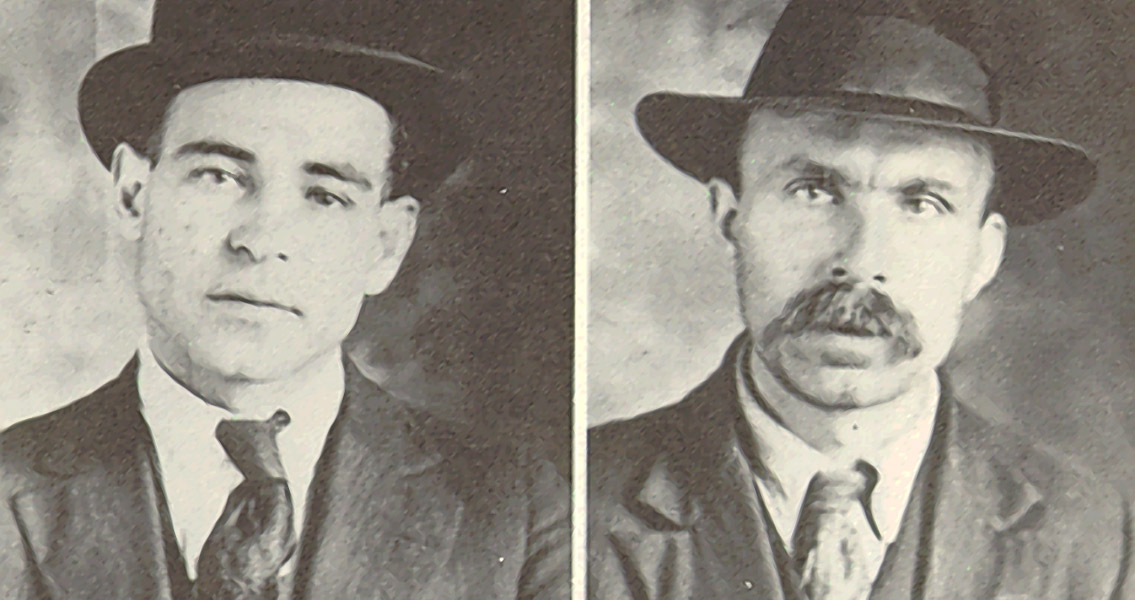
The ability to analyse ballistics in 1920 was of course limited compared to modern standards. Advances over the decades however, have seen the ballistics evidence reexamined several times, starting with the development of the comparison microscope just before the men’s executions in 1927. Each reevaluation of the evidence, in 1927, 1961 and 1983, all came to the same conclusion, Sacco’s revolver was the one which had been used to kill the security guard and the paymaster. On the other hand, some have accused the police of planting the bullet used in ballistics tests, observing that the one which matched Sacco’s gun didn’t match any others at the crime scene. Others argue the gun in Vanzetti’s possession which the prosecution claimed he had stolen from one of the victims, was in fact the wrong caliber and serial number. A book written by Felix Frankfurter, future Supreme Court Justice, in 1927, argued that there was little evidence to support the guilty verdict. It is unlikely if Sacco and Vanzetti’s guilt or innocence will ever be proven either way (there is also a third school of thought which reasons that Sacco was guilty but Vanzetti innocent). What is clear however, is that they were denied justice. As Massachusetts governor Governor Michael Dukakis proclaimed in 1977, the men had clearly not received a fair trial. Guilty or not, they were victims of the prejudices of the time, highlighted most clearly in the repeated refusal to allow them a retrial, despite new evidence surfacing.]]>