Categories
Breaking News

Fire Mastery May Have Given Modern Humans the Upper Hand

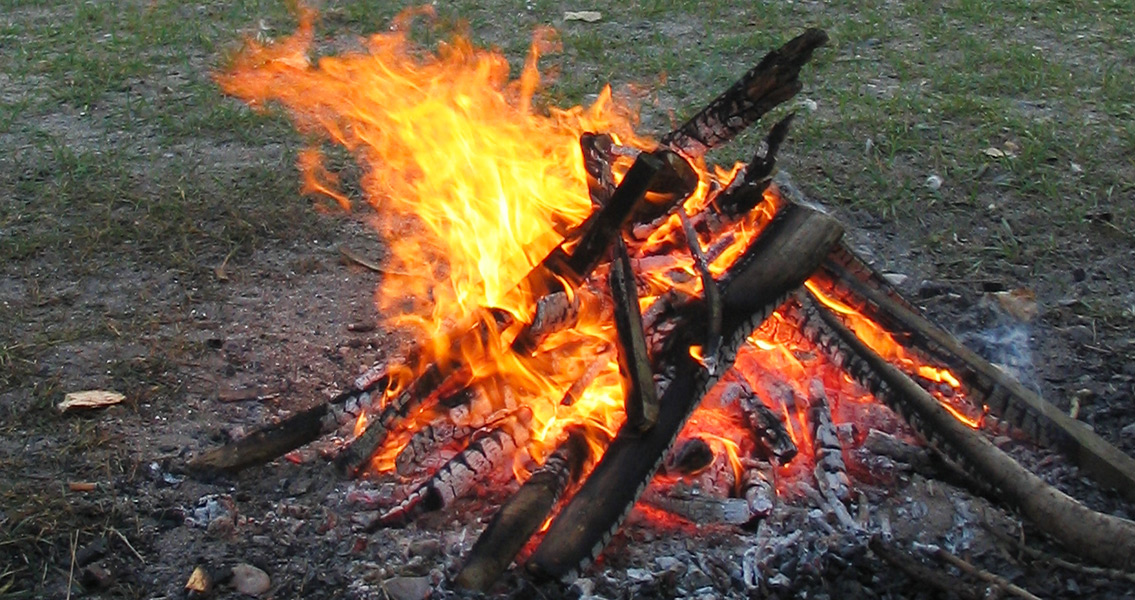
Homo species has just got more complex, with two scientists suggesting fire use contributed to our rise and the Neanderthals’ fall. Anna Goldfield, an archaeologist from Boston University, and Ross Booton, a mathematical biologist from Sheffield University, looked into this particular aspect of Neanderthals’ lives and discovered that even though fire was not completely unfamiliar to them, they definitely did not use it as consistently as modern humans. Although signs of fire use have been found at Neanderthal sites across Europe, they are scarce, suggesting fire was more of an occasional blessing than a fact of life. How did this impact the survival chances of the Neanderthals? By depriving them of a more wholesome calorie intake and safer food. Cooking is one of the best ways to rid food of harmful bacteria, parasites, and viruses, making it considerably safer to eat than when raw. Another major advantage of cooking is that it increases the amount of “processable” protein, and protein is indispensable for survival. So, according to Goldfield and Booton, who used mathematical models to try and detect a link between frequency of fire use and survival rates among both Neanderthals and modern humans, the former lived for hundreds of thousands of years in Europe without resorting to the use of fire on a regular basis. Modern humans, however, had mastered the element and made good use of it for warmth and cooking. The models revealed that this had a significant impact on survival chances. A mathematical model stipulating that modern humans used fire consistently while Neanderthals did not, yielded a gradual rise in the modern human population and a decline in Neanderthal numbers. A model which stipulated that the two species used fire with a similar frequency yielded no significant difference in their survival chances. Since we already know for a fact that the Neanderthals went extinct relatively soon after modern humans came on the European scene, the first model seems to be a more accurate reflection of reality. Further support for the “fire mastery hypothesis” comes in the different nutritional needs of Neanderthals and modern humans. Neanderthals were bulkier than us and needed a higher calorie intake to survive. Modern humans could survive with less. So, by mastering fire and cooking, the human populations expanded and, according to the mathematical models, consumed a larger share of the reindeer population (a crucial source of calories for both humans and Neanderthals, 40,000 years ago). Neanderthals were therefore left with scarcer access to a food source that they needed in larger quantities than humans. This latest research is further support of a more general theory that it was shrinking resources that spelled doom for the Neanderthals. This shrinking was not just due to the appearance of modern humans, however. Earlier studies have suggested that climatic factors reduced the amount of available sustenance. These, coupled with the mastery of fire characteristic of modern humans, may well have contributed to the demise of the Neanderthals, by restricting their access to the resources they needed to survive. Image courtesy of Wikimedia Commons user: Dirk Beyer]]>
Categories
Breaking News

130,000-Year-Old Talons Reveal Neanderthals’ Creativity

Categories
Breaking News

Partial Human Skull Holds Clues to Human History

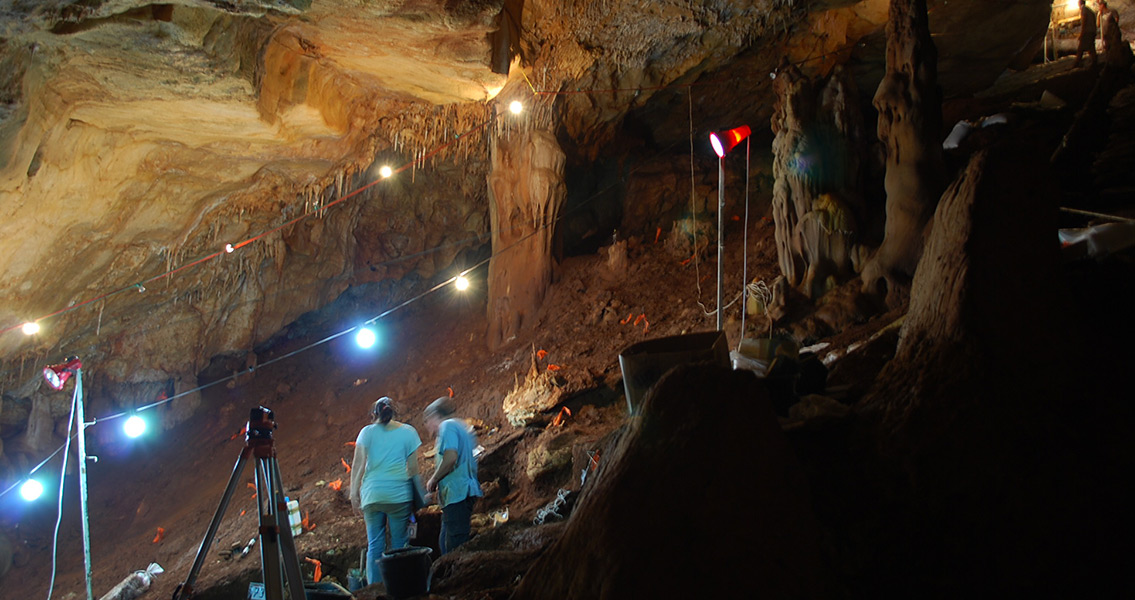
Homo sapiens and Homo neanderthalensis could have coexisted in the area. Precisely dating the skull immediately presented a number of difficulties. The skull fragment had originally been found by spelunkers exploring the newly-opened cave, who unfortunately removed it from its context. “Because it was already removed from the layer where it was presumably deposited,” said Dr. Elisabetta Boaretto, head of the Weizmann Institute’s D-REAMS (DANGOOR Research Accelerator Mass Spectrometry) laboratory, “we had to look for clues to tell us where and when it belonged in the setting of the archaeological record in the cave.” Initially, by using a technique known as the uranium-thorium method, the skull was determined to be 54.7 thousand years old. The uranium-thorium method, which is a radiometric dating technique, was applied to a thin mineral deposit on the skull. Unfortunately, the method used had an error margin of plus or minus 5.5 thousand years, which presented a major problem for researchers, as a more precise date was required. To fully pin down the date of the skull, radiocarbon dating was applied. Dr. Boaretto utilised radiocarbon dating of charcoal remains in order to map the human occupation of the whole cave. The results from Dr. Boaretto’s radiocarbon dates were compared with the original uranium-thorium dating, yielding a fixed true age for the skull of around 55,000 years old. The age and shape of the Manot Cave skull has led to some interesting insights. It suggests that humans and Neanderthals may have interbred over the period when humans migrated northwards, out of Africa; this most likely occurred when H. sapiens moved through the Middle East. The Manot Cave skull provides the first piece of evidence of a human residing in the region at the same time as Neanderthals – Neanderthal remains have been found in numerous nearby sites. Archaeologists are currently excavating the cave more fully in a search for more evidence of human habitation. If humans and Neanderthals did interbreed in the area around the Manot Cave, it would imply that the skull may have belonged to the ancestors of all modern non-African humans. Clearly, therefore, the research at Manot Cave could hold vital clues to the origins of our species. For more information: www.wis-wander.weizmann.ac.il Image courtesy of Wikimedia commons user: Reuveny]]>

Categories
Breaking News

Ancient Skull Reveals When Humans Colonised Eurasia

Image courtesy of Wikimedia commons user: Manot Cave Expedition]]>

Categories
Breaking News

Ancient Skeleton Reveals Genetic Origins of Europeans

Categories
News

The Neanderthals Were Omnivores, According to Recent Study

PLOS ONE online journal, the paper written by a group of geologists stated that the feces of the Neanderthals contained high portions of plant sterols which show that they did indeed eat plants. They also found much higher portions of cholesterol and coprostanol which supports the idea of high meat consumption. The scientists in this study were Ainara Sistiaga, a geo-archaeologist from the University of La Laguna in Tenerife, Spain, and Roger Summons, a geobiologist from the Massachusetts Institute of Technology in Cambridge, Massachusetts, USA. They looked at different biomarkers of meat and plants in fossilized feces from five different places at El Salt. This is more indicative of an omnivorous diet than the study that found the nitrogenous compounds in the teeth of the Neanderthals, Sistiaga states, as these biomarkers were in their feces. Only humans and other primates are able to convert cholesterol to copropostanol in the form of 5B-stigmastanol, hence why they were so sure that the feces were of human origin and not another mammal. They also made sure that it wasn’t any other primate by looking for any bones belonging to other primates in the surrounding area, and found none. The researchers also looked at the parasites and coprolites in the soil, and discovered only species associated with humans. Some scientists are not convinced with this finding, however. Michael Richards, paleoanthropologist at the University of British Columbia, states that it is difficult to identify the species of coprolites, and that animals passing by that area over thousands of years could have passed by and even settled in the area Neanderthals were, which would produce feces with similar biomarkers as the Neanderthals. Amanda Henry, paleobiologist at the Max Planck Institute for Evolutionary Anthropology in Leipzig, Germany, thinks the study is very exciting and could disprove the idea that Neanderthals were only carnivores, but says the study is incomplete as the researchers would have been better off using DNA or parasites unique to humans to make the findings conclusive.]]>