here]]>
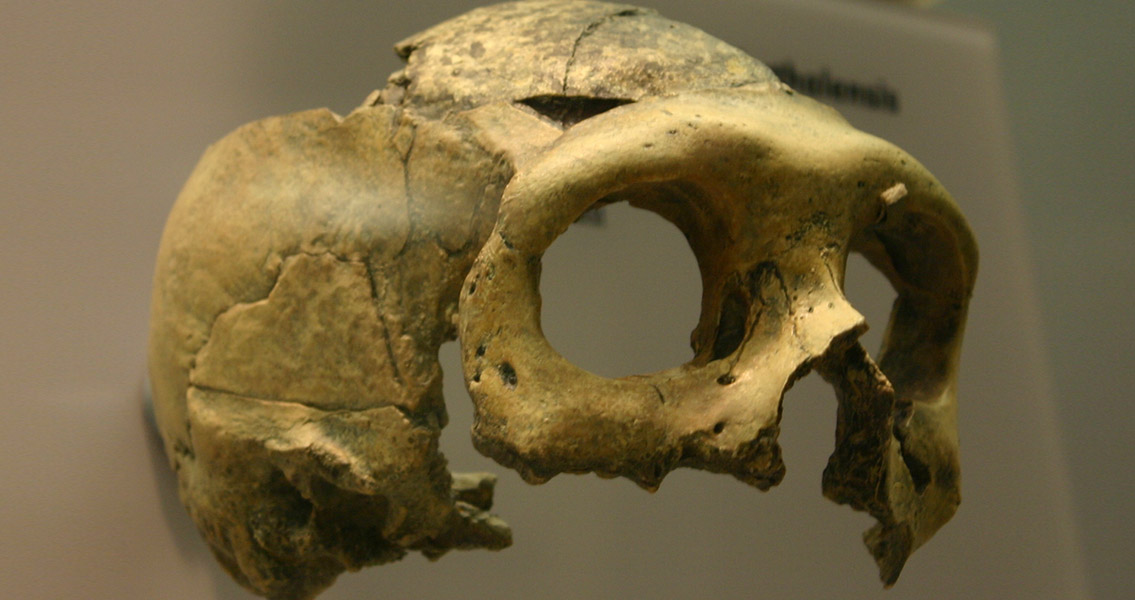
here]]>
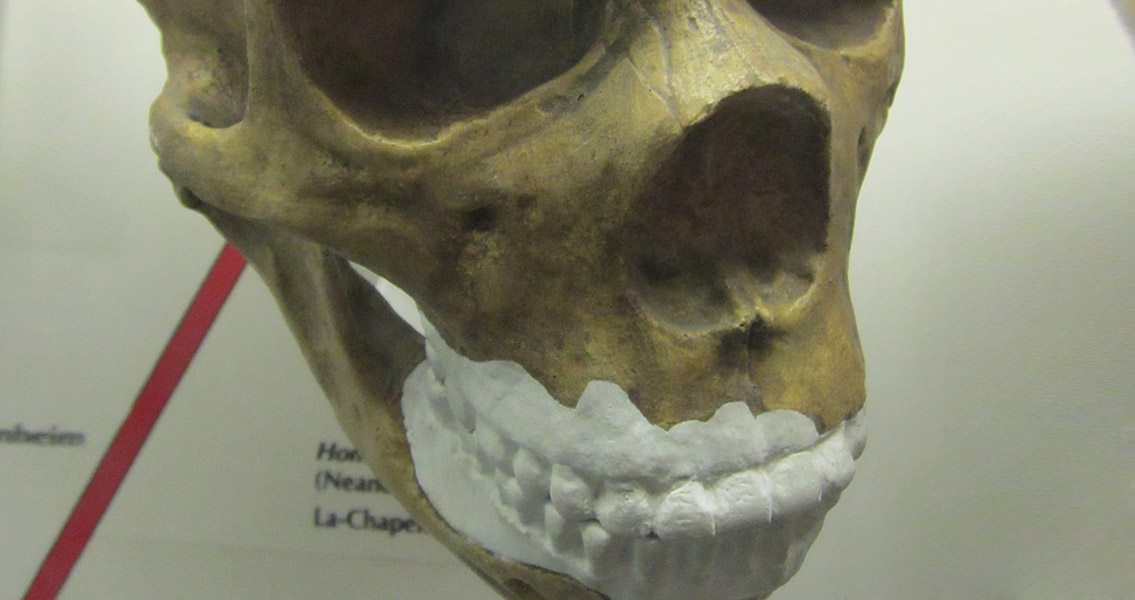
Antiquity, has discovered evidence of non-edible material in Neanderthal teeth. It is a remarkable find, one which opens up a host of possibilities concerning what Neanderthals did with their teeth: did they use their mouths as a third hand, or are the non-edible materials evidence that Neanderthals were concerned with dental hygiene? Most estimates suggest that Neanderthals first came on the scene between 300,000 and 250,000 years ago. By around 32,000 years ago they had been rendered completely extinct. They are often portrayed as being less intelligent, and uncivilised when compared to humans, however, new studies, including this latest one by Anita Radinia, Stephen Buckleya, Antonio Rosasa, Almudena Estalrricha, Marco de la Rasillaa and Karen Hardy; are increasingly bringing this assumption into question. For their research, the team led by Hardy from the Catalan Institution for Research and Advanced Studies extracted chemical compounds and micro fossils embedded in the teeth of Neanderthals from the 49,000 year old El Sidrón site in Spain. It was a unique approach to the still relatively new use of dental calculus (tartar) in archaeological study. Dental calculus is a hard substance that builds up on a creature’s teeth when they are not cleaned properly. For a long time archaeologists considered it nothing more than a waste product, and scrubbed it off of fossils. Over the last decade however, it’s been realised calculus actually contains a wealth of information, particularly when it comes to diet reconstruction of ancient populations. Hardy’s team discovered traces of conifer wood from a non-edible part of the trees in the molar of one adult Neanderthal. According to the study, the substance with no nutritional value could not have been confused with an edible part of a conifer – meaning it’s presence was certainly not connected to the Neanderthal’s diet. The study, published in the April edition of Antiquity, points out that associated dental wear suggests the teeth were being used for non-dietary functions, supporting the idea the piece of conifer had become embedded in the molar because the animal was using its mouth as a third hand. However, there are several other possible explanations. A study from 2013 revealed evidence from a 1.8 million year old Homo Erectus fossil discovered in Georgia that the creature had used something resembling a tooth pick to clean its teeth. Another study published earlier this year in the Journal of Human Evolution suggested that Neanderthals had healthier teeth than modern human hunter gatherers, a result of them cleaning their teeth. Taking these two studies into consideration, the piece of conifer wood in the El Sidrón Neanderthal’s teeth could have been linked to dental hygiene. Hardy et al’s study shows that a wealth of new insights into the lives of Neanderthals and ancient humans can be gained by studying dental calculus. The ambiguity surrounding their discovery serves as a reminder of just how much there is to learn about how our extinct cousins lived. For more information: journals.cambridge.org Image courtesy of Wikimedia Commons user: Rept0n1x]]>

American Journal of Physical Anthropology, challenges the prevailing view that infectious disease outbreaks exploded with the dawn of agriculture, when humans started to live in dense, sedantary populations alongside their livestock. In particular, their results bring into question the idea that diseases such as tuberculosis were initially spread to humans from livestock such as pigs. “We are beginning to see evidence that environmental bacteria were the likely ancestors of many pathogens that caused disease during the advent of agriculture, and that they initially passed from humans into their animals,” said Houldcroft in a Cambridge University press release. Although there is no definitive evidence humans transmitted African diseases to Neanderthals, Houldcroft and Underdown’s paper provides several candidates for diseases that could have been spread in such a way. One is Helicobacter pylori, a stomach ulcer causing bacterium. It is estimated to have initially infected humans in Africa between 116 and 88 thousand years ago. It arrived in Europe 52,000 years ago, while the most recent studies suggest Neanderthals had gone extinct by 40,000 years ago. Herpes simplex 2, the virus which causes genital herpes, is another candidate suggested by the paper. The genome of the disease suggests it was transmitted to humans through chimpanzees, via another as yet unknown hominin species, around 1.6 million years ago. “The ‘intermediate’ hominin that bridged the virus between chimps and humans shows that diseases could leap between hominin species. The herpes virus is transmitted sexually and through saliva. As we now know that humans bred with Neanderthals, and we all carry 2-5% of Neanderthal DNA as a result, it makes sense to assume that, along with bodily fluids, humans and Neanderthals transferred diseases,” said Houldcroft. Neanderthals lived in relatively small, isolated communities, meaning that rather than a rapid epidemic, their decline due to disease was probably quite gradual. “… it is unlikely to have been similar to Columbus bringing disease into America and decimating native populations. It’s more likely that small bands of Neanderthals each had their own infection disasters, weakening the group and tipping the balance against survival,” Other causes may have contributed to the extinction of the Neanderthals, but Houldcroft and Undertown’s work shows that humans spreading disease must be considered as a factor in the species’ decline. For more information: www.onlinelibrary.wiley.com]]>


here. ]]>

Quarternary International, the new study questions this idea. Although not proving either way whether Neanderthals actually made it as far as Southern Scandinavia, it shows that climate constraints wouldn’t have been enough to stop them. Two main hypotheses exist regarding Neanderthal inhabitation of Southern Scandinavia. The first, and by far the most widely held, is that climate constraints and dispersal barriers made it an impossibility. The second hypothesis claims that they did migrate north of 55°N, but they have for some reason remained invisible to the archaeological record. Led by Trine Kellberg Nielsen from Aarhus University, the authors of the study constructed climate models of where Neanderthals are known to have lived, and where they could have lived. Palaeoenvironmental reconstruction techniques were used to model the environment of Northern Germany and Southern Scandinavia during the Last Interglacial Complex. “Our results are inconsistent with the claim that climatic constraint and/or a lack of suitable habitats can fully explain the absence of Neanderthals in Southern Scandinavia during the Eemian Interglacial and Early Weichselian Glaciation”, they write in the abstract to the study. For years a cast of roe deer bones held in Denmark’s National Museum were considered evidence that Neanderthals had reached Southern Scandinavia. Archaeologists argued that the bones, discovered in 1955, showed signs of having been manipulated by Neanderthals. In 2013 this evidence was debunked by a team specialising in genetic engineering, from Aarhus University. Other evidence for a Neanderthal presence in Denmark comes in the form of Coups de poing, Lower Paleolithic hand axes. Around fifteen such axes which could have been used by Neanderthals have been found in Denmark. This evidence is far from conclusive however, human stone age hunters also used the primitive stone axes, and the examples found in Denmark were all unearthed from mixed soil, making it impossible to definitively date them. The timing and extent of Neanderthal migration throughout Europe is under constant revision and revaluation. Late last winter a study argued that Neanderthals had reached Italy 100,000 years earlier than previously thought. Significantly, Nielsen and colleagues’ study does find evidence that a geographic barrier may have impeded northerly migrations during the Eemian Interglacial Period between 130,000 and 115,000 years ago. The higher temperatures of the Interglacial Period inevitably led to higher sea levels, and there is a strong indication that the Baltic and North Seas were connected over southern Denmark. As such, even if the climate was warm enough for Neanderthals to have lived in Southern Scandinavia, a sea could have prevented them from walking there. Neanderthals lived across Eurasia between 200,000 and roughly 30,000 years ago, although these dates are far from agreed upon. Their duration, and the breadth of the area they inhabited: from the Middle East to the British Isles, shows the Neanderthals’ flexibility and endurance, especially when one considers the period they lived in included the last Ice Age. Nielsen et al’s study shows just how much there is still to learn about our closest extinct relatives. For more information: www.sciencedirect.com]]>


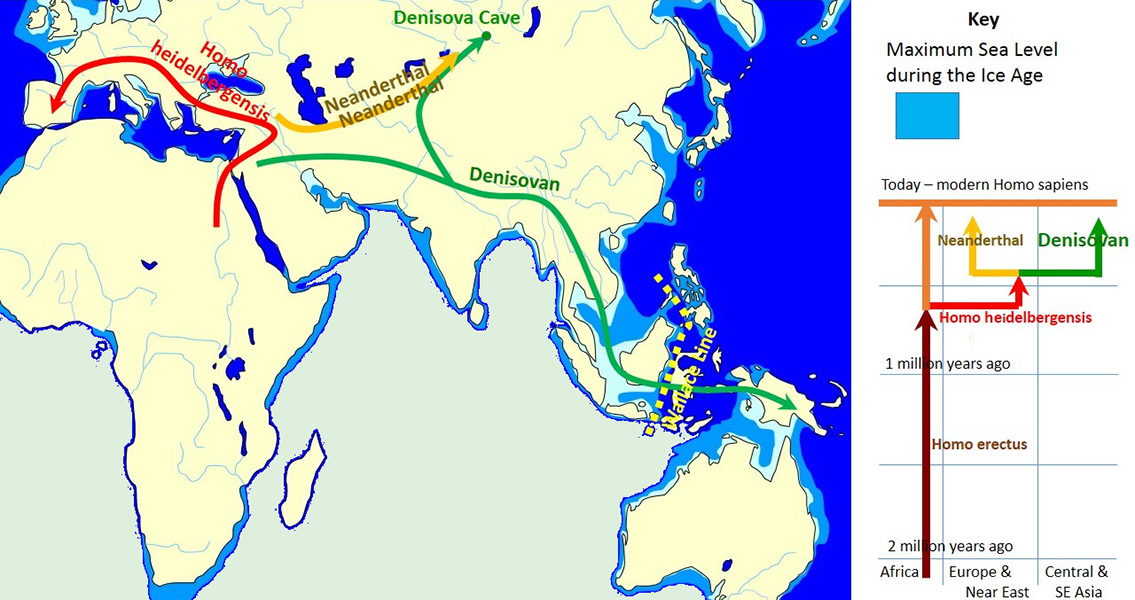

www.pnas.org ]]>